
Cultivating
Sustainable Futures
 News
News
First EU–Pacific Business Forum: linking Europe, Southeast Asia and the Pacific to promote sustainable growth
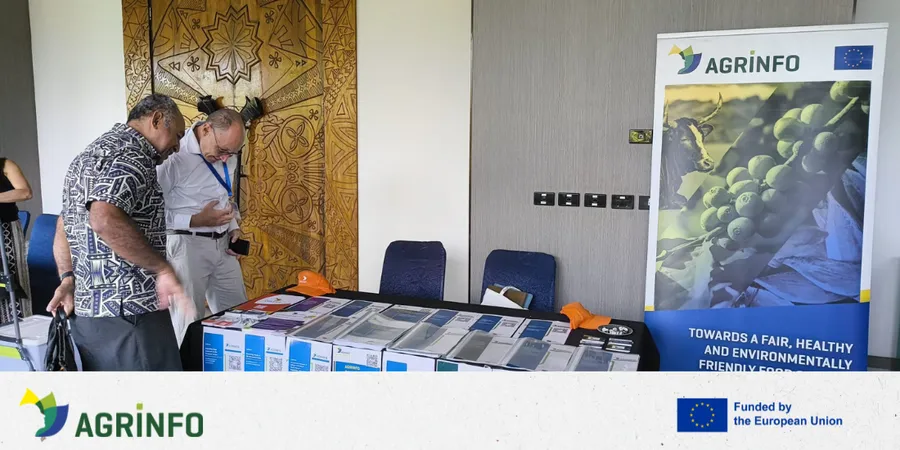
COLEAD participated in the Forum, which took place from 4–5 September 2025 in Nadi, Fiji. This landmark event brought together policymakers, investors, businesses, and development partners with the aim of strengthening economic relations between the EU and the Pacific region, as well as promoting sustainable growth pathways.COLEAD made a significant contribution, particularly during the thematic session 'Realising the Blue Pacific Continent: Investing in the Ocean for Sustainable Growth', which focused on sustainable aquaculture and fisheries. COLEAD's presentation in the context of the AGRINFO programme focused on access to the European market for fisheries and aquaculture products, as well as developments in EU policies and regulations.COLEAD was also present with a stand and participated in various sessions. This platform was used to raise the visibility of COLEAD resources and technical assistance, develop new partnerships, and reinforce our presence among public and private actors in the Pacific.Prior to the Forum, a mission to Vietnam on behalf of AGRINFO was used to further Programme engagement with the EU Delegation and key national stakeholders in agricultural and fish value chains. During a series of meetings, COLEAD representatives disseminated information on EU regulatory developments, and identified new avenues for cooperation. Meetings were held with: NAFIQPM (the National Authority for Agro-forestry, Fisheries, Quality, Processing and Market Development); VASEP (the Vietnam Association of Seafood Exporters); VICOFA (the Vietnam Coffee and Cocoa Association); VPAS (the Vietnam Pepper and Spice Association); and VINAFRUITS (the Vietnam Fruit and Vegetables Association).This dual mission demonstrates COLEAD’s role in promoting inclusive and sustainable economic growth by fostering connections between Europe, Southeast Asia, and the Pacific.This activity is supported by the AGRINFO programme, implemented by COLEAD and funded by the European Union (EU). This publication receives financial support from the European Union. The content of this publication is the sole responsibility of COLEAD and can in no way be taken to reflect the views of the European Union.A look back in pictures: [caption id="attachment_20815" align="aligncenter" width="369"] with VASEP (the Vietnam Association of Seafood Exporters)[/caption][caption id="attachment_20816" align="aligncenter" width="365"] with VICOFA (Vietnam Coffee-Cocoa Association)[/caption][caption id="attachment_20817" align="aligncenter" width="359"] with VPAS (Vietnam Pepper and Spice Association)[/caption][caption id="attachment_20818" align="aligncenter" width="357"] with VINAFRUITS (Vietnam Fruit & Vegetables Association)[/caption]
 News
News
Indonesia: Dialogue on upcoming EU Rules on mineral oil hydrocarbons
On 23 July 2025, under the AGRINFO programme, COLEAD organised a hybrid meeting in collaboration with the Indonesian Ministry of Food Affairs and the Delegation of the European Union in Jakarta, bringing together around sixty participants. The objective was to raise awareness among public and private stakeholders about the forthcoming European rules on mineral oil hydrocarbons (MOH) in foodstuffs, which will come into force in January 2027.COLEAD’s Regulations & Standards team outlined the proposed changes and explained the practical implications for key sectors such as palm oil, coconut, cocoa, tea, coffee, spices and fisheries. The exchanges with participants encouraged a productive dialogue between Indonesian ministries and professional associations, highlighting the importance of preparation to ensure successful compliance.The EU Delegation welcomed the meeting, stressing that this type of initiative demonstrates the EU’s commitment to transparency and consultation in shaping new policies, while offering stakeholders the opportunity to adapt their strategies in good time.Stay informed! Do not miss any updates on EU regulations affecting agri-food value chains worldwide.[maxbutton id="12" url="https://agrinfo.eu/subscribe/" text="AGRINFO newsletter" ]This activity is supported by the AGRINFO programme, implemented by COLEAD and funded by the European Union (EU). This publication receives financial support from the European Union. The content of this publication is the sole responsibility of COLEAD and can in no way be taken to reflect the views of the European Union.
 News
News
Latin America – Caribbean: A constructive dialogue on EU trade rules
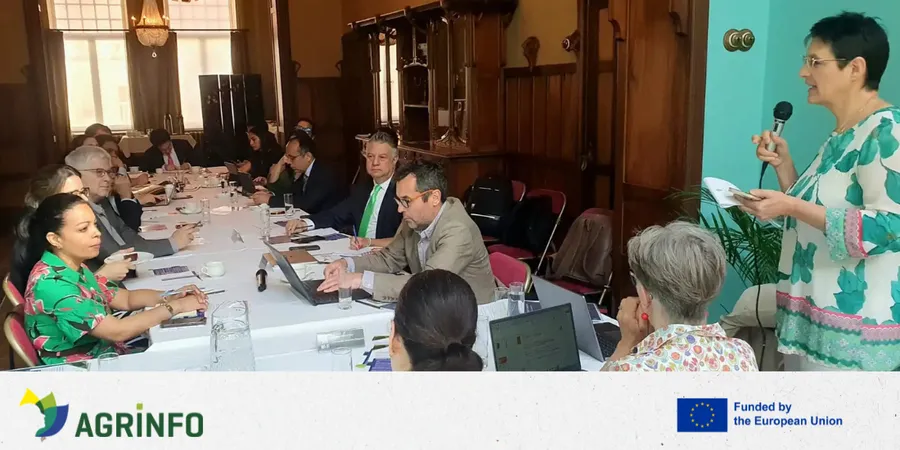
On 4 July, the COLEAD Regulations & Standards team took part in a unique event within the framework of the AGRINFO programme: a breakfast with the embassies of Latin America and the Caribbean, hosted at the official residence of the Argentine Ambassador in Brussels.In a friendly and open atmosphere, discussions focused on crucial issues for agri-food value chains, including:The European Green Deal and its impact on trade,regulations on pesticides and organic farming,phytosanitary rules, and e-certification.Several key points were discussed during the dialogue, including the importance of early participation in EU consultations, the decisive role of Member States in implementing controls, and concerns about the future of import tolerances. Representatives of third countries emphasised the importance of remaining fully engaged in EU expert consultations in order to anticipate and adapt to regulatory changes.Fourteen embassies were present: Argentina, Belize, Bolivia, Brazil, Chile, Colombia, Costa Rica, Cuba, Ecuador, El Salvador, Guatemala, Mexico, Paraguay, Peru and Uruguay.This event demonstrates the value of AGRINFO in facilitating communication with EU trading partners to foster transparent, equitable, and sustainable agri-food trade.This activity is supported by the AGRINFO programme, implemented by COLEAD and funded by the European Union (EU). This publication receives financial support from the European Union. The content of this publication is the sole responsibility of COLEAD and can in no way be taken to reflect the views of the European Union.
 News
News
COLEAD eLearning: new training pathways to strengthen the skills of 36,000 platform users
COLEAD's eLearning platform continues to grow as part of the FFM+ programme, offering new self-paced training pathways for professionals in the agri-food sector. Since 2024, four additional pathways comprising five courses have been added to the training offer.Business plan (available in English and French since June 2024)Financial planning (available in English since June 2024 and in French by the end of 2025);Fruit and vegetable preservation, Processing and Packaging (already available in French and due to be available in English by September 2025);Introduction to climate change (available in English and French since late 2024).These pathways aim to address the practical needs of MSMEs and partner organisations by equipping them with tools and knowledge that can be applied directly in the field.Exponential growthThe platform's success continues to grow exponentially, reflecting the increasing demand for accessible, specialised content that is tailored to the realities of the sector. Today, 36,000 users are connected.Other notable improvementsBeyond these new courses, the platform has evolved in several other ways:It is now accessible on smartphones via the Moodle app.The FAQs and learning resources have been completely revised and are now aligned with COLEAD’s new gender policy.BigBlueButton has been adopted as the preferred videoconferencing tool and is appreciated for its direct access to course recordings.Capacity building for teams: more than 50 experts have been trained in content creation and management.A new statistical dashboard has been introduced to enable better course monitoring.Updated certificates and transcripts are now ISO 21001 compliant.Coming soon:New features will further enhance the learner experience, including better mobile compatibility, optimised notifications, an offline mode and a dynamic orientation portal.These developments reaffirm COLEAD’s commitment to providing an increasingly accessible, interactive learning platform adapted to the needs of agri-food professionals.This activity is supported by the Fit For Market Plus (FFM+) programme, implemented by COLEAD within the Framework of Development Cooperation between the Organisation of African, Caribbean and Pacific States (OACPS) and the European Union. This publication receives financial support from the European Union and the OACPS. The content of this publication is the sole responsibility of COLEAD and can in no way be taken to reflect the views of the European Union or the OACPS.
 News
News
Why MSMEs in Sub-Saharan Africa’s agricultural sector struggle to access finance: key blocking factors
Agriculture plays a critical role in Sub-Saharan Africa (SSA)— the sector employs nearly half of the workforce[1] and drives food security, rural development, and poverty reduction. At the heart of this sector are agricultural micro, small, and medium-sized enterprises (agri-MSMEs)—the backbone of SSA’s rural economy. However, despite their importance, agri-MSMEs face a persistent barrier: access to finance.With three out of four agri-MSMEs unable to secure bank loans[2], these enterprises struggle to grow, innovate, and contribute to the region’s sustainable development.This article delves deeper into the key challenges behind this financing gap and how COLEAD is working to address them.The financing gap: a barrier to growth for Agri-MSMEs Agri-MSMEs in SSA are caught in a financing paradox: they are often too large for Microfinance Institutions (MFIs) but too small or risky for traditional banks and investors.This has created a $74 billion annual financing gap, leaving approximately 84% of the demand for funding unmet[3]. The most acute need lies in the "missing middle": the funding requirements between $50,000 and $1 million[4] (Figure 1). This gap stifles the growth of thousands of promising agri-MSMEs, limiting their ability to scale, create jobs, and contribute to food security and economic development of the region.Key blocking factors to accessing finance To contribute to solving the access to finance challenge in Sub-Saharan Africa (SSA), COLEAD has identified the key blocking factors agri-MSMEs face, which fall into the following four categories:Agri-sector risks:Agri-MSMEs in SSA operate in a high-risk environment that limits their access to finance. Climate variability, pest outbreaks, and phytosanitary issues can cause significant yield losses, increasing the risk of default. Market volatility, perishability, and weak storage infrastructure further affect their reliability as borrowers. Many also lack formal land rights, collateral, or transaction history, making credit access difficult. Further, uncertainty about the availability and quality of inputs such as seeds, fertilizers, pesticides etc. also impact them directly their income and then in turn their ability to repay.Fruit & vegetable sub-sector risks:The fruit & vegetable value chains (sub-sector of the agri sector) face even higher hurdles. There are usually long production cycles (3-6 years for some crops), small-scale operations, and fragile supply chains, which raise the risk profile. Further, perishability and lack of cold chains lead to post-harvest losses, while entry into export markets is hampered by price instability and high compliance barriers.Capability gaps:The capability gap can be observed both on the borrower and the lender side.From the borrowers’ side, many agri-MSMEs lack financial management skills (e.g. budgeting and cash flow management), and business management expertise (e.g. marketing, HR, strategic planning, etc.). Limited access to market information also makes it harder for agri-MSMEs to plan or negotiate effectively. On the technical side, poor farming practices often lead to lower yields. It is on this category that COLEAD focuses its efforts, providing capacity building to borrowers to equip them with the right skills and knowledge to be investment-ready.On the lenders’ side, the lack of agri-specific knowledge hinders their ability to craft lending products that are adapted to the sector. Traditional credit assessment processes also create high operational costs when applied to this sector, while use of technology (e.g. automated scoring, Geographic Information System, etc.) could make it more attractive.Macro environment challenges:Macro challenges also contribute significantly to the financing gap. Inconsistent agricultural and trade policies, weak government support, and unclear land rights make long-term investments risky. On top of that, economic instability like inflation, currency devaluation, and political uncertainty raises input costs and affects market performance. Weak legal systems and poor contract enforcement further discourage lenders. In some cases, MSMEs also engage in informal or unclear business practices, which lowers their credibility with financial institutions. The ripple effect of the financing gapThe lack of access to finance has far-reaching consequences. It limits agri-MSMEs’ ability to invest in productivity-enhancing technologies, expand operations sustainably, and access new markets. This, in turn, hampers rural development, exacerbates food insecurity, and perpetuates poverty. Bridging the financing gap is not just about supporting individual businesses—it’s about unlocking the transformative potential of the entire agricultural sector in SSA.COLEAD’s role in addressing the challenge At COLEAD, we recognize that addressing the access to finance challenge requires a holistic approach. Our Access to Finance department is dedicated to empowering agri-MSMEs through scalable training programmes, targeted technical assistance, and strategic partnerships with funding ecosystem players. By equipping agri-entrepreneurs with the tools, knowledge, and connections they need, we aim to bridge the "missing middle" and drive sustainable growth in SSA’s agricultural sector.Looking ahead The financing gap in SSA’s agri-sector is a complex issue, but it is not impossible. By addressing the root causes of the challenge and fostering collaboration among stakeholders, we can unlock the potential of agri-MSMEs to drive economic growth, enhance food security, protect the environment and lift millions out of poverty. In the next article, we will delve deeper into COLEAD’s solutions and how we are working to make external funding more accessible for agri-MSMEs in SSA.This activity is supported by the Fit For Market Plus (FFM+) programme, implemented by COLEAD within the Framework of Development Cooperation between the Organisation of African, Caribbean and Pacific States (OACPS) and the European Union. This publication receives financial support from the European Union and the OACPS. The content of this publication is the sole responsibility of COLEAD and can in no way be taken to reflect the views of the European Union or the OACPS. Notes[1] The World Bank Group (2023) - World Bank Open Data Portal. https://data.worldbank.org [2] USAID (2023) - Bridging the Gap: Financing Africa’s Agricultural Growth [3] Advisors, I. S. F. (2022) - The state of the agri-SME sector-Bridging the finance gap. Commercial Agriculture for Smallholders and Agribusiness (CASA).[4] Vandersypen, W., Claes, C., & Serneels, S. (2023) - Impact Investing for the Missing Middle in Agri-Finance. Stanford Social Innovation Review. https://doi.org/10.48558/HDGK-AR18
 News
News
Guinea: The AGRIECO Project kick-starts the agroecological transition of local value chains
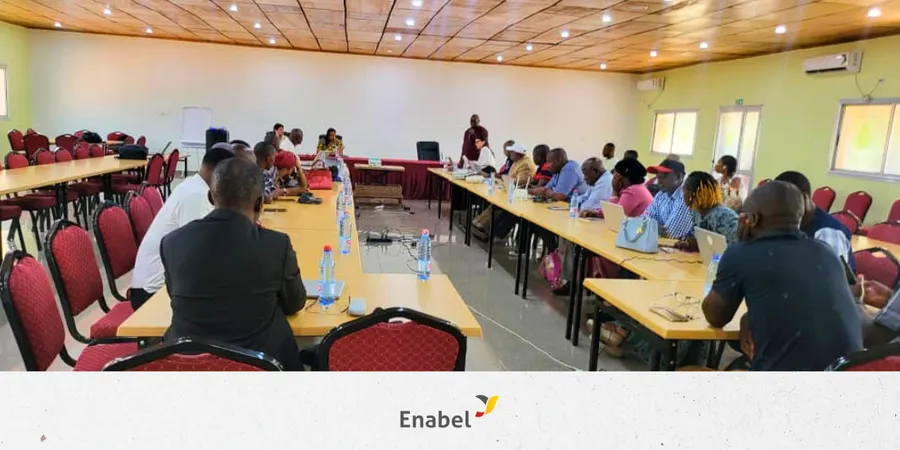
In the first half of 2025, the Agriéco project, which is funded by Enabel, took decisive steps to lay the foundations for the agroecological transition in Guinea. Particular focus was given to the pineapple, potato and vegetable value chains.Local dynamics were structured.Thirteen agricultural cluster initiatives were identified in the Kindia and Mamou regions. Six of these clusters have been selected as priorities and will receive enhanced support. In partnership with ICRA, the recruitment of cluster coaches is underway to ensure close, tailored guidance.Co-construction with local stakeholdersTwo participatory regional workshops were held in Kindia and Mamou, bringing together more than 75 stakeholders. The objective was to co-design agroecological transformation pathways adapted to local realities.Studies and training are building the foundations.Baseline studies have been launched on value chains, seed systems, and cluster organisation. Meanwhile, preparations are underway for the deployment of FAO’s TAPE tool, which is aimed at assessing sustainability practices.Regarding capacity building, the training of resource experts began with an e-learning phase in July. These future trainers will be responsible for disseminating agroecological practices within the clusters.A promising momentumField results have yet to be established, but the foundations are solid. Large-scale technical deployment and training activities are expected in the second half of 2025, marking a new stage in the sustainability and competitiveness of Guinea’s agricultural value chains.The Agriéco project, implemented in Guinea with financial support from the Belgian Development Agency (ENABEL). This publication was produced with financial support from ENABEL. Its contents are the sole responsibility of COLEAD and cannot in any way be considered to reflect the official position of ENABEL.
 News
News
Derrick Sarfo turns plastic into sustainable opportunities
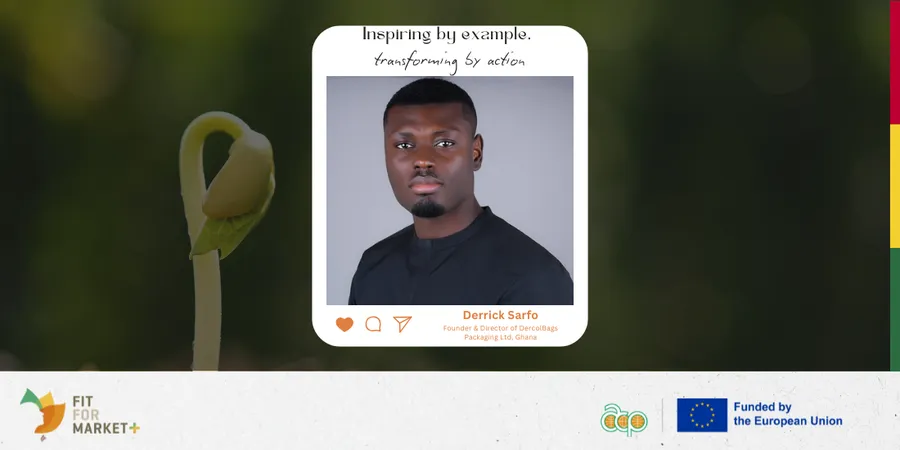
In Ghana, a young entrepreneur is proving that a committed vision can turn environmental challenges into opportunities for inclusive development. Derrick Sarfo, founder and director of DercolBags Packaging Ltd., has made the fight against plastic pollution a driver of social and economic innovation.His entrepreneurial journey stems from a tragedy. In 2015, the devastating floods in Accra, worsened by plastic waste clogging drains, left a deep mark on Derrick and pushed him to act. Three years later, he founded DercolBags, a social enterprise that designs sustainable packaging made from paper, cardboard and other biodegradable materials.But for Derrick, it is not just about producing alternatives to plastic. His project is also a platform for training and empowerment: the company now employs 18 young people, including 8 women, and has trained more than 140 people in sustainable packaging practices, reaching over 12,000 online learners. More than 463 Ghanaian businesses already use his solutions, helping to eliminate nearly 12,000 tonnes of single-use plastics.Always attentive to the needs of his community, he has ensured that 60% of his products are distributed through women working in local markets, giving them an active role in spreading eco-friendly solutions. Aware of the impact of disposable packaging in the food sector, Derrick also co-founded SPEX (Smartpack Exchange), a reusable food container system that has already attracted more than 4,600 users.Winner of several international support programmes, Derrick has skillfully combined personal development, fundraising and social innovation to give his projects regional scope. His ambition: to expand DercolBags across West Africa and franchise the SPEX model.Through his journey, Derrick embodies a strong conviction: entrepreneurship can be both a tool for protecting the environment and a driver of job creation and social inclusion.Derrick is a member of the AGRINNOVATORS.org platform, developed under the FFM+ programme.Derrick presented his company during Innovation Session n°18 organised by PAFO and COLEAD, aimed at showcasing innovations and successes of African farmer-led businesses and small and medium enterprises. You can access DercolBags Packaging’s Business Profile.If this topic interests you, join the discussion on packaging in the Agrinnovators forum.This activity is supported by the Fit For Market Plus (FFM+) programme, implemented by COLEAD within the Framework of Development Cooperation between the Organisation of African, Caribbean and Pacific States (OACPS) and the European Union. This publication receives financial support from the European Union and the OACPS. The content of this publication is the sole responsibility of COLEAD and can in no way be taken to reflect the views of the European Union or the OACPS.
 News
News
María Elsy Abreu turns Dominican cacao into a driver of sustainability and inclusion
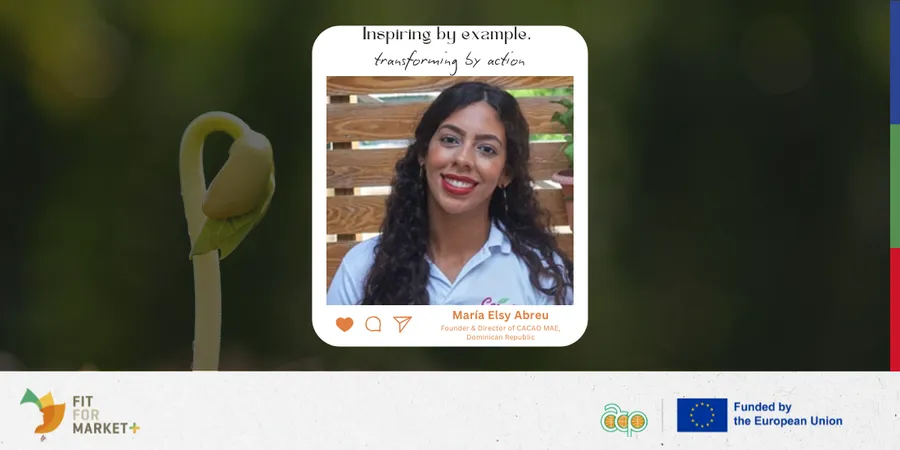
In the Dominican Republic, a new generation of entrepreneurs is transforming agricultural value chains. María Elsy Abreu, co-founder and director of Cacao Mae, is one of the movement's leading figures. With a background in marketing and an in-depth understanding of international markets, she is working to showcase the exceptional quality of Dominican cacao and to leverage it for sustainable and inclusive development.From agricultural roots to a global visionBorn into a family of farmers who cultivated cacao, tobacco, and coffee for generations, María Elsy grew up immersed in rural life. Building on this background and her training in marketing and international trade, she and her brother José Alejandro co-founded Cacao Mae in 2015. Their ambition was to offer authentic, organic, additive-free products while connecting producers, processors, and consumers directly.An entrepreneur committed to inclusionMaría Elsy's approach goes beyond products, placing inclusion at its core. She establishes direct partnerships with smallholder cacao producers, particularly collaborating with the Dominican producer Yluminada Ortega. Together, they share expertise and networks to ensure that the company’s success benefits rural women, too.A sustainable company focused on the futureUnder her leadership, Cacao Mae is committed to sustainability, with solar-powered production, rainwater harvesting and recyclable packaging. The company now has a presence on international markets, including the United States, Switzerland, Uruguay and Europe, and its products are sold in over 50 outlets across the Dominican Republic.Recognition and visibilityMaría Elsy represents her country at major international trade fairs, from the Salon du Chocolat in Paris to the Summer Fancy Food Show in New York. In 2024, her efforts were rewarded with the Pro-Internationalisation Award from ProDominicana.For María Elsy, entrepreneurship is not just about economic growth; it is also a social project. By building a responsible and inclusive company, she demonstrates that Dominican cacao can be a source of national pride and a product of excellence, as well as a tool for social transformation.María Elsy Abreu has presented her company during the Caribbean Agrifood Business Session n°9, organised by IICA and COLEAD, and aimed at showcasing the innovations and successes of Caribbean farmer-led businesses and small and medium enterprises. You can access the business profile of Cacao Mae.If you are interested in this topic, join the Women Empowerment discussion on the Agrinnovators Forum.This activity is supported by the Fit For Market Plus (FFM+) programme, implemented by COLEAD within the Framework of Development Cooperation between the Organisation of African, Caribbean and Pacific States (OACPS) and the European Union. This publication receives financial support from the European Union and the OACPS. The content of this publication is the sole responsibility of COLEAD and can in no way be taken to reflect the views of the European Union or the OACPS.
 News
News
Dominican Republic: strengthening the national framework for public health and agri-food competitiveness
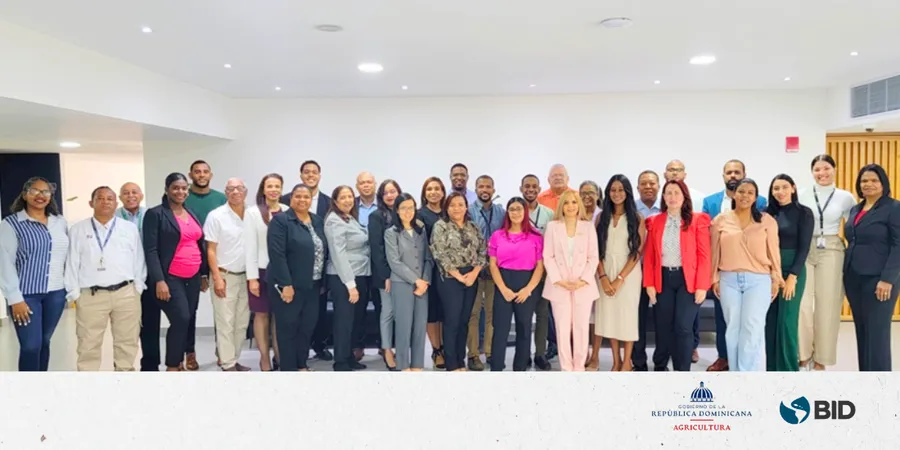
The country has just adopted its National Policy on Sanitary and Phytosanitary (SPS) Measures. This major strategic framework is designed to modernise the protection of human, animal and plant health while facilitating agri-food trade and promoting sustainability.This policy was developed in collaboration with the Ministries of Agriculture, Industry and Trade, Foreign Affairs, and Health (via the SPS Committee). It was developed within the framework of the SIA project (Sanidad e Innovación Agropecuaria), which is being implemented by COLEAD. The policy responds to new challenges, such as emerging health risks, stricter international market requirements, and increasingly demanding multilateral commitments.The policy is built on seven strategic pillars:The policy comprises seven pillars and 73 lines of action, ranging from legislative harmonisation and inter-institutional coordination to strengthening technical capacities, modernising laboratories and implementing a digital traceability system. The policy also adopts an integrated 'One Health' approach, linking human, animal, plant and environmental health.Concrete expected impactsImplementation will:better protect public health and ecosystems;ensure food safety and consumer confidence;enhance the competitiveness of Dominican products in international markets;It will also contribute to climate resilience and sustainable development.This ambitious policy sets out a clear roadmap for a modern, coherent and internationally recognised SPS system for the Dominican Republic.This activity is supported by the SIA project (Sanidad e Innovación Agropecuaria), implemented by COLEAD on behalf of the Ministry of Agriculture of the Dominican Republic and financed by the Inter-American Development Bank (IDB) under loan no. BID-4909/OC-DR. This publication has been produced with the financial support of the IDB. The contents are the sole responsibility of COLEAD and in no way reflect the views of the Dominican Ministry of Agriculture or the IDB.
 News
News
Senegal: modernising the phytosanitary system to boost horticultural competitiveness
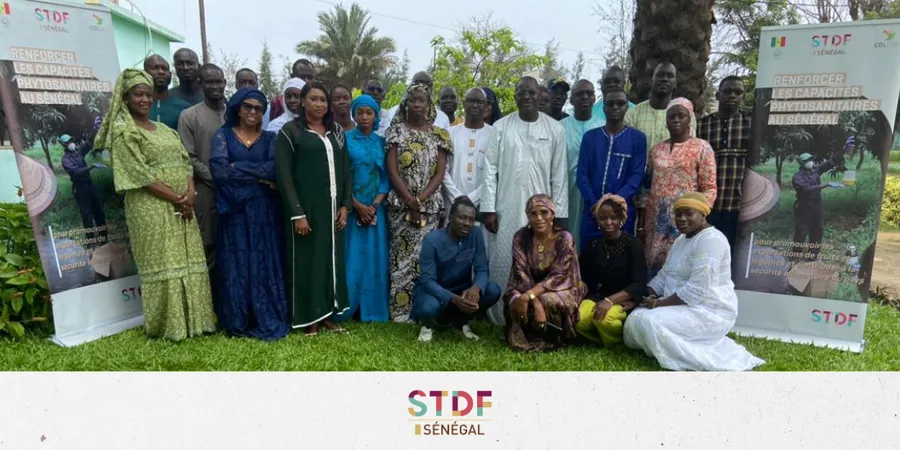
In the first half of 2025, the STDF/PG/946 project reached a key milestone in the modernisation of Senegal’s phytosanitary system, which is crucial for strengthening the competitiveness of horticultural exports.Major legal reformsA decree and three implementing orders covering surveillance and control, import and export inspections, and fee schedules were validated in May 2025. These new texts replaced legislation dating back to 1960, aligning the framework with international standards and including specific provisions to address the challenges faced by rural women in agricultural value chains more effectively.Towards better risk managementThe phytosanitary risk analysis process, which was initiated in the potato sector, will be extended to two more value chains. Strengthened through training and innovative tools (e.g. the CABI platform and artificial intelligence), national teams are improving their ability to assess harmful organisms.Capacity building and public-private dialogueA regional webinar introduced national authorities to the implementation of a Quality Management System (QMS). In parallel, export procedures for four horticultural sectors have been revised and a continuous training plan is being developed for Plant Protection Directorate (DPV) staff. Three national experts also received advanced training in South Africa to foster the introduction of digital monitoring tools. The project’s steering committee has validated the interim results and decided to extend the risk analyses to new sectors, such as citrus and cabbage. This forum is becoming a key space for structuring and coordinating activities between public and private actors.Inclusion and next stepsWith women accounting for over 50% of participants in some workshops, the project is demonstrating its commitment to more inclusive governance. Specific indicators have been developed to monitor women’s involvement in the phytosanitary sector. The second half of 2025 will see an acceleration and scaling up of technical activities, training and risk analyses.The “STDF/PG/946 ” project is funded by the WTO’s Standards and Trade Development Facility (STDF) at the request of the Senegalese Ministry of Agriculture, Rural Development and Food Sovereignty’s (MAERSA) Directorate of Plant Protection.
 News
News
Uganda: opening new market opportunities for horticultural exporters
In collaboration with CABI, COLEAD has just completed a series of interactive and insightful sessions as part of the EU-funded SPS Uganda project. The initiative aims to strengthen the country’s sanitary and phytosanitary system, as well as supporting horticultural businesses in accessing international markets, particularly in Europe.Understanding market access requirementsThe first module helped participants to grasp the differences between local, regional and international markets, and the related opportunities and challenges. Discussions focused on the relevant regulations, commercial and technical requirements, and associated costs, risks and benefits at each level. Particular attention was given to the evolving EU regulations under the AGRINFO programme and the important role of private standards such as GLOBALG.A.P., GRASP, SMETA and BRCGS for entering EU markets.Practical tools for certificationThe second part of the sessions focused on the practical implementation of GLOBALG.A.P. certification. Participants discovered COLEAD’s self-learning pathway, which is tailored to the strict requirements of this standard. They also learned about the resources and training available to strengthen compliance capacities.Active and motivated participationA total of 145 people registered for the series, with 125 actively taking part in the sessions. The exchanges were enriched by questions on upcoming EU regulations, private standards, trade fairs, and market entry strategies. The presentations, recordings and learning materials made available will help to extend the impact of this learning.Next stepsCOLEAD will continue to provide support in the form of personalised coaching, the dissemination of self-learning modules and the organisation of GLOBALG.A.P. IFA v6 training in Kampala in October. The goal is to enable Ugandan horticultural exporters to better meet international requirements and strengthen their competitiveness in global markets.This activity is supported by the Fit For Market Plus (FFM+) programme, implemented by COLEAD within the Framework of Development Cooperation between the Organisation of African, Caribbean and Pacific States (OACPS) and the European Union. This publication receives financial support from the European Union and the OACPS. The content of this publication is the sole responsibility of COLEAD and can in no way be taken to reflect the views of the European Union or the OACPS.
 News
News
Rwanda : study on the potential of the organic fruit and vegetable local market
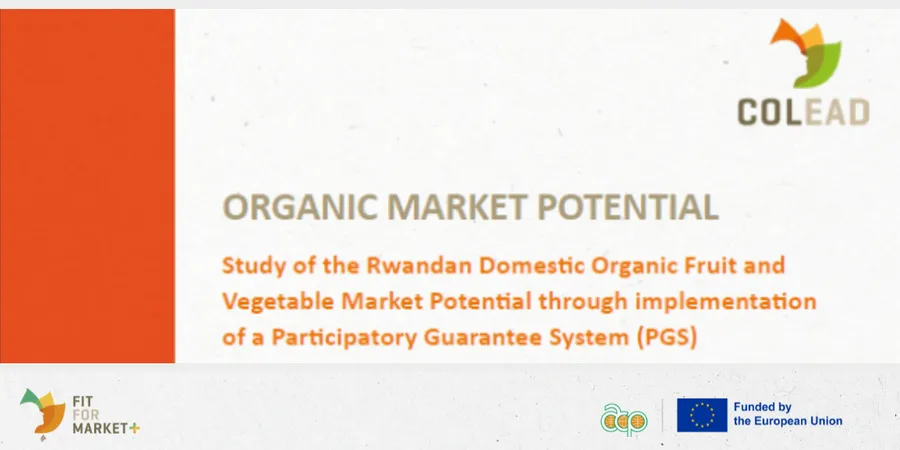
As part of the FFM+ programme, COLEAD recently published a groundbreaking study on the potential of the domestic market for organic fruit and vegetables in Rwanda. The report assesses the prospects for developing the organic sector in Rwanda, focusing particularly on the feasibility of a participatory guarantee system that would offer new certification options tailored to small-scale producers.An emerging market.The study analyses consumer and hospitality sector demand, current market conditions, and the challenges to be overcome to promote growth in Rwanda's organic sector.Despite constraints, successful adaptationThe results were initially scheduled to be presented at an in-person workshop in Kigali. However, due to diplomatic constraints, the event had to be reconfigured. Thanks to the flexibility of the service provider and technical assistance, as well as the ongoing commitment of ROAM and its partners, a productive virtual workshop was organised instead. This provided an opportunity to share the study's main findings, gather constructive feedback, and discuss strategic recommendations for consolidating organic farming in Rwanda.Prospects for stakeholders in the sectorThe results of this study provide a solid basis for strengthening local organic initiatives, improving the visibility of producers, and creating new business opportunities. The full report and the presentation materials used during the workshop are available in the COLEAD online library.This activity is supported by the Fit For Market Plus (FFM+) programme, implemented by COLEAD within the Framework of Development Cooperation between the Organisation of African, Caribbean and Pacific States (OACPS) and the European Union. This publication receives financial support from the European Union and the OACPS. The content of this publication is the sole responsibility of COLEAD and can in no way be taken to reflect the views of the European Union or the OACPS.