
Cultivating
Sustainable Futures
 News
News
Côte d'Ivoire, Uganda and Guinea: 3 new local programmes entrusted to COLEAD by the European Union and ENABEL
COLEAD manages and implements international and local programmes/projects funded by partners. Since 2015, COLEAD has diversified its financial partnerships by becoming more firmly rooted at local level via national programmes that complement multi-country intra-ACP interventions such as Fit For Market. It is in this context and with this rationale of deepening and increasing COLEAD's action and impact at ‘country’ level that new programmes have recently been signed with the European Union delegations for the Republic of Côte d'Ivoire and Uganda and with ENABEL in Guinea.Côte d’IvoireThe overall objective of the Programme d'Appui à la Sécurité des Aliments pour la République de Côte d'Ivoire (PASA-Côte d'Ivoire) entrusted to COLEAD by the EUD in Côte d'Ivoire is to strengthen the contribution of the Ivorian agri-food sector to the economic growth, food security and sustainable development of the Republic of Côte d'Ivoire by improving the competitiveness, resilience, inclusiveness and sustainability of agri-food value chains. The specific objective of PASA-Côte d'Ivoire is, in close collaboration with the relevant Ivorian authorities, to strengthen the capacity of private players in the agri-food sector - with particular emphasis on the two targeted value chains - to manage and control the sanitary and phytosanitary quality of food and to adapt to changing market requirements (regulatory, including SPS, commercial, social and environmental).UgandaThe ‘Improving sanitary and phytosanitary standards in horticulture in Uganda (SPS Uganda)’ programme entrusted to CABI for its implementation has the general objective of strengthening the capacity of public and private sector organisations in Uganda to comply with phytosanitary and food safety measures for fresh fruit and vegetable value chains on export markets, in particular the regulatory and commercial requirements of EU phytosanitary and food safety regulations, in order to safeguard consumer health and increase exports to the EU. COLEAD is a co-applicant of the programme and will be involved in activities relating mainly to the following specific objective: To improve production and product handling processes among private sector actors in order to improve the compliance of Uganda's fruit and vegetable value chains with phytosanitary and food safety regulations and market standards.Guinea The ‘Support for the agro-ecological transition of the pineapple, potato and horticultural value chains in Guinea’ programme entrusted to COLEAD and ICRA by ENABEL has the general objective of helping to improve the incomes of stakeholders in the potato, pineapple and horticultural value chains in the Kindia and Mamou regions, particularly young people and women. The specific objective is to enable Guinean pineapple, horticultural and potato value chain operators to make an inclusive commitment to a gradual transition to agro-ecology, while meeting market requirements.Stay tuned in the coming weeks for more information and especially on how to access these programmes!
 News
News
Multi-stakeholder commitment to fair trade in the agri-food chains. Call for an urgent review of the EU's Unfair Trading Practices (UTP) Directive
Media coverage of the farmers' protests in 2023-2024 highlighted the immense challenges facing the agricultural sector. Rising costs, pressure from retailers, mounting debt and the effects of climate change are threatening the viability of farms, affecting not only producers but the entire agri-food supply chain. In particular, these mobilisations call for fair prices and concrete mechanisms to protect farmers from their structurally vulnerable position in the food chain.In this context, and in line with its long-standing advocacy for fairer trade, COLEAD recently co-signed a position paper calling for an urgent review of the EU's Unfair Trading Practices (UTP) Directive.This initiative aims to ensure greater fairness and better distribution of value throughout the agri-food supply chain, while strengthening the sustainability of the sector.Towards ambitious and effective reformThe position paper proposes a series of ambitious measures that are essential if farms are to survive and a fair and sustainable food system is to be created:General prohibition of unfair trade practices: Adopt a global ban to discourage unfair practices that undermine human and workers’ rights.Ban on buying below cost of production: Guarantee that agricultural products cannot be purchased below the cost of sustainable production, for both EU and non-EU suppliers.Fair price transmission: Prohibit the sale of products below their purchase price to ensure a balanced distribution of value.Elimination of other harmful practices:o Delisting of retaliatory products.O Prohibiting ‘double-run’ auctions that drive down prices.O Preventing abuses linked to economic dependence.O Mandatory renegotiation of contracts in the event of unforeseen circumstances.Strengthen the Agri-Food Chain Observatory (AFCO): Increase its budget and powers to extend monitoring to imported products and strengthen cooperation with the competition authorities.Improve access to complaint mechanisms:o Raising awareness.O Multilingual resources and simplified online forms.O Encourage ex officio investigations to limit fears of retaliation.Deterrent sanctions and compensation: Introduce fines proportionate to the global turnover of offenders and ensure compensation for victims.A common vision for sustainable and resilient agricultureIn the spirit of the EU policy guidelines, which state that "farmers must receive a fair and adequate income and not be forced to sell below the cost of production", this position paper is a strong call to action. COLEAD remains committed to working with its partners to promote a fair and sustainable agri-food supply chain for the benefit of farmers, businesses and consumers.The document has been co-signed by several influential organisations, including Oxfam, Fair Trade Advocacy Office and IFOAM - Organics International, strengthening its reach and legitimacy.This collective signature underlines the importance of collaboration and commitment to positive change in the agricultural sector. Together we can help restore economic and social justice in business-to-business relations and ensure a sustainable future for generations to come.To read the full position paper, please click here: Full position paper.
 News
News
Calculating the environmental footprint of fruit and vegetables: Freshfel calls for action. Professionals and experts of the sector, we're waiting for your opinion! Consultation until 10 February 2025
As part of the Freshfel initiative on the Environmental Footprint, the “Fresh Produce PEFCR” Technical Secretariat (TS) invites all industry representatives to give their opinion on the second version of the FreshProducePEFCR document. This document develops technical rules for calculating the environmental footprint of fruit and vegetables.A consultation open to all stakeholdersThe second public consultation will run from 13 January to 10 February 2025. The aim of this exercise is to ensure that a variety of perspectives are taken into account in the drafting process. The Technical Secretariat particularly encourages sector experts and life cycle assessment specialists with solid experience in the fruit and vegetable sector to submit their comments. This consultation is the last opportunity to influence the final version of the “Fresh Produce PEFCR” before its publication.Why should you participate?Your input is essential to-Ensure the accuracy and relevance of the technical rules.Ensure that the needs of the different stakeholders in the sector are represented.Support the creation of a coherent and transparent environmental framework for the fruit and vegetable sector.Contact and further resourcesIf you have any questions about the Freshfel environmental footprint initiative or would like to access the full document, please contact Gil Kaufman at g.kaufman@freshfel.org.Act now!Don't miss this opportunity to contribute to an important initiative for the future of the fresh produce sector.Let's build a more sustainable and transparent future together.COLEAD is involved in this technical working group coordinated by Freshfel as part of the FFM+ programme.This activity is supported by the Fit For Market Plus (FFM+) programme, implemented by COLEAD within the Framework of Development Cooperation between the Organisation of African, Caribbean and Pacific States (OACPS) and the European Union. This publication receives financial support from the European Union and the OACPS. The content of this publication is the sole responsibility of COLEAD and can in no way be taken to reflect the views of the European Union or the OACPS.
 News
News
Sustainable energy management: a recent example of post-training support in Sierra Leone
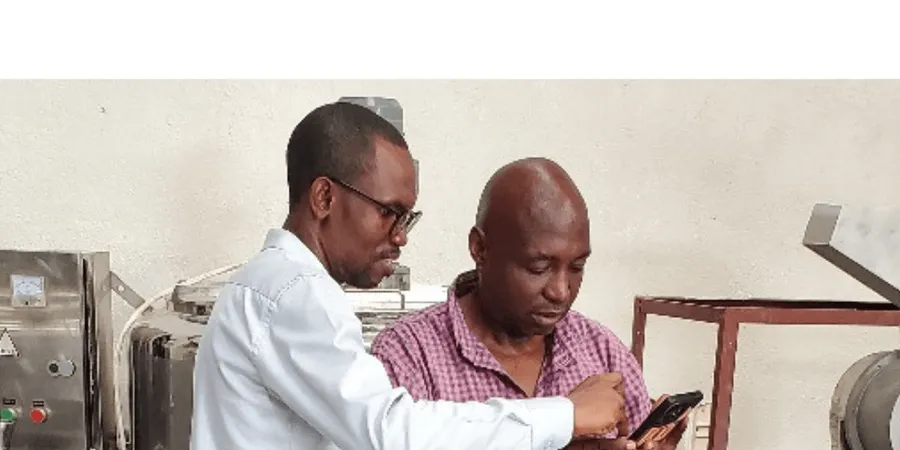
Last November, COLEAD provided a post-training support in the field of sustainable energy management to WANGU PTY LTD, a fruit and vegetable processing company in Sierra Leone. This intervention, carried out as part of the FFM+ programme, included a Type 1 energy audit according to the ISO 50002:2014 standard. The aim was to optimise the company's energy consumption and improve its overall operational efficiency.An energy audit for efficiencyThe audit focused on analysing energy consumption patterns at WANGU's Masiaka factory site and identifying opportunities to improve energy efficiency. Key activities included :- A site inspection to identify energy intensive equipment and inefficiencies;- A review of energy management procedures and historical data;- Recommendations for cost-effective improvements to processes and equipment utilisation, with a particular focus on optimising refrigeration, solar power and diesel generators.Key findings and recommendationsThe audit identified significant opportunities to reduce energy consumption and greenhouse gas (GHG) emissions:Potential energy savings of around 20%, equivalent to an annual reduction in fuel costs of around $85,000 and a reduction in emissions of 180 tonnes of CO2e;Recommendations to optimise refrigeration processes, increase solar energy production capacity and explore the production of biogas from fruit waste;Prioritising low or no-cost measures such as improving insulation, optimising equipment efficiency and improving maintenance;A more in-depth analysis (type 2 or 3 audit) recommended for opportunities requiring significant investment, as well as the implementation of an ISO 50001-compliant energy management system.Impact and next stepsWANGU PTY LTD has shown a strong commitment to implementing the audit recommendations. In particular, the company plans to increase its solar manufacturing capacity and implement an ISO 50001-compliant energy management system. These initiatives are in line with COLEAD's objectives to promote sustainability and reduce the environmental impact of agro-processing activities.This collaboration illustrates COLEAD's commitment to supporting companies make the transition to more sustainable, environmentally friendly practices.This activity is supported by the Fit For Market Plus (FFM+) programme, implemented by COLEAD within the Framework of Development Cooperation between the Organisation of African, Caribbean and Pacific States (OACPS) and the European Union. This publication receives financial support from the European Union and the OACPS. The content of this publication is the sole responsibility of COLEAD and can in no way be taken to reflect the views of the European Union or the OACPS.
 News
News
Happy New Year 2025 to everyone! Greetings from the COLEAD General Delegate and Chairman, inspired by the shared responsibility that binds us in pursuit of our 2030 goals
Dear colleagues, partners, and friends of COLEAD,As 2025 begins, we extend our warmest wishes to you, your teams, and your loved ones. May this new year bring health, joy, success, and hope to all.This year is especially important for COLEAD and its global network. We are not just turning a page but embarking on a shared journey to shape a bold collective strategy for 2030—the reference date for the Sustainable Development Goals. In a world of rapid change and mounting challenges, our responsibility to transform agri-food systems into more inclusive, sustainable, and resilient structures remains paramount. It is more than a goal; it is the very commitment that brings us together.As announced at the close of 2024, we will soon begin discussions on our “COLEAD 2030 Strategy,” a participatory initiative that will be enriched by your ideas, input, and expertise. We extend our gratitude in advance to all who will contribute. Let’s make 2025 the year we push beyond our perceived boundaries and chart a course for the future we imagine: a future in which collaboration, innovation, and solidarity confront today’s uncertainties to create a better, fairer world. As fellow colleagues, partners or members of the association, you are central to this endeavor. Your efforts, dedication, and expertise drove significant achievements in 2024, and we believe 2025 will be a year of even greater shared accomplishments and promising change.In a world sometimes shaken by turmoil, our collective strength and shared values serve as our compass. Together, we will continue to develop tailored solutions, address complex challenges, and enhance our impact both locally and globally. May this be a year in which we draw even closer to build resilient, equitable communities.As we set out on this promising path, we look forward to continuing this remarkable journey with you. In 2025, our shared ambition, innovation, and pursuit of tangible impact will guide us—because by uniting our efforts, we can transform challenges into opportunities and tensions into strengths for the common good.With warm regards and deep gratitude,Jeremy Knops Stephen MINTAHCOLEAD General Delegate COLEAD Chairman
 News
News
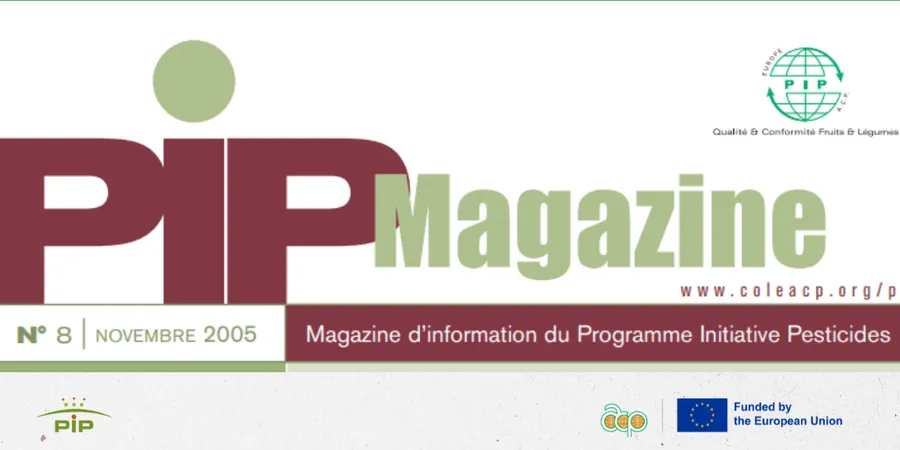
Flashback 2006 : To promote self-learning, PIP developed the "Toolbox". This consists of a computer-based interactive support tool for technical managers to assist them during the implementation of training programmes. It also promotes self-learning fo...
(Source : Pip Magazine n°11, April 2007)“In addition, the Toolbox contains databases covering relevant supporting information. The Toolbox was designed as a CD-ROM, with the aim of providing a solution to the problems that face export companies in accessing important information, while at the same time minimising internet connection problems experienced in most ACP countries. The Toolbox comes in the form of two CD-ROMS. Once they are installed on a computer, they provide access to several sources of information, including: • a "pesticides database", based on European regulations on active substances, national regulations, and authorisations in ACP countries. The database may be searched using the commercial name of the product, the active substance and/or the crop; • crop protocols for the main ACP export crops; • an interactive training area, for self-learning and self-assessment, in the key areas of food safety and traceability; • a glossary, with the definition of the main terms used in the area of food safety. The words are classified in alphabetical order and may also be accessed using a search engine; • a question/answer section; a video library, with approximately twenty video demonstrations of the principal application methods for plant protection products; • a photo library, with over 500 labelled photos relating to cultural practices, crop pests, etc.The toolbox, which is available in French and English, is now fully integrated into the PIP training system. Since last year, computer-assisted training on its use has been provided to trainers (local PIP consultants) and to technical managers from the private and public sector. The Toolbox's interactive training space includes theme-based modules (personal hygiene, safe use of pesticides, crop protection, regulations, etc). Thanks to this training tool, participants can learn at their own pace. Furthermore, users can also test their level of knowledge using the self-assessment system; this includes evaluation by subject and by theme, as well as a final evaluation. Finally, the PIP, by monitoring the self-assessment sessions, can provide a certificate of competence once the training is complete.”The Pesticides Initiative Programme (PIP) was financed by the European Development Fund. The ACP Group of States and the European Commission entrusted responsibility for its implementation to COLEACP (today COLEAD).
 News
News
Shaping the future: Driving gender parity on EU company boards. The directive on gender balance on company boards officially came into force at the end of 2024.
The Gender Balance on Corporate Boards Directive will officially come into force at the end of 2024, marking a landmark step towards achieving gender parity in EU-listed companies.The Directive sets ambitious targets to be met by 30 June 2026: 40% of non-executive director positions and 33% of all board positions must be filled by individuals of the under-represented gender in large or listed companies in the EU. EU Member States had until 28 December 2024 to transpose these requirements into national law. Key measures include :The introduction of transparent, gender-neutral criteria for board appointments.A preference rule that gives priority to equally qualified candidates of the under-represented gender.Mandatory reporting on board composition and barriers to progress towards gender targets.Proportionate sanctions for non-compliance, such as fines or cancellation of board appointments that do not comply.To further promote gender balance, Member States will be required toEstablish oversight bodies to monitor implementation.Publish lists of companies that meet the standards.Ongoing challenges and opportunitiesWhile progress has been made since 2010, gender representation on company boards remains uneven across the EU. The overall average is currently 34% women on boards, with significant differences:Countries with binding quotas report the highest representation (39.6%).Countries with soft measures are making moderate progress (33.8%).Countries with no specific measures lag far behind (17%).Now that the transposition deadline has passed, the European Commission will assess Member States' compliance. Infringement proceedings may be launched in cases of non-compliance.A commitment to fairer governanceThe Directive on gender balance on company boards underlines the EU's firm commitment to promoting gender equality and fostering more inclusive corporate governance. By tackling systemic barriers and setting enforceable targets, this initiative lays the foundations for fairer representation and a more equitable future in corporate governance.As a reminder, in 2023 COLEAD launched its new Gender Strategy and Action Plan, which aims to provide a framework for operationalising COLEAD's vision of gender equality by proposing concrete measures and actions to integrate the gender dimension into its programmes and activities.Read more about COLEAD's gender equality statement of intent
 News
News
" Put pen to paper or keyboard to work!!" Compose a poem or a song in preparation for the United Nations International Year of Women Farmers in 2026. Launch of a unique initiative to highlight women farmers as entrepreneurs for a more sustainable world
A unique initiative is being launched in the run-up to 2026, which the United Nations has declared the International Year of Women Farmers, with the launch by COLEAD and partners of a global poetry and song competition. The event aims to celebrate the essential role of women farmers in food security, rural development and resilience to climate change.A showcase for creativity and recognitionThe competition will be held in a spirit of cultural exchange and international recognition. It invites poets and musicians from around the world to submit original works that highlight the contributions of women in agriculture. Through their stories, songs and verses, participants will tell the inspiring stories of women who are feeding the planet and ensuring sustainable development.Objectives of the competitionRaise awareness: To highlight the importance of women farmers in reducing hunger and promoting sustainable development.Celebrate: Celebrate their dedication and leadership in the sustainable development of global agriculture.Unite: Create a global platform to share experiences, cultures and values around a common vision for a better, fairer world.Official launch date 1 March 2025The competition will be open to everyone, regardless of age or geographical location, from 1 March 2026. Participants can submit their work in one of the following categoriesPoetry: Original free verse or regular verse that celebrates women farmers as entrepreneurs of a sustainable world.Song: Original song lyrics or musical compositions celebrating women farmers as entrepreneurs of a sustainable world.A jury of experts in agriculture, the arts and communications will judge the entries on the basis of originality, relevance and impact.Prizes and recognitionWinners will receive special prizes and the opportunity to showcase their work at international events in 2026. Winning entries will be broadcast on global platforms, giving their authors exceptional visibility.The top 50 poems and songs will be published in a book.Why enter?This competition is a unique opportunity for authors to contribute to a global movement to highlight the essential role of women in agriculture and to promote values of solidarity, diversity and sustainability.There's only one step from agriculture to culture!Let's celebrate the world's women farmers and their invaluable contributions together!To find out more about how to enter and the full rules,stay tuned to our communication channels over the coming days and weeks.
 News
News
Research Trial Demonstration Day at GART
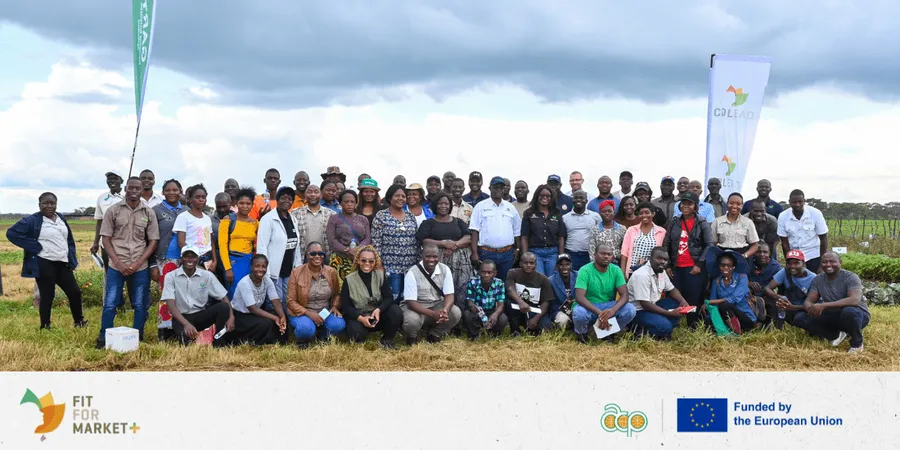
On January 10, 2025, the Golden Valley Agricultural Research Trust (GART) hosted a highly successful trial demonstration day at its research farm in Chisamba, Zambia.The event presented the content and progress of the ongoing COLEAD research trials implemented by GART, which focus on exploring the potential benefits of integrating undervalorized crops (here Cleome and Amaranthus), into the well-established tomato and cabbage production systems. Under the Fit For Market Plus Programme, field trials are set-up in commercial production environments to evaluate the potential integration of these indigenous and naturalised vegetables intercropped with tomato and cabbage to determine whether it can effectively reduce pests and diseases, enhance soil health and nutrient management, and offer potential economic value and an extra revenue stream. Furthermore, the aim is to assess the compatibility and agronomic efficiency of these integrated systems, focusing on nutrient and water use efficiency. By doing this, the objective is to adapt and showcase intercropping practices at the local level, encouraging their adoption within the prevalent traditional tomato and cabbage production systems, which frequently rely on continuous monocropping.This demonstration initiative hosted by GART and organized in collaboration with the Research & Innovation Brokerage Department of COLEAD and Kabuza Consultancy, attracted more than 100 participants, including representatives from government ministries, NGOs, academic institutions, seed companies, and farmers groups from diverse regions. After a presentation of GART and COLEAD’s missions, an overview of the trial objectives and methodologies was presented. A guided field walk provided attendees with an up-close look at the experimental plots, demonstrating intercropping setups, drip irrigation techniques, and pest control practices. Participants engaged actively in discussions, providing valuable feedback during a survey and feedback session.Feedback from the event highlighted the promise of intercropping Cleome and Amaranthus to enhance farmer income and nutrition. Participants raised critical considerations such as spacing, the need for further trials in different regions, and the commercial scalability of the intercropping system. The event also fostered interest among higher education institutions for future collaborations. Jointly reflecting and discussing with diverse stakeholders about the trial objectives, the translation into practice, and other grower concerns are highly crucial for further enhancement and potential future adoption of such alternative production practices. The event concluded with a summary of takeaways and a call for further collaboration in refining and scaling these practices. The overwhelming support from stakeholders underlines the potential of undervalorized vegetables to transform agricultural practices, making them more sustainable and profitable.We thank all participants for their enthusiasm and contributions and look forward to sharing the final results of the trials in the coming months!This activity is supported by the Fit For Market Plus (FFM+) programme, implemented by COLEAD within the Framework of Development Cooperation between the Organisation of African, Caribbean and Pacific States (OACPS) and the European Union. This publication receives financial support from the European Union and the OACPS. The content of this publication is the sole responsibility of COLEAD and can in no way be taken to reflect the views of the European Union or the OACPS.
 News
News
Shared Interest Foundation and COLEAD make progress in linking technical assistance with financial access, to strengthen the sustainability and operational efficiency of cocoa and coffee cooperatives
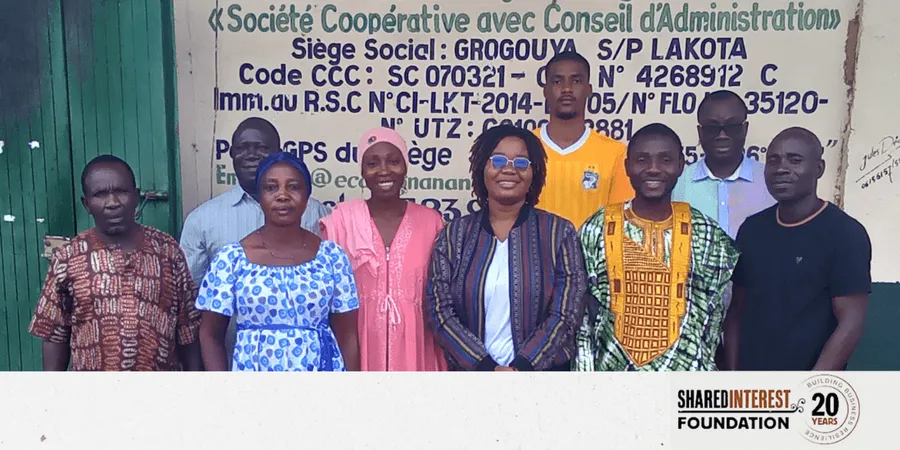
The partnership between COLEAD and the Shared Interest Foundation (SIF) continues to make progress in its mission to strengthen cooperatives in Côte d'Ivoire, Rwanda and Uganda. Launched in February 2024, the project entitled "Design and Management of a Training & Technical Assistance Programme" has successfully implemented three of its four core components.Key achievements Baseline diagnostics: a thorough assessment of the governance and financial frameworks of the eight participating cooperatives has been completed. The diagnostic reports have provided a clear pathway for addressing gaps and improving management practices. Training in cooperative governance and management. Launched in July 2024, this training equips cooperative boards and management teams with the skills needed for effective leadership and operational excellence. Targeted roles include presidents, general secretaries, treasurers and accountants. Business and financial planning. Providing training to improve financial literacy, develop robust business strategies and enhance market readiness. Upcoming focusThe final phase, scheduled for January-February 2025, will prioritise climate change awareness sessions. These sessions will engage extension officers and lead farmers to promote adaptation strategies and build resilience to environmental challenges.Collaborative impactThis initiative underscores COLEAD's key role in linking technical assistance with financial access, thereby strengthening the sustainability and operational efficiency of cooperatives in the cocoa and coffee sectors. By integrating governance reforms, financial planning and climate-smart practices, the project advances the common goals of resilience and sustainability.COLEAD remains committed to fostering stronger frameworks and capacities for cooperatives to navigate dynamic economic and environmental landscapes with confidence. Shared Interest Foundation was established in 2004 as a charitable subsidiary of Shared Interest Society. Its aim is to work with producers who need support to grow and be more sustainable, ultimately alleviating poverty by helping people to trade and earn a living. Founded in 1990, Shared Interest Society brings together a community of more than 12,000 people in the UK with the common goal of investing in a fairer world. They work hand in hand with communities where income opportunities may be limited and where businesses face increasing challenges. Shared Interest works cooperatively, funding Fair Trade enterprises in 45 countries. Most of these organisations support smallholder farmers who produce around a third of the world’s food but often struggle to feed their families.
 News
News
Gender and phytosanitary capacity building in Senegal: indicators aim to ensure that women benefit fully from the opportunities offered by the project
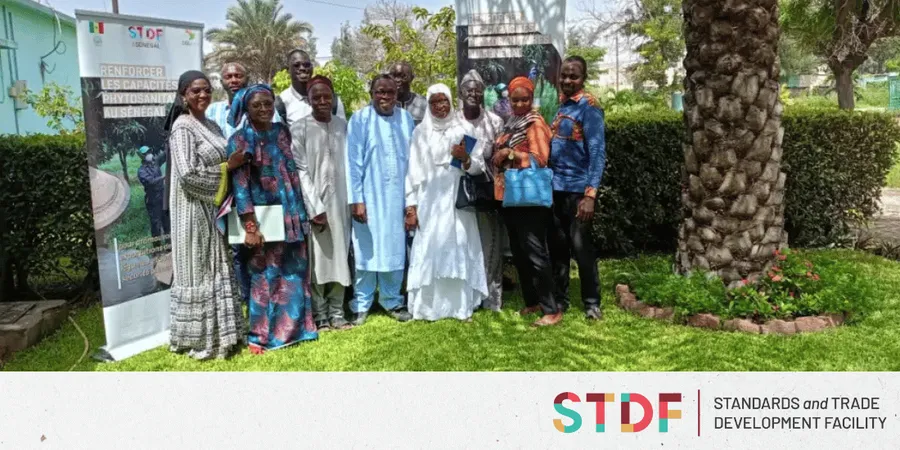
The STDF/PG/946 project "Strengthening phytosanitary capacities to promote exports of horticultural products from Senegal" was officially launched on 6 June. Led by COLEAD in partnership with the Directorate of Plant Protection (DPV) of the Senegalese Ministry of Agriculture, Food Sovereignty and Livestock and funded by the STDF, this three-year project aims to improve and strengthen Senegal's phytosanitary system to bring its practices in line with international standards.In addition to its technical and economic objectives, the project incorporates an ambitious and proactive approach to gender equality, an essential aspect of making agriculture more inclusive and sustainable.Gender mainstreaming: a cross-cutting priorityAn in-depth analysis carried out prior to the project identified several levers for integrating a gender dimension into activities. These results led to the inclusion of specific indicators in the logical framework of the project, including Legal aspect: explicit inclusion of a gender dimension in the revision of phytosanitary legislation to ensure that the policies adopted take into account the specific characteristics and needs of women in the agricultural sector. Skills development: ensuring women’ access to trainings (by inclusion practices) and monitoring data on training participants by gender in order to measure the impact of activities on the empowerment of women and men. Partnerships and awareness-raising: systematic integration of gender awareness-raising in meetings with stakeholders to raise collective awareness and promote equality. These indicators aim to ensure that women, who make up a significant proportion of the agricultural workforce in Senegal, benefit fully from the opportunities offered by the project.As a reminder, the project is based on four main axes: Reviewing the legal framework: drafting inclusive legislation in line with international standards. Strengthening operational capacities: developing the processes, and resources needed for effective phytosanitary management. Training and skills development: Establishing training programmes tailored to the specific needs of the horticultural sector (both public and private). Communication and cooperation: mobilising stakeholders and promoting inter-institutional cooperation with a gender awareness component. Expected impact: fairer and more competitive agricultureBy integrating a gender-sensitive approach, the project aims to make Senegal a regional model for inclusive phytosanitary system. The aim is to ensure that women and men contribute equally to the modernisation of the agricultural sector, while benefiting from the economic and social spin-offs.With this approach, Senegal is not only strengthening its export potential, but is also resolutely moving towards the Sustainable Development Goals (SDGs), in particular gender equality (SDG 5) and the promotion of sustainable and inclusive agriculture (SDGs 2 and 12).These activities were supported by the STDF/PG/946 project. The STDF/PG/946 project is implemented by COLEAD, funded by the STDF. This communication has been produced with the financial support of the STDF. Its contents are the sole responsibility of COLEAD and can under no circumstances be regarded as reflecting the position of the STDF.
 News
News
Regulatory changes for honey exports to the EU: 67 partner countries interested in AGRINFO information
In November 20-24, AGRINFO organised three webinars to present a new guide developed by the programme on the regulations governing the export of honey to the European Union. This outlines a number of recent regulatory changes affecting countries wishing to export honey to the EU.The webinars were organized on a regional basis and included: 25 November: Session in French for African countries 26 November: English session for ACP countries 27 November: Session in English for Asian, Pacific and Central European countries. A session in Spanish for the Caribbean and Latin America is planned for early 2025.The webinars focused on : the EU honey market the five key regulatory areas covering exports of honey to the EU, with details of recent changes and timeframes. Participants were encouraged to subscribe to the AGRINFO to ensure that they remain up-to-date with any future amendments. ParticipationThese three events were well received with 394 registrations from 67 countries and 258 participants. Thirty of these countries are not yet authorised to export honey to the EU and additional information is being provided on request to assist them countries in their compliance procedures.On 25 November there was considerable interest from Côte d'Ivoire, Madagascar, Togo and Morocco, notably on the issue of food safety and the registration of export establishments. On 26 November Egypt, Kenya and South Africa discussed in particular the process for their countries to be added to the list of approved exporters. Finally, on 27 November, several Pacific countries joined the webinar as well as Armenia, Malaysia, the Philippines and Pakistan, Moldova and Ukraine. Questions mainly concerned the new legislation on the use of antibiotics and products made with honey.Follow-up actions Armenia: A dedicated webinar was organised on 4 December with translation into Armenian. Morocco: A meeting was held on 3 December with the Moroccan export agency to make better use of AGRINFO services. Ethiopia: On 13 December, a training session was organised for the Ethiopian authorities on the use of TRACES, in particular for the listing of establishments. The recording of the 26 th November session is available HEREThe Guidance “Exporting Honey to the European Union” is available HEREThe Guidance is also available in French and SpanishThese activities were supported by the AGRINFO programme. The AGRINFO programme is implemented by COLEAD and funded by the European Union (EU). This communication has been produced with the financial support of the EU. Its contents are the sole responsibility of COLEAD and can under no circumstances be regarded as reflecting the position of the EU.