
Cultivating
Sustainable Futures
 News
News
COLEAD's Workshop on Enhancing Plant Protection Skills
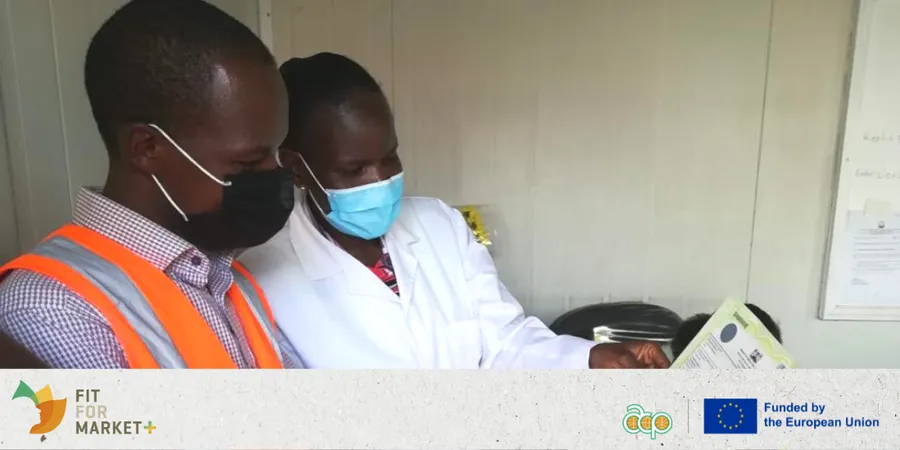
COLEAD recently organised a workshop titled "Sampling and Methods for Detecting Harmful Organisms in Fresh Fruit and Vegetable Exports to the EU." This collaborative effort, facilitated by seasoned experts, successfully enhanced the competencies of 96 phytosanitary inspectors from 26 countries across Africa, the Caribbean, and the Pacific.The workshop included an English session with 50 participants from 15 countries and a French-speaking session with 46 participants from 11 countries. Introducing the nuanced concepts of Risk-Based Sampling (RBS), the workshop equipped inspectors to refine sampling methodologies within their respective organizations. Upholding principles of fairness, technical justification, and consistency, participants are now positioned to make positive contributions to the field of plant protection.Conducted throughout November and December, the workshop served as a period of fruitful collaboration. It provided a platform for collective commitment to championing the cause of the International Plant Protection Convention (IPPC) and the WTO-SPS Agreement.As we reflect on this concluded endeavor, we affirm our dedication to nurturing a resilient and secure global trade in fruits and vegetables. Many thanks to the experts Babacar, Stephen, Emmanuel, and Neakoh for their excellent work.Participant Testimonial:
 News
News
(FAO-COLEAD) E-learning training toolkit on plant health legislation
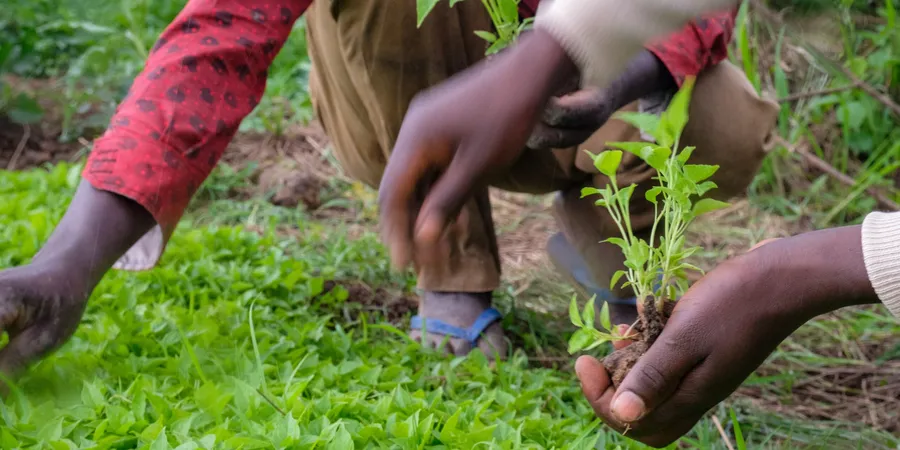
The FAO Strategic Framework 2022-2031 highlights the critical role of strengthened national and international integrated One Health systems in achieving global food security and environmental protection, with a particular emphasis on the prevention, early warning, and management of plant pests and diseases. In alignment with this framework, the project aims to develop a comprehensive training toolkit on plant health legislation. This toolkit is designed to enhance knowledge and awareness of plant health legislation's key components, its vital role in ensuring sustainable agri-food systems, and to bolster outreach efforts on this area.This initiative will involve detailed engagements with key stakeholders, including the International Plant Protection Convention (IPPC) and representatives from regional and national plant protection organizations, to create a training toolkit that draws on the IPPC, international instruments, legislative guidelines, the phytosanitary capacity evaluation (PCE) tool, and FAO's field reports related to technical legal assistance. The toolkit aims to serve not only as a resource for legislative reform but also to build institutional capacity, raise awareness, and maintain political interest in plant health. Would you like more information? You can contact COLEAD's Training or Regulations & Standards departments (network@colead.link, specifying the name of the department in your email).
 News
News
Benin, Belgium, Kenya... Facilitating inter-university partnerships to bring academic research closer to business needs
As part of its ongoing efforts to promote innovation and sustainable development in the agricultural sector, COLEAD regularly strives to play its role as a liaison and catalyst for collaboration between universities and research institutes around the world. The main objective is to facilitate the raising of funds for research, which is essential for the advancement of innovative projects that respond to the sector's sustainability challenges and opportunities.COLEAD's Research & Innovation Brokerage department facilitates South-North partnerships between academic institutions to pool forces not only to fund joint research, but also to develop projects that address issues specific to the horticulture sector. Here are two examples:Valorisation of Pineapple Residues in Benin: in response to the challenges facing the pineapple sector in West Africa, a group of researchers from the University of Abomey Calavi (Benin) and the KU Leuven (Belgium) have submitted a proposal to transform pineapple residues into organic fertilisers and renewable energy sources.Towards sustainable 'green gold' in Kenya: faced with the opportunities offered by the avocado sector in East Africa, researchers from the University of Eldoret (Kenya) and KU Leuven (Belgium) have drawn up a joint proposal for sustainable avocado cultivation. The aim of this multi-partner project is to exploit the full potential of the avocado, nicknamed "green gold", while at the same time offering greener, more prosperous farming.Increasing impact: one of the raisons d'être of COLEAD's partnerships and alliancesCOLEAD's active involvement in these types of research projects and partnerships demonstrates its commitment to:Orientate university research towards the concrete needs of the partners and beneficiaries of the programmes implemented by COLEAD.Establish a link between business demands and applied research.Involve the private sector in the use of university discoveries.Stay at the forefront of emerging technologies to raise awareness among the various stakeholders.Enhance and promote innovative pilot projects.This activity is supported by the Fit For Market Plus (FFM+) programme, implemented by COLEAD within the Framework of Development Cooperation between the Organisation of African, Caribbean and Pacific States (OACPS) and the European Union. This publication receives financial support from the European Union and the OACPS. The content of this publication is the sole responsibility of COLEAD and can in no way be taken to reflect the views of the European Union or the OACPS.© photo: Cytonn Photography
 News
News
First Feedback from Fruit Logistica 2024: Sustainable Agriculture for All!
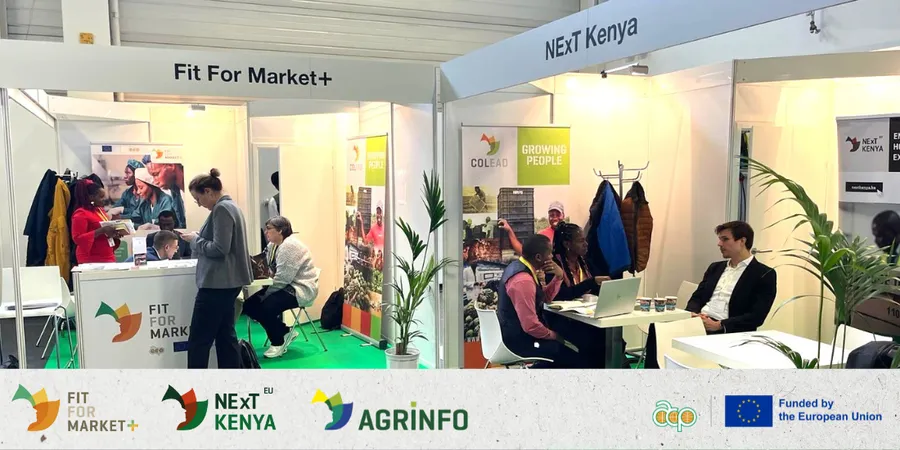
As Fruit Logistica 2024 has just concluded, COLEAD reflects on some of the fair's highlights, considering its mission to serve the Sustainable Development Goals (SDGs) through its programmes, funded by donors such the EU, OACPS, AFD, ENABEL, and STDF. COLEAD was present as an exhibitor through its FFM+, NExT Kenya, and AGRINFO programmes, facilitating numerous meetings with existing and potential partner beneficiaries. Among these operational and useful appointments, some particularly resonated with the association's vision and mission.
 News
News
AGRINFO–South Africa Webinar on EU agri-food regulations
COLEAD’s AGRINFO programme collaborated with the South African Embassy in Brussels and the Department of Agriculture, Forestry and Fisheries to host an informative webinar on “Supporting your monitoring of & compliance with EU law”. The event on 24 January, which focused on the EU-funded agrinfo.eu website and pesticide-related EU legislation, saw participation from over 40 competent authorities, regulatory affairs, and agri-food associations in South Africa.Morag Webb and Chris Downes of COLEAD emphasised the critical role of AGRINFO in offering clear and timely information to prevent trade disruptions. They explained the EU’s process of reviewing and adjusting maximum residue limits (MRLs) due to increasing pesticide levels in food products, underlining the importance for non-EU countries of understanding these new regulations and their potential impacts.Mr Mpho Sekgala, Acting Director, Food Import and Export Standards, presented the South African Agricultural Biosecurity System. He stressed the significance of meeting market standards, especially for the EU market, and the role of MRLs in ensuring consumer health. And he highlighted the responsibilities of exporters and producers in maintaining chemical usage records and adhering to export protocols.This webinar was organised as part of the AGRINFO programme, implemented by COLEAD and funded by the European Union (EU).
 News
News
News from Sri Lanka: AGRINFO Webinar Highlights and Insights
On 23 January COLEAD’s AGRINFO programme held an introductory webinar for stakeholders and competent authorities in Sri Lanka. The webinar was organised and hosted by the Sri Lanka Export Development Board (EDB). The event brought together over 90 participants from diverse sectors including tea, coconut, spices, organic production, and packaging.Keynote Speakers & Insights: Dr Kingsley Bernard, CEO of EDB, extended a warm welcome to all attendees. Morag Webb and Chris Downes of COLEAD demonstrated the EU-funded agrinfo.eu website and its search functions. They also gave a general overview of the EU Green Deal initiatives and their potential impacts on countries exporting agri-food commodities to the EU.Impacts of Changing Legislation: policymakers need to be informed about the implications of new legislation on different stakeholders, and AGRINFO plays a key role in facilitating access to clear information to avert trade disruptions. Discussions covered the EU’s process of revising maximum residue limits (MRLs) in response to rising pesticide levels in food products, underscoring the need for non-EU countries to grasp these new regulations and their sector-specific impacts.Active Participation & Future Collaborations: participants in the webinar represented a wide array of private sector companies, exporters, and agri-food organisations (notably tea, coconut, spices, and organic producers), and also from the packaging sector. Topics such as the EU’s organic regulation, review of packaging rules, and new deforestation regulation were of particular interest. Closing remarks by Mr Janak Badugama (EDB Director – Export Agriculture) underlined the significance of these topics for Sri Lanka’s agri-food export sector and the prospects for future collaborations.Looking Ahead The success of this webinar has sparked interest from the Sri Lankan Ministry of Plantation and National Organic Control Unit for more events of this nature, benefiting growers and exporters of affected products.This webinar was organised as part of the AGRINFO programme, implemented by COLEAD and funded by the European Union (EU).
 News
News
Webinar on European Regulations for Madagascar
COLEAD recently organised a technical webinar at the request of MINAE (Ministry of Agriculture and Livestock) in collaboration with the Embassy of Madagascar in Brussels. The aim was to shed light on European regulations and alignment procedures for Madagascan companies.The main topics covered were:the process for adopting new European regulationshow to participate in public consultationsthe impacts on Madagascar’s agri-food sectorscoordinating stakeholders for effective public–private dialoguemonitoring tools.The webinar attracted more than 80 participants from a wide range of professional backgrounds, including representatives of companies, competent authorities, support structures, international projects and institutions, and civil society.We would like to thank everyone who took part in this informative session. Your participation and your questions contributed to a fruitful discussion and a valuable sharing of knowledge.This webinar was organised as part of the AGRINFO programme, implemented by COLEAD and funded by the European Union (EU).
 News
News
FLASHBACK (2004)
March 2004: Celebrating the first results of the PIP programme in developing expertise in Africa. Twenty years ago, COLEAD's PIP programme achieved its first successes in capacity building in ACP countries, providing economically viable solutions for companies producing and exporting horticultural products. This extract from the March 2004 PIP Magazine highlights "Strengthening the capacities of the horticultural sector".Improving the quality of services from suppliers to producers and exportersACP producer-exporter countries have a wealth of expertise and local knowledge in various fields. However, there is often a lack of adequately informed and trained structures. While it is crucial to help companies master production and export processes, it is equally important to improve the quality of support and services they receive from their enabling environment.PIP's capacity-building efforts with various private and public partners aim to enable these sectors to find economically viable local solutions to their challenges and to improve the ACP horticultural sector's ability to anticipate future trends. Based on the needs identified by PIP beneficiaries, tailor-made support programmes will be developed to improve the quality of services provided by service providers to ACP producers and exporters. In this context, and in line with the PIP approach, the focus is on the private sector.In Kenya, for example, PIP is supporting two extension structures to train trainers and improve integrated pest management techniques.(...) In Senegal, PIP support has focused on upgrading the skills of local extension agents, who have become the programme's main training agents for the entire sub-region. "Some of these partners, whether private or public, ...The public sector as a key partner for the private sectorThe public sector is also indispensable partner. Once the socio-economic impact of the horticultural export sector in a country becomes significant, the public sector can become a deeply involved partner with the potential to strengthen overall capacities. However, it's not just a question of the public sector being dominant in a country's horticultural sector; the private sector must also recognise the support needs identified by public partners. In Kenya, for example, the private sector led the PIP to support the Kenyan Pest Control Products Board (PCPB), which is responsible for registering and approving pesticides. In Senegal, the private sector recognised the value of the Plant Protection Directorate's (DPV) support to smallholder farmers. Similarly, in Cameroon, small pineapple growers are advised by technical agents from the state-appointed CETAM (Centre d'Encadrement Technique Ananas du Moungo).More generally, when capacity building involves public support structures such as approval services, these entities often face challenges in mastering procedures and disseminating information. PIP experts draw inspiration from practices within the European Union. For example, a key action might be to establish local pesticide databases, improve communication systems and, most importantly, train staff. The PIP offers short-term training courses in Europe for such staff. Where capacity building is targeted at rural support structures (e.g. DPV in Senegal or RADA - Rural Agricultural Development Authority - in Jamaica), which provide systematic training for small-scale producers, PIP focuses on helping them to better master the dissemination of food safety control techniques. It's worth noting that these bodies can benefit from PIP's "training the trainers" programme (see PIP Magazine No. 2 and INFO PIP No. 21).Seeking synergies with other donors and programmesFinally, PIP actively seeks synergies with other capacity-building support mechanisms established by various donors. For example, in Ghana, where the World Bank has launched a comprehensive food security programme, PIP works closely with the project managers to develop joint activities, including the Ghana Task Force. This collaboration aims to integrate the objectives of a "Food safety cluster" proposed by the World Bank into the framework of the PIP Task Force, thereby avoiding any duplication.Source: PIP Magazine No. 3*The PIP programme, funded by the European Union at the request of the ACP Group of States, was implemented by COLEAD during its first phase from 2001 to 2007.
 News
News
Access to finance for agripreneurs: getting back to basics
Launch of our first webinar for information and training. Access to finance is widely recognised as a key solution for rapid and sustainable development of agriculture in sub-Saharan Africa. The main limiting factors are the lack of suitable finance and the capacity of entrepreneurs to prepare a suitable application. COLEAD is stepping up its involvement in this area through programmes such as Fit For Market +.Our approach focuses on empowering agripreneurs to develop their projects by demystifying access to finance. How do we do this? By helping them understand what access to finance means, when to access it, how and why.Access to finance is a crucial stage in business development. Experience shows that it is often a source of considerable anxiety and misunderstanding for small- and medium-sized agribusinesses in vulnerable but high-potential countries such as those in Africa.From the applications for support we receive, it is clear that potential partner beneficiaries often lack a basic understanding of how to access finance. They need answers to simple questions: Do I need funding? What does it take to get funding? What are the different sources of funding?In this context and for these reasons, COLEAD recently launched its first webinar on the basics of accessing finance for horticultural and agricultural projects. This initiative aims to inform and train agripreneurs in their search for external funding.130 people attended the webinar on 16 January and nearly 400 registered for the follow-up, which included a recording of the session and an information document.In 60 minutes, the webinar provided accessible, practical information to help small businesses with limited financial knowledge to better understand:Access to finance for an agricultural project: what it is and what it isn't.Reasons for accessing finance.Project maturity and investment readiness.Basic requirements for accessing finance.Common sources of finance and eligibility criteria.The process of accessing finance + Do's and Don'ts.Common challenges.Success stories.The need for information, awareness and training in this area is immense, as are the entrepreneurial opportunities, particularly for investment in fresh produce processing projects for local and regional markets.Therefore, this first webinar will be followed by other similar initiatives, including information and awareness sessions. These will be complementary and preliminary to any possible support (training, advisory support, preparation of applications, etc.).Finally, it is important to note that COLEAD does not directly provide funding through programmes such as FFM+. However, if you are a company (or association) in the horticultural sector and you are struggling to obtain external funding for your development project, you can apply for our support. We will consider your application and see how we can help you.This activity is supported by the Fit For Market Plus (FFM+) programme, implemented by COLEAD within the Framework of Development Cooperation between the Organisation of African, Caribbean and Pacific States (OACPS) and the European Union. This publication receives financial support from the European Union and the OACPS. The content of this publication is the sole responsibility of COLEAD and can in no way be taken to reflect the views of the European Union or the OACPS.
 News
News
Workshop on strengthening accounting management for horticultural enterprises in Casamance
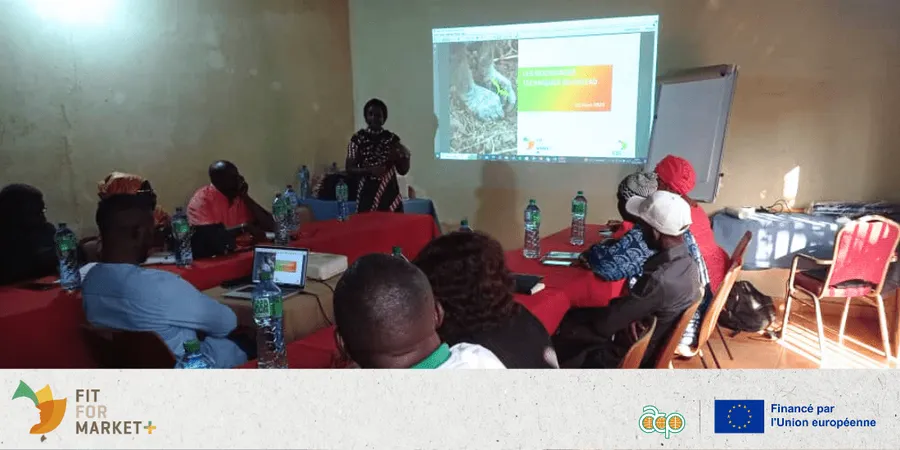
The FFM+ Programme recently organized an intensive four-day training in Ziguinchor, from November 28th to December 1st, 2023, hosted at the BAZINESS LAND incubator. This session aimed to enhance the skills of managers of horticultural enterprises, specializing in the processing and marketing of local fruits and vegetables. Fourteen enterprise managers benefited from this reinforcement, focusing on administrative and accounting management, planning, and procedure implementation.The training covered basic accounting, including the preparation of balance sheets and income statements, as well as recording transactions, journal entries, and financial statement production. Participants engaged in practical exercises such as developing strategic plans and business plans, understanding the importance of financial information, reflecting on asset and liability aspects, budgeting, calculating results, and creating financial statements.This training aims to improve administrative and accounting management to foster better management structure in these enterprises, the majority of which are led by women, and to encourage greater employee involvement.This activity is supported by the Fit For Market Plus (FFM+) programme, implemented by COLEAD within the Framework of Development Cooperation between the Organisation of African, Caribbean and Pacific States (OACPS) and the European Union. This publication receives financial support from the European Union and the OACPS. The content of this publication is the sole responsibility of COLEAD and can in no way be taken to reflect the views of the European Union or the OACPS.
 News
News
Africa and the Pacific: concrete, inspiring partnerships
PACIFIC (PIFON-COLEAD): "Strengthening the resilience of the agri-food sector in the Pacific Islands" (a new series) The Pacific Islands Farmers' Organisations Network (PIFON) and COLEAD are initiating a series of roundtables on "Building Resilience: Strengthening the Agro-processing Sector in the Pacific Islands". These roundtables aim to highlight inspiring companies in the Pacific region that have excelled in value addition. Join the first webinar on Wednesday 28 February 2024 from 8.00 to 9.30am FJT (UTC+12). To register, please use the link below:I would like to register for the sessionAgriculture is an important source of livelihoods and income for the Pacific Islands, mainly through exports. Adding value to primary agricultural products opens up new opportunities in domestic markets, increases income for those in the value chain and creates employment. It also increases shelf-life, improves nutrition and food security, and reduces post-harvest losses, food waste and dependence on food imports.This new series of roundtables will focus on value addition to traditional Pacific staple crops such as breadfruit, taro, cassava and sweet potato, as well as national value chains. It will showcase different agri-food processing initiatives, ranging from small-scale cottage industries to larger commercial exports, and provide a platform for sharing knowledge, experiences and best practices in the private sector. Insights from scientific, technical, policy and financial partners will also be included.Further details of the first Roundtable, including the programme, will be announced shortly. This series is the first collaboration between PIFON and COLEAD. Stay tuned for future activities via the organisers' websites and social media channels.
 News
News
Digital technology and strategic partnerships for vocational training in sustainable agriculture
Highlighting the IPPC (FAO) COLEAD collaboration in SPS e-learning.The International Plant Protection Convention (IPPC) is a multilateral treaty for international cooperation in plant protection. The Convention has 182 signatories. Countries wishing to become contracting parties to the IPPC should send their instruments of accession to the Director-General of the FAO.The IPPC aims to ensure coordinated and effective action to prevent and control the introduction and spread of organisms harmful to plants and plant products. This is achieved through the development and implementation of phytosanitary policies and activities. At a national level, these activities are the responsibility of the National Plant Protection Organisation (NPPO), which is the official service established by a government to carry out the functions specified by the IPPC. While the NPPO is responsible for phytosanitary actions, it cannot operate in isolation and must engage with other government agencies, the private sector and civil society to protect plant health.On 19 November 2021, a Memorandum of Understanding was signed between COLEAD and the IPPC Secretariat, in the context of the implementation of the FFM SPS programme. This new partnership has strengthened collaborative actions in the field of plant health to minimise the impact of plant pests and facilitate trade, development and economic growth. Below is a non-exhaustive summary of the joint actions carried out over the last 3 years:Members of the COLEAD technical team have been selected as members of 3 working groups coordinated by the IPPC Secretariat. These are the IPPC Working Group to develop e-learning materials on monitoring and reporting requirements, the IPPC Working Group to develop e-learning materials on inspection and the Capacity Building Committee team on Fusarium oxysporum sp. cubense Tropical Race 4 (TR4).Since then, these groups have been working on the development of training and guidance documents covering inspection, pest surveillance and Fusarium head blight (TR4) in collaboration with the FAO e-Learning Academy. For example, online courses on PRA (Pest Risk Analysis) and export certification have been developed as part of the FAO's support for the COMESA" trade facilitation programme and support the implementation of the International Standard for Phytosanitary Measures (ISPM).NPPOs from ACP countries are supported each year as part of their participation in the IPPC's Commission on Phytosanitary Measures (CMP). In 2023 the following NPPOs were involved: Burkina Faso; Ethiopia; Ghana; Kenya; Gambia; Togo; Madagascar; Nigeria.COLEAD has translated several IPPC guides into French to make them more accessible worldwide, particularly for French-speaking West African countries. The topics covered are : The situation of a harmful organismThe creation of a National Plant Protection OrganisationHow a National Plant Protection Organisation worksVerification of importsExport certificationCommunication on plant health risksManaging stakeholder relationsPlant health diagnosis servicesMonitoring harmful organismsDrawing up contingency plans in the event of outbreaks of quarantine pests (new)Regulation of wood packaging materials (new)COLEAD and the IPPC also collaborate closely and regularly on the co-development of e-learning and the organisation of international webinars. Here are some examples: Pest risk analysis (246 participants, 74 countries)Export certification (110 participants, 22 countries)Phytosanitary inspection (Eng; Sp): (228 participants; 65 countries)With regard more specifically to digital training, we would like to pay tribute to the ongoing efforts of our colleagues: David SODADE in leading and improving online training courses, Morag WEBB and Marie Hélène KESTEMONT who received their certificate of appreciation from the IPPC, for their contribution in terms of guidance and online training on respectively the prevention, preparation and response to fusarium head blight of tropical race 4 (TR4) of banana, plant health inspection/Surveillance and reporting obligations.Plant health stands at the intersection of several key global challenges. It is crucial for enabling market access and thus plays a significant role in the agricultural economy and worldwide food security. It is also closely tied to biodiversity preservation, vital for sustaining ecosystem balance and resilience against environmental disruptions. In the era of climate change, managing plant health becomes even more critical. It helps in combating climate change impacts by ensuring the well-being of forests and crops and adjusting to emerging threats in a shifting climate. Plant health is therefore a cornerstone of a sustainable future, intertwining economic, ecological, and natural resource management aspects in a global and integrated perspective.This activity is supported by the Fit For Market Plus (FFM+) programme, implemented by COLEAD within the Framework of Development Cooperation between the Organisation of African, Caribbean and Pacific States (OACPS) and the European Union. This publication receives financial support from the European Union and the OACPS. The content of this publication is the sole responsibility of COLEAD and can in no way be taken to reflect the views of the European Union or the OACPS.