
Cultivating
Sustainable Futures
 News
News
Companies promoting the circular economy and reducing food waste
On 28 November 2022, during the 11th Innovations Session organised by the PAFO and COLEACP, inspiring African companies demonstrated how their businesses based on the circular economy contribute to reducing food loss and waste (agenda ; speakers' biodata). The online session was attended by over 170 participants from Africa, the Caribbean region and Europe.The recording of the session is available on COLEACP’s YouTube channel.The growing global population requires increased food production levels to address food and nutrition security while reducing negative environmental impacts such as soil and water degradation, greenhouse gas emissions and loss of biodiversity. During the Innovations Session, six entrepreneurs explained the critical contribution of the circular economy to feeding the population – without destroying the planet and its resources.Rose Noah, CEO of Ghanaian biotech firm West African Feeds Ltd., described how the company uses black soldier fly larvae to valorise food waste. Through this process, the company converts bio-waste into valuable inputs for Africa’s livestock industry, including organic fertiliser, insect-based animal feed, animal nutrition, compost and hygiene products.Fatou Titine Cissoko, founder and manager, explained how Guinea-based company Enterprise Fatou & Kadija reduces post-harvest losses by producing 100% natural, preservative-free dried pineapples, dried mangoes and natural juices that are sold on both national and international markets under the brand Jedengui.Co-founder Amogelang Shaun Masi presented Viva Organica, a company in Botswana that transforms kitchen waste and animal manure into highly nutritious, 100% organic natural farming inputs rich in nutrients and pro-biotics. The products improve soil moisture and overall soil health, enhancing the climate resilience of farming communities, and have reduced the cost of fertiliser by 25%.Founded in 2019 by Mark Musinguzi, Hya Bioplastics upcycles local food waste from a range of flexible plant fibres to create 100% home compostable products including fruit and vegetable trays, takeaway food boxes and disposable plates. The company provides a cost competitive alternative to plastics, while also creating additional revenue streams for smallholder farmers in Uganda who are able to profit from their fibre waste.Oscar Ekponimo, founder of Chowberry, a technology-driven social business that reduces food waste and improves access to food in Nigeria, described how the company creates a secondary market for food at risk of waste or expiration.Lastly, Andrew McNaught, founder and lead consultant, showed how Zambia-based company Tandem Circular Consulting works with the private sector to develop circular projects, improve resource utilisation and operating efficiencies and provide sustainable business solutions.This series is supported by the Fit For Market SPS programme, implemented by COLEACP within the Framework of Development Cooperation between the Organisation of African, Caribbean and Pacific States (OACPS) and the European Union.
 News
News
FFM+ receives 445 applications for support
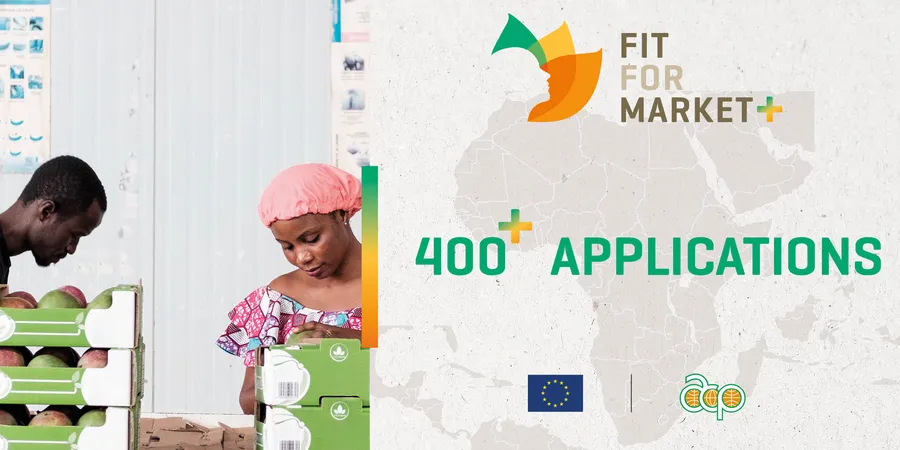
By mid-December 2022, the FFM+ programme had received 445 applications for support (AFS): The largest proportion (37%) of AFS were received from Western Africa, followed by Southern Africa (23%), Eastern Africa (22%) and Central Africa (13%). Organisations in Malawi submitted the most AFS (66), followed by Nigeria (44), Cameroon (30), and Ghana and Kenya (both 29). Across all countries, a majority (56%) of AFS have been received from horticultural companies, with service providers (16%) and smallholder support structures (15%) also submitting a significant number of AFS. Note that the AFS submitted by Kenyan structures will be analysed under the scope of the NExT Kenya programme.Fit For Market+ (FFM+) provides support to the horticultural sector in member countries of the Organisation of African, Caribbean and Pacific States (OACPS). It aims to maintain and improve the capacity of smallholders, farmer groups and horticultural MSMEs to access domestic, regional and international markets through the progressive sustainable intensification of the horticultural sector, while adapting to changes in their operating environment due to COVID-19 and climate change.This activity is supported by the Fit For Market+ programme, implemented by COLEACP within the Framework of Development Cooperation between the Organisation of African, Caribbean and Pacific States (OACPS) and the European Union.
 News
News
COLEACP’s Sustainability Self-Assessment System (SAS)
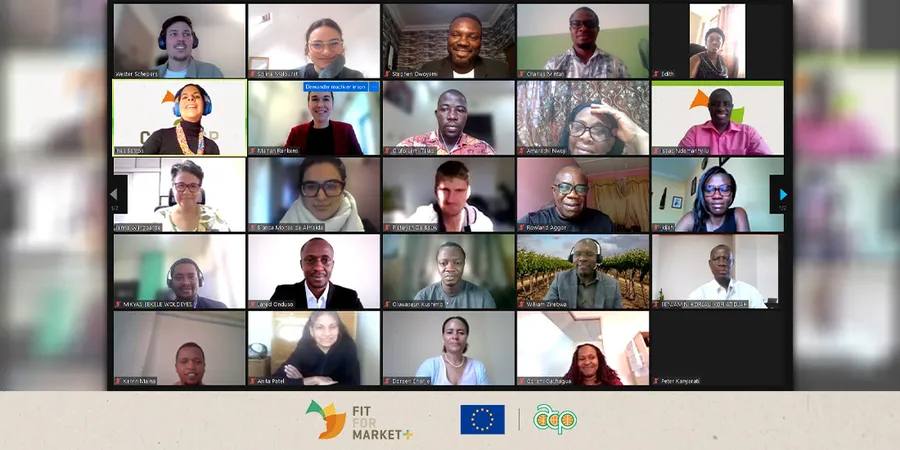
In the framework of the Fit for Market Plus (FFM+) programme, COLEACP organised two training sessions on the new version of the COLEACP Sustainability Self-Assessment System (SAS). The sessions were part of a SAS training programme that will include completion of a self-study course, peer exchanges and mentoring/coaching sessions.The two sessions took place on the 1 December 2022 in English (AM) and in French (PM). Participants included the COLEACP technical assistance team and COLEACP experts – those with experience in previous SAS and those who wanted to reinforce their capacities and become SAS experts.SAS is an online business management tool for fruit and vegetable producers and suppliers based in the ACP region focused on the sustainability pillars of people, profit and planet. SAS is designed to promote continuous improvement in the application and monitoring of good practice by producers and MSMEs in ACP-EU horticultural value chains.The role of a SAS expert is to accompany an MSME partner-beneficiary of a COLEACP programme through the SAS process – from intake meeting to guidance in filling the different SAS sections, through to final reporting.The English session was attended by 22 experts from Sierra Leone, Kenya, Ghana, Malawi, Uganda, Zambia, Rwanda, Tanzania, Suriname, Nigeria, Zimbabwe, and Ethiopia. The French session was attended by 15 experts from Benin, Madagascar, Togo, Mali, Senegal, Cameroon, Côte d'Ivoire and Burkina Faso.The sessions included a presentation about the SAS tool and its relevance in the context of FFM+, alongside the importance of it as a self-assessment component for MSMEs in the horticultural sector. Furthermore, the experts had the opportunity to make contact with the SAS platform (version 2) and its functions through a guided demonstration by one of COLEACP’s SAS team members. Experts that were already familiar with tool had the opportunity to share their experiences and challenges and provide feedback.This activity is supported by the Fit For Market Plus programme, implemented by COLEACP within the Framework of Development Cooperation between the Organisation of African, Caribbean and Pacific States (OACPS) and the European Union.
 News
News
Launch of FFM+ in Togo
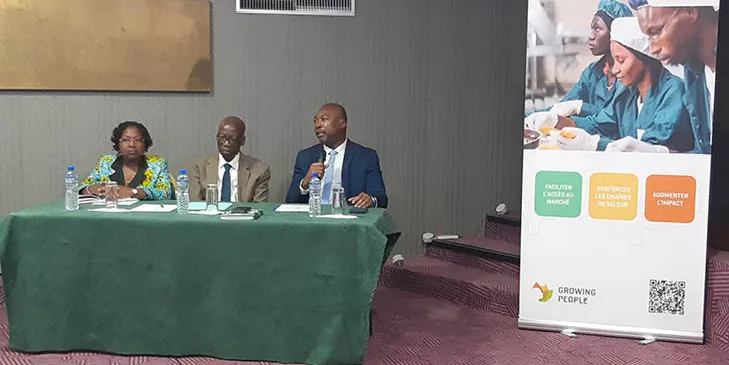
On 20 October 2022, in collaboration with the Ministry of Agriculture, Livestock and Rural Development of Togo, COLEACP organized the closing workshop of the "Project to strengthen the phytosanitary control and certification system for fruit and vegetable sector of Togo – STDF/PG/375” funded by the Standards and Trade Development Facility (STDF). The same event hosted the launch of the new FFM+ programme in Togo.The STDF/PG/375 project ran for 4 years, from 2018 to 2022. The project made it possible to strengthen the framework and capacities of the services involved in inspection and control, public and private extension services, professional organisations and private operators. As a result of this work, fruits and vegetables from Togo should now have better access to markets (local, regional and international) with a notable reduction in quarantine pests.The FFM+ programme, which is a continuation of the FFM and FFM SPS programs, will consolidate the achievements made during the implementation of the STDF/PG/375 project and further strengthen Togo's horticultural sectors.FFM+ is a 5-year, €25 million programme, financed by the EU and the Organisation of African, Caribbean and Pacific States (OACPS), that aims to mitigate the impacts of the COVID-19 pandemic by strengthening the sustainability of the African, Caribbean and Pacific horticultural sector. It aims to maintain and improve the capacity of smallholders, farmer groups and horticultural MSMEs to access domestic, regional and international markets through the progressive sustainable intensification of the horticultural sector, while adapting to changes in their operating environment due to COVID-19 and climate change.This activity is supported by the Fit For Market+ programme, implemented by COLEACP within the Framework of Development Cooperation between the Organisation of African, Caribbean and Pacific States (OACPS) and the European Union.
 News
News
Supporting the agroecological transition of Benin’s pineapple sector
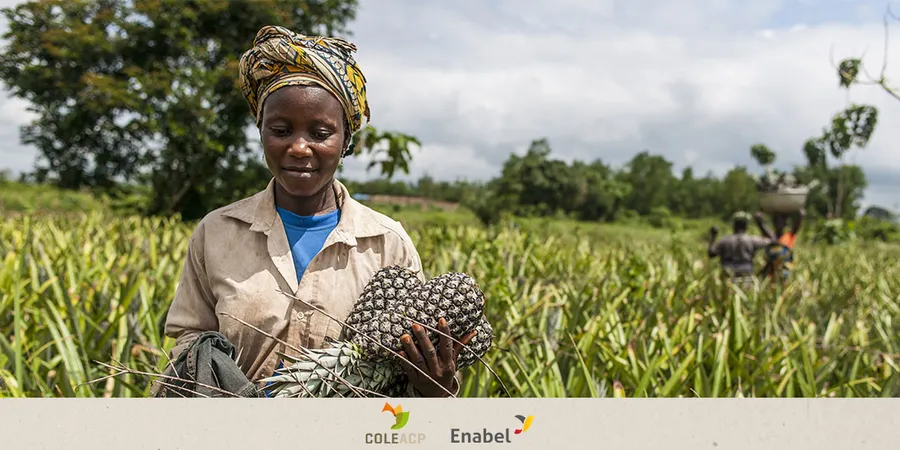
As part of the project “Support to the agroecological transition of the pineapple sector in Benin”, COLEACP, with the help of a Beninese expert, is evaluating the performance of more than 400 producers and 15 processors with the goal of developing a personalised transition.Specifically, this project aims to carry out a three-step intervention: Prepare and conduct a training session on the theme "Assessment, reduction and recovery of waste from the pineapple sector: identifying and assessing the quantity of waste" Support companies in collecting data on waste (in the field and at the processing unit level) Compile, analyse and share the results. To this end, COLEACP has developed a tool that enables processors to assess the amount of waste produced and, consequently, to improve processing efficiency.In the first stage of the project, company-specific training is planned, which will cover waste recovery and support in carrying out a preliminary assessment of the volumes and types of co-products/waste generated at the production level (via a sample of producers to be defined) and at the level of the processing site.This is a project-based training: it aims to promote the ideas, knowledge and skills acquired during the training through direct application within the participants' structures. After the introductory phase, the expert will coach each company in the follow-up and collection of data over a period of 3–5 months.At the end of the training, participants will be able to: Understand the benefits of reducing and recovering pineapple waste Identify the types of pineapple waste generated throughout the production chain and the causes and critical stages Assess the amount of waste generated throughout the production chain using record sheets. The data collected will be key to enable the technical and financial evaluation of the different waste reduction/recovery options, and to identify the most suitable technology/solution for each company.This activity was organised within the framework of the Support to the agroecological transition of the pineapple sector in Benin, financed by ENABEL through its Development of Entrepreneurship in Agricultural Sectors Programme (DEFIA) and implemented by COLEACP.
 News
News
Suriname strengthens SPS systems
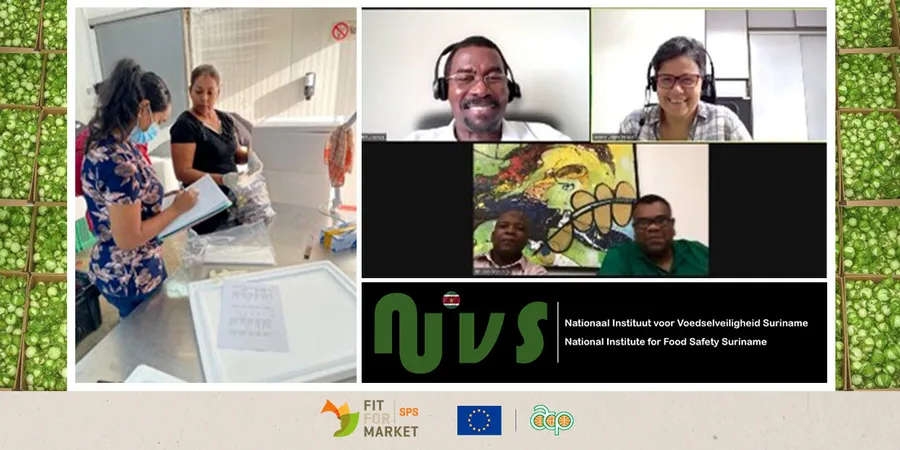
Following a one-day workshop in Paramaribo on COLEACP’s new Rapid SPS Assessment Tool (R-SAT) in May 2022, COLEACP is supporting via the FFM SPS programme, two key interventions designed to strengthen the national SPS systems of Suriname: Review and update the legislation of Suriname for consistency with the International Plant Protection Convention (IPPC) and provisions for establishing a Parastatal NPPO An expert review of the current plant health law of Suriname has begun, to ensure consistency with the IPPC legislation and identify necessary modifications to the technical content. Next, the legal description and management structure of the National Plant Protection Organization (NPPO) will be reviewed, including consideration of future financing options required for operation. To achieve this, a COLEACP expert is holding meetings with the main stakeholders to build consensus. Draft the New Food Law of Suriname Suriname’s current Food Law dates back to 1911. The COLEACP expert will review the relevant national legislation, act in an advisory capacity to the management of the National Institute for Food Safety (NIVS) on all aspects of the food law and its governance structure and study the policy documents underpinning the reform of the food law, to contribute towards drafting the new food law. As with the first initiative, this will include extensive stakeholder consultations. R-SAT provides a practical, step-by-step guide to assist ACP countries in their assessment of national SPS systems to strengthen them in line with international standards and regulations. R-SAT is designed to be complementary to tools such as the FAO and WHO guidelines, allowing rapid preliminary assessment and generating information that can be fed into these more in-depth evaluations as necessary.
 News
News
DeSIRA-LIFT work on Climate-Smart Agriculture presented at COP27
COLEACP is the lead of the second service area (SA2) of the European Union’s DeSIRA-LIFT programme, which supports the Development of Smart Innovation through Research in Agriculture contributing to sustainable agriculture and food systems. Throughout the project implementation, COLEACP has developed strong relationships with the five partner organisations of CAADP-XP4, especially FARA, to support their work on agricultural innovation systems, including activities related to Climate-Smart Agriculture (CSA). To this end, DeSIRA-LIFT SA2 selected Dr Genevesi Ogiogio, Green Economic Advisor to the African Union, to produce two reports on CSA: (i) a 10-year Synthesis Report of African engagement at on COPs; (ii) a Continental Africa Climate Smart Agriculture Implementation Plan (CSAIP) 2022-2032.Both reports are inputs for the African Union Green Recovery Action Plan (AU GRAP) 2021–2027 and the African Union Climate Change and Resilient Development Strategy and Action Plan 2022–2032. The GRAP was adopted by the African Union (AU) Assembly in February 2022 as a continental framework for coordinating interventions across five pillars within the recovery from the COVID-19 pandemic and for positioning African economies on a green and just transition pathway.During COP27, on 14 November 2022, the AU Commission organised a high-level ministerial roundtable to promote and present the AU GRAP initiative among African countries, stakeholders and development partners, as well as mobilise further commitment, support and partnerships. FARA Executive Director, Dr Yemi Akinbamijo, attended the discussion and presented the two CSA reports commissioned by DeSIRA-LIFT to the attending Ministers, Heads of leading regional and continental organisations (including the Presidents of the Pan African Parliament and of the African Development Bank), international development managers and finance partners. European Commission Director, Ms Carla Montesi (Directorate-General for International Partnerships, DG INTPA) represented the Commission at the roundtable and expressed strong commitment to support the GRAP.The discussions initiated at the roundtable will be continued in early 2023 with a conference about the implementation the AU GRAP at country level, along the publication of both the Decadal Durban+10 Synthesis Report on COPs 17-26 and the Continental Africa Climate Smart Agriculture Implementation Plan (CSAIP) 2022-2032.Upcoming work led by DeSIRA-LIFT SA2 also includes (i) the launch of the Malabo+10 series to support CAADP-XP4 with their contributions to Malabo Declaration commitments sharing knowledge, trends, innovations and lessons learned on key-topics (circular economy, sustainable production, intra-African trade, investment in research); (ii) the identification and promotion of drivers of innovations developed by women and youth in collaboration with the CAADP-XPA Capacity Development Group and TAP/FAO.More information on the DeSIRA LIFT website: https://www.desiralift.org/
 News
News
NExT Kenya reviews food safety culture
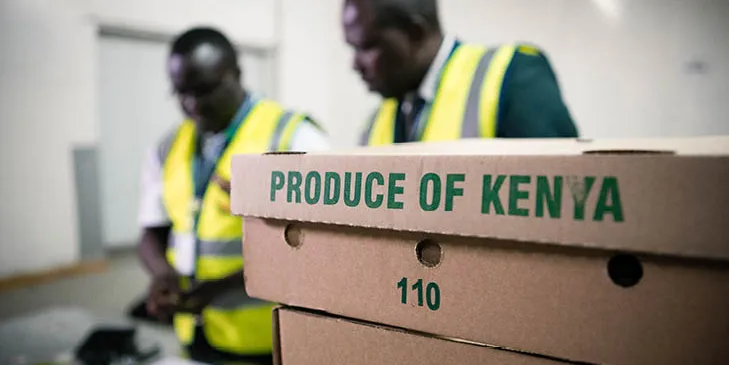
In October, the NExT Kenya programme worked with AAA Growers, a Kenyan exporter of fresh fruits and vegetables, to facilitate an expert review of the food safety culture and assess upcoming food safety requirements.AAA Growers hopes to implement a pro-active approach to better understand food fraud, food defence and food safety culture. This will be done through specialist training on each topic and reviewing and updating the current plans and risks/vulnerabilities associated with primary production and post-harvest handling of fresh produce.All three topics covered in this project are relatively new to the food safety industry but have receiving increasing attention in recent years due to a number of high-profile cases such as the horsemeat scandal in 2013 and the baby milk formula scandal of 2008. Food fraud: the Vulnerability Assessment And Critical Control Points (VACCP) programme addresses “fraudulent and intentional substitution, dilution or addition to a product or raw material, or misrepresentation of the product material, for the purpose of financial gain by increasing the apparent value of the product or reducing the cost of its production”. Food defence: the Threat Assessment and Critical Control Points (TACCP) programme deals with the “intentional contamination of food”, which is also referred to as also referred to as biovigilance or bioterrorism Food safety culture: defined by the GFSI TWG as, “shared values, beliefs and norms that affect mindset and behaviour toward food safety in, across and throughout an organization.” This initiative consisted of an assessment of the current situation of AAA Growers’ operations, with staff offered the opportunity to share feedback with the expert reviewer. These elements were taken into consideration in the development of a tailored 6-day training on the different components of food fraud, food defence and food safety culture.Participants appreciated the training, which was new to the company. General feedback from learners was that they enjoyed the course and now have a better understanding of the various topics and requirements; they felt that it will assist them in implementing these aspects of their food safety management plan going forward, so that the plans are no longer completed only to pass audits but can also add value to the organization.Follow-up remote coaching is likely to be carried out through the NExT Kenya programme to strengthen the long-term sustainability of this activity.This activity is implemented by COLEACP and supported by the NExT Kenya (New Export Trade) programme, established in collaboration with the EU Delegation in Nairobi and Kenyan stakeholders.
 News
News
Kenya: Support for the 2022 Fruit, Vegetables & Herbs Conference
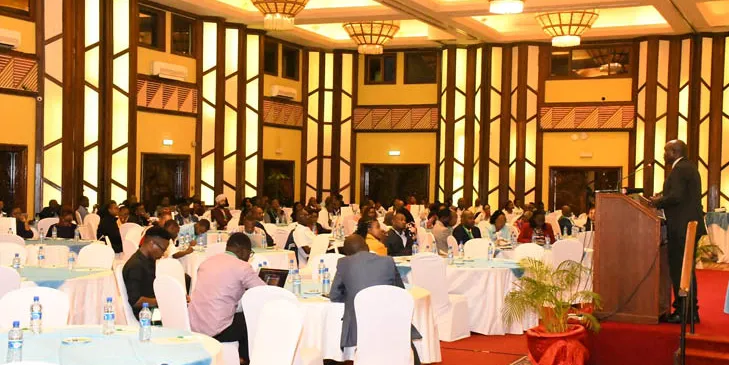
The 2022 Fruits, Vegetables & Herbs Conference and Exhibition took place in November 2022 at the Safari Park Hotel, Nairobi. The theme for this year’s conference was "Enhancing Productivity, Quality, Food Safety, and Market Access for Fruits, Vegetables & Herbs".The main objective of the conference was to bring together stakeholders (both public and private) in the fruit, vegetables and herbs subsector to discuss challenges and opportunities, with an emphasis on promoting the competitiveness of Kenya’s fresh fruits, vegetables and herbs through wider adoption of business models that will guarantee increased production of high quality, safe fruits, vegetables and herbs, along with enhanced market access.The NExT Kenya programme supported the conference, which aimed to highlight the achievements of regional and national programmes across Kenya that have helped to address some of the more critical challenges facing the country’s agriculture sector. Through networking, discussions and exchange of ideas, the various stakeholder groups have increased clarity of roles and responsibilities, which will allow them to better prepare for the next steps towards sustainable solutions and development.This activity is implemented by COLEACP and supported by the NExT Kenya (New Export Trade) programme, established in collaboration with the EU Delegation in Nairobi and Kenyan stakeholders.
 News
News
NExT Kenya: training on key GLOBALG.A.P changes
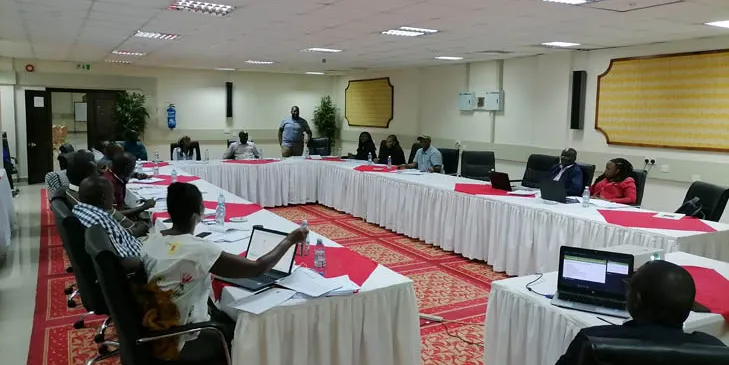
On 8 November 2022, the NExT Kenya programme trained 22 staff from horticulture producing and exporting companies on “Key changes on GLOBALG.A.P. IFA v6”. The training had a rich mix of participants, including compliance managers, quality managers, staff managing the quality management system (QMS) and internal auditors (QMS and farm auditors).The training was designed around recent version updates leading to GLOBALG.A.P IFA v6, the final version of which was published on 29 September 2022. The training aimed to update middle managers’ technical skills on the GLOBALG.A.P. IFA version 6 to allow them to make the necessary changes within their company to guarantee compliance with the latest IFA v6.The participants were taken through GLOBALG.A.P.’s General Regulations, and principles and criteria relating to the plants’ scope (fruit and vegetables category). The learner satisfaction survey conducted at the end of the training revealed a positive response from participants, with one remarking that “the training is well timed and indeed it will help in preparing for the IFA version 6 [implementation]”. Another participant commented on the collaborative aspect of the training, saying that “I interacted and shared experiences with people from various organisations on challenges”.Integrated Farm Assurance (IFA) is GLOBALG.A.P.’s flagship standard. Developed in consultation with stakeholders across the entire global supply chain, it takes a holistic approach to responsible farming and is audited annually by accredited, independent third-party certification bodies (CBs).The IFA standard includes three scopes containing multiple product categories that cover agriculture, floriculture, aquaculture and livestock. The certification status of all producers is visible in the GLOBALG.A.P. IT systems for transparency in the supply chain.This activity is implemented by COLEACP and supported by the NExT Kenya (New Export Trade) programme, established in collaboration with the EU Delegation in Nairobi and Kenyan stakeholders.
 News
News
Information session on the new EU Regulation on organic production and labelling of organic products (EU 2018/848)
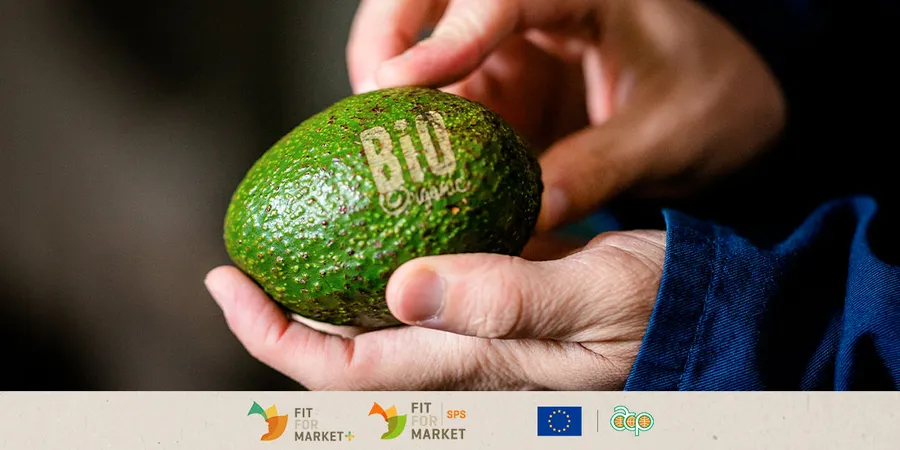
The Fit For Market SPS programme, in collaboration with the Research Institute of Organic Agriculture (FiBL), organised an information session specifically designed for the Dominican Republic on the new EU Regulation on organic production and labelling of organic products (EU 2018/848), and its implications for the certification of producer groups. This event took place online on 1 December 2022.The session was opened by Escipión Joaquin Oliveira Gomez, Assistant Secretary General, Sustainable Economic Transformation and Trade, Secretariat of the Organisation of African, Caribbean and Pacific States (OACPS), Darío Vargas Mena, Deputy Minister of Agricultural Extension and Training at the Ministry of Agriculture and Vilma Arbaje, Deputy Minister of Foreign Trade at the Ministry of Industry, Trade and MSMEs.During the session, which was attended by more than 150 people, the main regulatory changes were discussed. Two experts, Mr Salvador Garbay and Ms Florentine Meinshausen from FiBL, presented detailed explanations on the new rules, applicable as of 1 January 2022, as well as on the transitional periods in force.Participants were also invited to send any requests for support to COLEACP regarding the new Fit For Market Plus (FFM+) programme or other topics.This activity is supported by the Fit For Market SPS and Fit For Market Plus programmes, implemented by COLEACP within the Framework of Development Cooperation between the and the European Union and the Organisation of African, Caribbean and Pacific States (OACPS).
 News
News
Angola: The Fit For Market Plus (FFM+) programme presentation
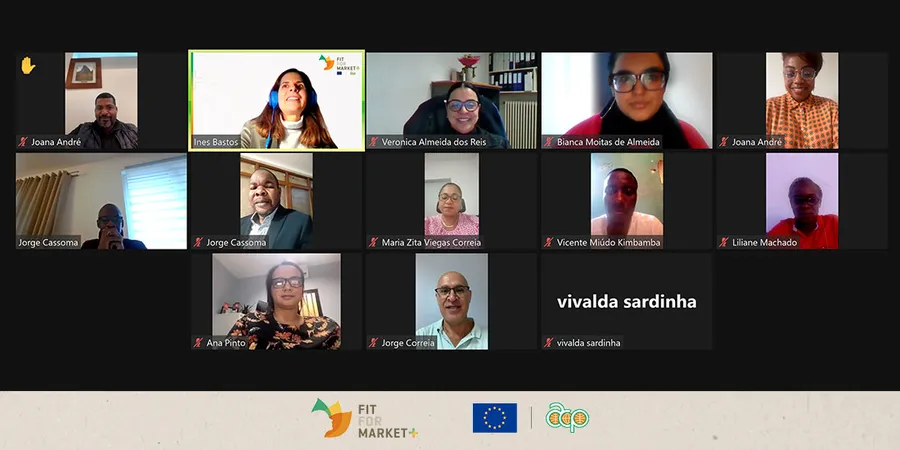
On 14 December 2022, COLEACP and the Angolan Embassy in Belgium organised a webinar to present the FFM+ programme to Angolan representatives of the horticultural sector.The session, held in Portuguese, was organised with the aim of providing additional information on the FFM+ programme and how the different potential partner-beneficiaries can take part in it. Participants were introduced to COLEACP activities, the framework of the programme and process of our application for support.Participants included COLEACP Technical Assistance representants Ines Bastos, Regional Programme Manager COLEACP and Bianca Moitas de Almeida. In addition, the embassy of Angola was present, represented by Dra. Joana Nareth and Dr. Jorge Cassoma, as well as the representative of Cape Verde embassy in Belgium.The attendees, in total 15, were representing a diverse group of entities that could apply to the program including, representatives from the public and private sector, namely, producer groups, cooperatives, MSMEs (micro, small, medium enterprises), support structures and consulting companies.Fit For Market+ (FFM+) provides support to the horticultural sector in member countries of the Organisation of African, Caribbean and Pacific States (OACPS). It aims to maintain and improve the capacity of smallholders, farmer groups and horticultural MSMEs to access domestic, regional and international markets through the progressive sustainable intensification of the horticultural sector, while adapting to changes in their operating environment due to COVID-19 and climate change.This activity is supported by the Fit For Market+ programme, implemented by COLEACP within the Framework of Development Cooperation between the Organisation of African, Caribbean and Pacific States (OACPS) and the European Union.