
Cultivating
Sustainable Futures
 News
News
Update on EU MRL changes - April 2022
Since the start of 2022, we have been highlighting significant changes to EU MRLs that affect 23 active substances, 9 of which are important for ACP export horticulture.The European Commission has also recently notified the World Trade Organization (WTO) of some additional proposed changes involving a further 5 substances, including 1 that is key for ACP horticulture (hexythiazox). How will ACP producers/exporters be affected? Changes to EU Maximum Residue Limits (MRLs) also apply to products that are exported to the EU. Growers producing for export may need to adapt their practices to meet the new MRL or, if this is not possible, stop using these products and look for an alternative method of pest management. What should ACP producers/exporters do now? For each use of the plant protection products (PPPs) involved, the Good Agricultural Practices (GAPs) in place will need to be checked and probably adapted to ensure compliance with the new MRLs. This is essential to prevent interception and destruction of merchandise at the border.If you use these PPPs, it is important to liaise with your producer/exporter associations and national authorities to check that the GAPs you apply are compliant with the new MRLs. In most cases, adaptations will be needed (dose rate, number of applications, application method, pre-harvest interval).If you have any major concerns about these changes, and fear that you will be left without an effective and locally available alternative, please contact COLEACP at: network@coleacp.org.
 News
News
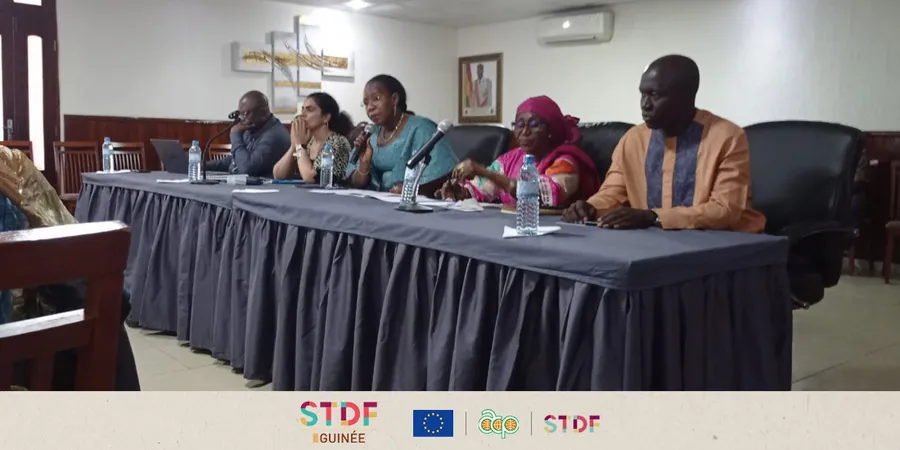
STDF Guinea - March Steering Committee
On 16 March, the Steering Committee of the project "Strengthening the phytosanitary monitoring and certification system in Guinea" (STDF/PG/498) was held to discuss the programming of activities for the last year.This meeting provided an opportunity to share the progress of the project activities: on the drafting of the good practice guide on potatoes as well as the training on the implementation of a methodology for the constitution of the list of harmful organisms in Guinea.This meeting also allowed the committee members to validate the project's progress report and to vote for a one-month extension.This activity was organised within the framework of the Project to strengthen the phytosanitary monitoring and certification system in Guinea, supported by the Standards and Trade Development Facility (STDF) project and implemented by COLEACP.
 News
News
Trinidad and Tobago: EUROCHAMTT–COLEACP collaboration
The European Business Chamber in Trinidad and Tobago (EUROCHAMTT) and COLEACP have signed a Memorandum of Understanding to collaborate in delivering group training and promotion of market opportunities to the members of EUROCHAMTT and other fruit and vegetable producers in Trinidad and Tobago. The collaboration will benefit from EUROCHAMTT’s expertise, knowledge and networks in the horticulture sector in Trinidad and Tobago, and COLEACP’s experience throughout ACP countries and at EU level.The focus will be on capacity building and supporting operators to comply with sanitary and phytosanitary (SPS) issues and market requirements, within the sustainable framework outlined in COLEACP’s Sustainability Charter, supported by the Fit For Market SPS and Fit For Market Plus programmes.
 News
News
Catch up on our latest webinars showcasing ACP agribusinesses
Two recent webinars focused on agrifood businesses in the Caribbean and Africa: “Agriculture trade: Opportunities for SMEs and businesses in export markets” (with the Inter-American Institute for Cooperation on Agriculture, IICA); and “Catalysing young African agri-entrepreneurs’ investments” (with the Pan-African Farmers’ Organization, PAFO).
 News
News
News digest: Agri-food Systems and Sustainability
The Intergovernmental Panel on Climate Change (IPCC) has published its latest report on the state of the climate crisis. It states that climate breakdown is accelerating rapidly and many of the impacts will be more severe than predicted. Everywhere is affected, with no inhabited region escaping dire impacts from rising temperatures and increasingly extreme weather. About half the global population – between 3.3 and 3.6 billion people – live in areas “highly vulnerable” to climate change. Millions of people face food and water shortages owing to climate change, even at current levels of heating. Small islands will be among those worst affected. Walton Webson, an ambassador of Antigua and Barbuda and the chair of the Alliance of Small Island States, called the findings “cataclysmic”. Dave Reay, the director of Edinburgh Climate Change Institute at the University of Edinburgh, said: “Like taking a wrecking ball to a set of global dominoes, climate change in the 21st century threatens to destroy the foundations of food and water security, smash onwards through the fragile structures of human and ecosystem health, and ultimately shake the very pillars of human civilisation.” A third report, due in April, will cover ways to cut greenhouse gas emissions, and the final part, in October, will summarise the lessons for governments meeting in Egypt for the UN Cop27 climate summit.Source: The Guardian, 28 February 2022
 News
News
News Digest: Agri-food Markets, Production and Trade
The EU has responded to Russia’s military attack against Ukraine by adopting a comprehensive and robust package of restrictive sanctions. The sanctions are listed here.Source: European Commission, 2022
 News
News
Get ready for Fruit Logistica and Macfrut 2022
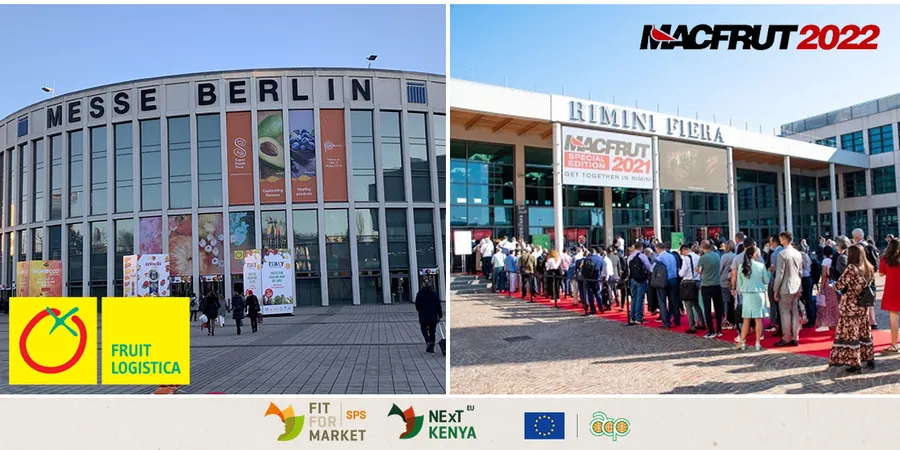
The Fruit Logistica and Macfrut trade shows are opening their doors soon! Be ready to meet up again face-to-face, in Berlin or in Rimini.To help ACP horticultural companies prepare for their visits to Fruit Logistica and Macfrut, group training sessions are currently being organised under the Fit For Market SPS and NExT Kenya programmes.The training is structured around online sessions and individual coaching sessions to help put the knowledge acquired into practice.On completing these training sessions, company directors will be ready to successfully attend the trade fairs and maximise their opportunities.Our latest Trade Fair Guide 2022: Participating in physical and digital trade fairs in the fresh fruit and vegetables market supports visitors and exhibitors before, during and after a trade show. The specific Fruit Logistica Trade Fair Guide has also been updated for 2022; and an update to the Macfrut guide is in press.Although registration is now closed, you can still register as a visitor to Fruit Logistica, and we have summarised some key events in the programme.COLEACP will be exhibiting at Fruit Logistica 2022 in Berlin – if you wish to meet with us, visit our stand: Hall 26, Stand D-20. A warm welcome is waiting for you. This activity is supported by (i) the Fit For Market SPS programme, implemented by COLEACP within the Framework of Development Cooperation between the Organisation of African, Caribbean and Pacific States (OACPS) and the European Union ; and the NExT Kenya (New Export Trade) programme funded by the European Union (11th EDF) and prepared in collaboration with the EU delegation and established in collaboration with the EU Delegation in Nairobi and Kenyan stakeholders.
 News
News
Caribbean: Strategic review and new action plan for CAHFSA
The Caribbean Agricultural Health and Food Safety Agency (CAHFSA) has agreed a customised action plan for the implementation of Fit For Market SPS programme support. The main aims of the action plan are to strengthen the agency’s organisation and governance; provide capacity building for its members and staff, including in COLEACP’s Rapid SPS Assessment Tool (R-SAT); and share expertise in facilitating intra-regional trade through networking and engagement with the private sector.In September 2021, a strategic review webinar with CAHFSA’s main stakeholders set the baseline for a renewed strategic focus for the agency. Sixteen participants shared their views on CAHFSA’s institutional and operational environment in order to identify opportunities and threats. They also discussed internal strengths and weaknesses, and concluded by defining the ambitions for the agency.During 2021 a COLEACP expert has been holding a series of online meetings with Dr Gavin Petters, recently appointed CEO of the agency, and Ms Juliet Goldsmith, Plant Health Specialist, focusing on a renewed strategic focus for the agency that emphasises delivering value to members and ensuring financial and operational sustainability. The conclusions of these discussions will be presented during CAHFSA’s next annual meeting.Two online training courses are planned for CAHFSA members. The first, which started in April, focuses on “Organisation of Official Controls”. The training lasts 4 weeks, involving around 6 hours of self-study and 3 hours of live activities each week. This course covers the requirements of an official control policy with regard to the SPS Agreement and the International Plant Protection Convention; EU plant health legislation and its implications for third countries; risk identification and phytosanitary certification; and setting up an internal audit system and a financing system for a national system of controls.And on 22 April, in a well attended e-meeting, Miguel Camacho of Axonica Consulting and ProFound presented recommendations on CAHFSA’s strategy to improve the performance of SPS in the Caribbean region. CAHFSA is a young association that wants to strengthen its support for establishing an integrated regional agricultural health and food safety regime, which will operate in collaboration with national policies. The aim is to facilitate a well organised and coordinated regional plant health system and to achieve high levels of food safety, enhancing the regional competitiveness of agricultural trade and at the same time advancing environmental protection and safeguarding public health.CAHFSA was created as an Inter-Governmental Organisation by the signing of an Agreement among Member States of the Caribbean Community (CARICOM). Located in Paramaribo, Suriname, CAHFSA is governed by a Board of Directors comprising one representative of each Member State, and a representative of the CARICOM Secretariat who sits on the Board as an observer. This activity is supported by the Fit For Market SPS programme, implemented by COLEACP within the Framework of Development Cooperation between the Organisation of African, Caribbean and Pacific States (OACPS) and the European Union.
 News
News
Training for Kenyan experts in Digital Learning Tools
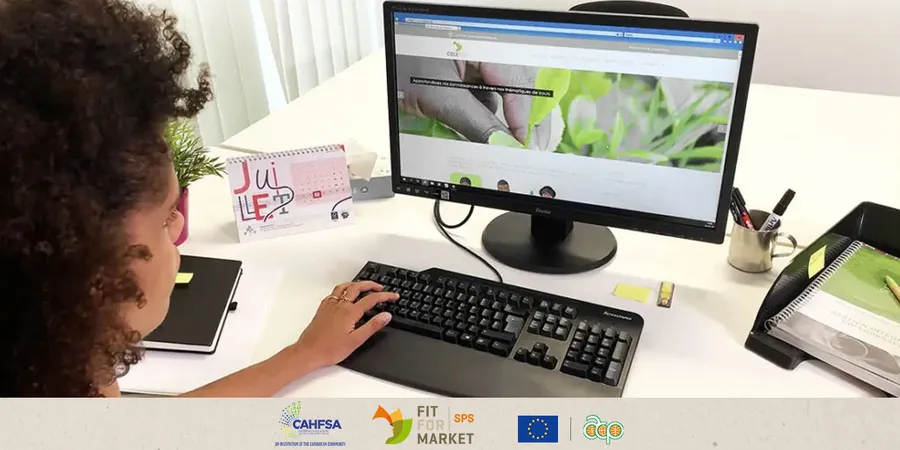
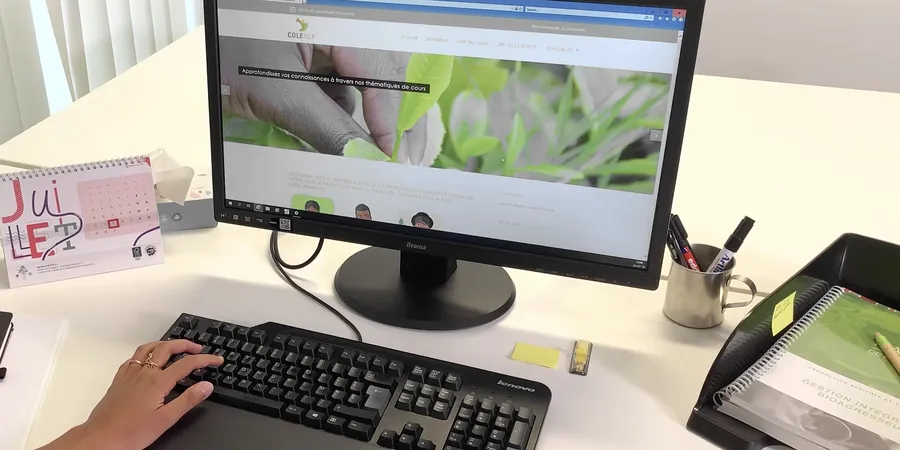
In March and April, 13 Kenyan experts have been taking part in training on Digital Learning Tools, provided through the NExT Kenya programe. The training is delivered through short live sessions and self-paced learning on COLEACP's e-learning platform. The participants have diverse expertise in areas including food safety, commercial negotiation, human resource management, GLOBALG.A.P. standards, social standards, and crop protection, and are all involved in providing digital training.This training is implemented by COLEACP through the NExT Kenya (New Export Trade) programme, established in collaboration with the EU Delegation in Kenya and Kenyan stakeholders.
 News
News
Group training on Avocado Fruit Quality Management
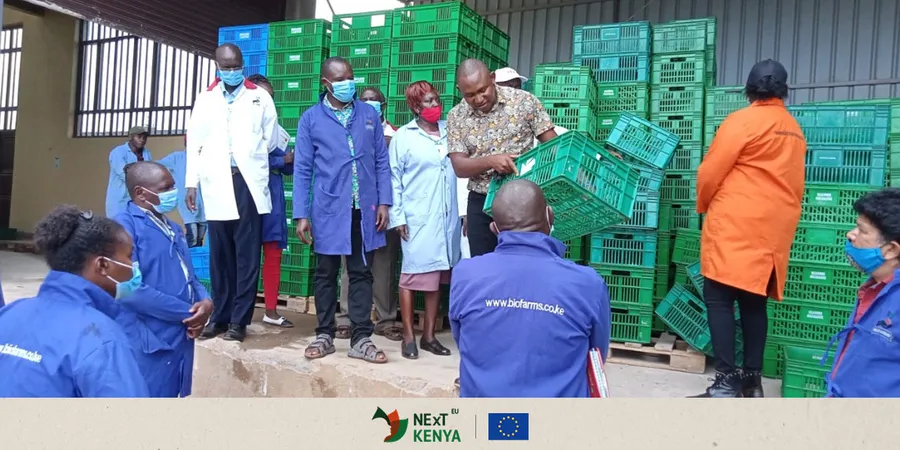
In February, 19 staff of Kenyan avocado exporters took part in training on commercial fruit quality management, with a focus on good harvest and post-harvest practices. The participants were technical and extension staff responsible for avocado quality control within their companies. The focus on the first day was on best practices in setting up an orchard, avocado growing, and at farm, packhouse and logistical levels. The training incorporated two field visits on the second and third days: one to a large-scale and one to a small-scale avocado orchard. This allowed the participants to appreciate first-hand the different management practices in the different types of orchard. The training will be followed up by in-company coaching on avocado dry matter testing, to coincide with the start of the Kenyan 2022 avocado season.This activity is implemented by COLEACP and supported by the NExT Kenya (New Export Trade) programme, established in collaboration with the EU Delegation in Nairobi and Kenyan stakeholders.
 News
News
NExT Kenya: Claims handling training
Staff of Kenyan companies have been taking part in training on claims handling, provided through the NExT Kenya programe. The aim is to build the capacity of company managers and staff in charge of trade negotiations and customer contracts , within small and medium-sized horticultural exporting companies (SMEs). Also taking part will be staff of the Fresh Produce Consortium of Kenya, who assist the association's members in dealing with claims. Up to 16 staff from 10 different organisations took part. The group training will also facilitate peer-to-peer exchange and sharing of experiences among Kenyan horticultural companies.This activity is implemented by COLEACP and supported by the NExT Kenya (New Export Trade) programme, established in collaboration with the EU Delegation in Nairobi and Kenyan stakeholders.
 News
News
Training in digital learning for our Pacific experts
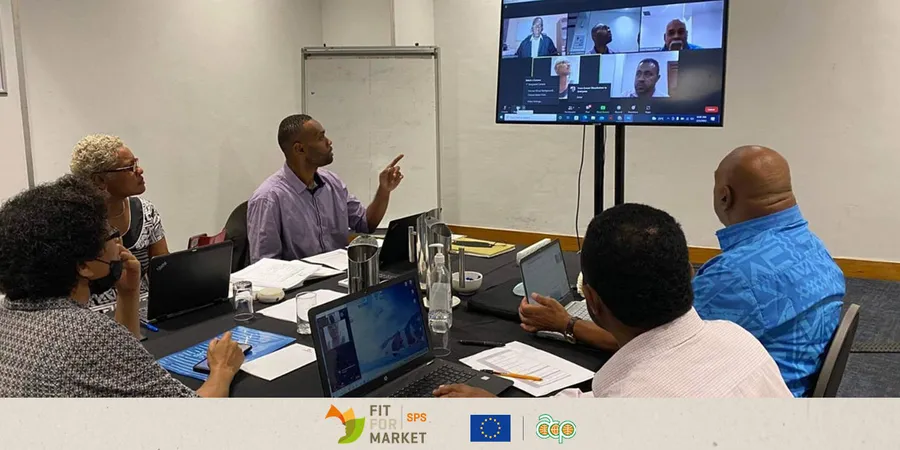
In early February, the Fit For Market SPS programme held its first training of trainers on "Training and Communication Skills" for the Pacific.Phase 1 of the training focuses on mastering teaching methods, and phase 2 is devoted to digital tools and specific skills needed for distance learning.Four Fijian experts participated in Phase 1. To put the learning into practice, due to the COVID-19 health measures, the training was hybrid: Fijian facilitator Aftaniwa Tawake and the three Fijian trainers/trainees were present in person in the classroom in Suva, while Zambian facilitator Ernest Muzukutwa participated remotely via Zoom.The experts enjoyed the first session very much. At the end of the training, the experts will all be able to prepare and conduct classroom and group training at a distance.This activity is supported by the Fit For Market SPS programme, implemented by COLEACP within the Framework of Development Cooperation between the Organisation of African, Caribbean and Pacific States (OACPS) and the European Union.