
Cultivating
Sustainable Futures
 News
News
Amendments to EU plant health rules for False Codling Moth
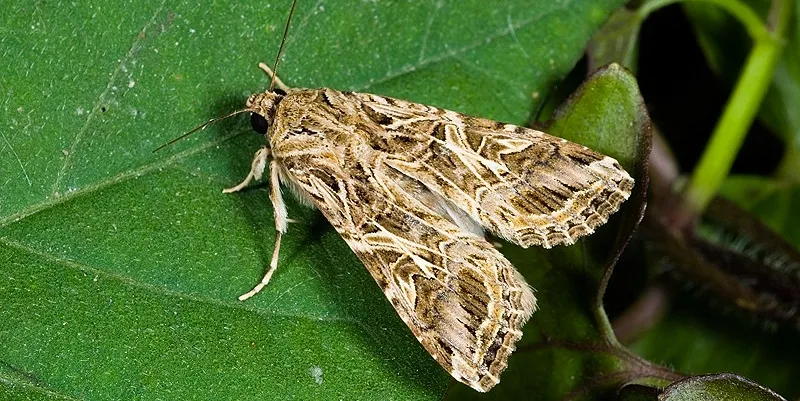
The EU has introduced new legislation to amend plant health rules covering False Codling Moth (FCM, Thaumatotibia leucotreta). The new draft regulation has been submitted to the WTO for a feedback period, period until the 11th April 2022. The date of implementation is not yet known.FCM is listed as a priority pest under EU plant health regulations ((EU) 2019/1702). Unfortunately, as this pest has been intercepted on several host plants in recent months during EU border controls, stricter rules have now been introduced. The new requirements target, in particular, countries that have been using options to export under FCM-free places of production (option C), or a systems approach for FCM control (option D).The draft regulation introduces new FCM-related rules for the following crops: Revised import requirements for fruits of Capsicum, Citrus (other than Citrus aurantiifolia Citrus limon), Prunus persica, and Punica granatum (point 62 of the annex)Action needs to be taken to protect exports of these crops to the EU from 11th April The most important points to note are for countries exporting these crops according to the options (c) “pest free place of production” or (d) “systems approach/post-harvest treatment”: 1. The NPPO must send a list of production site codes in advance in writing to the European Commission (EC)2. Details of the systems approach (or the post-harvest treatment method) for FCM must be communicated in advance to the EC together with documentary evidence of its effectiveness.3. Prior to export, the fruits must be inspected (by the NPPO) for the presence of FCM, including destructive sampling of 10% of the visually inspected fruits4. For every consignment, the code for the production site must be included on the phytosanitary certificate. (Alongside the description of the product, you must write the unique identification number or name of the approved production site).5. In the Additional Declaration, the NPPO must copy and paste the Option selected by the country. For example, for Option (c), copy and paste the following text: “The consignment complies with Option (c) of Points 62 of Annex VII to Implementing Regulation (EU) 2019/2072: no signs of Thaumatotibia leucotreta to which those fruits are known to be susceptible, have been observed at the place of production and in its immediate vicinity since the beginning of the last complete cycle of vegetation, on official inspections carried out at least monthly during the three months prior to harvesting, and none of the fruits harvested at the place of production has shown, in appropriate official examinations, signs of the relevant pest, and information on traceability is included in the phytosanitary certificate”The amendments introduced in the new draft regulation affect a number of ACP export crops, targeted because they are a known pathway into the EU of a serious quarantine pest that could damage EU agriculture or the environment. NPPOs and export sectors in the countries concerned need to act now in order to ensure that the necessary steps are taken to allow exports to continue after 11th April 2022.Amendments like this are generally made following risk assessments, or where there have been large numbers of non-conformities in imports from third countries. In this case, the rules have been tightened due to repeatedly high numbers of FCM interceptions from a number of countries, often in consignments exported under option (c) “free place of production”. Stricter measures must be now put in place in each exporting countries and communicated to the EU before the 11th April.The following text is extracted from the revised Annex to the Draft Regulation, and lists the options that must be used in order to export after 11th April. The amendments concern Point 62 of Annex VII to Implementing Regulation (EU) 2019/2072, and they affect Options (c)and (d), the most commonly used by exporting ACP countries. They bring in strict new requirements for approval of production sites, inspections, and information.Point 62 (amended)This gives 4 options that specify strict conditions for the management of FCM (T. leucotreta): In fruits of Capsicum (L.), Citrus, other than Citrus aurantiifolia (Christm.) Swingle Citrus limon (L.) Osbeck. and Citrus sinensis Pers., Prunus persica (L.) Batsch and Punica granatum L. (pomegranate)From countries on the African continent, Cape Verde, Saint Helena, Madagascar, La Reunion, Mauritius and IsraelThe 4 options are as follows:Option (a)the fruits originate in a country recognised as being free from Thaumatotibia leucotreta in accordance with relevant International Standards for Phytosanitary Measures, provided that this freedom status has been communicated in advance in writing to the Commission by the national plant protection organisation of the country of originorOption (b)the fruits originate in an area established by the national plant protection organisation in the country of origin as being free from T. leucotreta, in accordance with the relevant International Standard for Phytosanitary Measures ISPM 4,which is mentioned on the phytosanitary certificate, provided that this freedom status has been communicated in advance in writing to the Commission by the national plant protection organisation of the country of originorOption (c) (i) the fruits originate in a place of production established by the national plant protection organisation in the country of origin as being free from T. leucotreta in accordance with relevant International Standard for Phytosanitary Measures ISPM 10, and which is included in the list of place of production codes that has been communicated in advance in writing to the Commission by the national plant protection organisation of the country of origin, and(ii) the fruits have been subject to official inspections carried out in the place of production at appropriate times during the growing season and prior to export, including a visual examination and destructive sampling of 10% of the visually inspected fruits, and have been found to be free from T. leucotreta, and (iii) the fruits are accompanied by a phytosanitary certificate that indicates the place of production codes, allowing traceability to the places of productionorOption (d) (i) the fruits have been produced in an approved site of production, which is included in the list of production site codes that has been communicated in advance in writing to the Commission by the national plant protection organisation of the country of origin, and(ii) the fruits have been subjected to an effective cold treatment to ensure freedom from T. leucotreta or an effective systems approach to ensure freedom from T. leucotreta or another effective post-harvest treatment to ensure freedom from T. leucotreta in accordance with the relevant International Standards for Phytosanitary Measures ISPM 14 and ISPM 42, provided that the systems approach or the post-harvest treatment method together with documentary evidence of its effectiveness has been communicated in advance in writing to the Commission by the national plant protection organisation of the country of origin, and(iii) prior to export the fruits have been subjected to an inspection for the presence of T. leucotreta, including destructive sampling of 10% of the visually inspected fruits, and(iv) the fruits are accompanied by a phytosanitary certificate that indicates the production site codes, allowing traceability of the sites of production and mentions the use of a systems approach or details of the treatment method.’COLEACP Plant Health GuidesCOLEACP provides plant health guidelines on the export of several ACP export crops. These are currently being updated to incorporate the recent changes introduced under Regulation (EU) 2021/2285, as well as these latest amendments: - (New) Guidelines on the export of fresh guava, papaya, and Annona- (Update in process) Guidelines on exporting fresh capsicum from the Caribbean (version 2020)- (Update in process) Guidelines on the export of Capsicum from Africa, Madagascar, Cape Verde, and Mauritius (version 2020)- (Update in process) Guidelines on exporting fresh eggplant and tomato from Africa, Madagascar, Cape Verde, and Mauritius (version 2020)- (Update in process) Guidelines on exporting fresh citrus from Africa, Madagascar, Cape Verde and Mauritius (version 2020)- (Update in process) Guidelines on the export of fresh mango to the European Union (version 2020) – new version expected in end of February 2022These guides provide a clear explanation of what needs to be done in order to ensure that exported produce is in compliance with EU phytosanitary requirements. It details the information to be provided, and actions to be taken, at all stages from production to export by producers and exporters, as well as by the national authorities and inspection services.Those documents are publicly available in our E-library https://eservices.coleacp.org/en/e-library?search_api_views_fulltext=guidelinesThis information is published as part of the activities of the Fit For Market SPS programme. Fit For Market SPS is a COLEACP programme funded by the European Union within the framework of the Development Cooperation with the Organisation of African, Caribbean and Pacific States (OACPS).
 News
News
STDF Cameroon: 5th Steering Committee meeting
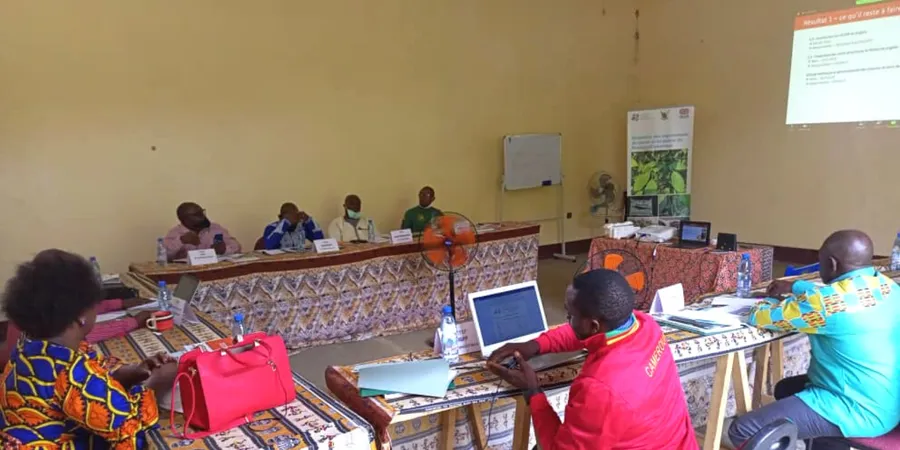
On 3 February, the 5th meeting of the Steering Committee (COPIL) of the project “Improvement of the sanitary and phytosanitary quality of Penja pepper in Cameroon to facilitate access to international markets” (STDF/PG/593) was held to discuss the project’sfinal year. This year's programme, validated at the COPIL meeting, focuses on training for the various trades involved in Penja pepper; awareness-raising on good storage and transport practices for distributors; the purchase of equipment; and the creation of awareness-raising information on SPS practices in the sector.The meeting concluded with a speech by the COPIL chairman, Mr. Sop, who congratulated the project team for the activities to date which have contributed to improving production practices among the Penja Pepper Representative Geographical Indication Group (GRIGPP)– including the publication of an SPS Good Practice Guide for the sector.This activity was organised within the framework of the Project to strengthen the phytosanitary monitoring and certification system for the fruit and vegetable sector in Cameroon, supported by the Standards and Trade Development Facility (STDF) and implemented by COLEACP.
 News
News
News Digest: agri-food production, markets and trade
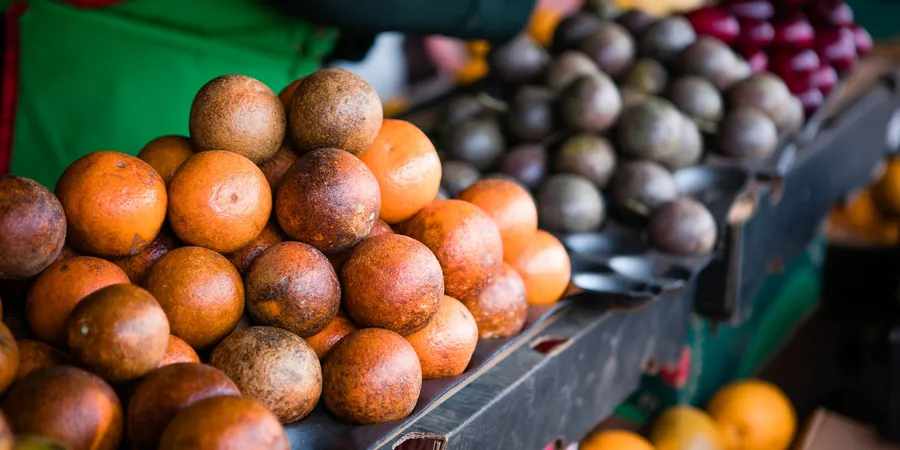
The Ministers of Agriculture and Trade of the West African Economic and Monetary Union (UEMOA) met in Cotonou, Benin in December to discuss the soaring price of fertilisers and their availability. This is a situation faced by most countries in the world, but which is more acute in sub-Saharan Africa, where the rate of dependence on imports of both phosphorus and nitrogen is around 70%, and in a context where hunger has worsened in Africa since 2019.Source: Commodafrica, 15 December 2021
 News
News
Uganda: The Refugee Next Door achieves organic certification for pineapple farmers
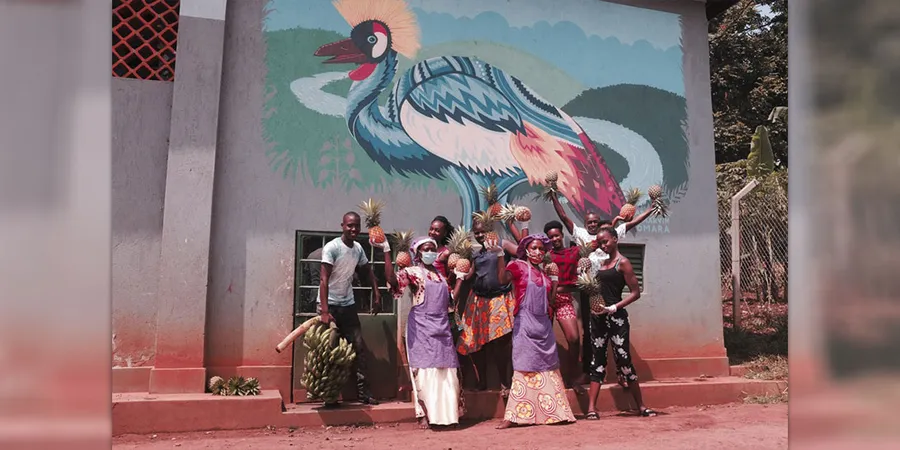
Belgian company Kasana Fruits sources dried, organic-certified fruits and nuts produced in Africa (mainly Uganda and Burkina Faso) by local farming cooperatives. The company’s socially responsible business model supports farming and educational programmes in these countries.To build a more inclusive and reliable pineapple supply chain, Kasana Fruits has successfully brought together 58 Ugandan pineapple producers into a farmers’ cooperative. This cooperative, which supplies most of Kasana’s pineapples and bananas, is supported by The Refugee Next Door (RND), a non-profit association that owns the Amani processing centre.With the support of the EU-funded Fit For Market programme implemented by COLEACP, Kasana has been training and coaching members of the cooperative towards group organic certification. In July 2020, COLEACP experts carried out an initial assessment of the quality management system and internal control system, benchmarked against the Ecocert Organic Standard. COLEACP continued to work with Kasana to provide technical assistance and training, to the end of 2020.In September 2021 the cooperative and RND successfully passed the audit and received their organic certification for vanilla and pineapple products. The Ecocert Organic Standard is recognised as equivalent to the provisions of regulation (EC) No 834/2007.Through obtaining organic certification, RND aims to increase processing margins and exports. New drying technology, supported by Enimiro Uganda, will provide better drying ratios and product quality.The social impact of the pineapple drying project and the associated schooling project can be estimated as supporting a total of 112 jobs, and directly benefiting 885 people.1 “The organic certification has been a huge milestone and I'm very thankful to COLEACP for its financial and human support in this. I'm looking forward in continuing our collaboration in the future.” - François-Xavier Willaert, CEO, Kasana Fruits Congratulations to RND, the cooperative, Kasana Fruits, and all those involved for this major achievement! 1
 News
News
Our most read news of 2021
Highlighting dynamic young people in agriculture, and developments in sustainable productionCOLEACP’s most viewed news stories last year featured environmental sustainability training, organic regulation, agripreneurs, and incubator training for young technical managers in Togo.These activities are supported by the EU-funded Fit For Market and Fit For Market SPS programmes, and the STDF project in Togo, part of a suite of programmes implemented by COLEACP.
 News
News
What can COLEACP’s Research & Innovation department do for you?
On 25 January, COLEACP’s Research & Innovation department held a videoconference, to introduce the department’s range of activities and services. Regulatory monitoring tools: You can follow events at European and international levels via interactive dashboards and online databases, to support monitoring of regulations and rapid adaptation to changes (MRLs, PPP approvals, TRACES, RASFF, and e-GAP) Field trials to find new alternatives to control priority pests: How are trial activities scheduled? Learn about the 18 trials implemented since 2019, and our research objectives for 2022 Development of new guides/brochures: Get an overview of updated and newly published material on crop protection and production developed in recent months, and planned for 2022 Identifying and testing smart technologies for agriculture in ACP countries: See a review of smart technologies for ACP agriculture, and the results of the first field test of the Blockchain in Côte d'Ivoire The interactive session allowed time for question-and-answer sessions and discussions.You can view the video here.Under the EU-funded Fit For Market SPS programme, COLEACP’s Research & Innovation department focuses on the adaption and dissemination of technologies and solutions that contribute to safe and sustainable food. The department acts as a research broker, bringing together a variety of resources to ensure that technologies are accessible to SMEs.This session is part of a series of videoconferences that aim to inform on the latest trends, and to provide a forum for discussing the main sanitary and phytosanitary (SPS) and other issues affecting the fruit and vegetable sector in ACP countries. This activity is supported by the Fit For Market SPS programme, implemented by COLEACP within the Framework of Development Cooperation between the Organisation of African, Caribbean and Pacific States (OACPS) and the European Union.
 News
News
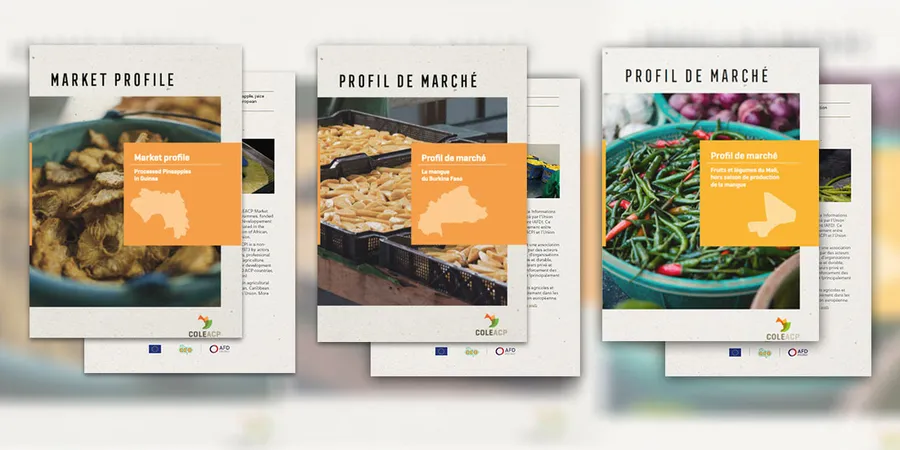
Three new market profiles from Fit For Market
Processed pineapples (Guinea), mango (Burkina Faso), and off-season fruit and vegetables (Mali)
 News
News
News digest: agri-food systems and sustainability
On 10 January, in the context of the French Presidency of the Council of the European Union and ahead of the European Union-African Union Summit scheduled for February 2022, Franck Riester, French Minister Delegate for Foreign Trade and Economic Attractiveness, held an international ministerial conference dedicated to the prospects of the European trade partnership with Africa. The overhaul of the partnership between the European Union and Africa is high on the agenda of the French Presidency of the Council of the European Union. The European Union-African Union Summit in February 2022 was an opportunity to mark this ambition at the highest political level.Source: French Presidency of the Council of the European Union, 8 January 2022
 News
News
Message to our members and partners
Dear friends of COLEACP,On behalf of COLEACP and the team, we are pleased to send you our best wishes for 2022, and especially we wish you and your loved ones very good health. We are approaching this new year with cautious optimism, while launching an appeal to the whole COLEACP family to continue to mobilise our individual and collective efforts, which contribute to building a fairer and more sustainable agri-food system.In an international context that - due to COVID and climate change - remains uncertain, volatile and complex, we are pleased to share with you the positive outlook for our association and its partners, shaped by the implementation of two new major programmes, namely Fit For Market+ and AGRINFO.Fit For Market+, announced in December, is a five-year, €25 million programme. It aims to mitigate the impacts of the COVID-19 pandemic by strengthening the sustainability of the horticultural sector of members of the Organisation of African, Caribbean and Pacific States (OACPS). It is intended to help horticultural value chain actors mitigate the negative economic impacts of the pandemic, and at the same time seize new market opportunities by adopting green, low-carbon and climate-resilient strategies, developing and adopting relevant practices, skills and technologies. Fit For Market+, as its name implies, will be implemented as a continuation of the Fit For Market programme and in synergy with Fit For Market SPS. Fit For Market+ is managed by COLEACP in the framework of development cooperation between OACPS and the European Union.AGRINFO is a new programme to inform EU partners about the ongoing development of EU regulatory and non-regulatory measures in the agricultural sector, so that these developments are known and understood, in the service of a fair, healthy and environmentally sound food system for all stakeholders. AGRINFO is funded by the EU, with €7 million over five years.These two programmes, implemented by COLEACP, are part of the Farm to Fork strategy of the European Green Deal, which aims to accelerate the necessary transition towards more sustainable food systems. Together with the other programmes under way at COLEACP at international and national levels, they should enable us to consolidate the progress made in 2021, and thus contribute to the positive evolution of the global agri-food model, thanks to the continuous strengthening of the capacities of current and future generations of producers, entrepreneurs, consultants, technicians and all economic actors in the agricultural and food system.This is what our "Growing People" vision is all about. We hope to see you soon in 2022.Until then, we hope that your professional activities, and especially your collaboration with our organisation, will contribute to giving you satisfaction and the positive energy and courage to face life with optimism.Yours sincerely,Stephen MintahPresidentJeremy Knops Délégué Général
 News
News
"Best development partner" at 2021 Avocado Industry Excellence Awards
Dr Chagema Kedera, NExT Kenya Programme Coordinator, received the trophy from Avocado Society of Kenya CEO Mr Ernest Muthomi.COLEACP's programme activities in Kenya recently resulted in the award for "best development partner" at the 2021 Kenya Avocado Industry Excellence Awards (KAEA) held on 10 December at the Safari Park Hotel, Nairobi.The KAEA, now in its second edition and becoming a national ritual, is an initiative of the Avocado Society of Kenya. The awards acknowledge and recognise contributions to the avocado sector that change or alter businesses, resulting in advancement in all areas of the sector, and including but not limited to marketing, research and development, products, and innovations in production.COLEACP's programme activities were recognised and appreciated for their exceptional contribution in the advancement of the Kenyan horticulture sector, in particular the EU-funded NExT Kenya programme. This programme targets whole value chains, with a specific focus on micro, small and medium enterprises (MSMEs) and the private and public services that support the horticultural sector. For example, the programme was involved in revamping Kenya’s National Horticulture Taskforce, a public-private sector coordination mechanism on strategic/policy issues to address the challenges facing the horticulture industry. It has carried out a study of the bottlenecks affecting the competitiveness of Kenyan exports, and a report soon to be published will offer pragmatic, in-depth recommendations on how to best deal with the bottlenecks identified. The programme has also initiated the development of Good Practice Guides for avocado and beans/peas, which are currently being finalised. The NExT Kenya programme aims to increase the contribution of the horticultural sector to household incomes through the generation of employment opportunities and foreign currency; and to improve food security, food safety and nutrition by increasing the resilience, inclusiveness, and sustainability of Kenyan horticultural value chains.Other programmes implemented by COLEACP in Kenya are Fit For Market and Fit For Market SPS. Recent activities under these programmes, in collaboration with other stakeholders, include a series of regional training/sensitisation forums for all producers across the country, aiming at a common approach across the industry to help drastically reduce interceptions of Thaumatotibia leucotreta (false codling moth, FCM) on roses exported to Europe. COLEACP activities in Kenya are supported by EU-funded programmes. The NExT Kenya (New Export Trade) programme funded by the EU Delegation in Nairobi was established following extensive consultations and collaboration with Kenyan horticulture stakeholders. The Fit For Market and Fit For Market SPS programmes are implemented by COLEACP within the Framework of Development Cooperation between the Organisation of African, Caribbean and Pacific States (OACPS) and the European Union. Fit For Market is co-funded by the French Development Agency (AFD).
 News
News
STDF Togo: Training for DPV inspectors on implementing official controls
Inspectors of Togo’s Plant Protection Directorate (DPV) took part in training on implementing official controls during November 2021. This distance learning via the COLEACP e-Learning Platform, part of the Project for the Strengthening of the National Phytosanitary Control and Certification System for Fruits and Vegetables in Togo, aimed at reinforcing the capacity of 20 DPV inspectors to carry out official control activities of plants and other regulated products. The aim was to train participants to the procedures and instructions established in conformity with the International Standards for Phytosanitary Measures (ISPMs) and the phytosanitary requirements of importing countries.Participants strengthened their understanding of the importance of ISPMs and their application in relation to the requirements of the International Plant Protection Convention (IPPC) for contracting parties. Topics covered included the regulatory context and the evolution of EU phytosanitary legislation in plant health, in relation to EU Regulation 2016/2031 and its implications. Participants discussed the importance and requirements for documentation, traceability and reporting of official control activities and their results. Through practical exercises, they experienced how to execute sampling plans, and to properly fill in additional declarations on phytosanitary certificates.This activity was organised within the framework of the Project for the Strengthening of the National Phytosanitary Control and Certification System for Fruits and Vegetables in Togo, funded by the Standards and Trade Development Facility (STDF) and implemented by COLEACP.
 News
News
Amendment to the EU plant health legislation - applicable from 11th April 2022
In August 2021, COLEACP issued a Flash Info advising of a public consultation by the European Commission on proposed amendments to the EU plant health legislation. The resulting amendments have now been incorporated into the new Commission Implementing Regulation (EU) 2021/2285, published on 14th December 2021.These amendments concern the listing of pests, prohibitions and requirements for the introduction into, and movement within the European Union of plants, plant products and other objects (amending Regulation (EU) 2019/2072). They will apply from 11th April 2022.The new Regulation (EU) 2021/2285 introduces amendments that affect a number of ACP exports to the EU (including mango, papaya, guava, capsicum, eggplant, tomato and citrus from certain countries). NPPOs and export sectors in the countries concerned need to take action to ensure that the necessary measures are put in place so that exports can continue after 11th April 2022.The most important changes in terms of impact on ACP fruit and vegetable exports to the EU include the following:1.Point (5) clarifies the categorization of fruit fly (Tephritidae) species“Based on the reassessment of the group of Tephritidae, specific species and genera have been identified that are not present or have limited presence in the Union territory and should be listed as Union quarantine pests. Several genera should be listed as Union quarantine pests, in order to allow protective measures against them, pending the availability of methods to identify them at species level, notably at larval stages”.Some individual fruit fly species and genera are already named as Union quarantine pests. However, due to the lack of methods to identify many fruit flies at species level, the EU has taken a pragmatic approach. They have listed several entire genera as Union quarantine pests so that protective measures are taken against them while the diagnostic methods are being developed. This means that entry into the EU of produce containing a large range of fruit fly species (including all fruit flies belonging to the Acanthiophilus, Bactrocera, Ceratitis, and Dacus genera) is now prohibited2.Amendments to ANNEX VII, stipulating additional requirements for certain plants and plant products from third countriesThe new Regulation (EU) 2021/2285 amends some of the special requirements listed in Annex VII of Regulation (EU) 2019/2072. These special requirements target crops that are a known pathway into the EU of serious pests that could damage EU agriculture or the environment. The amendments are often made following risk assessments, or in cases where there have been large numbers of interceptions in imports from third countries.The special requirements stipulate detailed rules that apply in order to export certain plants and plant products to the EU, alongside the pests and exporting countries concerned. In some cases the Annex includes a series of options specifying the strict conditions that apply. Exporting countries must select -and inform the European authorities - which of these options they will use.The options vary depending on the crop and pest but, in general, they include the possibility of exporting according to categories of pest-free status (according to ISPM 4). There may also be an option to apply a systems approach or post-harvest treatment to ensure that the exported produce is free from the pests concerned. The latter requires the submission of a dossier to the EU by the National Plant Protection Organisation (NPPO) describing in detail the approach or treatment that will be applied.It is important to note that these amendments also affect the completion of the phytosanitary certificate; specific details may need to be included in the Additional Declarations.The latest amendments affect a number of ACP exports. NPPOs and export sectors in the countries concerned need to act now to ensure that the necessary steps are taken in order to allow exports to continue after 11th April 2022. The following points listed in Annex VII of Regulation (EU) 2021/2285 indicate the main crops, pests and countries concerned: Point 61. Options that specify strict conditions to manage Fruit flies (Tephritidae): - In fruits of Citrus, kumquat (Fortunella Swingle); Trifoliate orange (Poncirus Raf., and their hybrids); mango (Mangifera L.) and Prunus L.- From all third countriesPoint 67. Options that specify strict conditions to manage the fruit fly Bactericera cockerelli (Sulc.):- In fruits of Solanaceae (including Capsicum, tomato and eggplant).- From the Caribbean, Australia, the Americas and New Zealand.Point 71. Official statement of status as a country or area free from Thrips palmi Karny (no option for a systems approach or post-harvest treatment):- In fruits of Momordica L.- From all third countriesPlease note that fruits of Momordica L. are listed as high-risk plants for which a PRA is needed (EU) 2018/2019Point 72.1. Options that specify strict conditions to manage the fruit fly Bactrocera latifrons (Hendel) in:- fruits of Capsicum L. and Solanum L.(including tomato and eggplant)- Angola, Benin, Botswana, Burkina Faso, Burundi, Cameroon, Cape Verde, Central African Republic, Chad, Comoros, Congo, Côte d'Ivoire, Djibouti, Equatorial Guinea, Eritrea, Eswatini, Ethiopia, Gabon, Gambia, Ghana, Guinea, Guinea-Bissau, Kenya, Lesotho, Liberia, Madagascar, Malawi, Mali, Mauritania, Mauritius, Mozambique, Namibia, Niger, Nigeria, Réunion, Rwanda, Sao Tome and Principe, Senegal, Seychelles, Sierra Leone, Somalia, South Sudan, Sudan, Tanzania, The Democratic Republic of Congo, Togo, Uganda, Zambia, Zimbabwe (plus other non-ACP countries)Point 72.2. Options that specify strict conditions to manage the fruit fly Bactrocera dorsalis (Hendel):- In fruits of Annona L. and papaya (Carica papaya L.)- From Angola, Benin, Botswana, Burkina Faso, Burundi, Cameroon, Cape Verde, Central African Republic, Chad, Comoros, Congo, Côte d'Ivoire, Equatorial Guinea, Eritrea, Eswatini, Ethiopia, Gabon, Gambia, Ghana, Guinea, Guinea-Bissau, Kenya, Lesotho, Liberia, Madagascar, Malawi, Mali, Mauritania, Mauritius, Mozambique, Namibia, Niger, Nigeria, Réunion, Rwanda, Sao Tome and Principe, Senegal, Seychelles, Sierra Leone, Somalia, South Sudan, Sudan, Tanzania, Democratic Republic of Congo, Togo, Uganda, Zambia, and Zimbabwe (plus other non-ACP countries)Point 72.3. Options that specify strict conditions to manage the fruit flies Bactrocera dorsalis (Hendel) and B. zonata (Saunders) in:- fruits of guava (Psidium guajava L).- (among others) Angola, Benin, Botswana, Burkina Faso, Burundi, Cameroon, Cape Verde, Central African Republic, Chad, Comoros, Congo, Côte d'Ivoire, Djibouti, Equatorial Guinea, Eritrea, Eswatini, Ethiopia, Gabon, Gambia, Ghana, Guinea, Guinea-Bissau, Kenya, Lesotho, Liberia, Madagascar, Malawi, Mali, Mauritania, Mauritius, Mozambique, Namibia, Niger, Nigeria, Réunion, Rwanda, Sao Tome and Principe, Senegal, Seychelles, Sierra Leone, Somalia, South Sudan, Sudan, Tanzania, The Democratic Republic of the Congo, Togo, Uganda, Zambia, Zimbabwe (plus other non-ACP countries).The following COLEACP guidelines will be available in the coming days to incorporate the main changes under Regulation (EU) 2021/2285: - (New) Guidelines on the export of fresh guava, papaya, and Annona- (Update) Guidelines on exporting fresh capsicum from the Caribbean- (Update) Guidelines on the export of Capsicum from Africa, Madagascar, Cape Verde, and Mauritius- (Update) Guidelines on exporting fresh eggplant and tomato from Africa, Madagascar, Cape Verde, and Mauritius- (Update) Guidelines on exporting fresh citrus from Africa, Madagascar, Cape Verde and Mauritius- (Update) Guidelines on the export of fresh mango to the European UnionThese guides provide a clear explanation of what needs to be done in order to ensure that exported produce is in compliance with EU phytosanitary requirements. It details the information to be provided, and actions to be taken, at all stages from production to export by producers and exporters, as well as by the national authorities and inspection services.