
Cultivating
Sustainable Futures
 News
News
Workshop to launch the Regional Guide to Good Mango Practices in West Africa
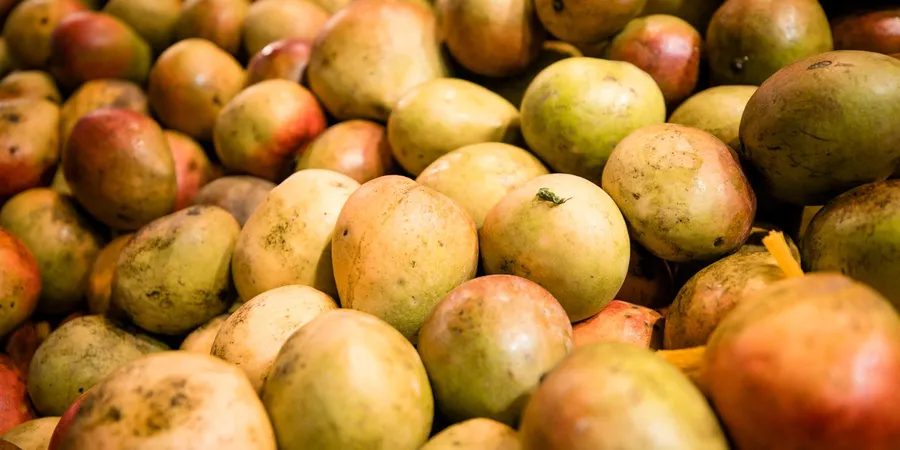
12 January saw the launch of a project to support the development of a "Regional Guide to Good Practices for Mango in West Africa". The development of the Guide is being organised as part of COLEACP’s partnership with the ECOWAS SyRIMAO project, "Innovative Regional Fruit Fly Management System Project in West Africa", via the EU-funded Fit For Market SPS programme. The January workshop brought together more than 60 participants, stakeholders in the mango sector from the public sector (competent authorities) and the private sector (inter-professional organisations and companies) from 10 ECOWAS countries, as well as representatives of support projects for the mango sector in the ECOWAS zone. During this event, the objectives of the Good Practice Guides currently being initiated by COLEACP for priority sectors were reiterated as facilitating:compliance of practices and productsrecognition of compliance with standards and regulatory requirements for market accessdialogue and exchange of practices within the sectoradaptation of educational tools to the needs of different actors in the value chain.Fresh mango was selected as a priority commodity chain for the development of a Good Practice Guide due to the SPS requirements to which it is subject, particularly relating to compliance with EU phytosanitary regulations concerning fruit flies. As the problem of fruit fly (Tephritidae) control transcends the administrative borders between countries, a regional guide is needed. Eight of the ECOWAS countries are particularly concerned, as they have already submitted a dossier to the EU competent authorities presenting their systematic approach to managing the phytosanitary risk associated with fruit flies, in line with European legislation: Burkina Faso, Côte d'Ivoire, Gambia, Ghana, Guinea, Mali, Senegal and Togo.As the sector is especially important in Burkina Faso, a Good Practice Guide for dried mango is also planned alongside this regional fresh mango guide.January’s regional launch workshop was the first step in the process of developing the Guide, which will continue in each of the eight countries through national information workshops to mobilise the various stakeholders. The next step will be to collect and analyse information on organisation and current practices in the sector, particularly through stakeholder surveys, to characterise the practices and control measures applied, identify gaps and control and self-control measures applicable at national and regional levels, and feed into the exercise of drawing up both Guides (fresh and dried mango). This process will be based on bodies that will be set up at national level (technical working groups) and regional level (technical working group and steering committee), accompanied at each stage by experts from COLEACP and SyRIMAO.The first version of this Regional Guide to Good Mango Practices is scheduled for final validation by the end of 2022. If this is achieved, action plans, support for deployment of the Guide, and the application of the recommendations resulting from the work could be implemented in the countries during the 2023 mango export season, with the support of the Fit For Market SPS programmes of COLEACP and SyRIMAO of ECOWAS.The meeting concluded by reiterating the importance of commitment and mobilisation of stakeholders at both national and regional levels to achieve this objective.Finally, a Question-and-Answer session confirmed participants’ interest in this Guide.The targeted countries will be contacted individually by COLEACP to undertake the next steps.This activity is supported by the Fit For Market SPS programme, implemented by COLEACP within the Framework of Development Cooperation between the Organisation of African, Caribbean and Pacific States (OACPS) and the European Union.
 News
News
Cameroon: Working week for the implementation of COLEACP R-SAT tool
A week-long workshop was held in early January in Kribi, bringing together the private and public sectors involved in the mango value chain (fresh and dried), to discuss the implementation of COLEACP’s Rapid SPS Assessment Tool (R-SAT). The tool and its roll-out are supported by the Fit For Market SPS programme, continuing COLEACP’s activities in support of Cameroon’s horticultural sector and Department of Regulation and Quality Control of Agricultural Products and Inputs (DRCQ). R-SAT supports Competent Authorities to assess the current status and functioning of their sanitary and phytosanitary (SPS) systems, in conjunction with key stakeholders from the public and private sectors.The tool, introduced in Cameroon in September 2021, will enable the development of a prioritised action plan by agri-food value chains to strengthen national SPS systems, and to ensure their alignment with international standards and regulations.This January workshop was attended by 18 participants, including representatives of several ministries and the Cameroon Mango Task Force, as well as three expert trainers. This successful meeting provided a platform for those involved to propose an action plan to improve the national SPS system for the sector.This activity is supported by the Fit For Market SPS programme, implemented by COLEACP within the Framework of Development Cooperation between the Organisation of African, Caribbean and Pacific States (OACPS) and the European Union.
 News
News
Update on EU MRL changes
Key points Since our latest news in December 2021 , we are highlighting some significant changes affecting five active substances (acequinocyl, Bacillus subtilis strain IAB/BS03, emamectin, flutolanil, and imazamox) used in crop protection ( Reg. (EU) 2021/2202 ). In particular, emamectin is important and widely used in ACP horticulture. The latest changes involve an increase in MRLs for peaches and kiwi fruits. The new Maximum Residue Limit (MRL) for peaches is 0.15 mg/kg (previously 0.03 mg/kg) and for kiwis the new MRL is 0.15 mg/kg (previously 0.01 mg/kg). The European Commission has also notified the World Trade Organization (WTO) of further proposed changes involving 30 substances, nine of which are key for ACP horticulture (bifenthrin, fenpropimorph, methoxyfenozide, propoxur, spinosad, thiram, azoxystrobin, cymoxanil and iprovalicarb). Competent Authorities in countries that will be particularly affected by these changes can submit comments on these proposals to the WTO. The deadline for comments is February 2022 ( Table 1 ). Note that since January 2021, MRLs for Great Britain (GB) follow a different review process. The changes described above therefore do not apply to GB, and the MRLs here may differ. MRLs for Great Britain can be consulted here (note that EU MRLs also apply in Northern Ireland). How will ACP producers/exporters be affected? Changes to EU MRLs have an impact on ACP growers, as the new MRLs also apply to products that are exported to the EU. Growers may need to adapt their practices to meet the new MRL or, if this is not possible, they may need to stop using these products and look for an alternative method of pest management. What should ACP producers/exporters do now? For each use of the plant protection products (PPPs) involved, the Good Agricultural Practices (GAPs) in place will need to be checked and probably adapted to ensure compliance with the new MRLs. This is essential to prevent interception and destruction of merchandise at the border. If you use these PPPs, it is important to liaise with your producer /exporter associations and national authorities to check that the GAPs you apply are compliant with the new MRLs. In most cases, adaptations will be needed to the GAPs (dose rate, number of applications, pre-harvest interval). If you have any major concerns about these changes, and fear that you will be left without an effective and locally available alternative, please contact COLEACP at network@coleacp.org .
 News
News
COLEACP receives distinction for support to Togo’s organic sector
COLEACP, through its Fit For Market SPS programme, was a partner in the second edition of the Organic and Local Organic Fair organised by the Association Nationale pour l'Agriculture Biologique au TOGO (ANA-Bio TOGO) and partners. The aim was to promote the production and consumption of organic products. From 9 to 11 December 2021 in Notsè, Togo, visitors and exhibitors gathered in a friendly atmosphere to experience conferences, presentations and tastings of certified organic products. The event was also the occasion for awarding prizes and honorary distinctions to stakeholders, including technical and financial partners, involved in promoting sustainable and organic agriculture in Togo.Mr Bodomziba Tchala, COLEACP's National Relay in Togo, received the honorary distinction of the "Togo Organic Agriculture Awards" on behalf of the association. COLEACP is delighted to receive this award, which will motivate the association to continue and intensify its efforts to support the production and marketing of organic products in Togo, in the sub-region and in Europe.[caption id="attachment_12904" align="aligncenter" width="569"] Mr Bodomziba Tchala, COLEACP relay in Togo, receiving the Togo Organic Agriculture Awards on behalf of COLEACP.[/caption] The principles of organic farming, which respect people and nature, are in harmony with COLEACP's mission to develop an inclusive and sustainable trade in agricultural and food products. This approach has a special place in the association's capacity-building and cascading training activities for current and future generations of producers, entrepreneurs, consultants, technicians, and other economic actors in the agricultural and food system.In Togo, COLEACP works closely with ANA-Bio TOGO, 28 enterprises and producer groups, most of which are active producers of organic products, as well as specialist training consultancies, and producer organisations. COLEACP also collaborates with the services of the Ministry of Agriculture, Livestock and Rural Development for inspection and phytosanitary control, and agricultural extension.This activity is supported by the Fit For Market SPS programme, implemented by COLEACP in the framework of development cooperation between the Organisation of African, Caribbean and Pacific States (OEACP) and the European Union.
 News
News
Senegal: Training on market requirements in Casamance
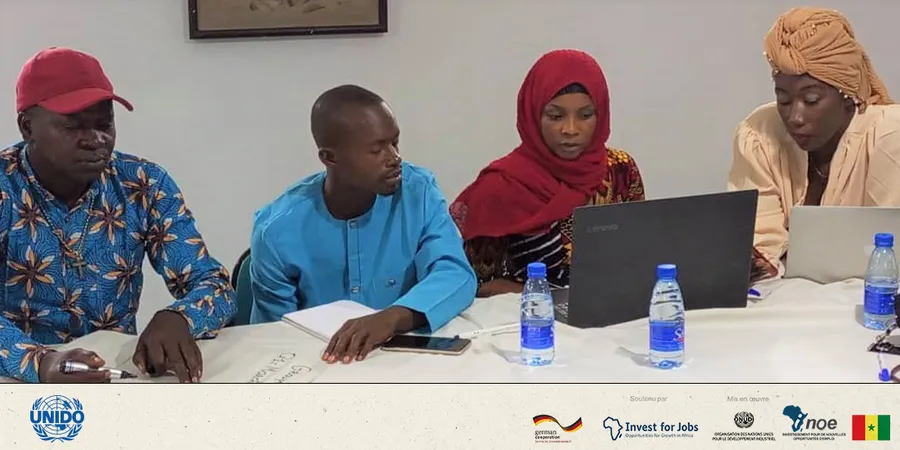
In November–December 2021, COLEACP was capacity building with mango production/processing companies in Casamance, focusing on market requirements.The training, part of COLEACP’s contribution to the UNIDO project "Inclusive and sustainable industrial development for job creation in Senegal and Ethiopia", aimed to identify the opportunities and obstacles for local, regional and international markets, and the costs of accessing them. The training will enable support structures and companies to better understand the: economic models of local, regional and export markets, their differences, and the advantages and disadvantages of each respective requirements of each market (regulatory, commercial, etc.) steps to be taken to reach the desired market, and technical and financial implications for companies risks/rewards for the value chain. Twelve participants took part, including ten companies, and two teachers from the Lycée Technique Agricole Émile Badiane (LTAEB).This activity, implemented by COLEACP and supported by the United Nations Industrial Development Organization (UNIDO), contributes to the project "Inclusive and sustainable industrial development for job creation in Senegal and Ethiopia".
 News
News
STDF Cameroon: Group trainings on Good Processing and Drying Practices for Pepper in Penja and Loum
In November 2021, two collective training sessions were organised in Penja and Loum (Cameroon) on good practices for processing and drying Penja pepper. The training sessions for processing/quality managers aimed to bring the quality of Penja pepper in line with international market requirements for SPS measures without altering its traditional quality. Trainings, which is part of the "project to improve the sanitary and phytosanitary quality of Penja pepper in order to facilitate its access to international markets" (STDF/PG/593), enabled participants to master:the stage of maturity of the berries by type of product (green pepper, black pepper, white pepper and red pepper)the stages and operations of the product transformation process (green pepper, black pepper, white pepper and red pepper)the techniques of retting white pepper, bleaching black pepper, conservation of green pepper and drying of each type of Penja pepperthe risk practices at each stage of the transformation processthe recommended risk management measures for processing and drying of Penja pepperthe good hygiene practices (personnel hygiene, equipment and infrastructure hygiene, premises hygiene, raw material hygiene, hygiene related to working methods) related to the processing and drying of each type of Penja pepperthe sampling of a batch in a normal context or in case of differencethe different records to be made in the context of processing and drying of Penja pepperthe different checklists necessary for the processing and drying of Penja pepper and the management of non-conformities.To know the management and archiving of documents for better traceabilityParticipants expressed a keen interest in the distribution of brochures on harvesting, blanching and retting techniques, traceability and general hygiene principles. This activity was organised within the framework of the Project to strengthen the phytosanitary monitoring and certification system for the fruit and vegetable sector in Cameroon, supported by the Standards and Trade Development Facility (STDF) and implemented by COLEACP.
 News
News
New Training-of-Trainers in Crop Protection for Kenyan experts
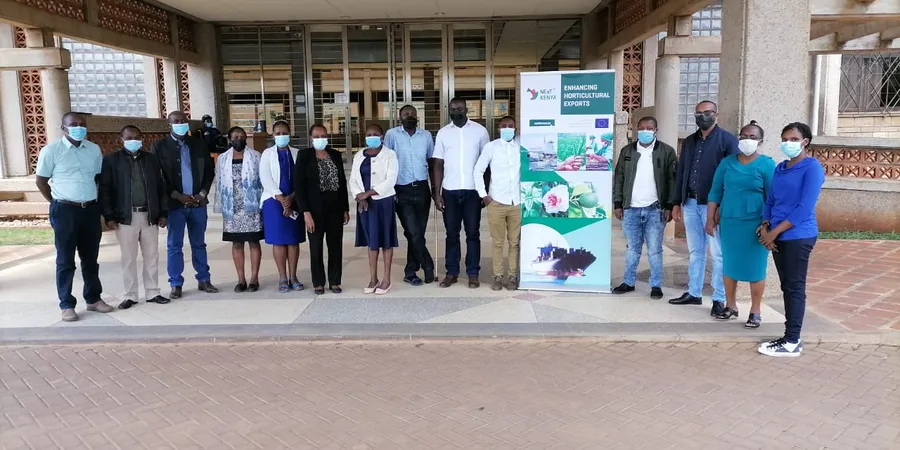
Due to the high demand for locally available technical expertise, NExT Kenya has launched a training-of-trainers cycle to build the capacities of a new group of Kenyan experts in COLEACP’s training methodology. The training-of-trainers will focus on learning and communication techniques on crop protection decision-making, scouting, application of control methods, and Field Training Workshops – a specific method to pass on key messages to workers and small-scale farmers.The training consists of preparation through an online learning platform, followed by face-to-face training. The first sessions took place in November–December 2021.Kenyan fruit and vegetable producers working with the EU-funded NExT Kenya programme often require capacity building and technical assistance in pest and disease management, one of the main causes of pre- and post-harvest losses. Specifically, local expertise is needed to implement training-of-trainers activities related to crop protection decision making and practice, including:Assessing the robustness of current pest and disease management strategiesCrop production protocols relating to plant health compliance (roses, mango, avocado, etc.)Pest and disease identification, crop scouting, monitoring methods and toolsSetting up an integrated pest and disease management strategy, including methodology and equipment, tools, and cost benefit calculationsTraining-of-trainers for extension staff, crop scouts and farmers on recognising and monitoring pests and diseasesData analysis for monitoring and application thresholds, and how these inform decision making processesSelecting the best suitable crop protection methods, focusing on integrated pest management (IPM)Understand the risks involved in using crop protection productsTraining spray operators on safe applicationand best pesticide use practicesDepending on the company’s operational model and the number of crop scouts, outgrowers and spray operators involved, most of these activities target the individual in charge of crop protection decision making, and of training and monitoring spray operators. These people will become internal trainers to train crop scouts and spray operators, applying the distinctive cascading training system of COLEACP and its programmes. For the key messages to be conveyed to these end-target groups, training tools and methodologies, including the Field Training Workshops method, are provided to support senior staff to train their crop scouts and spray operators.The capacities of local experts have been strengthened for over 20 years through the financial support of the European Union programmes. One of the major outcomes has been the creation of a pool of experts who have become “master trainers”, capable of training other Kenyan or ACP consultants on technical topics, training and communication techniques and the use of existing training tools.This activity is implemented by COLEACP and supported by the NExT Kenya (New Export Trade) programme, established in collaboration with the EU Delegation in Nairobi and Kenyan stakeholders.
 News
News
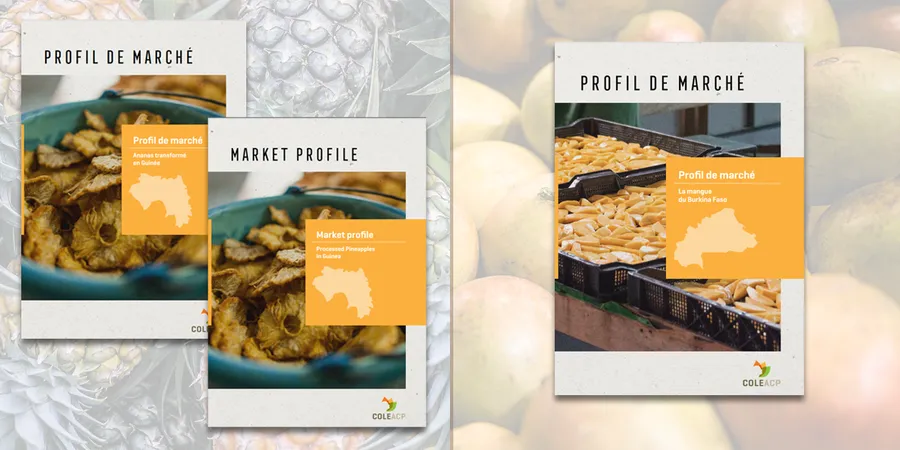
New market profiles : processed pineapple in Guinea and mango in Burkina Faso
COLEACP's Market Intelligence Service publishes the market profile for “Processed pineapple from Guinea”. This profile identifies market opportunities for three processed pineapple products (dried pineapple, pineapple juice and pineapple syrup) on the Guinean, West African and European markets. It is available in English (here) and French (here) for programme partners beneficiaries and COLEACP members.The market profile for “Mango from Burkina Faso” was produced as part of the collaboration between COLEACP and VCA4D1, which carries out agricultural value chain analyses in EU partner countries. The objective of VCA4D's work is to assess the contribution of sustainable and inclusive value chains to growth and job creation. The report presents the Burkinabe mango market, fresh and processed, at local, regional and international level. It is available for free access here (French version only).Other market profiles are in progress and will be made available shortly: off-season fruit for mango in Mali ; air logistics for products exported from Suriname to the EU ; coffee and cocoa in Ecuador.In parallel, the department will publish two market studies by the end of the year, which are currently being finalized by the Information and Communication Department :Market study of fruit and vegetables from ACP countries in the Pacific regionMarket study of fruit and vegetables from ACP countries in the Caribbea, regionAs a reminder, COLEACP's Market Intelligence Service published a study of the European market for ACP fruit and vegetables last July (available in English here, and in French here, on the COLEACP e-library).1 Value Chain Analysis for Development. More information on the program here : https://europa.eu/capacity4dev/value-chain-analysis-for-development-vca4d-These activities are supported by the Fit For Market and Fit For Market SPS programmes, implemented by COLEACP within the Framework of Development Cooperation between the Organisation of African, Caribbean and Pacific States (OACPS) and the European Union. Fit For Market is co-funded by the French Development Agency (AFD).
 News
News
Fit For Market+: a new EU-OACPS programme
From 2022 COLEACP will implement a new EU/OACPS-funded programme that builds on 20 years’ achievements to confront the unprecedented challenges – and opportunities – faced by ACP horticultural value chains today.This new five-year, €25 million programme – “Fit For Market+ : Mitigating the impacts of the COVID-19 pandemic by strengthening the sustainability of the ACP horticultural sector” – will support actors in the value chain to mitigate the negative economic impacts of the COVID-19 pandemic, and at the same time to seize new market opportunities by embracing green, low-carbon, climate-resilient strategies through developing and adopting relevant practices, skills and technologies.Fit For Market+ builds on COLEACP’s 20-year history of implementing development programmes, from PIP and EDES, through the two Fit For Market programmes (FFM and FFM SPS), to the more recent NExT Kenya.The key to all COLEACP’s programme activities, conducted with ACP partners, has been to first identify the technical challenges and opportunities to access markets; then work to reduce the challenges and create the conditions to leverage the opportunities; and ultimately to sustainably strengthen the capacity of partner beneficiaries to respond effectively to the changing context.These foundations have been developed and consolidated over time. While maintaining the same basic methodology, COLEACP has broadened its scope of activity within an increasingly holistic approach based on a sustainability framework. Meeting the requirements of the horticultural export trade is the basis of sustainable transformation of local and regional fruit and vegetable value chains, as well as providing relevant outputs for other agri-food value chains.The programme will be officially launched in Q1 2022. Stay tuned – more information will follow.The Fit For Market+ programme is implemented by COLEACP within the Framework of Development Cooperation between the Organisation of African, Caribbean and Pacific States (OACPS) and the European Union.
 News
News
2021 Kenya Avocado Excellence Awards
On 10 December, COLEACP attended the Kenya Avocado Excellence Awards (KAEA) as a shortlisted nominee under the category of “best development partner”.COLEACP is in good company in the category, alongside MARKUP (the EU-EAC Market Access Upgrade Programme); the Government of Kenya’s National Agricultural and Rural Inclusive Growth Project (NARIGP); and the independent, nonprofit research institute RTI International.The nominations in all the categories can be viewed here.The KAEA, now in its second edition and becoming a national ritual, is an initiative of the Avocado Society of Kenya. The awards acknowledge and recognise contributions to the avocado sector that change or alter businesses, resulting in advancement forward in all areas of the sector, and including but not limited to marketing, research and development, products and production innovation.The KAEA aims to achieve: advancement of excellent service delivery and overall industry development recognition and appreciation of exceptional contribution by industry players encouragement of innovation, creativity and strict adherence to industry best practices and regulatory standards stimulation of healthy competition among industry players and adoption of best practice(s). The NExT Kenya (New Export Trade) programme, implemented by COLEACP, is established in collaboration with the EU Delegation in Nairobi and Kenyan stakeholders.
 News
News
STDF Togo: Building capacity in Health Quality Management
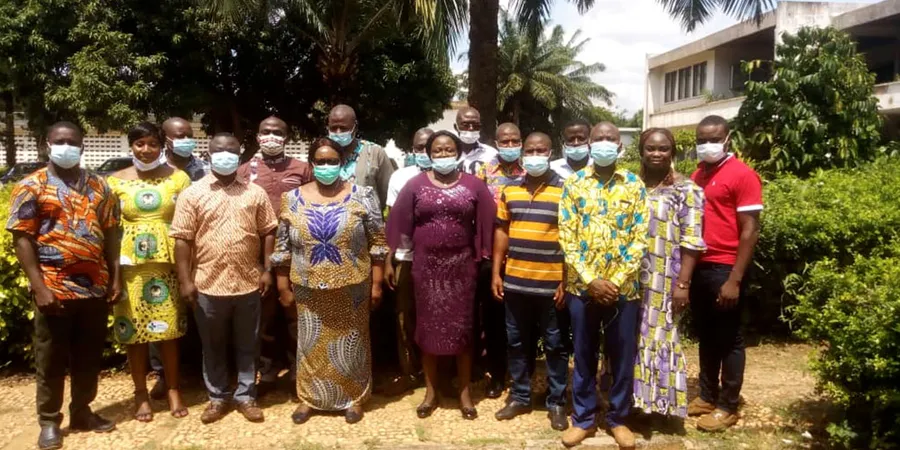
From 26 to 29 October, supervisors of the Institute for Technical Advice and Support in Togo participated in a training course on Health Quality Management. The training was organised through the Standards and Trade Development Facility (STDF) project-375 to strengthen Togo’s SPS system.STDF is a global partnership facilitating safe trade, sustainable economic growth, poverty reduction and food security. STDF works in developing countries to promote better food safety and improved animal and plant health.In Togo, since 2018, STDF-375 supported an initiative to strengthen the phytosanitary control and certification system for fruit and vegetables in the country. This project was implemented by COLEACP under the guidance of Kadjala KPATCHA, national coordinator for the STDF in Togo.COLEACP has been active in Togo since the early 2000s, with a particular focus on the pineapple growing sector, with activities including technical capacity building. The current project, ‘Strengthening of the phytosanitary control and certification system for the fruit and vegetable sector in Togo’, aims to enable Togo to comply with international SPS standards by building a robust SPS system. This should ensure the country’s producers can access regional and international markets, particularly for fruit and vegetables.From the outset, COLEACP viewed the provision of training on good SPS practices, for both public and private stakeholders from the fruit and vegetable sector, as key to the success of the project.The training session was designed to strengthen the capacities of the 15 participants around product traceability, good hygiene practices, risk analysis, the principles of self-checking, regulatory requirements, document management, and more. The participants are now better able to train the producers they supervise on how to improve their health quality management systems to meet the requirements of their target markets.This activity was organised within the framework of the project “Strengthening of the phytosanitary control and certification system for the fruit and vegetable sector in Togo”, funded by the Standards and Trade Development Facility (STDF) and implemented by COLEACP.
 News
News
Dominican Republic: Supporting organic banana and citrus production
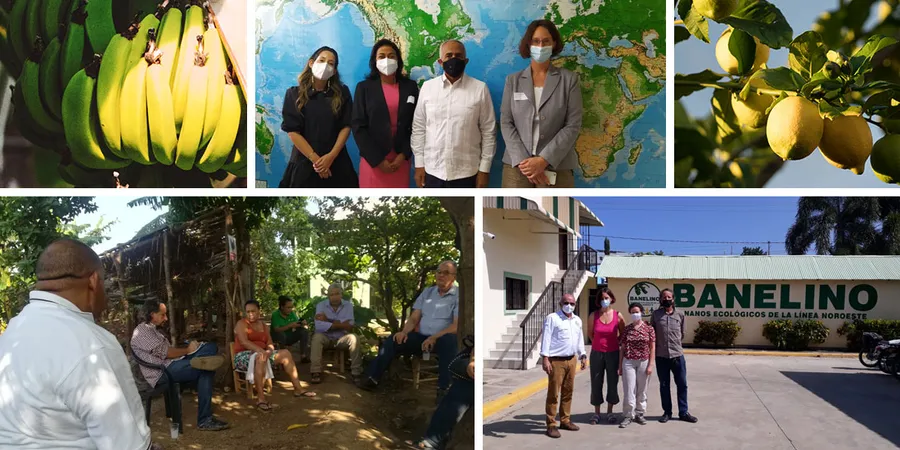
On 29 October COLEACP met with representatives of two banana producers’ associations, Banelino and Adobanano, and a citrus producers’ association, Sosbiolim, in the region of Mao, to better understand their needs and to review priorities for action.The Dominican Republic is the world’s largest producer of organic bananas: 55% of all organic bananas are grown in the country, and 95% of them are exported to the EU. The experiences of the country’s banana producers – their methods, processes and results – can reveal the successes and challenges of the shift to organic banana production.The Fit For Market SPS programme, implemented by COLEACP, aims to equip smallholders, farmer groups and MSMEs to access international and domestic markets, through helping them to comply with sanitary and phytosanitary requirements.In the Dominican Republic, COLEACP engaged with Banelino, Adobanano and Sosbiolim to discover whether Fit For Market SPS can address any of the producers’ needs that are not already covered by other programmes. COLEACP’s Marie-Hélène Kestemont (Geographical Coordinator) and Laura Wauters (Project Manager) met with representatives of the three associations.Established in 1996, Banelino represents 336 small-scale producers (each of whom farms around 3 ha) in the NorthWest Line of the Dominican Republic, close to the border with Haiti. Every week, Banelino’s members export about 450 tons of bananas, 98% of which are destined for the European Union (the remaining 2% goes to the USA). This is the equivalent of around 24,000 tons of bananas per year.Banelino’s members are partners in the organisation, which is led by a Board of Directors. Women occupy most of the management positions and comprise 30% of the membership. In supporting its members, Banelino particularly focuses on creating opportunities for women and young people.Over several years, COLEACP has established a productive and positive working relationship with Banelino, which has participated and given presentations in several COLEACP webinars organised for the Caribbean region. As a result of this constructive relationship, Banelino has recently expressed interest in becoming a member of COLEACP.Gustavo Gandini, Technical Director of Banelino’s ABIOMA Department, described some of the organisation’s initiatives – and current and future challenges. Banelino’s members currently face challenges in complying with organic production requirements. Requirements for the analysis of pesticide residues have recently increased, but a lack of accredited laboratories in the Dominican Republic means that many samples must be sent to other countries for testing. There is also some uncertainty around interpreting the results of these tests and of soil sample analysis. But in more positive news for producers, a laboratory at the Dominican Institute of Agriculture is expected to become accredited soon.Banelino is also interested in COLEACP’s training offer (including practical field training), advice on recent regulations, particularly including around organic production, and support for building business plans. The association is also keen for COLEACP to represent its members in discussions within the European Community, which is seen as very valuable.The mission to the Dominican Republic was also an opportunity for the first in-person contact between COLEACP and representatives of Adobanano and Sosbiolim. Adobanano is a non-profit umbrella company with about 2,000 members, including independent banana producers, associations and exporters.For Sosbiolim, the meeting focused on the Lemon Cluster – bringing together representatives from all along the value chain – and was held at a lemon farm in Piloto. Currently, only two lemon exporters in the country are certified organic. One ongoing challenge for lemon producers is to comply with EU regulations, in place for the past two years, requiring additional measures and information concerning fruit flies.At a scheduled meeting between officials of the Ministry of Agriculture, including Vice Minister of Rural Development Miriam Guzman, and representatives of the Lemon Cluster, COLEACP’s work and potential programme support were presented. The Vice-Minister was particularly interested in the possibility of launching a COLEACP training programme, potentially focusing on organic production.COLEACP looks forward to continuing these working relationships with both private and public sectors in the Dominican Republic.This activity is supported by the Fit For Market and Fit For Market SPS programmes, implemented by COLEACP within the Framework of Development Cooperation between the Organisation of African, Caribbean and Pacific States (OACPS) and the European Union, and co-funded by the French Development Agency (AFD).