
Cultivating
Sustainable Futures
 News
News
Kenya: Digital collective training on Food Safety Quality Management System
COLEACP organised a remote training course on “Food Safety Quality Management System” for partner companies of the NExT Kenya programme from 26 July to 27 August 2021. The target audience for this four-week digital training included technical staff (quality managers, packhouse managers and internal auditors) in charge of compliance within horticultural production companies and producer groups. The training was directed toward staff in exporters’ associations that assist their member companies with the implementation of food safety standards.At the end of the training sessions, participants are expected to have achieved the following specific objectives: understand and explain the importance of food safety management and its relevance; know the principles of food safety management (regulatory requirements, standards, quality manual redaction, documentary management, regulatory monitoring, etc.); understand and apply good hygiene practices (hygiene throughout the sector, packhouse organisation, self-assessment principles, etc.); understand and apply the principles of traceability (objectives and elements of a traceability system, tools, practical implementation, etc.); describe the advantages of implementing a food safety management system in participants’ own marketing and production context. list the main elements of a food safety quality management system (regulatory requirements, standards, quality manual redaction, documentary management, regulatory monitoring, etc.); list the main food safety quality management standards used in horticulture, their scope, and the markets that require these standards; and list the main building blocks of a functional food safety quality management system (internal versus external audit, training, quality manual, equipment, hygiene, crop protection traceability, etc.). A group of 21 trainees participated in the course. The participants were drawn from 11 Kenyan horticultural MSMEs: Mofarm Ltd, Kenya Horticultural Exporters (KHE), Marja General Co Ltd, Jani Fresh, Instaveg, Athi Farms Exporters, Flamingo, Association of Kenya Mango Traders, Suera Ltd, Equatorial Hortifresh Ltd and Markgrown Enterprises.This activity is implemented by COLEACP and supported by the NExT Kenya (New Export Trade) programme, established in collaboration with the EU Delegation in Nairobi and Kenyan stakeholders.
 News
News
Kenya: Revamped National Horticulture Taskforce gets to work
The public-private National Horticulture Taskforce has been strengthened to enable it to take a more active role in providing an enabling environment and consultative guidance to the horticultural sector in Kenya.Private-sector members of the taskforce are drawn from various organisations, including the Fresh Produce Exporters Association of Kenya (FPEAK), the Fresh Produce Consortium of Kenya (FPC Kenya), the Kenya Flower Council (KFC), and the Agrochemicals Association of Kenya (AAK).The government presence in the taskforce includes representation from the Ministry of Agriculture, Livestock, Fisheries and Cooperatives (MALFC); the Ministry of Health (Public Health — Food Safety Unit), the State Department for Trade, and the National Treasury. Government agencies include the Horticultural Crops Directorate (HCD), Kenya Plant Health Inspectorate Service (KEPHIS), Pest Control Products Board (PCPB), Kenya Agricultural & Livestock Research Organization (KALRO), and the Kenya Export Promotion and Branding Agency (KEPROBA). The Council of County Governors is also represented.Between May and September 2020, COLEACP facilitated consultative meetings of horticulture stakeholders, which resulted in agreement on the need to revamp this taskforce. This followed two earlier multi-stakeholder workshops held in 2019.The chair is Joshua Oluyali, Head of the MALFC Horticulture Division at the State Department for Crop Development and Agricultural Research.Representing the private sector as co-chair is Clement Tulezi, CEO, KFC, who says the revamping of the taskforce is an exciting new development that promises to strengthen Kenya’s horticultural sector. “The taskforce will provide an enhanced public-private sector coordination mechanism on strategic and policy issues to adequately address the challenges facing the horticulture industry” (Horticulture News, 30 August 2021).The taskforce operations are guided by the terms of reference agreed upon by its members in the interest of the stakeholders. Given the importance of horticulture, there are initiatives to have the taskforce established under the law within MALFC to give it a legal mandate.In the past, the agriculture sector has been disadvantaged by limited data, for example on nutrition, food utilisation, agricultural products, yields and prices. So the taskforce intends to develop an integrated information management system that will process all the data collected along the value chain, linking to existing systems with relevant information on horticulture. The taskforce has created a Data, Information Management, Market Development and Trade Facilitation Committee to guide this process.This activity is implemented by COLEACP and supported by the NExT Kenya (New Export Trade) programme, established in collaboration with the EU Delegation in Nairobi and Kenyan stakeholders.
 News
News
Government of Uganda, private sector and EU discuss opportunities for horticultural exports
On 22 September, the EU Delegation in Uganda organised a trialogue between the Government of Uganda, the Ugandan private sector and the European Union to discuss “Challenges and opportunities for Ugandan horticultural exports to Europe”. Europeans hold Ugandan products in high regard, but some issues regarding standards and quality have led to increased controls at EU borders for products coming from Uganda. This represents a great loss for the Government and for the private sector.The meeting identified and discussed several constraints at both private and public sector levels.This activity is supported by the Fit For Market SPS programme, implemented by COLEACP within the Framework of Development Cooperation between the Organisation of African, Caribbean and Pacific States (OACPS) and the European Union.
 News
News
News Digest: Brexit
The UK Government has announced a revised timetable for pre-notification and checks on plants and plant products for imports from the EU to Great Britain. The key points are:Full customs declarations and controls will be introduced on 1 January 2022 as previously announced. Exporters will no longer be able to defer customs declarations after 1 January 2022 unless they are authorised to do so.Safety and security declarations on imports will be required from 1 July 2022 (delayed from 1 January 2022).Requirements for pre-notification of sanitary and phytosanitary (SPS) goods will be introduced on 1 January 2022 (delayed from 1 October 2021). This includes High Risk Food and Feed Not of Animal Origin (HRFNAO) exported from a third country into the EU and then exported from the EU Member State into Great Britain (GB), which will need to be pre-notified from 1 January 2022. But the requirement for all HRFNAO to enter GB via a Border Control Post is delayed until 1 July 2022. The existing requirement to pre-notify HRFNAO destined for GB and transiting through the EU remains in place, and these products must enter GB via an appropriate designated Border Control Post.On 1 January 2022 pre-notification will be extended to all regulated plants and plant products imported from the EU. GB importers will need to pre-notify using the UK’s electronic Import of Products, Animals, Food and Feed System (IPAFFS), but they will not require a phytosanitary certificate until 1 July 2022.Phytosanitary certificates and physical checks on SPS goods at Border Control Posts will be introduced on 1 July 2022 (delayed from January/March 2022).High priority plants already have to be pre-notified and require a phytosanitary certificate. Physical checks on high priority plants at Border Control Posts will be introduced from 1 July 2022 (delayed from 1 January 2022). Places of destination (PoD) authorised to receive high priority plants can continue until 1 July 2022; after that date regulated goods will need to be presented for inspection at a Border Control Post, inspection centre or control point. PoDs applying for authorisation as an inland Control Point should do so in good time before 1 July 2022.For low risk plants and plant products, checks at Border Control Posts will be introduced on 1 July 2022 (delayed from 1 March 2022).Source: UK Government Press Release, 14 September 2021
 News
News
Caribbean: Strategic review of the Caribbean Agricultural Health and Food Safety Agency
With the support of COLEACP, the Caribbean Agricultural Health and Food Safety Agency (CAHFSA) is undergoing significant changes to ensure that it fulfils its mandate and maximises the value it offers to member countries. CAHFSA’s role is particularly important in the current context of a global pandemic; the increasing importance of non-tariff barriers and agricultural nationalism; threats to food security; and the need to rapidly diversify and expand exports from the Caribbean region.For CAHFSA to contribute effectively to addressing these issues, an updated strategic direction was needed, to ensure that the agency’s mandate and actions are aligned with the needs of its members and its medium-term objectives, while setting ambitious but realistic high-level goals. An online strategic review working session took place on 7 September with CAHFSA’s main stakeholders, to capture the needs and ambitions of the plan, and to shape the future of the agency in an appropriate way. The objective was to lay the foundations for a new strategic direction for the organisation, focusing on creating value for members and ensuring the financial and operational sustainability of the agency.A group of 16 participants shared their views on the effect of the environment on the agency, to identify opportunities and threats. They discussed internal strengths and weaknesses and concluded by defining the agency’s ambition. This virtual session was the first opportunity in over five years for stakeholders to discuss CAHFSA’s strategic direction. COLEACP expert Miguel Camacho, emphasised the value of the highly engaged and active dialogue between participants and the importance of such activities for CAHFSA’s future.This activity is supported by the Fit For Market SPS programme, implemented by COLEACP within the Framework of Development Cooperation between the Organisation of African, Caribbean and Pacific States (OACPS) and the European Union.
 News
News
Ethiopia: Unveiling of COLEACP Rapid SPS Assessment tool for the Ethiopian NPPO
A meeting was held on 15 September 2021 with the Ethiopian National Plant Protection Organisation (NPPO), the national focal point and the COLEACP team to introduce COLEACP’s Rapid SPS Assessment (R-SAT) tool. The R-SAT tool was developed by COLEACP to support relevant authorities, in consultation with key stakeholders from the public and private sectors, to assess the status and functioning of SPS systems. Bringing together the public and private sectors will allow the development of a priority action plan based on a common strategic vision.COLEACP will work with Ethiopia in carrying out some priority actions, mainly related to capacity building and technical partnerships. The objective is to develop a pathway for strengthening national SPS systems in Ethiopia and ensure their alignment with international standards and regulations. The tool is generally applied to one or two priority value chains but can provide results to be implemented in other sectors.This activity is supported by the Fit For Market SPS programme, implemented by COLEACP within the Framework of Development Cooperation between the Organisation of African, Caribbean and Pacific States (OACPS) and the European Union.
 News
News
ECTAD CARIBBEAN: Taro/dasheen exporters seeking markets
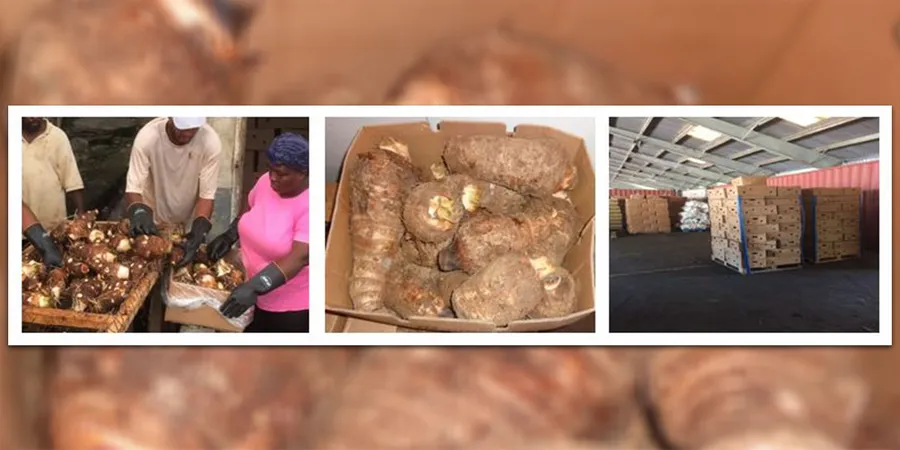
The Eastern Caribbean Trading Agriculture and Development Organisation (ECTAD CARIBBEAN) is a national small farmers’ organisation based in St Vincent and the Grenadines, with connections and networks throughout the Caribbean. Its farmers produce a variety of crops, with taro/dasheen (Colocasia esculenta) being one of the main crops exported; secondary crops include eddoes, ginger and sweet potatoes. The organisation has been marketing taro/dasheen to clients in Europe for over ten years through its integrated production and marketing programme. It is now expanding its operations, looking for additional reliable and sustainable markets within Europe to ensure that its farmers can link their produce to sustainable markets.Shipping from St Vincent and the Grenadines is available on a weekly basis via the Geestline Shipping Company; it takes 21 days to reach England, from where the produce can be trans-shipped to any part of Europe.ECTAD CARIBBEAN offers the best competitive prices for these commodities as the farmers themselves are involved not only in producing but also in sorting, grading and packing of products, which reduces the transaction cost.ECTAD CARIBBEAN has good supplies available and is ready to develop business relationships to supply taro/dasheen and other products to the European market.
 News
News
New and upcoming publications from the Market Intelligence service
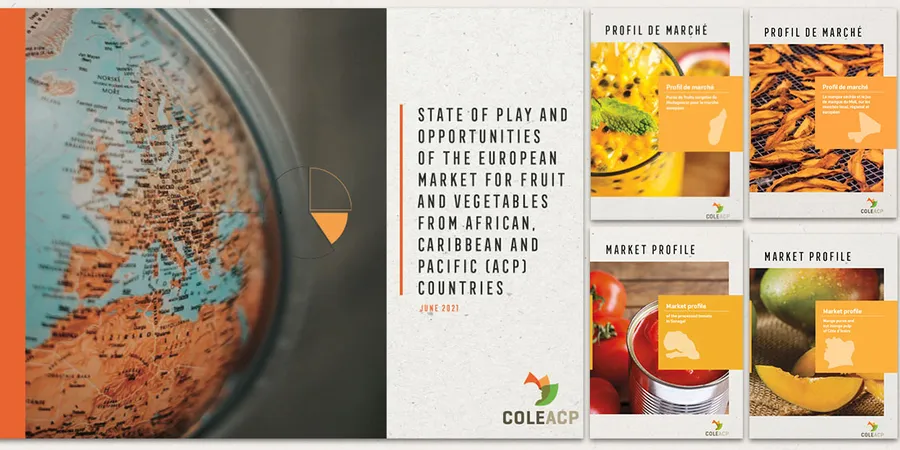
The latest market study from COLEACP’s Market Intelligence service is “State of play and opportunities of the European market for fruit and vegetables from ACP countries” – more information available here. COLEACP also produces market profiles – targeted studies focusing on specific countries and/or commodities, often at the request of stakeholders. The most recent are:
 News
News
Just published – the European market for fruit and vegetables from ACP countries
The latest market study from COLEACP’s Market Intelligence service is “State of play and opportunities of the European market for fruit and vegetables from ACP countries”.Four years on from our original 2017 report, this new publication provides an update on the evolution of the European market, and development opportunities on this market for fruit and vegetables of ACP origin.
 News
News
COLEACP training – Improving SPS practices along the whole Penja pepper value chain
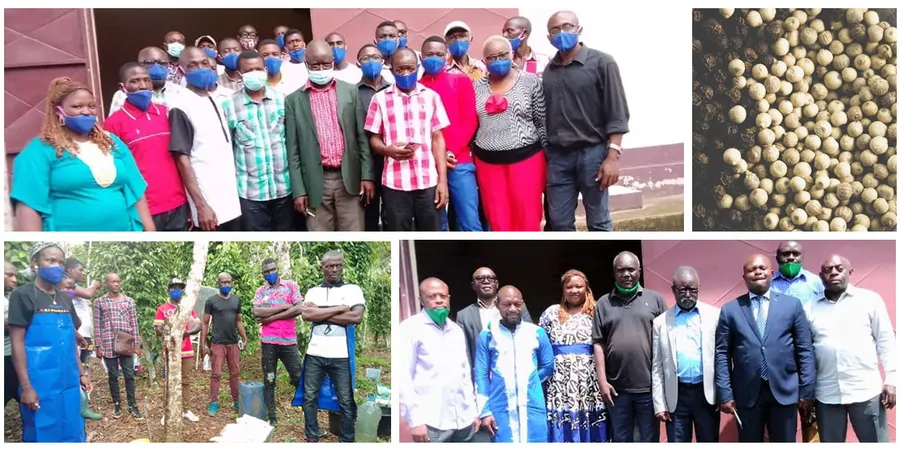
Since June, training on good SPS practices for the Penja pepper sector has been continuing through the Standards and Trade Development Facility (STDF) project “Strengthening the phytosanitary monitoring and certification system for Cameroon’s fruit and vegetable sector”.Stricter European regulations since 2016 threatened to limit the export potential of Penja pepper, a unique agricultural product originating from Cameroon. This project centres on supporting Penja pepper producers to understand the SPS risks and strengthening their capacity to deal with them. The emphasis is on multiple levels of training and engagement across all sectors of the Penja pepper value chain, including nursery workers, small- and large-scale producers, agricultural input distributors, processors and exporters. It also includes the national and regional authorities responsible for issuing phytosanitary certificates and for research.
 News
News
Business coaching: SwanCape Farms pushing to the next level
Dr Agnes FasehunDuring June and July 2021, SwanCape Farms, a fast-growing farm-to-door company in Nigeria, participated in business coaching with an Agri-Logic expert, organised and facilitated through the Fit For Market programme. Throughout 2020-21, business training and coaching has formed a key part of COLEACP’s Covid-19 Action Plan.The agri-business coaching focused first on issue resolution – human resources, cashflow and profitability, operations, competition and USPs – with the aim of moving from a “fire-fighting mode” to a “strategic thinking mode”. This was followed by a comprehensive strategy review, and planning for change to ensure that insights and learnings are implemented and embedded in the business.Following the 11 coaching sessions, Dr Agnes Fasehun, Managing Director of SwanCape Ltd, reports that the company has restructured its organisational chart and set strategic goals for the next four quarters. Changes to the weekly operational schedule now enable SwanCape to optimise delivery to supermarkets, and overall revenue has increased. Clarity on roles has enabled the entrepreneur to restructure the team and hire three new staff fit for the roles. Tools and templates provided have allowed the entrepreneur to document strategy, improve knowledge on the financial position, improve focus, and develop an action plan to improve profitability and scale the business from next year onwards. SwanCape’s enhanced e-commerce platform is at www.swancapefarms.comDr Fasehun worked closely with an expert facilitated by COLEACP – Sanne Steemers of Agri-Logic, a network of experts in management, consultancy and research that “operates where agricultural production, development, international trade and consumer markets intersect”.
 News
News
Deadline extended: Join the Organic Africa Pavilion at BioFach 2022
There is still a chance for African organic suppliers to take part in the Organic Africa Pavilion at BioFach, which is happening in Nuremberg, Germany from 15 to 18 February 2022. The deadline for applications has been extended to 30 September 2021.