
Cultivating
Sustainable Futures
 News
News
International Women's Rights Day 2021
Women still face too many challenges in finding jobs in the formal economy or starting and developing businesses, due to insufficient conducive policies and normslow rates of land ownership, as well as access and control over resources and limited access to credit.However, women are a significant entrepreneurial force as owners of farms, input supply stores, service delivery businesses, and processing and export firms whose contributions to local, national, and global economies have significant impact on poverty-reduction, employment creation and wellbeing of rural communities and society at large. We need to promote and protect women’s jobs along the food chain, from farm to fork, and advocate for fair wages and better working conditions. Therefore, supporting women entrepreneurship across the value chain is one of the most powerful routes to promote agriculture, agribusiness and boost sustainable rural development. To respond to highly competitive markets in local, regional and export markets and capture gains in value-addition activities, women entrepreneurs need more training and skills in business management, marketing and digital skills along the value chain with an emphasis on growth sectors, green technologies and safe and sustainable farming and agro-processing practices. With this background and willing to support farmers’ organisations, cooperatives and SMEs to seize opportunities in new markets and to establish key partnerships to strengthen their competitiveness, PAFO and COLEACP promote Innovations and Successes of African Women led Businesses and showcase entrepreneurs successes.
 News
News
Awareness-raising for operators in the pepper sector
As part of COLEACP’s STDF-funded project to improve the SPS quality of Penja pepper in Cameroon to facilitate access to international markets, the project’s national coordinator has been organising last week awareness-raising meetings in the different production basins. These meetings aimed to inform the different actors (producers, nursery, etc.) about past and future activities. Many training sessions are planned to train these operators on good SPS practices for the production and processing of Penja pepper. Awareness-raising sessions are organised throughout the week.
 News
News
AGROSEAL LTD (Ghana) – implementation of a quality management system
AGROSEAL LTD is currently receiving COLEACP Fit For Market support to implement a quality management system that complies with national and international requirements. This collaboration includes capacity building and support for the Agroseal team to develop a procedures manual. Agroseal is a Ghanaian agricultural trading company with a focus on fresh fruits and vegetables (pineapple, orange, okra, mango, etc.), which aims to empower smallholder farmers through innovation and technology to gain reliable access to higher-end markets, increasing incomes and reducing poverty. The COLEACP training will also be relayed to the small-scale producers the company works with. The Fit For Market programme is implemented by COLEACP within the Framework of Development Cooperation between the Organisation of African, Caribbean and Pacific States (OACPS) and the European Union.
 News
News
Uganda: Agricado Farms gains certification
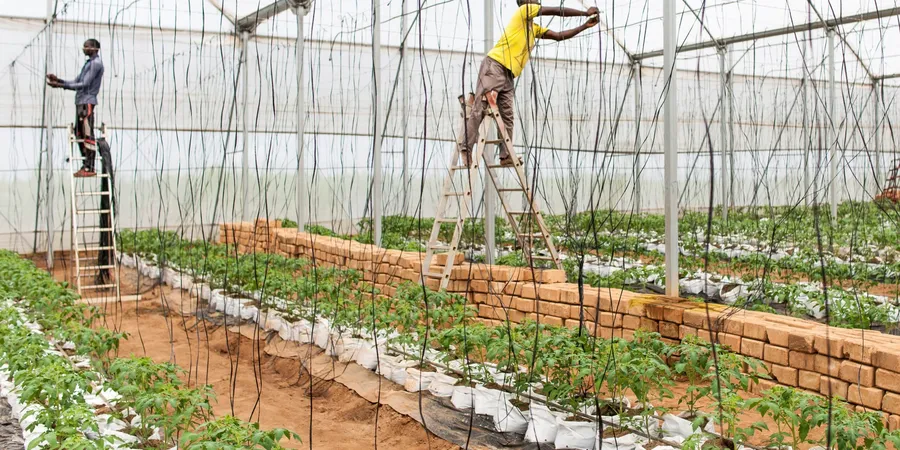
A year’s effort by the Agricado Farms team in collaboration with COLEACP’s Fit For Market programme has resulted in the company’s achievement of GLOBALG.A.P. certification (Option 1 – Single Producer Certification). Confirmed following an audit in January 2021, this certification will have a major positive effect on the company’s ability to access international high-end markets. Agricado Farms Uganda Ltd is a new fresh fruit and vegetable company located in Kampala, Uganda. It targets the European and Middle Eastern markets for supplying hot peppers, green and red chillies, eggplants, okra, sweet potato, peanuts, avocado and macadamia nuts. To enhance capacity building for its staff and to achieve GLOBALG.A.P. certification, Agricado Farms submitted a request for support to the Fit For Market programme. A Memorandum of Understanding, including an individual action plan, was signed with COLEACP after a meeting at Fruit Logistica (Berlin) in February 2020. Although in March 2020 Covid-19 had a major impact on the horticultural sector in Uganda, with a lot of restrictions on local movement and even temporary closing of the airport in Kampala, Agricado Farms found solutions to reach the main goal of achieving GLOBALG.A.P. certification by the end of the year. Fit For Market support included group training on hazard analysis and critical control points (HACCP), offering the most important building blocks to develop a food safety management and traceability system according to international standards. As a second step, COLEACP organised technical assistance with a baseline assessment to identify corrective actions to be taken in terms of documentation, procedures, infrastructure and training to reach compliance with GLOBALG.A.P. Following this needs assessment, the company’s quality management team took part in training on how to introduce the GLOBALG.A.P. standard to its workers. On top of this training, tailor-made technical assistance was offered to close the remaining gaps to meet all GLOBALG.A.P. requirements. When all GLOBALG.A.P. requirements were in place, a final validation of the quality management system was organised in November 2020, to make sure that the certification audit would not reveal an unacceptable number non-conformities that would hinder GLOBALG.A.P. certification. COLEACP congratulates the Agricado Farms team on this achievement, especially in the demanding context of 2020. The Fit For Market programme is implemented by COLEACP within the Framework of Development Cooperation between the Organisation of African, Caribbean and Pacific States (OACPS) and the European Union.
 News
News
Study in CEMAC on procedures for inspection and control of the entry, sale and use of pesticides
A diagnostic study on inspection and control procedures for the entry, sale and use of pesticides is currently under way in the Economic and Monetary Community of Central Africa (CEMAC). Implemented under COLEACP’s Fit for Market SPS programme, the study was initiated by a request from CEMAC’s Comité Inter-Etats des Pesticides de l'Afrique Centrale (CPAC), which coordinates the management of pesticides within CEMAC. The study will involve defining an action plan for the six CEMAC States, which should contribute to reducing the circulation of illegal pesticides and improving the SPS quality of their agricultural production. The first results are expected by the end of May 2021. Find all the news of our actions in Cameroon here.The Fit For Market SPS programme is implemented by COLEACP within the Framework of Development Cooperation between the Organisation of African, Caribbean and Pacific States (OACPS) and the European Union.
 News
News
Brexit tools: Importing from and re-exporting UK goods to the EU
The UK Government has provided these useful tools to help importers and exporters negotiate the steps for importing from, and re-exporting UK goods to the European Union: Flowchart diagram (pdf) Step-by-step process Rules of Origin presentation form: Defra_EU_Rules_of_Origin_Business_Guidance_Presentation.pdf (mcusercontent.com) Rules of Origin business guidance documents: Defra_EU_Rules_of_Origin_Business_Guidance.pdf (mcusercontent.com) Sector specific guidance focused on the most relevant Rules of Origin articles and with industry specific examples: EU_RoO_Sector_Guidance_All_Sectors.pdf (mcusercontent.com)
 News
News
Dominican Republic - webinar 2 co-organised by COLEACP and JAD
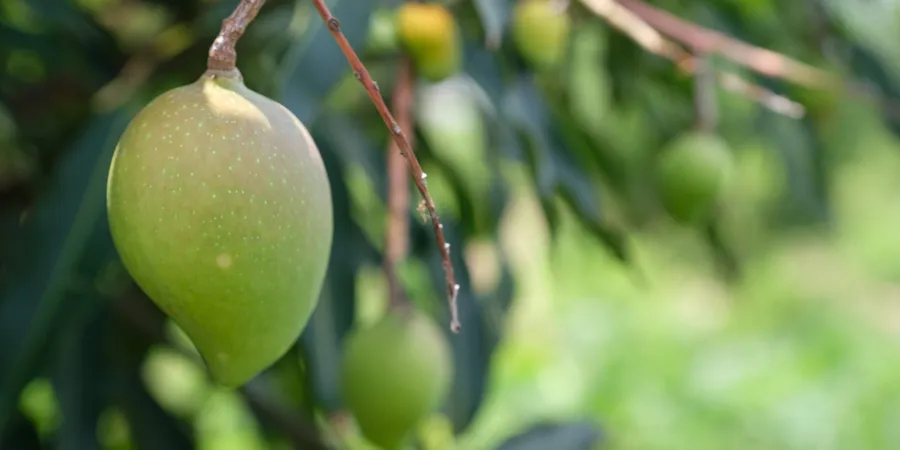
In collaboration with the Dominican Agroenterprise Board (Junta Agroempresarial Dominicana, JAD), COLEACP is organising a series of webinars on market access for processed products in the pineapple, mango and avocado sectors. These are part of the CALIFRUP project “Quality enhancement for the development of MSMEs in the processed fruit value chain”, which aims to support the strategy of value chain development and, specifically, to strengthen the processed fruit value chain.The second webinar, on 17 February, focused on regulatory and private requirements, and the action plan that companies will need to implement before being able to export mango, pineapple and avocado to Europe. The webinars are supported through COLEACP’s Fit For Market programme.
 News
News
Finding alternatives to control priority pests and diseases
Research & Innovation activities at COLEACP aim to ensure that solutions are available to farmers to tackle priority pests and diseases Challenges following EU ban on PPPs Every year, the use of many plant protection products (PPPs) is affected by regulatory changes – that is, changes in approvals and Maximum Residue Limits (MRLs). This has a direct impact on producers who often must change production methods (good agricultural practices – GAP) to comply with the new rules. Any non-compliances can lead to the interception and destruction of goods, and thus cause significant financial loss as well as reputational damage.It is essential for producers to keep up-to-date and to make any necessary adjustments in time to ensure compliance with the regulations, either by adjusting the GAP, or using alternative control methods.However, this is not an easy task. Many recently banned PPPs in the EU have been widely used for many years as inexpensive and effective broad-spectrum compounds, and in many cases no comparable alternatives are currently available.With this in mind, Research & Innovation activities at COLEACP aim to ensure that solutions are available to farmers to tackle priority pests and diseases. Invitation to take part This work is a participatory and iterative process where all stakeholders (farmers, governments, NGOs, PPP manufacturers, etc.) are invited to contribute to identify the most relevant research and innovation activities. If you want to learn more, contact us at: network@coleacp.org COLEACP supports research into new alternatives COLEACP's Research & Innovation Service acts as a research broker, bringing together a diversity of resources to adapt and disseminate technologies and solutions that contribute to safe and sustainable food. One of our core activities addresses the need for effective and affordable crop protection in ACP horticulture. Climate change and regulatory reforms are contributing to serious challenges for growers, and there is a pressing need to develop new methods of pest management, as well as to facilitate access to the most appropriate and affordable technologies available.In the framework of the EU-funded Fit For Market SPS programme, our team of experts have drafted a list of key priorities (crop-pest combinations). Criteria for selection1 comprise a variety of factors, including regulatory changes, and also the efficacy of existing solutions, trade volumes (import/export), social impact, and farmers’ feedback based on a survey conducted within the COLEACP network.The next step is to identify existing crop protection products that have the potential to address these priorities, but which are not currently tested or registered in ACP countries. By bringing together farmers’ knowledge, the research, start-ups and PPP manufacturers, COLEACP experts seek to identify the most relevant solutions and fast-track their access to the market. This support may include technical backstopping, bioefficacy screening, establishment of GAPs, trials for registration and other support towards ACP registration, and the establishment of Codex MRLs.In practice, this support is reflected in field trials and targeted studies. Based on the prioritisation exercise conducted in 2019, COLEACP is implementing a trial programme to generate the necessary data and knowledge to fast-track registration of relevant technologies. Field trials to generate data and fast-track registration Table 1 summarises field trials conducted since the launch of Fit For Market SPS in 2019 and planned for the first half of 2021.Table 1 Field trials conducted since 2019 and planned for the first half of 2021
 News
News
News digest: Agri-food markets & production
The situation in the global papaya market is quite stable at the moment (Fresh Plaza, 12 February). But the lack of air cargo capacity due to the coronavirus pandemic has had a significant impact on the supply and price levels of papayas, which are significantly more expensive than in other years.
 News
News
News digest: Policy
Capping a year that was one of the three warmest on record, the UN Environment Programme (UNEP) has released its fifth Adaptation Gap Report, finding that although many nations have advanced in adaptation planning, developing countries face a significant gap in adaptation finance (IISD, 25 January). The report places special focus on nature-based solutions that promote protection, sustainable management and restoration of ecosystems. It finds that nature-based solutions must receive significantly greater funding and attention, given the low-cost benefits they bring to climate change adaptation, society and biodiversity.
 News
News
COLEACP's new training in performance management for horticultural SMEs
COLEACP has been providing training in performance management, effective communication and lean management principles for the senior managers of AAA Growers, one of Kenya's leading exporters of premium and prepared vegetables and the country's largest commercial grower and exporter of chillies.
 News
News
Vert Limited – Working towards a sustainable and inclusive business
During 2020, Kenyan SME Vert Limited received support from COLEACP’s Fit For Market programme to update its policies towards social compliance. Vert Limited is a Kenya-based, indigenous company specialising in growing and exporting fresh produce, targeted specifically at the European market. The company sells fine vegetables on the export market and has ventured into mango puree and dried mango. Social compliance has become an important sustainability parameter for consumers. Proof of social welfare in the form of certification has been finding its way upstream in international supply chains, and the horticultural industry is no exception. One commonly requested standard by European importing companies is the Sedex Members Ethical Trade Audit (SMETA), a social auditing methodology that enables businesses to assess their sites and suppliers in order to understand working conditions in their supply chain. For Vert Limited, benchmarking its social and human resources policy against the SMETA standard demonstrates the management’s commitment to a sustainable and inclusive business.