
Cultivating
Sustainable Futures
 News
News
Brexit: Updated advice from the UK
The UK Government website (www.gov.uk/transition) now provides updated information on Brexit-related changes for businesses, including helpful step-by-step guides to: importing goods from the EU exporting goods to the EU moving goods to or from Northern Ireland The Border Operating Model for traders and hauliers has been updated following the UK–EU trade and cooperation agreement, and case studies are provided representing end-to-end scenarios between GB and EU for importing and exporting goods from January 2021. These show not just the journeys for standard goods, but also for journeys with additional requirements such as those using the Common Transit Convention or transporting controlled goods.
 News
News
Covid-19: Business e-coaching for Kenyan MSMEs
One of COLEACP’s responses to the Covid-19 pandemic was to provide online Business Survival Bootcamps to assist horticultural companies with a critical review of their business performance and cashflow constraints as a direct result of the crisis. A total of 73 Kenyan participants actively participated in these bootcamps during June–July 2020.As a follow-up, support was available to customise further business support for SMEs under COLEACP’s Fit For Market or NExT Kenya programme. Innovative e-coaching support was designed for horticultural MSMEs and producer groups to assist them to rebuild resilience in preparation for the recovery phase by providing decision-making support and guidance, so that they have the necessary knowledge and information to make informed choices in light of the challenges.During the second half of 2020, six Kenyan SMEs actively participated in these coaching sessions, which provided valuable feedback on how to address acute business needs. Priorities differed, depending on each company’s unique situation, but covered among others: cost and cashflow management improved human resources management supply chain management.Mrs Maina, Director of Vert Ltd, a company specialising in fine vegetables and mango processing, reported that the experience provided valuable insights for the company to pivot its operations and verify its assumptions for a new business line.
 News
News
Business support for Kenyan horticultural SMEs
Reviewing the business plan During the second half of 2020, COLEACP's Fit For Market and NExT Kenya programmes supported five Kenyan SMEs to update their business plan via an in-depth review or coaching. The companies particularly appreciated the detailed support from experts in the horticultural sector. An external view to critically assess the company’s operations and underlying assumptions has been an eye-opener for many SMEs. Joint construction of the business plan and priorities ensures ownership and provides companies with clarity on their unique position, facilitating discussions with prospective financial partners. A business plan is first and foremost a tool for presenting the company's strategy, demonstrating the quality and potential of identified opportunities; defining priorities by setting both operational and financial objectives; and identifying the main risks by providing alternative scenarios (particularly in terms of the assumptions underlying financial projections). It is a tool to help manage the company and ensure its projects are coherent and feasible. SMEs requested this COLEACP programme support in order to: validate assumptions on a new business venture (a new product line, change in the business model, investments in the company) access external finance (banks, international financial institutions) optimise business management practices and gain better understanding of the company’s strategic positioning, risk exposure, cost structure, cashflow, etc.Links to financial institutions and complementary support programmes COLEACP is actively developing relationships with international financial institutions and other donor programmes that provide support to the Kenyan horticultural sector, and sharing information on calls for application, including the following: EU-funded AgriFI Challenge Fund in Kenya: more than 200 companies applied for funding in the most recent call (August 2020), which will be followed by a third and final award of financial support in early 2021 KIEP 250+ (Kenya Industry and Entrepreneurship Project) implemented by the Ministry of Industrialization, Trade and Enterprise Development (MoITED) with support from the World Bank: the first call for applications closed in December 2020; new calls will be organised in the coming months Common Fund for Commodities: this United Nations fund organises a yearly call for applications; the next one is due before 15 April 2021.Earlier in 2020, COLEACP signed a Memorandum of Understanding with the ABC (Agri-Business Capital) Fund, which provides loans and equity investments adapted to the needs of rural SMEs, farmers’ organisations, agripreneurs and rural financial institutions. It particularly targets commercially viable ventures that can help create employment and improve rural livelihoods, especially for youth and women. The fund also prioritises climate-smart projects that promote sustainable production. Read more about COLEACP's partnership with the ABC Fund here.
 News
News
SCS International - Cardboard packaging manufacturing plant
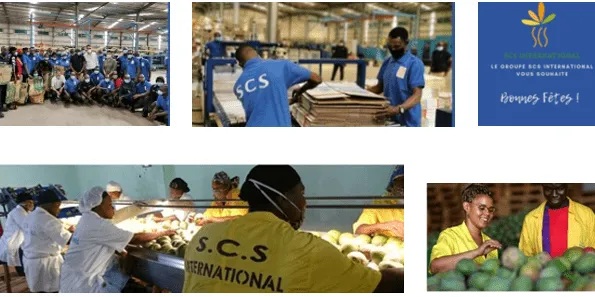
Malian horticultural company SCS International, a COLEACP Fit For Market partner, has been planning for several years to set up a cardboard packaging manufacturing plant. SCS has announced that the plant is now fully operational, and in 2020 it has already supplied more than 1 million cartons and nearly 3 million paper bags. In addition to creating new jobs, the plant will enable exporting companies and manufacturers in Mali and the sub-region to benefit from local sourcing.
 News
News
Mango Campaign Report 2020
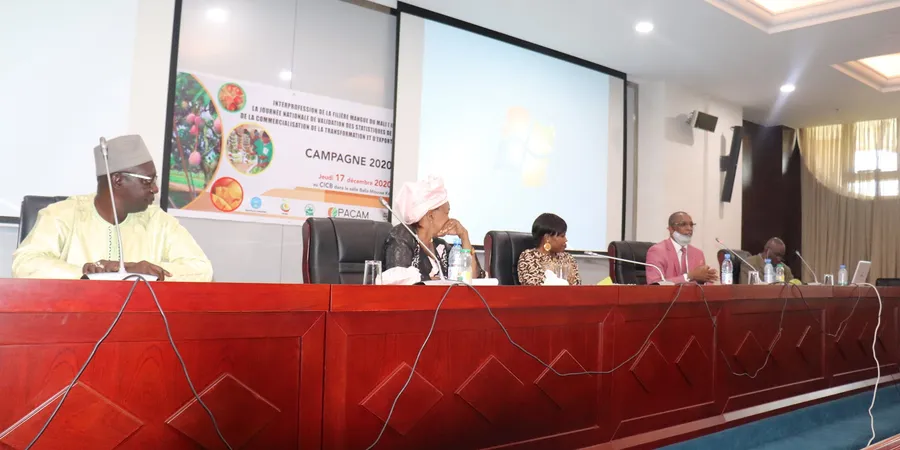
On 17 December 2020, the national day for the validation of statistics on mango production, marketing, processing and export was held in Mali. This day brought together the various stakeholders of the mango sector in Mali who were able to witness the results of the sector and exchange on future actions. Special attention was given to the impact of COVID-19 on the campaign. The Malian channel CHERIFLA TV, takes a look back at this day chaired by Mr. Moctar Traore, representative of the Minister of Trade and Industry.
 News
News
LINGFIELD FARMS strengthens skills on Good hygiene practices and traceability principles
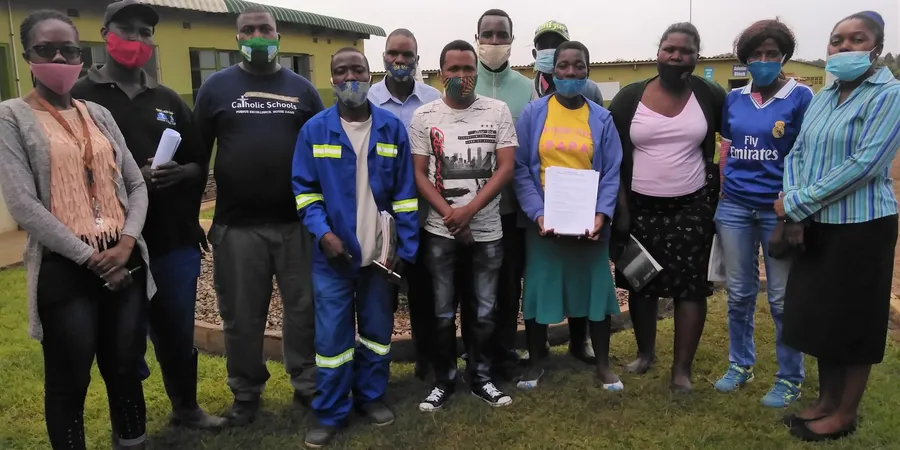
Lingfield Farm is a family-run horticultural producing company with more than 120 permanent and 300 casual workers. The company was supported by COLEACP to follow a training on « Good hygiene practices and traceability principles » for the technical staff on-site at the company’s premises in Gweru, Zimbabwe. This training aims to refresh and strengthen the staff’s capacities to successfully and systematically meet Food Safety Management requirements of their produce (peas and fine beans) reaching the export market.
 News
News
1st session of the training of trainers and facilitators on good SPS practices for Penja pepper
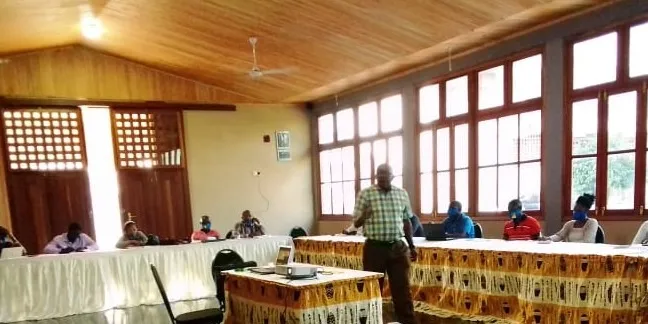
As part of the STDF/PG/593 project, a training session has started on Monday 21 December aimed at strengthening the technical and pedagogical skills of experts and strategic actors in the Penja pepper value chain.At the end of this training, the participants will be able to act as trainers and coaches, especially for the training courses planned in the framework of this project. The STDF Cameroon project, led by COLEACP, aim to improve the sanitary and phytosanitary quality of Penja pepper.
 News
News
UPCOMING FIT FOR MARKET SUPPORT IN SOMALIA
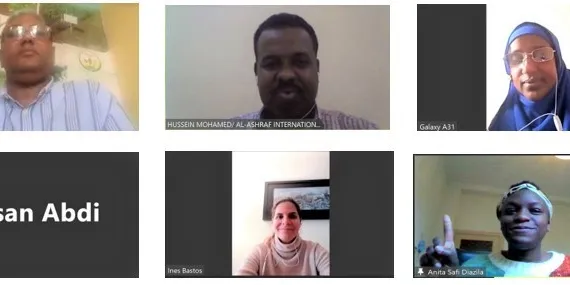
A meeting with representatives of Somali horticultural companies, cooperatives and producers’ associations was organised in December 2020. Inês Bastos (Regional Programme Manager) and Anita Safi Diazila (Project Officer) introduced COLEACP's ongoing programmes and activities, and learned more about the activities of the different stakeholders. Requests for Fit For Market programme support following the meeting will lead to the signature of Memoranda of Understanding, with subsequent access to group training, to the COLEACP network, and to e-services (e-learning, e-library, e-GAP). In 2021, COLEACP will begin working with a leading horticultural company in Somalia to strengthen the technical skills of extension staff on key issues, including food safety, hygiene, traceability, and good agricultural and postharvest practices. COLEACP support will also contribute to capacity building for extension staff to enable them to raise awareness and to train workers and small farmers in good practices using COLEACP's distinctive training-of-trainers approach. Before the civil war that began in 1991, bananas and sugarcane were the country's major cash crops. Due to lack of inputs, drought and poor infrastructure, cash crop production and exports have been declining sharply. In central and southern Somalia, irrigation is restricted to the relatively and continuously diminishing fertile areas around the Shabelle River, where the main crops are maize, rice, sesame, cowpeas, bananas, papayas, lemons, grapefruit and mangoes (source: International Fund for Agricultural Development).
 News
News
Developing Good Practice Guides
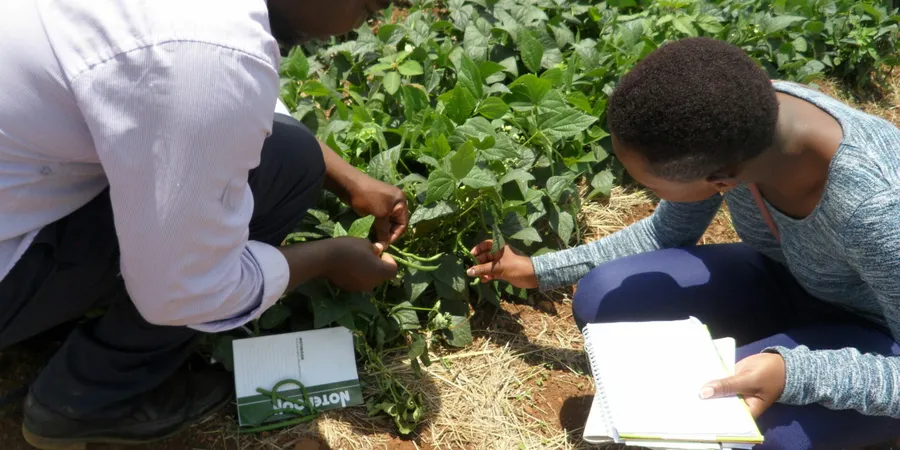
During 2021 COLEACP will be providing a team of expert consultants to support national/regional initiatives to develop Good Practice Guides for horticultural value chains.A Good Practice Guide is intended to help all the different actors working in a particular horticultural sector to produce their crops and products under the best sanitary and phytosanitary (SPS) conditions. The Guides will harmonise specifications with international SPS standards and the adoption of Good Agricultural Practices (GAP), Good Plant Protection Practices (GPP) and Good Hygiene Practices (GHP), all based on the hazard analysis and critical control points (HACCP) approach.It is important to note that these Good Practice Guides will be developed, disseminated and kept up to date by stakeholders within each value chain. They are not COLEACP publications – they should be written, owned and published by the professionals, within each country/region and crop sector, who will inform and use them. The stakeholders in the sector who take on this task will receive practical support throughout the process from COLEACP expert consultants.An effective Good Practice Guide impacts on all stakeholders within the sector, as links along the value chain affect one another, and also have a clear impact on the sector as a whole – on how it functions, and how it is regarded, on local, regional and international markets. For example, even one interception of infested consignments by the European Union, or another international or regional market, has the potential to threaten the entire export sector.COLEACP’s team of expert consultants will be working with professionals in each value chain to develop Good Practice Guides. The first seven sectors and countries will be: Avocado – Kenya Beans/peas – Kenya Capsicum – Uganda Leafy vegetables – Togo Mango – West Africa Pineapple– Benin Potato– Guinea Work will begin on the first step of the five-step development process from January 2021.
 News
News
COLEACP welcomes 100+ new members in 2020
During 2020 the association ratified 118 new members. COLEACP’s membership now totals 488, from European Union and 45 countries across the African, Caribbean and Pacific regions. They range from large-scale operators to SMEs. Among the 118 new members, the highest representation is of ACP producer/exporter/processor groups (53%). The remainder comprise a growing number of professional organisations of ACP producers/exporters and horticultural supply chain support organisations (private/public sector & CSOs); also European importers; service providers; associated operators; and training/research centres & universities. We are looking forward to reaching the milestone of 500 members early in 2021.
 News
News
International Trade Fairs 2021: Expected participation of COLEACP and partners
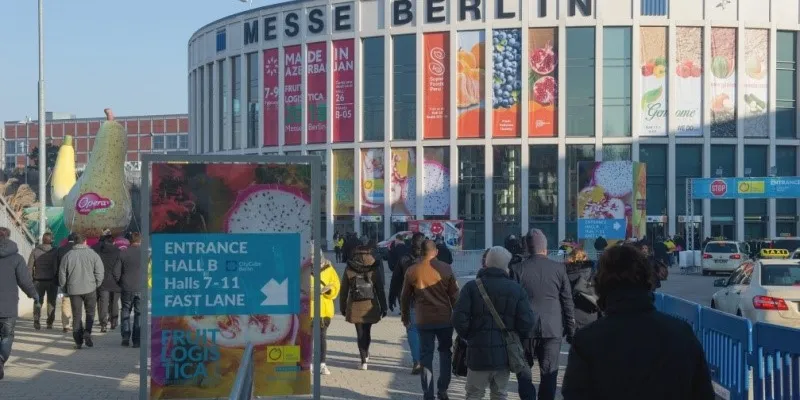
Supporting companies attending international trade fairs in the horticultural sector is one of the activities of COLEACP’s Business Development department. In November and December 2020 we asked COLEACP members and partners to let us know which trade fairs they would like to participate in during 2021, to help us prepare for our future participation in trade fairs and other professional events, in person and virtually. The international trade fairs have adapted to the Covid-19 situation by developing new ways of digital participation (virtual stands, B2B meetings, webinars), or by adapting their traditional physical format to the health measures in force in the host country. The surveys were conducted in French and English. There were 70 French-speaking respondents, and 49 English-speaking respondents. There was a very clear answer to the question "Would you like COLEACP to continue to organise your meetings with buyers at these trade fairs?" – 97% of French speakers and 96% of English speakers answered "Yes". The four trade fairs we consulted about were: BIOFACH eSpecial 2021: 17–19 February in Nuremberg (purely digital format) MACFRUT 2021: 4–6 May in Rimini (face-to-face and two digital forums) FRUIT LOGISTICA Special Edition 2021: 18–20 May in Berlin (physical + digital tools) FRUIT ATTRACTION 2021: 5–7 October in Madrid (face to face) The proportions of those intending to take part (whether as a visitor or exhibitor) are very similar in both language groups. However, more Anglophone than Francophone respondents hope to attend as exhibitors, particularly at Fruit Logistica. Overall, for the four trade fairs, around 20% of respondents are planning to attend as exhibitors. The highest planned visitor attendance is for Biofach eSpecial (English-speakers) and Fruit Logistica (French speakers). We also asked for recommendations for any trade fairs and webinars (European, African or on other continents) that COLEACP could take part in. For both anglophone and francophone respondents, there was general interest in trade fairs on the African continent. English-speaking respondents specifically mentioned the National Organic Agriculture Business Summit (NOABS) in Nigeria; the HortiFresh fruit and vegetable fair in West Africa; WAOC (the West African Organic Conference); and IFTEX (Kenya’s Flower Industry Expo). There was also interest in Middle-Eastern and Asian events such as WOP Dubai (World of Perishables); Asia Fruit Logistica; and Biofach Japan for organic products. A number of respondents were also interested in additional European events, including IFTF (International Floriculture Trade Fair) in Amsterdam; the London Produce Show; SIAL Paris; and the Anuga food fair in Germany. Many French-speaking respondents mentioned SARA (Salon international de l’Agriculture et des Ressources Animales, Abidjan, Côte d’Ivoire), where COLEACP exhibited in 2019. Other suggestions for Africa were IATF (Intra-African Trade Fair, Kigali, Rwanda); FIARA (Foire Internationale de l’Agriculture et des Ressources Animales, Dakar, Senegal); Fidak (La Foire Internationale de Dakar); La Foire Internationale de Lomé, Togo; and Nigeria Agrofood in Lagos. Cocotech, organised by Cogent, was also mentioned. Several respondents mentioned a specific interest in investment and business opportunities. In Europe, specific mention was made by several people of SIA (Salon International de l'Agriculture, Paris); Salon Marjolaine in Paris; medFEL in Perpignan, France; and SISAB (the trade fair of the Portuguese agri-food industry). Again, there was interest in in Middle-Eastern and Asian events, with specific mentions of Dubai. There was some general interest in USA and Canada, and one respondent mentioned Russia.
News
Brexit: challenges for ACP horticultural exporters
Following on from COLEACP’s November Brexit workshop and background information document, COLEACP has just published up-to-date information on the Brexit process, and specifically the potential impacts on ACP horticultural producers and exporters. Preparing for the UK’S exit from the EU customs union and single market from 1st January 2021: Challenges for ACP horticultural exporters – Background Information Document N°2 The United Kingdom’s withdrawal from the EU customs union and single market from 1 January 2021 is part of the “Brexit” process resulting from the UK’s decision to leave the European Union. It will have serious short-term effects and long-term implications for the conduct of ACP horticultural trade with the UK, particularly along triangular supply chains that deliver goods to the UK via initial ports of landing in the EU. Some adjustments will also be required in certain areas for ACP horticultural exports to EU27 markets, especially for deliveries to the Republic of Ireland via the UK. As Freshfel Europe recently noted, there are still many uncertainties around technical, trade facilitation and contingency measures to minimise disruption in January 2021 and beyond. As negotiations between the EU and UK are still ongoing, and some key issues and areas for action continue to evolve, regular updates will be provided on COLEACP’s websites until the end of the year. The updated document focuses on all the supply chains impacted:Direct exports (i) to the UK; (ii) to the EU27Indirect exports (i) to the UK via the EU27; (ii) to the EU27 via the UK; (iii) to the Republic of Ireland via the EU27 and the UKSpecific information is provided to clarify related issues, including triangular supply chains and the “UK land bridge”, and actions that could be taken by ACP horticultural exporters. There are also sections detailing:Customs and trade-related documentation issues: non-tariff issues; the Authorised Economic Operators (AEO) scheme; making use of the Common Transit Convention; GB sanitary and phytosanitary (SPS) requirements and controls; and organic certificationBorder control issues: direct delivery of ACP horticultural exports to the UK; IT system challenges; staffing challenges; and business preparations for EU/UK border controlsLogistical challenges: increased warehousing and cold storage costs; “groupage” issues; potential UK road haulage challenges; and the border infrastructureFuture market developments: tariff issues in trade with the UK; the most favoured nation (MFN) tariff issue; understanding and applying for Economic Operators Registration and Identification (EORI) numbers and related Binding Tariff Information (BTI) and Binding Origin Information (BOI) decisions; the Registered Exporter (REX) system of origin certification; key contractual concerns; and necessity markets versus luxury purchase markets