
Cultivating
Sustainable Futures
 News
News
Integrated management for false codling moth control
Virtual training on "Integrated management measures for false codling moth (Thaumatotibia leucotreta) control" is being provided for both private sector (managers of packaging stations/production) and public service (phytosanitary inspectors) through COLEACP's two Fit For Market programmes.30 participants from The Gambia, Ghana, Nigeria and Zimbabwe are learning more about the new EU Plant Health Regulation regarding FCM; the use of FCM protocols along the value chain, including data-collection forms; the responsibilities of each player along the value chain towards FCM mitigation; and the phytosanitary treatments for FCM.
 News
News
Pest free areas for production and export of curry leaves in Ghana
The Plant Protection and Regulatory Services Directorate of the Ministry of Food and Agriculture, in collaboration with COLEACP, organised a workshop in Accra on establishing and maintaining pest free areas for the production and export of curry leaves in Ghana. The workshop brought together officials from the Vegetable Producers and Exporters Association of Ghana (VEPEAG), Ministry of Trade and Industries, Ghana Export Promotion Authority, and the Directorate of Crop Services of the Ministry of Food and Agriculture. Other stakeholders also participated online via Zoom.Read the full news published by Modern Ghana on their website.
 News
News
Impacts of Covid-19 on horticultural SMEs in Ghana
COLEACP’s surveys in the early months of the pandemic aimed to gather first-hand information on the impact of Covid-19 on operators of horticultural businesses, and assess how support from COLEACP and other partners could best be redirected as a response. These were not intended to be systematic surveys – respondents were self-selecting, and the operators taking part varied greatly in size and operation. But the results provide an illuminating qualitative snapshot of the key impacts of Covid-19 to date, and have been used to inform COLEACP’s and partner organisations’ priorities going forward.Key points: The main impacts have been on customer demand, with reduced supplies from producers, and on logistics, particularly air freight. Turnover has decreased 50% on average for the participating companies. While companies have lost 5 tonnes of product per month on average, the majority have found alternative markets (generally local markets). All respondents are experiencing liquidity problems and are unable to pay overheads or producers. Companies are relatively aware of government aid available to them, although few actually benefit from it at this stage. The survey was open between 3 and 16 August. The 12 companies that responded were COLEACP members and partners, and members of Sea-freight Pineapple Exporters of Ghana (SPEG) and other professional organisations. Most of the respondents operate in several value chains simultaneously: mainly pineapple, followed by mango, processed fruit and chillies. Half operate on European markets, 40% on local markets, and one company exports to Morocco. The main sectors affected were pineapples, chillies and sweet potatoes, with 100% of companies active in these sectors reporting an impact. In general, all sectors are affected, including processed products. Domestic as well as international markets have been impacted, with all respondents having some activity on local markets (including with local processing factories). The clearest impact was due to the decrease in airfreight capacity (50% of companies), followed by reduced supply of products from producers (42%). Over 70% of the companies had sold larger quantities on the local market, and 50% were still trying to identify potential new markets. One company has started to process its products, and one company has also started to produce compost with unsold produce. 50% of respondents said they had access to an online platform to sell their products (although not all found this useful). Of the 12 enterprises that completed the survey, 11 mentioned a decrease in turnover, and one enterprise had not yet been able to estimate this impact. 42% of respondents saw turnover reduced by more than half, and one company estimated losses at over 80%. Impact on turnover Eight companies were able to quantify this impact and provided an estimate of their loss over the first half of 2020, which amounts to between €250 and more than €1 million. Compared with forecasts, the impact was mainly felt in terms of ordering from current or potential customers (for more than 60% of respondents). Slightly fewer than half of the companies were not able to meet existing orders; one company saw no impact on orders; and one company saw an increase in orders. In terms of volume sold, the impact is mainly negative. One-third of the companies experienced a decrease in customer order sof 25–50%, and 25% experienced a decrease in volume of 50–75%. One company experienced an increase in orders. Impact on companies’ orders (volume) Eight companies (out of the 10 that were negatively impacted) were able to estimate the average loss per month of volume not sold. This ranged from 5 kg to 36 tonnes of loss in marketed volume per month. The main cashflow challenges faced by companies during the crisis are their difficulties in covering overheads (more than 70% of companies), followed by costs to cover inputs for new plantations (60% of companies) and producer payments (50% of companies). On prices, however, for 50% of companies market prices were similar to the same period in 2019. Prices were higher than 2019 for a quarter of companies, and lower than 2019 for the remaining quarter. 33% of companies were aware of government assistance programmes (assistance with bills for utilities, loan extensions, deferred payment deadline for certain taxes), but only one company reported benefiting from government support. Many horticultural companies employ casual workers on farms and in packhouses – daily wage-earners who are only employed when there is harvesting and packing activity. They are often the weakest in the value chain and the first to feel the impact of economic slowdown. 30% of the companies were unable to hire seasonal workers. However, 30% of respondents hired their seasonal workers as initially planned, and two businesses hired more casual workers than planned. 50% of the companies had kept all their permanent staff, even if they had to take measures such as reduced wages (33% of companies) or had to close their business for a week or more (41%). Eight of the 12 respondents work with small-scale outgrowers. Six of the eight companies saw some impact on their relationships with outgrowers. 25% were unable to guarantee markets for outgrowers’ produce, and 25% could not pay their outgrowers. Seven companies have played a corporate social responsibility role –distributing food and hand sanitisers; awareness-raising on the virus to casual workers, outgrowers or the local community. The vast majority of respondents were applying virus containment measures in their workplaces as recommended by the World Health Organization (WHO): hand washing, maintaining social distance, etc. Temperature checking was an additional measure implemented by several companies. Measures have been implemented mostly within plantations/farms (over 90% of the enterprises in packhouses/processing units (60%) and by four out of the eight respondents working with producers. The main difficulty reported was the financial cost of implementing Covid-19 safety measures (41% of companies). Finance is a major bottleneck for many companies’ operations due to increased costs for logistics, safety measures, protective clothing, etc. The majority of companies that responded prioritised financial support, or assistance with access to finance.Other areas of support highlighted included: linking buyers to suppliers; support in accessing markets; information and training (on markets, on Good Agricultural Practices, on Covid-19 related procedures for farming operations); provision of inputs and other materials; support with freight/logistics. Download the complete of survey results on the impact of Covid-19 on horticultural SMEs in Ghana: COVID19 - SURVEY _Ghana - 2020-
 News
News
COVID-19 – Update on trade and markets in ACP countries and the EU for horticultural products
Many countries have put in place special measures to reduce the spread of the coronavirus (COVID-19). These measures, as well as changes in food purchasing habits, have an impact on trade. In addition, concerns are mounting for the health and livelihoods of the workers who produce, deliver and sell our food worldwide. COLEACP remains on standby to keep all stakeholders in the horticultural trade informed about the latest major news on the evolution of the national, regional and international markets.To provide easier access to the various news items, we are organising the information in five main sections: DOMESTIC, REGIONAL, INTERNATIONAL TRADE LOGISTICS HORTICULTURAL PRODUCTION & PROCESSING EXAMPLES OF COLEACP SUPPORT POLICY RESPONSES
 News
News
Training for Africado on HACCP methodology
As part of COLEACP’s Fit For Market programme, a Kenyan expert provided remote training to Africado, one of the biggest avocado producers in the north of Tanzania. The 5-day training on HACCP methodology, within the Food Safety and Hygiene theme, involved live-streamed sessions as well as regular homework for participants.
 News
News
COLEACP and NPPOs share the results of an internal audit system
A recent e-meeting with NPPOs focused on setting up an internal audit system, supported by COLEACP’s Fit For Market SPS programme. The internal audit system relates to support for the preparation and implementation of dossiers (systemic approaches) submitted to the EU’s DG SANTE, with regard to the requirements of the new EU Plant Health Regulation for control of quarantine pests on certain fruit and vegetables.The meeting was attended by Directors and representatives of NPPOs from many countries including Benin, Burkina Faso, Cameroon, Côte d'Ivoire, Dominican Republic, Eswatini, Gambia, Ghana, Guinea, Kenya, Madagascar, Mali, Senegal, Sierra Leone, Togo, Uganda, Zimbabwe ... as well as a representative of the International Plant Protection Convention. The interactive session encouraged exchanges of information and experience between participants and with the COLEACP team. Other e-meetings will be proposed to our NPPO partners in the following weeks.
 News
News
COLEACP's "Guides to Good Practice" development
COLEACP’s Fit For Market programme is providing training to local experts in developing horticultural sector Good Practice Guides with value chain stakeholders, to support compliance with SPS standards. Local experts are benefiting from a three-part training course to master the many and varied hard and soft skills that they will need.Following on from successful completion of online training (Phase 1), yesterday we held the inception meeting for Phase 2 - training will begin next week to strengthen the experts' capacity to develop and structure a Guide through improved project management and communication skills. Phase 3 will involve personalised coaching during the process of actually developing a Good Practice Guide. The first three Guides are planned for avocado and peas/beans (#Kenya) and capsicum (#Uganda).
 News
News
NExT Kenya: coaching Kenyan flower companies on FCM management
The Kenya Flower Council, in collaboration with the Fresh Produce Exporters Association of Kenya (FPEAK), Fresh Produce Consortium Kenya (FPC-Kenya), Kenya Plant Health Inspectorate Service (KEPHIS), Kenya Agricultural & Livestock Research Organisation (KALRO), and COLEACP’s Fit For Market SPS and NExT Kenya programmes have set up a series of regional training/sensitisation forums for all producers across the country, aiming at a common approach across the industry to help drastically reduce interceptions of false codling moth (FCM) on roses exported to Europe. Events were organised in Mount Kenya, Naivasha, Eldoret and Nariobi and reached out to 170 flower companies.These events began in January 2020 with an awareness-raising event for company CEOs, followed by the development of an improved FCM management protocol for roses for technical staff and regional peer-to-peer learning sessions.Currently, eight companies that have had repeated interceptions, located across the four regions mentioned above, are benefiting from in-situ coaching to enable them to correctly implement the FCM protocol developed earlier by the agronomists. At this stage, very encouraging feedback was shared by Mr. Johnston Mulary, Advocacy Officer for KFC, who reports that the two farms already visited are very satisfied with the coaching and already look forward to the follow-up visit expected in 3 months. In addition, the FCM management protocol for roses, shared by KFC with all its members, has been very well received as an on-farm training resource.
 News
News
Impacts of Covid-19 on the horticultural sector in Sierra Leone
COLEACP’s surveys in the early months of the pandemic aimed to gather first-hand information on the impact of Covid-19 on operators of horticultural businesses, and assess how support from COLEACP and other partners could best be redirected as a response. These were not intended to be systematic surveys – respondents were self-selecting, and the operators taking part varying greatly in size and operation. But the results provide an illuminating qualitative snapshot of the key impacts of Covid-19 to date, and have been used to inform COLEACP’s and partner organisations’ priorities going forward.In June 2020, COLEACP conducted a survey of its members in the horticultural sector of Sierra Leone. The three responding companies are in the fresh production and export sector (mainly peppers, leafy vegetables, sweet potatoes and yams, also fruits such as mango and passionfruit). The companies are active on local and European Union markets.The issues identified as having the highest impacts were disruptions to domestic logistics, cargo costs and limited air freight options.Sales volumes had changed from the companies’ initial projections: all three companies said that orders were reduced by over 75% during the period March–May. All three reported cashflow challenges, particularly to cover overheads and payments for inputs. However, while two companies reported that prices had fallen compared with the same period in 2019, one company had seen prices rise.Only one of the three companies had access to an online platform to market its produce. All three said they were still working to identify potential alternative markets; current mitigation activities included selling more on domestic markets, and processing fresh produce.All three companies said they were unable to guarantee markets to their outgrowers, and two were scaling down new planting schedules. One company had reduced casual workers by 75% and the other two had stopped employing casual workers. All three companies had laid off some permanent staff, and one had to close for a period of more than 7 days.All of the companies said no direct government support was available to them; one said that it had benefited from delayed payments of taxes and utility bills.Covid-19 measures recommended by the World Health Organization were understood and applied by the companies on-farm, but slightly less so at packhouse and outgrower levels.All three companies said that their main problems were financial constraints, and placed cashflow management at the top of their priorities for support. Contingency planning for fresh produce operators, business negotiation skills, and more information on Covid-19-related procedures for farming and packhouse operations were also identified as high priorities.
 News
News
Survey results: Impacts of COVID-19 on the horticultural sector in Zimbabwe
COLEACP’s surveys in the early months of the pandemic aimed to gather first-hand information on the impact of Covid-19 on operators of horticultural businesses, and assess how support from COLEACP and other partners could best be redirected as a response. These were not intended to be systematic surveys – respondents were self-selecting, and the operators taking part varying greatly in size and operation. But the results provide an illuminating qualitative snapshot of the key impacts of Covid-19 to date, and have been used to inform COLEACP’s and partner organisations’ priorities going forward. Key points: 45% of respondents saw orders reduced by more than 50%, and a significant percentage were not able to honour existing contracts. 45% reported that prices were lower than in March–May 2019, although 27% reported higher prices than in 2019. 72% of companies had reduced the number of casual workers they employed, with half of those companies ceasing to employ casual workers altogether. In June, COLEACP conducted surveys to learn from our members and partners in the horticultural sector about the impacts of the current health and economic crisis throughout March–May. The survey was carried out with the assistance of ZimTrade, the national trade development and promotion organisation. Eleven companies responded, and the main crops affected are berries, sugar snaps, green beans, French beans and sweet potatoes. Export companies reported a big impact on their markets in Europe; the local Zimbabwean market is also affected for the vast majority of respondents. Food service and wholesale markets have been badly affected, while retail has stayed strong. Most companies reported reduced market demand from prospective clients and reduced orders from existing supply contracts. 45% of respondents saw orders reduced by more than 50%. No company experienced increased market demand, and a significant percentage were not able to honour existing contracts. 45% reported that prices were lower than in March–May 2019, but 27% reported higher prices than in 2019. Companies are facing cashflow challenges, which mostly cause difficulties in covering overheads costs and affect the ability to purchase enough inputs for the coming production season. Disturbance to domestic logistics, causing limited supply and market demand for fresh produce, was clearly a major factor. More than half of the companies report having sold more on domestic markets during the crisis, but most companies were still identifying potential alternative markets. One positive spin-off was establishing a retail store to continue supply. Unsold produce was mostly donated to employees, but sometimes went to waste or was used as compost. Two companies have started up processing, making juice, banana chips and dried vegetables. Companies used social media (Facebook and WhatsApp) to sell produce online, but no better equipped online platform is available. The companies that use outgrowers had reduced order quantities from them, as they were not able to guarantee a market for their produce. One company reported ceasing to source from more than 20 outgrowers with whom they usually work. The crisis also had a major impact on casual workers, with 72% of companies reducing the numbers employed; half of those companies stopped employing casual workers altogether. Companies did employ workforce protection measures (face masks; social distancing measures; etc.) and implement WHO recommendations at packhouse and production levels, but did not extend these practices to outgrowers. Most of the companies were not receiving any government support. Difficulties cited included lack of funds to pay wages, limited access to foreign currency, unstable and unpredictable working capital, police road blocks, and cash payments making it difficult to respect social distancing. Also mentioned was a pre-existing rural bias about the virus, with some feeling that the remoteness of the farm, away from the city, meant the virus was unlikely to be spread to them and so that containment measures should not apply to them. Suggested support actions include lobbying for export support measures such as more flights to Zimbabwe; support to farmers to reduce post-harvest losses using solar drying technologies, packaging and value addition; helping to educate farmers to be flexible regarding payment terms and to open accounts for payment; links with financial institutions to access resources to boost working capital; links to regional markets; and capacity building through training, including on value addition (in particular on drying vegetables and safe packaging), utilising sustainable and smart technologies along the value chain, and gathering market intelligence and data analysis to connect better with domestic and global markets.
 News
News
E-workshop on the implementation of an internal audit system
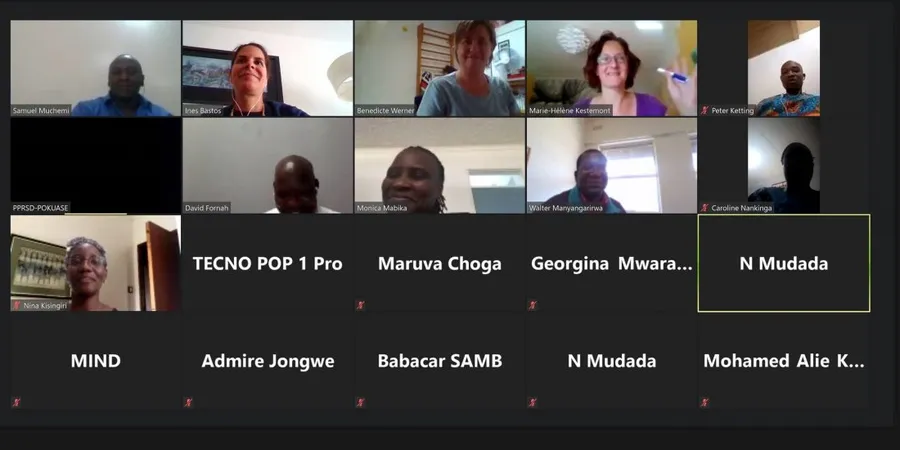
As part of #COLEACP's Fit For Market SPS programme, a e-workshop on “Implementation of an internal audit system” was held on 23 September. The virtual session gathered NPPO internal audit managers from Ghana, Sierra Leone, Uganda and Zimbabwe. During the workshop, facilitated by the expert Samuel Muchemi with participation by COLEACP's Regional Programme Managers, the country representatives shared their experiences and the status of their country's system, along with challenges and the way forward. Before the workshop, the internal audit managers had the opportunity to benefit from coaching support from the #COLEACP expert.
 News
News
Impacts of Covid-19 on the horticultural sector in Rwanda
COLEACP’s surveys in the early months of the pandemic aimed to gather first-hand information on the impact of Covid-19 on operators of horticultural businesses, and assess how support from COLEACP and other partners could best be redirected as a response. These were not intended to be systematic surveys – respondents were self-selecting, and the operators taking part varying greatly in size and operation. But the results provide an illuminating qualitative snapshot of the key impacts of Covid-19 to date, and have been used to inform COLEACP’s and partner organisations’ priorities going forward.In June 2020, COLEACP conducted a survey of its members in the Rwandan horticultural sector. The five responding companies are active in the fresh production and export sector (mainly French beans, pineapple, avocado, passion fruit, mushroom, sweet potatoes, eggplant, banana and chillies), and in processed products. All participating companies market their products on both international and regional markets, and one also sells its products on the local market.Sales volumes had changed from the companies’ initial projections: during the period March–May two of the companies saw losses on their orders of 50–75%, and one company saw losses of 25–50%. One company reported losses under 25%, and one experienced no impact.However, three companies reported that prices were similar to the same period in 2019 and one company received higher prices than 2019; only one company said prices were lower than in 2019.The main problems encountered by companies were the limited airfreight options to main destination markets and the high cargo costs.Regarding alternative markets, two companies were selling more on domestic markets and one company had processed some of its fresh produce. Two companies had not developed any alternative markets in response to the crisis. Just one of the five companies said it had access to onine platforms to market its products (Yego and Garden of Eden).Covid-19 measures – frequent hand washing, distancing, not shaking hands – are generally known and understood by most employees of the companies. Despite the lack of financial means and restrictions on movements, all the companies were able to implement measures to cope with Covid-19 that allow them to continue their operations at production, outgrower level and packhouse levels.