
Cultivating
Sustainable Futures
 News
News
What do ACP producers and exporters need most urgently? First survey results
Through an online survey, COLEACP has been asking what support is most urgently needed by the ACP fruit and vegetable sector during the current crisis. Preliminary results from 87 contributors are analysed below. Respondents were asked to prioritise the three most urgent areas where support is needed. Access to finance was clearly regarded as the most urgent area (77.0% of respondents placed this in their top three issues), followed by hygiene and food safety practices (69.0%). Support for storage/processing, logistics solutions, diversifying markets, and crisis management were all regarded as among the most urgent areas.Finance Finding solutions for access to finance was important to the majority of survey respondents (92.0%). The same number felt it will be important to disseminate testimonials to raise awareness among the general public and decision-makers about the risks facing the sector in terms of job losses and reduced income for producers (however, when asked to prioritise, only 5.7% placed this in their top three).Good hygiene and food safety practices Asked about information on good hygiene and food safety practices in relation to the coronavirus, almost all respondents (96.6%) wanted dissemination of this information. Almost equal numbers wanted a simple handout to print and distribute (e.g. within the company or packhouses) (88.5%); an information session to deliver to employees and workers (online, written materials, etc.) (88.5%); and an information session to deliver to outgrowers (87.4%). Giving more detail on the types of information and training materials, respondents suggested “A simple handout that can be printed and distributed on signs and symptoms, how it is caught and how to protect yourself, and procedure if one has it, what to do, what manager should tell the workers”; and “There is a need for lots of pictograms on hygiene issues”. Illustrative videos of how to protect yourself against COVID-19 were also suggested. Regarding the delivery of information, suggestions included training on the use of e-learning tools; and the ability to use COLEACP e-learning on android phones to reach producers without internet access. Longer-term views on health and safety included “Strengthening the capacity of the plant’s HSE department in terms of workforce and skills”, and “We need to promote home garden and online means to deliver goods”. Respondents also mentioned specific practical equipment that is difficult to access: PPE and disinfectant for workers and outgrowers; infra-red thermometers for daily temperature checking; masks, gloves, sanitising gel and dispensers; and also computer equipment to print out handouts for workers.Logistics On getting produce to markets, most respondents (81.6%) were interested in information on local transportation. Very similar numbers wanted logistics solutions for air freight (59.8%) and sea freight (57.5%).Management Asked about advice on crisis management, the vast majority of respondents wanted advice on crisis communication (92.0%). Financial management and human resources management were also important to most respondents (87.4% for both). In addition, respondents suggested (among others) advice on environmental management; help to become organically certified as organic foods are perceived to be healthier and boost immunity; assistance with spot marketing to enable distribution of supplies; and help in searching for better markets. Other requests included assistance in setting up an outgrower system for easy management, tracking and monitoring; contingency planning; management of new agricultural techniques; and reorganising workspaces taking into account the COVID-19 recommended arrangements. Stress management, and motivation of trainers, sensitisers, supervisors and extension workers, were also raised.Storage/processing Asked about support to improve storage/processing of fresh produce, respondents focused mainly on mangoes, pineapples, leafy vegetables and salad vegetables such as tomatoes, herbs and spices (turmeric, cinnamon, ginger, moringa), in addition to a wide range of fruits and vegetables. On the question of what equipment is urgently needed to improve storage/processing of fresh produce, the majority of respondents focused on refrigeration equipment (cold storage rooms, pre cooling and cold transport, mobile cold stores, refrigerated trucks, etc.), and curing and drying equipment (especially solar driers) and related solar panels and generators. Aluminium bags for herbs and spices were also requested, as was smoking equipment. Other items noted included the need to expand seedling production; seeds, plant protection products and fertilisers; control of alteration indices (water content, organoleptic, vitamins) with portable devices; and modern juice and wine production equipment. Reflecting a range of different types and sizes of businesses, respondents’ estimates of the immediate investment need to improve storage/processing varied. The majority (35.8%) suggested they would need investment of €10,000–50,000; 11.9% were in the €50,000–100,000 bracket; and 26.9% over €100,000. 25.4% felt that an investment of under €10,000 would be helpful to them. 88.5% of respondents would be interested in support to diversify markets, particularly at the local level.Other suggestions Respondents were also asked about additional actions that should be taken. Many reiterated that they needed help with staff health and safety. Many suggestions also focused on identifying alternative or additional markets, particularly local and regional markets – “provide information on the fruit needs of neighbouring countries and potential customers” – and on the wider needs that are likely to arise in the near future:“In view of the foreseeable world food crisis caused by the COVID-19 pandemic, it is appropriate for States and multilateral partners to invest in the improvement of agricultural techniques in order to increase yields.”“Now produce enough fruit and vegetables to fight hunger. So that the local, regional and European market is always supplied with fresh fruit and vegetables.”“Inform on the opportunities that could arise from this crisis for producers and exporters.”
 News
News
COLEACP’s short-term priority – to improve the resilience of ACP MSMEs
Agri-food MSMEs in ACP countries are particularly affected by the COVID-19 outbreak. On top of the health threat it poses to workers and stakeholders along their value chains, the pandemic is highlighting the vulnerability of agri-food supply chains to trade disruption on national, regional and international levels, especially for short shelf-life goods such as fresh produce. MSMEs are already vulnerable due to very limited cash flow reserves, and even a temporary disruption can lead to job losses and declining revenues for small-scale producers that will have severe knock-on effects in terms of poverty alleviation, food security and nutrition in ACP countries.COLEACP’s priority in the short term is to increase the resilience of ACP MSMEs so they can protect the health and safety of employees, workers, producers and their communities; safeguard livelihoods; and contribute to food security and nutrition. At the national level this involves working through the private sector, for example via farmer organisations and industry associations, and by establishing business-led COVID-19 taskforces to identify priorities and combine the public and private resources needed to address them.Building on current activities under its two Fit For Market programmes, COLEACP is focusing on: Keeping the ACP and EU agri-food industry up to date on trade and market dynamics. Sensitising and training the ACP agri-food industry on COVID-19 preventive measures to protect the health and safety of workers, employees, producers and their communities. Supporting the ACP agri-food industry to develop contingency plans for cashflow management and access to working capital; staff retention and reorganisation; market access (matching supply to demand with regard to logistics, diversifying from export to local/regional markets and from fresh to processed); and operations relating to preventive measures at public and private sector levels, and interactions with customs and border controls. Advocating on behalf of the ACP agri-food industry towards governments, international institutions and financial intermediaries to facilitate short-term contingency plans; ensure consistency of measures across EU and ACP countries to avoid trade and market distortions; and strengthen national and regional food production and distribution systems in the medium term throughout ACP countries.
News
UK – new flexibility on import certifications
In response to the COVID-19 outbreak, the UK’s Department for Environment, Food and Rural Affairs (Defra) has announced the following measures to ease trade flows. Certificate of Organic Inspection (COI): Defra has agreed to accept electronic certificates of inspection produced in the online management tool TRACES NT for organic products, in line with EU provisions. Original documents need to be shown to Port Health Authorities once available. Phytosanitary certificates: The UK is aligned with the European Union in terms of acceptance of digital copies. Other customs certification: HM Revenue & Customs has confirmed flexibility regarding customs documentation. Marketing Standards – Horticultural Marketing Inspectorate (HMI) checks: Temporary measures have been introduced for border inspections of consignments from countries with Approved Inspection Service (AIS) agreements, including Senegal and Kenya. Consignments from these countries will continue to clear Customs without delay with regard to marketing standards requirements, and the small percentage of post-clearance checks have been temporarily suspended. Note that requirements for border checks from non-AIS countries are unchanged.
News
Certification bodies adapting to the crisis
GLOBALG.A.P. CONSULTATION ON NEW “IFA REMOTE” SOLUTION In addition to the current emergency procedure for certificate extension published on 26 March, GLOBALG.A.P. is developing a new “Integrated Farm Assurance (IFA) Remote” system to meet the growing need for initial certification and re-certification based solely on remote inspections and audits. The solution will apply to all GLOBALG.A.P. standards, and will be available for the duration of the COVID-19 crisis; however, it probably will not be Global Food Safety Initiative (GFSI)-recognised. IFA Remote will run in parallel with the regular IFA standard, and IFA Remote certificates will be clearly marked to inform all market participants that they are based on remote inspections and audits.GLOBALG.A.P. is establishing IFA Remote in consultation with various stakeholders, including market participants, certification and accreditation bodies, and other representatives, and will shortly issue the initial draft of the IFA Remote system, and an invitation to join the public consultation. ECOCERT – REMOTE AUDITS FOR THE SHORT TERM Ecocert has published answers to a series of questions about remote audits. While the certification body has always considered field audits as an irreplaceable tool, inextricably linked to high-quality certification, remote auditing means it can deliver an adjusted level of guarantee, adapted to this exceptional crisis. However, Ecocert is clear that COVID-19 will not cause on-site audits to disappear – as soon as the situation allows, an adjusted field audit plan will be put in place to cover possible risks identified during the remote audit. In addition to the quality of information observed, collected and verified, field audits are also a way of maintaining a powerful human link between the certification bodies and the companies they certify. Ecocert says it will endeavour to ensure that its auditors return to meet each producer and company it certifies, anywhere in the world. SAI PLATFORM AND FSA TOOL The Sustainable Agriculture Initiative (SAI) Platform (31 March) has communicated temporary measures to all of its approved Verification Bodies to ensure minimal disruption to the audit process. The timeline for the updated Farm Sustainability Assessment, FSA 3.0, which originally aimed for a soft launch at the end of 2020 and full roll-out in 2021, is now under review. SEDEX, SMETA, AND NEW COVID-19 IMPACT ASSESSMENT Sedex (Supplier Ethical Data Exchange) has issued guidance on managing labour standard compliance and the impact of COVID-19 on SMETA (Sedex Members Ethical Trade Audit), recommending that members delay audits for the time being to support containing spread of the virus. Sedex is also publishing solutions for building resilient supply chains and protecting workers during COVID-19 disruption. Alternative and more flexible methods to uphold due diligence that will be piloted in the coming weeks include virtual assessments of sites (while not full SMETA audits, they enable businesses to continue to protect workers during times of significant disruption); direct worker reporting; and enhancing the use of desktop verification for follow-up audits.Sedex is also considering a COVID-19 Impact Assessment methodology for assessment of sites to specifically address prominent issues occurring due to the disruptive health, safety and economic impacts of the outbreak. The assessment would have a limited scope audit focusing on areas directly of importance post-outbreak – health of workers, hours and wages (including statutory benefits), unauthorised subcontracting, responsible recruitment (including child labour) and restrictions on freedom of association.
 News
News
Track changes to pesticide Maximum Residue Limits (MRL) with the COLEACP database
A review of key EU and Codex MRL changes since the start of 2018 and an introduction to E-GAP, your tool for tracking changes that affect your sector.Every year, the use of many plant protection products is affected by Maximum Residue Limit (MRLs) changes. Since the start of 2018, MRL have been changed for 239 active substances in EU Regulation and the Codex Alimentarius combined.This has a direct impact on producers who often must change production methods (Good Agricultural Practices - GAP) to comply with the new rules. Any non-compliances can lead to the interception and destruction of goods, and thus cause significant financial loss as well as reputational damage.It is essential for producers to keep up-to-date and to make any necessary adjustments in time to ensure compliance with the regulations, either by adjusting the GAP, or by using alternative control methods.This news presents key MRL changes for your sector since 2018.Keeping track of PPP authorisations and MRL changes is complex and time-consuming, but essential to ensure regulatory compliance.COLEACP has responded to this need by releasing E-GAP, a database on MRLs and good agricultural practices. E-GAP is a unique online tool that allows you to easily find up-to-date EU and Codex MRLs, and information available on the GAP to help ensure compliance under local conditions. IMPORTANT MRL CHANGES FOR YOUR INDUSTRY SINCE 2018 Based on continual monitoring of the regulations, COLEACP experts have compiled a listing of key MRL changes affecting the ACP horticultural sector since the start of 2018.The report highlights 126 MRL changes for key active substances and crops in ACP countries. The full report is available here.Producers who use these active substances are urged to take note of these changes and ensure they take the necessary measures to comply with the new MRLs as soon as possible.If you wish to obtain further information, or if you encounter particular problems as a result of these changes, please contact COLEACP at the following address: network@coleacp.org (link sends e-mail). E-GAP: COLEACP’S DATABASE THAT MAKES IT EASY FOR YOU TO ACCESS THE INFORMATION YOU NEED The COLEACP online database (E-GAP) is accessible to all its members and beneficiaries. To date, it is one of the few sources of this information specifically dedicated to the horticultural sector in ACP countries.This tool provides information on the maximum residue limits currently in force. It also provides the Good Agricultural Practices (dose rate, interval between treatments, pre-harvest intervals,etc.) that ensure compliance with these MRLs. Additional information such as the type of pesticide, the registration status of the active substance in the EU and in ACP countries, the classification recommended by the World Health Organisation (WHO) and the resistance group is also provided.The COLEACP database, E-GAP, is accessible with your login and password in the e-service section of our website: here.If you wish to obtain further information or if you encounter any problems in using the database, please contact COLEACP at the following address: network@coleacp.org (link sends e-mail).
 News
News
First results of COLEACP’s COVID-19 survey – Kenya
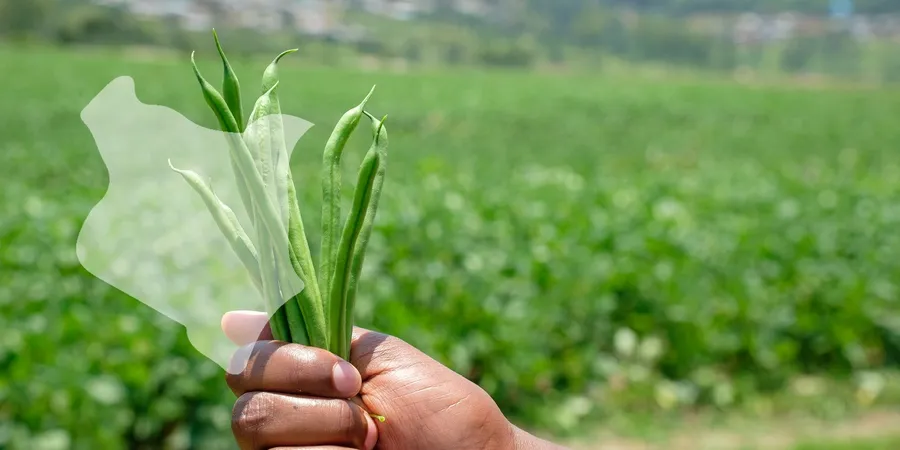
Over the past two weeks, COLEACP has been asking businesses in ACP countries to share their experiences of the COVID-19 crisis and to let us know what support is most urgently needed. Our online survey will be repeated at the end of each month in order to measure the evolution of the impact of the pandemic over time, and companies that were unable to take part in the first round are encouraged to contribute in future. We will let you know when the survey is open again at the end of April.The objective is to gather first-hand information on the impact of COVID-19 on operators of horticultural businesses, and assess how support from COLEACP and other partners could best be redirected as a response.We will continue to update our statistics in light of further responses. Next week’s newsletter will contain a more comprehensive review of all the countries that are taking part in the survey.This early report analyses the preliminary findings from horticultural companies in Kenya – so far, 19 companies (29%) have responded to the call. Preliminary results indicate that the major impacts are on logistics; on companies’ ability to maintain their outgrowers/suppliers and employees; and on financial management. Two-thirds of Kenyan survey respondents saw a loss of more than 50% of initial projected revenue for March 2020.Regarding exports to the UK and the EU (especially the Netherlands and France), drastically reduced airfreight capacity, doubled airfreight costs and increased transit times mean that fine vegetables (French beans, snow peas, sugar snaps, baby corn) are particularly impacted; sea freight is less affected so far.Operationally, companies are looking at laying off casual workers (40% reduction among survey respondents in March) and placing some permanent staff on paid/unpaid leave. For March, survey respondents reported their combined use of outgrowers decreased by nearly half (47.5%) Almost 100% of businesses (the exception being one large company) are not able to guarantee a market for their small-scale suppliers, many are unable to pay their outgrowers (37%), and even more are already scaling down on new planting schedules, which will have an impact on future supply and missed revenue and livelihoods for outgrowers in the coming weeks/months.Key themes in terms of financial management are reduced cashflow due to declining orders and increased costs; limited access to credit; inability to pay creditors on time; creditors reducing the length of payment terms; the need to service asset finance loans while vehicles and equipment are lying idle; banks freezing loans, especially for import/export businesses; difficulty in paying staff, suppliers, and taxes; and increased production costs.Predicted longer-term impacts throughout 2021 and beyond will result from reduced planting, current limitations on extension services, accumulated debt, loss of trained workers, loss of traditional supply bases (outgrowers), and loss of clients due to damaged confidence as a result of undersupply (79% of survey respondents have been unable to honour existing contracts due to logistical challenges directly linked to the COVID-19 crisis). Companies are exploring options for other local and regional markets, diversifying to other crops and processed produce, and looking for equipment to automate planting and processing and thus limit the gathering of people while ensuring continuity of activities – if the necessary finance can be found.Regarding the needs for COLEACP support, respondents were particularly interested in tangible and practical support on COVID-19 related procedures for farming operations (84% of respondents) and packhouse operations (79%). Other topics highlighted included contingency planning for fresh produce operators (68%); human resources management in times of crisis (63%); negotiation skills to get more out of existing partnerships (58%); cashflow management (58%); and adapted communication towards employees and suppliers (53%).COLEACP will organize information-sharing and capacity-building for staff on the topics that companies have identified.
 News
News
Prospects for domestic and regional markets throughout ACP countries
A Zimbabwe exporter of fresh vegetables that also sells regionally and locally reports that after 3 days of lockdown, the government relaxed the rules for key sectors: health, agriculture, food manufacturing and distribution. This saw local markets partially open and trade has been going on, although at a slow pace. The bulk of agro-commodity prices have slumped, except for lemons and partially avocado. Farms have been asked to lockdown but operate with housed labour inside the farm. Regarding exports, KLM Cargo is flying in three times a week and there is additional space from refrigerated trucks running into Joburg and flying out from there. So produce is still moving. The company has stopped exporting soft fruit (berries) because prices have collapsed in Europe, as these products are now considered non-essential in the main. While a small percentage is going into local markets, some fruit is being thrown away. But demand for vegetables from EU and UK has actually increased, and all that is produced is going into the markets at good prices, in some cases increased prices due to shortages.A vegetable exporter in Madagascar reports that the containment measures are being followed as best they can, but the fact that the majority of Malagasy people are in the informal sector does not make the government’s task any easier. At their factory, production is still relatively unscathed, with green beans collected and in line with tonnage forecasts. Protective measures for workers are well in place: systematic temperature checks, masks for everyone, increased hand washing facilities at site access points, and 1 metre spacing in the factory which has forced us to review the configuration of the workstations. But the slowdown is being felt by suppliers of produce, who also working in downgraded mode.A blog post by the International Food Policy Research Institute (IFPRI, 13 April) describes a preliminary survey (23 March–2 April) with small-scale farmers, large-scale investors, brokers, agro-input dealers and development agents in the area between Ethiopia’s Central Rift Valley and Addis Ababa. Early insights on the impacts of the pandemic are: There is less trading activity in Addis’s vegetable wholesale market (Atkilt Tera) since the start of the COVID-19 crisis, despite this being the fasting season when vegetable consumption is usually higher. This appears to be due to larger traders reducing their activity; travel bans reducing the volume and frequency of trucks coming to the city; a slowing of the restaurant trade; and an unfortunate misconception among some urban residents that consuming raw vegetables increases the likelihood of contracting and spreading the virus. Urban retail prices are not significantly affected so far – both supply and demand are affected, with reduced urban demand being balanced by the declining vegetable supply to Addis Ababa. However, producer prices for vegetables are rapidly declining due to reduced demand from the city, oversupply, and fewer buyers (although this may also be in part due to seasonal patterns). Farm losses appear to be increasing, with some vegetables left on the field to rot due to lack of buyers. Prices of important inputs – fungicides, insecticides, herbicides, fertilizers and improved seeds – are increasing because of shortages linked to the closure of land borders, and reduced imports from China. Labour is becoming scarce due to restrictions on movement and gathering of people, with labourers increasingly returning to their home areas. Although this is an early study which will be built on in the coming weeks and months, initial policy implications are: Declining urban demand for high-value and nutritionally rich fruits and vegetables may be driven by misinformation linking consumption of these foods to the spread of the virus – if so, there is a need for widespread and effective information campaigns to counter this misunderstanding. Ensuring that travel bans do not negatively affect food trade is paramount. Ensuring availability of agricultural inputs to farmers at low prices, as well as assuring incentives for their production, should be a priority over the next few months. Fresh produce markets in the South African province of Gauteng, particularly Johannesburg and also Tshwane, are much quieter than usual and the absence of foreign buyers is hugely affecting sales (Fresh Plaza, 16 April). South Africa is the only apple producer in the region, and the dominant source of citrus. Under current regulations, although food transport may continue, cross-border passenger traffic has been suspended and buyers from neighbouring countries like Swaziland, Mozambique and Zambia have decreased sharply, strongly affecting sales on the fresh produce markets. Apples and pears are particularly hard hit, with stocks building up. At the moment fruit is regarded as a luxury item. The Zambian Business Times reported at the end of March that Lusaka fruit traders were finding it difficult to replenish stocks, with orange and banana prices rising swiftly. At the markets, sales of staple vegetables like potatoes, onions and tomatoes are reported to be much stronger than fruit: as temperatures fall across South Africa, consumers are turning away from fruit and towards vegetables. CARIBBEAN The Barbados Agricultural Society reports that the COVID-19 experience in the Caribbean is modest compared with the experiences of developed countries such as Spain, Italy and the USA. Governments in the region have implemented measures to protect their populations, which has probably to a large degree minimised the health impact of the virus. However, the implementation of social distancing measures has resulted in the agricultural sector being placed under considerable stress. Supply chain disruption has resulted from the implementation of the measures, producing some challenges and opportunities. One challenge is the closure of supermarkets, which are major buyers of local agricultural products. Another challenge of the shutdown has been the fact that input suppliers have expressed concern about the ability of farmers to service their debt because of reduced cash flows as a result of the closure of the supermarkets and other buyers of farmers’ produce. The hotels and restaurants are also closed, which is another loss of revenue and a major concern for local farmers. PACIFIC A grower/exporter of agricultural products in Fiji also reports experiencing a lockdown and closure of the business until further notice. Work has stopped and farms/harvesting are not being attended to by farmers. The farming community is also facing financial difficulties as the company cannot make payments.
 News
News
How can large companies support their MSME partners?
Business Fights Poverty, a business-led collaboration network focused on social impact, has launched a new Business and COVID-19 Response Centre and an Action Toolkit to provide practical steps large companies can take to support their MSME partners through the COVID-19 crisis. As MSMEs struggle, the impact on their communities is also significant as they are often the only source of goods and key services for the most poor and vulnerable populations. For large companies, who rely on MSMEs in their value chains as suppliers (including small-scale farmers), distributors, retailers and customers, beyond the immediate humanitarian imperative, supporting them through the COVID-19 crisis will be critical to ensuring supply chain resilience, business continuity and recovery in the months ahead.There are several practical ways that large companies can act now through their core business, philanthropy and policy engagement to support their MSME partners through the crisis. To help stimulate thinking and action within companies and between partners, Business Fights Poverty and the Corporate Responsibility Initiative at the Harvard Kennedy School have produced a practical guide structured around an action framework.
 News
News
Survey of EU Companies in Cameroon
The Delegation of the European Union in Cameroon has launched a survey to map the presence of European companies in Cameroon; to measure the impact of the COVID-19 crisis on European companies and identify the key actions to take to defend their interests; and to lay the foundations for the creation of a European Business Organization in Cameroon. Relating to the current crisis, the survey asks about impacts that companies are experiencing or expecting, including missing goods/services; production losses/sick employees; cancellation of orders; less demand for products and services; liquidity constraints; and problems in the supply chain/logistics.
 News
News
East Africa: COVID-19 hampers fight against locusts as threat grows
A predicted second wave of desert locusts in East Africa will cause major food security problems for countries already struggling against the coronavirus lockdown – and COVID-19 is also directly disrupting the battle against the locusts. According to Al Jazeera (9 April), flight bans imposed to slow the spread of COVID-19 have significantly delayed deliveries of pesticides in countries across the region. Vincent Ssempijja, Uganda’s Agriculture Minister, reported that Uganda has deployed more than 2000 military troops to carry out control operations, but the lack of certain pesticides hinders the use of aircraft, which are much more efficient than ground operations. And due to COVID-19 control measures, there are very few staff supporting the field control activities. Kenyan officials have also said that coronavirus restrictions have slowed efforts to fight the infestation, as crossing borders has become harder and pesticide deliveries are held up (The Guardian, 13 April).But Cyril Ferrand, FAO’s Resilience Team Leader for East Africa, said that “While lockdowns are becoming reality, people engaged in the fight against the upsurge are still allowed to conduct surveillance and air and ground control operations” (UN News, 9 April). The biggest challenge is delays in pesticide deliveries due to a significant reduction in global air freight operations, and FAO’s priority is to prevent a breakdown in pesticide stocks in each affected country. To respond to restrictions on the movement of personnel, FAO is making greater use of remote data collection through a critical network of partners, civil society, extension workers and grassroots organizations.Countries across East Africa are battling the worst locust outbreak in decades, with FAO warning that the situation remains “extremely alarming” as hopper bands and an increasing number of new swarms form in parts of the region. Widespread rainfall in March is expected to generate a dramatic increase in locust numbers in the coming months, with new swarms due to move from Kenya into South Sudan and Uganda. Unlike the previous swarms of mature, less ravaging insects that crossed into the country in February, the new arrivals – nymphs and young locusts – are even more destructive.This represents an unprecedented threat to food security and livelihoods because it coincides with the beginning of the long rains and the planting season. FAO estimates that locust numbers could grow another 20 times during the upcoming rainy season unless control activities are stepped up.
 News
News
Training Needs Assessment in Nanyuki
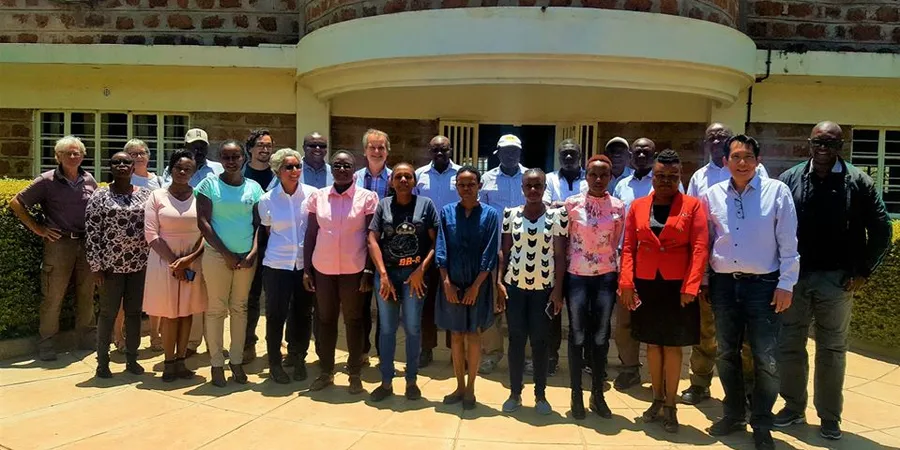
Earlier in March, prior to the COVID-19 lockdown, management of Kenya Horticultural Exporters (1977) participated in a training session on Training Needs Assessment in Nanyuki, as part of the process to set up an improved internal training unit.
News
Santo Domingo, Dominican Republic: Agroalimentaria 2019
Agroalimentaria is the main trading platform for agricultural and agro-industrial products in the Caribbean region. From 9 to 11 May, Dominican producers and exporters, as well as national and multinational companies in the food, tobacco and beverage sectors, will meet to present their products and know-how to the world. Tropical fruits, vegetables, condiments and spices, bananas, coffee and cocoa, particularly from organic farming, will be in the spotlight. During the event, COLEACP will give a presentation on the challenges facing the private and public sectors due to the evolution of European plant health regulations. COLEACP’s stand at the fair will provide an opportunity to meet companies and public services in the region to discuss its FFM and FFM SPS programmes.More information on Agroalimentaria : http://www.agroalimentaria.com.do/