
Cultivating
Sustainable Futures
 News
News
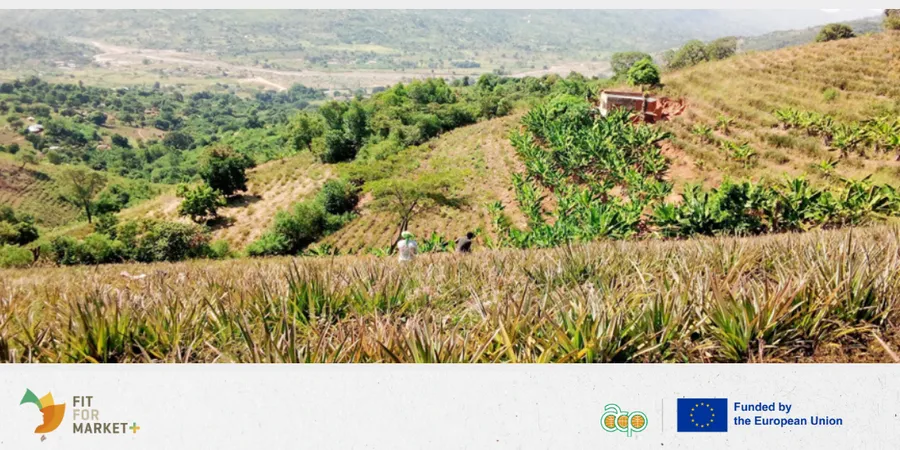
Supporting partner countries in achieving compliance with EU organic standards: the case of Zimbabwe
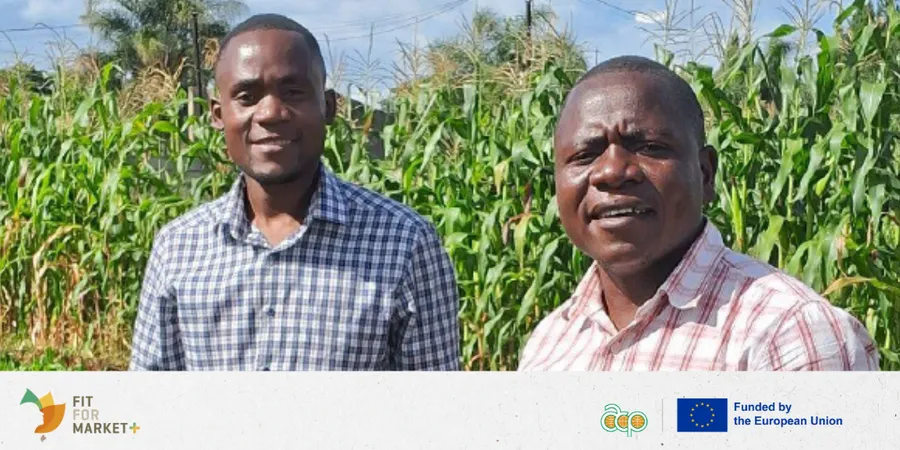
As part of the FFM+ programme, COLEAD recently supported the Rusitu Valley Fruit Growers and Marketing Trust (RVGMT) and the Pineapple Growers Agricultural Cooperative Society Limited (PGACSL) in aligning their Quality Management System (QMS) and Internal Control System (ICS) with the new EU Organic Regulation (EU 2018/848).This revision of the European framework introduces stricter requirements for group certification, traceability, and transparency, which are essential for maintaining access to EU organic markets.The assignment involved close collaboration with the RVGMT and PGACSL teams to review existing documentation, identify compliance gaps, and develop an updated and fully compliant QMS manual, complemented by new internal inspection and risk assessment tools.The support also helped clarify the structural relationship between the two entities: RVGMT, responsible for multiple fruit value chains, and PGACSL, now focused exclusively on organic pineapple production and certification in line with the new EU rules.The beneficiaries praised the expert’s “professionalism, technical rigour, and practical approach”, highlighting that the gap analysis and subsequent improvements “laid a solid foundation for enhanced compliance and optimal readiness for organic certification.”Thanks to this intervention, PGACSL is now better equipped to regain its organic certification and resume exports of Zimbabwean organic pineapples to the EU. Continued training, strengthened market partnerships with Greenstone Foods, and ongoing collaboration with ZimTrade will help ensure the sustainability of these achievements and the lasting recovery of access to international markets.This activity is supported by the Fit For Market Plus (FFM+) programme, implemented by COLEAD within the Framework of Development Cooperation between the Organisation of African, Caribbean and Pacific States (OACPS) and the European Union. This publication receives financial support from the European Union and the OACPS. The content of this publication is the sole responsibility of COLEAD and can in no way be taken to reflect the views of the European Union or the OACPS.
 News
News
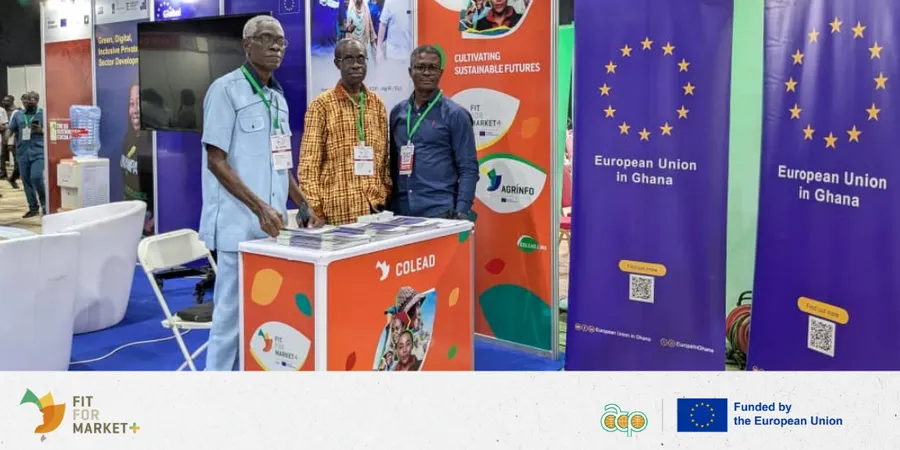
Strengthening dialogue for a sustainable agro-industry in West Africa: insights from the Ghana Industrial Summit and Exhibition
From 15 to 18 September 2025, COLEAD took part through the FFM+ programme, in the Ghana Industrial Summit and Exhibition (GISE), a major event for industrial transformation in Ghana and across West Africa. The mission aimed to strengthen synergies between public, private and technical partners, while showcasing initiatives implemented through the Fit for Market Plus (FFM+) and AGRINFO programmes. Beyond institutional visibility, this participation marked a key milestone in promoting a sustainable, innovative, and competitive regional agro-industry.The GISE: a hub for innovation and sustainabilityOrganised by the Association of Ghana Industries (AGI), the GISE has become an essential platform for dialogue on competitiveness, sustainability, and the green transition in the industrial sector. The 2025 edition, held in Accra, brought together public decision-makers, agri-food companies, professional organisations, and development partners. From the European Union Pavilion, COLEAD presented its work in supporting sustainability and SPS compliance within horticultural value chains through the FFM+ programme, as well as AGRINFO resources monitoring changes in EU regulations impacting agrifood value chains.Building bridges to accelerate transformationCOLEAD also took part in the event “Promotion of Agro-Processing in West Africa”, organised by HPW Fresh & Dry, a key network partner. This meeting highlighted investment and regional collaboration opportunities in agri-food processing, while underlining the importance of an integrated approach combining innovation, sustainability, and public-private partnerships. It also reaffirmed the need to strengthen local capacities and regional value chains to enhance the competitiveness and added value of African agricultural products.Looking ahead: towards stronger regional cooperationThis mission to Ghana is part of COLEAD’s strategy to support the sustainable agro-industrial transition in West Africa, by connecting businesses, institutions, and technical partners around concrete initiatives. The discussions held in Accra pave the way for new regional collaborations and confirm COLEAD’s role as a facilitator of sustainable and inclusive solutions for agri-food value chains, particularly across sub-Saharan Africa.This activity is supported by the Fit For Market Plus (FFM+) programme, implemented by COLEAD within the Framework of Development Cooperation between the Organisation of African, Caribbean and Pacific States (OACPS) and the European Union; and by the AGRINFO programme, implemented by COLEAD and funded by the European Union (EU). This publication receives financial support from the European Union and the OACPS. The content of this publication is the sole responsibility of COLEAD and can in no way be taken to reflect the views of the European Union or the OACPS.
 News
News
Flashback 2014 - Tapping into local and regional markets
Source : Horizons magazine, October 2014(…) COLEACP helps farmers improve the quality of products for the local market. As the standard of living rises in the ACP states, short supply chains now offer real opportunities for economic development. Local and regional markets are developing into important outlets for the agrifood sector in Africa and the Caribbean. They represent an attractive alternative to export.In many African countries, selling goods at a stall or a local grocery is no longer limited to the informal economy. National and regional markets are developing into important outlets for the agrifood sector in Africa and the Caribbean. They represent an attractive alternative to the export trade for SMEs and small producers. With the growth of the middle class, retail chains are being put in place in African countries, with quality standards close to those of export markets. Urban authorities also tend more to adopt measures to improve the hygiene and sanitary conditions of covered and open-air markets. To connect - or stay connected - to these local value chains, (small-scale) farmers have to be able to meet the new requirements of local distributions channels. COLEACP has always been concerned about the impact on food production of its work on export crops. The PIP-2 and EDES programmes both have included this dimension and can advise on production for local and regional markets. This represents an opportunity for COLEACP to make available its methodology and capacity-building tools, originally developed for the export sector, to short supply chains.Train-the-trainers sessions for short supply chainsIn 2011, the government of Côte d'Ivoire asked COLEACP to become involved with small operators who sell their goods at local markets. It wished to help them maintain access to this outlet as the public authorities launched a programme to improve the sanitary and phytosanitary conditions for goods sold on the markets. Based on a fact-finding mission, an ambitious action plan was drawn up targeting five essential crops: banana, cabbage, tomato, eggplant and sweet potato. The main challenge was selecting the key personnel to be trained in a context of extremely fragmented production. COLEACP turned to the many cooperatives and associations that help structure small-scale operators in the country, and to two other key players in local distribution: the National Agency for Support for Rural Development (Agence nationale d’appui au développement rural - ANADER), active in agricultural extension, and Océana, a new private operator in large-scale vegetable production. Around 15 technicians selected by these structures will be trained as part of the PIP Programme. The training will focus on improving the agricultural practices of small operators: safety, hygiene, traceability, crop protection and sensible and safe use of inputs. It will also teach training practices, giving future trainers a method and tools enabling them to share their knowledge with interested parties. COLEACP has regularly organised train-the-trainers courses such as the one implemented in Côte d’Ivoire, always with a view to spreading new know-how to small producers, working through their associations or through private and public extension agencies.In Mali, 15 trainers were trained in September 2013 based on a request by three cooperatives of small producers and two non-governmental organisations.COLEACP has taken the same initiative in the Caribbean. Working together with the Caribbean Farmers Local and regional markets are developing into important outlets for the agrifood sector in Africa and the Caribbean. They represent an attractive alternative to export. Network (CaFAN), in December 2013, trained around 30 agriculture extension workers from throughout the Caribbean. The goal is to give 500 000 small producers in the CaFAN network access to more promising markets, including hotels, restaurants, and minimarkets and supermarkets. (…)The Pesticides Initiative Programme (PIP) was financed by the European Development Fund. The ACP Group of States and the European Commission entrusted responsibility for its implementation to COLEACP (today COLEAD).
 News
News
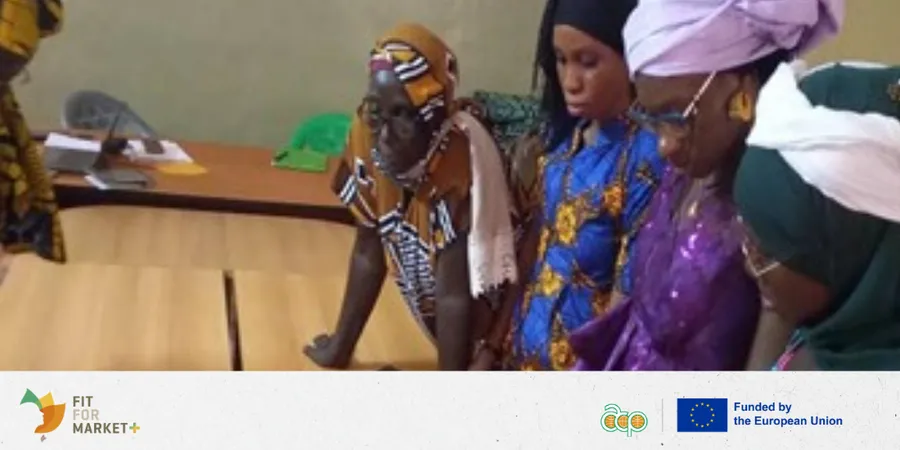
Strengthening local agri-food value chains and women’s entrepreneurship: the example of Casamance, Senegal
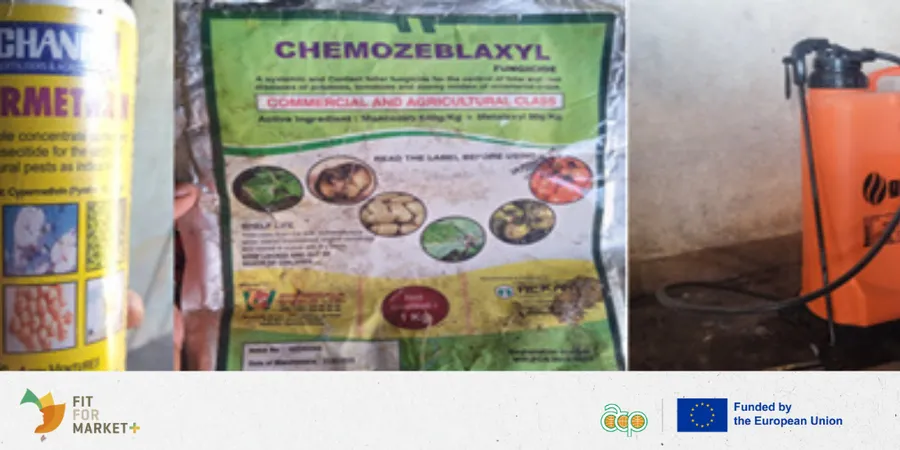
Processing units play a central role in creating added value, ensuring product quality, and enhancing the competitiveness of horticultural value chains. Moreover, strengthening the technical and organisational capacities of small enterprises and cooperatives is a key condition for scaling up the regional agri-food sector and recognising the economic role of women within value chains.In Casamance, training sessions organised through the Fit For Market Plus (FFM+) programme have brought together production and processing managers with a clear objective: to improve management and workflow efficiency within processing units. The training programme was structured around four main stages:Enterprise diagnosis – identifying challenges and mapping production processes;Classroom training – providing theoretical insights into optimisation principles and tools;On-site implementation, supported by a local expert;Collective debriefing and experience sharing.Concrete results and a lasting learning dynamicParticipants were able to identify key performance factors, strengthen internal coordination, and develop individual action plans to improve the management of their units. Beyond the skills acquired, the initiative fostered a collective dynamic of continuous improvement, engaging teams around shared objectives of quality, efficiency, and sustainability.Contributing to regional competitiveness and women’s empowermentBy supporting the professionalisation of local processing structures, COLEAD aims to contribute to the consolidation of regional agri-food value chains, the creation of sustainable employment, and the promotion of women’s entrepreneurship in local, regional, and international markets. This experience illustrates how the FFM+ programme provides concrete support for capacity building among operators and the structuring of agri-food ecosystems within a framework of sustainability, inclusion, and gender equality.This activity is supported by the Fit For Market Plus (FFM+) programme, implemented by COLEAD within the Framework of Development Cooperation between the Organisation of African, Caribbean and Pacific States (OACPS) and the European Union. This publication receives financial support from the European Union and the OACPS. The content of this publication is the sole responsibility of COLEAD and can in no way be taken to reflect the views of the European Union or the OACPS.
 News
News
Strengthening crop protection: the example of Ramsay Agriculture
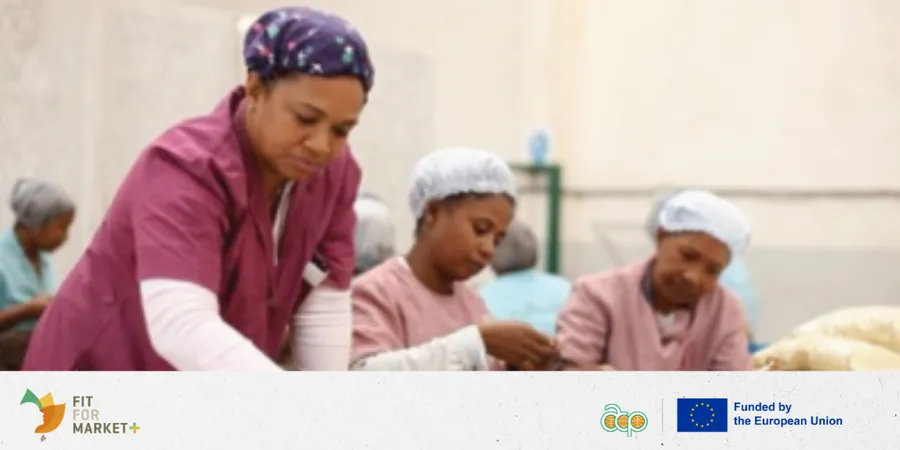
As part of the Fit For Market Plus (FFM+) programme, COLEAD provided technical assistance to Ramsay Agriculture, a small but dynamic farming enterprise based in Mzuzu (Malawi), through the Horticultural Production and Marketing Consortium (HOPMAC).Towards a safer and more sustainable production modelThe support aimed to help the company put into practice the knowledge acquired during the training course “Developing a Crop Protection Strategy”. Over four intensive days, the COLEAD expert assessed existing pest management practices, trained field staff in the principles of Integrated Pest Management (IPM) and supported the team in developing a tailored and functional crop protection strategy.Tangible results in the fieldThe mission achieved several key outcomes: the design of a new crop protection model incorporating IPM principles; strengthened staff skills in crop observation, pest identification, and field hygiene; the introduction of a data collection and monitoring tool; and the identification of gaps in data analysis and aflatoxin risk management, paving the way for targeted follow-up support. The assignment also highlighted the need for access to certified seeds, mechanisms to retain skilled staff, and ongoing learning to ensure the sustainability and resilience of Ramsay Agriculture’s crop protection system.Strong ownership by the companyRamsay Agriculture expressed great satisfaction with the quality and relevance of the support:
 News
News
Towards circular waste management: example of support for Jacarandas in Madagascar
As part of the Fit For Market Plus (FFM+) programme, Jacarandas, a company specialising in the production of spices and essential oils in Madagascar, benefited from technical assistance to update its Waste Management Plan (WMP). The mission, carried out jointly by LONO (Côte d’Ivoire) and SOATY, a Malagasy expert trained under the programme, aimed to provide the company with a plan aligned with international standards and oriented towards a “Zero Waste” policy, through the recovery or treatment of all waste generated on site.A comprehensive diagnosis for practical solutions In collaboration with Jacarandas’ QHSE team, an in-depth technical assessment was conducted to map all waste streams generated by the factory. The results showed that 97% of the waste is organic, mainly consisting of distillation residues. The report proposed several recovery pathways, including pelletisation or methanisation of the residues to partially replace bamboo used as fuel, composting as a complementary solution, and establishing partnerships with specialised service providers for the management of plastics, electronic waste (WEEE), and hazardous waste.Recommendations for integrated and efficient management The report includes detailed recommendations to improve traceability and the quantification of waste flows, as well as to integrate water management into the material balance. It also provides monitoring templates and an energy and economic analysis of the recovery potential.Next steps: towards enhanced environmental performance To consolidate these results, several actions are planned: launching a pilot project for organic waste recovery, formalising partnerships with the identified service providers, and strengthening monitoring tools and staff training. These efforts will enable Jacarandas to improve its environmental performance, reduce its ecological footprint, and move towards a circular and responsible waste management system, illustrating COLEAD’s commitment to sustainability across agri-food value chains.This activity is supported by the Fit For Market Plus (FFM+) programme, implemented by COLEAD within the Framework of Development Cooperation between the Organisation of African, Caribbean and Pacific States (OACPS) and the European Union. This publication receives financial support from the European Union and the OACPS. The content of this publication is the sole responsibility of COLEAD and can in no way be taken to reflect the views of the European Union or the OACPS.
 News
News
Supporting agribusinesses in developing bankable business plans: the case of Produhort in Malawi
As part of the Fit For Market Plus (FFM+) programme, COLEAD supports agribusinesses in developing bankable business plans, essential tools for growth and long-term sustainability. In this context, a post-training support mission was conducted with Produhort Investments Ltd, a horticultural enterprise based in Lilongwe (Malawi). As a participant in the “Develop a Business Plan for Your Agribusiness” training, Produhort received tailored coaching to finalise and strengthen its 2025–2030 business plan.A business plan to guide growthThe mission’s objective was clear: to turn a draft business plan into an operational and bankable tool, aligned with the company’s strategy, capacity, and ambitions. The COLEAD expert worked closely with Produhort’s management team to review financial projections, refine performance indicators, and adjust development priorities. The final business plan now includes clear growth objectives, measurable performance indicators, and realistic financial projections for the next five years. It reflects Produhort’s strategic vision, notably the expansion of cultivated land and diversification into high-value horticultural products.A strategic tool for decision-makingBeyond access to finance, Produhort now views its business plan as an internal roadmap, a living document that guides operational, production, and sales decisions. This sense of ownership strengthens the company’s autonomy and its ability to plan growth in a structured and realistic manner.Lessons for future supportThe experience highlights the importance of ensuring a smooth transition between collective training and individual coaching, to guarantee that key concepts are well understood and adapted to each enterprise’s maturity level. It also underlines that a business plan should remain a living, evolving tool, regularly updated by the beneficiaries themselves rather than a static document produced by external experts. Through such targeted support, COLEAD helps strengthen the strategic planning and management capacities of agribusinesses – an essential step towards improved access to finance, greater economic resilience, and a sustainable impact on regional horticultural value chains.This activity is supported by the Fit For Market Plus (FFM+) programme, implemented by COLEAD within the Framework of Development Cooperation between the Organisation of African, Caribbean and Pacific States (OACPS) and the European Union. This publication receives financial support from the European Union and the OACPS. The content of this publication is the sole responsibility of COLEAD and can in no way be taken to reflect the views of the European Union or the OACPS.
 News
News
Sustainable products for healthy living: Thanthwe Enterprises (Malawi) leads the way towards regional and international markets
Thanthwe Enterprises, an innovative agri-food company from Malawi, has benefited from strategic support through the FFM+ programme, aimed at strengthening its competitiveness and structuring its expansion into regional and international markets.This support provided the company with strategic guidance and in-depth market analysis to inform its approach to market entry in Southern Africa, notably South Africa, Zambia and Mozambique, with a longer-term goal of expanding into the European Union.The study revealed the strong potential of Thanthwe’s diverse product portfolio, which includes herbal teas, natural juices, jams, spices and chilli sauces. Rooted in Malawi’s biodiversity and guided by the company’s philosophy — “Sustainable Products, Healthy Living” — these products are perfectly aligned with global trends that favour natural, ethical and health-oriented goods.South Africa emerged as the most strategic entry point, thanks to its mature retail ecosystem and growing demand for organic and fair-trade products. The recommended approach outlines a phased expansion strategy: beginning with South Africa, followed by Zambia and Mozambique through existing regional retail and distribution networks. Entry into the EU market is positioned as a long-term objective, dependent in particular on compliance with regulatory frameworks such as the EU Novel Food Regulation.Beyond market intelligence, COLEAD’s support through FFM+ identified several key investment priorities to strengthen export readiness:obtaining HACCP certification,improving packaging and labelling,enhancing brand positioning and storytelling, andallocating dedicated resources for regional marketing and visibility.The 18-month strategic action plan thus provides a clear roadmap for scaling up Thanthwe Enterprises and consolidating its export foundations.For the company, the process has been a true turning point:
 News
News
Social sustainability through SMETA 4-Pillar certification: The example of Chisel Investments in Zimbabwe
As part of the Fit for Market Plus (FFM+) programme, COLEAD recently carried out a follow-up mission at Chisel Investments Pvt Ltd, a horticultural company based in Headlands, Zimbabwe. The objective was to assess the progress made in implementing the SMETA 4-Pillar standard and to identify the remaining steps required to achieve certification.Encouraging progress over one yearSince the first assessment in 2024, Chisel Investments has made significant progress, particularly in developing internal policies and procedures that align with the SMETA requirements. The company has drafted several key documents relating to labour practices, health and safety, environmental management, and business ethics.Significant improvements have also been observed in management practices and worker relations. For example, the farm has recruited an administrative officer to strengthen its internal organisation — a key recommendation from the previous visit.Investing to achieve certificationThe progress achieved has now paved the way for a new phase — one focused on the investments required to consolidate compliance and finalise preparation for SMETA certification. Priorities include the improvement of infrastructure, such as housing and equipment.COLEAD plans to mobilise its Access to Finance Department to support Chisel in identifying funding opportunities for these investments, both in Zimbabwe and internationally. These resources could help Chisel implement the remaining corrective measures and improve infrastructure and working conditions for its employees.This activity is supported by the Fit For Market Plus (FFM+) programme, implemented by COLEAD within the Framework of Development Cooperation between the Organisation of African, Caribbean and Pacific States (OACPS) and the European Union. This publication receives financial support from the European Union and the OACPS. The content of this publication is the sole responsibility of COLEAD and can in no way be taken to reflect the views of the European Union or the OACPS.
 News
News
Strengthening the bankability and strategic use of business plans: the example of Coldiron in Zimbabwe
As part of the Fit For Market Plus (FFM+) programme, a post-training support mission was conducted for Coldiron, a horticultural company based in Zimbabwe. This support followed the company’s participation in the training “Create a Business Plan for Your Agribusiness.”ObjectivesThe overall objective of the post-training mission was to assist Coldiron in reviewing and finalising its business plan so that it reflects its current operations and meets the requirements of financial institutions.More specifically, the mission aimed to:clarify certain aspects covered during the training;review and refine the draft business plan, providing personalised feedback;support the company in finalising and implementing the document;define the next steps for using the plan effectively in financing applications and business development.ImplementationThe mission combined in-person and online sessions, organised in three main stages:Inception meeting – held at Coldiron Farm (Marondera and Harare) to discuss objectives, methodology, and expectations;Review of the draft business plan – identification of key gaps, such as missing detailed financial data, limited market analysis, and the absence of a risk management framework;Debriefing session – validation of the revised plan, alignment on financial projections and funding requirements, and definition of next steps.During the field visit, the expert also assessed the company’s production and processing facilities. Recommendations included digitalising record keeping, documenting standard operating procedures for quality control, and strengthening financial and market data.Results and OutlookThe mission enabled Coldiron to enhance the structure, financial clarity, and strategic coherence of its business plan. The management expressed strong commitment to implementing the updated plan as a tool for financing and business development.Some components still require completion, including crop budgets, multi-year cash flows, and market data. Finalising these will be essential to enable Coldiron to use its business plan to (i) apply for bank and agri-finance funding (ii) develop new market opportunities, particularly for processed and dried products targeting South Africa; and (iii) pursue organic certification to strengthen its competitiveness in regional and European markets.This activity is supported by the Fit For Market Plus (FFM+) programme, implemented by COLEAD within the Framework of Development Cooperation between the Organisation of African, Caribbean and Pacific States (OACPS) and the European Union. This publication receives financial support from the European Union and the OACPS. The content of this publication is the sole responsibility of COLEAD and can in no way be taken to reflect the views of the European Union or the OACPS.
 News
News
New DeSIRA LIFT reports to promote innovation and skills for transforming African food systems
The DeSIRA LIFT programme has recently published several reports that highlight key initiatives aimed at strengthening agricultural innovation and inclusion in Africa.'Women and Innovation': Fifteen case studies illustrate the central role of women in transforming agri-food systems, whether as farmers, entrepreneurs, researchers, or community leaders. Their innovations foster sustainable livelihoods, community resilience, and responsible natural resource management. [maxbutton id="12" url="https://eservices.colead.link/sites/default/files/file_fields/2025/DESIRA/DeSIRA%20LIFT_Women-led-innovations_2025.pdf" text="Women led innovations" ]From research to business: In collaboration with the RUFORUM network, a study analysed how universities in countries such as Cameroon, Senegal, South Africa and Uganda can better translate research results into viable enterprises. The study's findings offer concrete ways to strengthen entrepreneurship and employment, particularly among young people and women. [maxbutton id="12" url="https://eservices.colead.link/sites/default/files/file_fields/2025/DESIRA/DeSIRA%20LIFT_RUFORUM_Research%20to%20Business%20report.pdf" text="Research to Business report" ]Co-certification of training: Another report explores mechanisms for the joint certification of short professional training courses in the agricultural sector. The aim is to create an evolving framework for skills recognition that is accepted by universities, governments, businesses, and regional actors. [maxbutton id="12" url="https://eservices.colead.link/sites/default/files/file_fields/2025/DESIRA/DeSIRA%20LIFT_RUFORUM_Co-certification%20mechanisms.pdf" text="Co-certification mechanisms" ]Agricultural e-learning: A study of e-learning platforms revealed significant potential for the development of digital content dedicated to managing and facilitating agricultural innovation. Of the 170 universities in the RUFORUM network that were examined, 136 already have online training systems in place, paving the way for large-scale reinforcement of regional capacities. [maxbutton id="12" url="https://eservices.colead.link/sites/default/files/file_fields/2025/DESIRA/DeSIRA%20LIFT_RUFORUM_Elearning%20platforms%20report.pdf" text="Elearning platforms report" ]These analyses aim to inform continental policy dialogues and propose practical solutions for inclusive, sustainable, innovation-driven agricultural transformation in Africa.Within the DeSIRA LIFT project, COLEAD has collaborated closely with African research organisations specialising in areas that contribute to sustainable agriculture and food systems.DeSIRA-LIFT (June 2021 – May 2025) is the result of close collaboration between Agrinatura (European Alliance on Agricultural Knowledge for Development), the European Forum on Agricultural Research for Development (EFARD) and the European Commission’s Directorate-General for International Partnerships (DG INTPA).
 News
News
Towards better protection against unfair trading practices: Call on the European Parliament to regulate unfair trading practices and protect producers in third countries
On 15 June, the European Parliament's Committee on Agriculture and Rural Development (AGRI) adopted a significant report aimed at strengthening the cooperation of enforcement authorities responsible for implementing the European directive on unfair trading practices (UTPs) within the agri-food supply chain.COLEAD and the Fair-Trade Advocacy Office (FTAO) welcome this progress, which marks a decisive step towards closing existing gaps and ensuring that every farmer and small agri-food supplier, whether in the EU or not, can benefit from better protection against unfair or abusive behaviour.However, there is still one major concern: the current definition of 'cross-border unfair trading practices' does not cover situations where the buyer is in the EU and the supplier is outside the EU. This omission puts producers in third countries at a disadvantage, as they are often among the most vulnerable, and it also creates unfair competition to the detriment of operators supplying the EU market.COLEAD and FTAO therefore urge the European Parliament to amend this definition during the plenary vote to ensure that all unfair cross-border practices, regardless of the location of the parties involved, are covered by the directive.As Jeremy Knops, General Delegate of COLEAD, emphasises: