
Cultivating
Sustainable Futures
 News
News
Important message to the competent authorities and operators involved in the mango sector
The European Union is in the process of overhauling its plant health regulations. In December 2019, the new EU plant health regulation will become fully operational. In the meantime, the existing rules are being enforced more rigorously and special measures have already been introduced for a number of imported crops where there have been high numbers of notifications due to quarantine pests.The new EU plant health rules focus in particular on crops that are a known pathway into the EU of serious pests that could damage EU agriculture or the environment. One of these serious pests is the non-European fruit fly (Tephritidae). In recent years there have been consistently high numbers of interceptions due to the presence of this pest in mango imported from ACP countries, and this has resulted in a decision to introduce special measures to tackle the problem.In October 2018 a Draft Commission Implementing Directive was introduced, amending Annexes I to V of Council Directive 2000/29/EC, and including changes that affect mango. The changes have already been notified through the WTO, so the process is well underway. It is expected that the Directive will be formally adopted in March, and published in April, after which there will be a 5-month transition period before it comes into force.The new Directive will require action from producers, exporters and the National Plant Protection Organisation (NPPO). It gives four possible options, but only one of these is applicable to the mango sector in ACP countries. The first three options require pest-free countries, zones, or production units, which in practice are not viable options.According to the fourth option, when the Directive comes into force, mango imports will only be permitted into the EU if “They have been subjected to an effective treatment to ensure freedom from Tephritidae (non-European)”. Information documenting the treatment must be recorded on the plant health certificate that accompanies the consignment. Furthermore, before the designated start date, the NPPO must send a dossier to the EC outlining in detail the treatments that must be applied. This dossier can include post-harvest treatments, and/or a pre-harvest “systems approach” that covers control and management (IPM) of the pest in the field. The NPPO must work together with the mango industry to agree an action plan that will ensure all exported mango is 100% free of fruit flies. Once the action plan is agreed, all parties must follow it rigorously.COLEACP will provide more information on the details of the new rules (including the start date) as it becomes available. Under its Fit for Market programmes, COLEACP will be available to support both NPPOs and the mango industry in each country in the development of the dossiers to be submitted to the EC before the end of the year. COLEACP is also available to work with the mango industry and national authorities to help put the necessary actions in place.In the meantime, while the new rules will only enter into force after the end of the 2019 season, it is critically important for 2019 exports to be tightly managed so that there are a minimum number of interceptions due to fruit fly. If levels continue as in previous years, it is possible that the EC will take more drastic action against imports from ACP countries for the 2020 season.
News
Two new approved plant protection products for tomatoes
In the fruit and vegetable sector, two new products have been authorised, only for tomatoes: one based on pyrethrins and the other on spinetoram.The following links take you to the Global List of pesticides authorised by the Permanent Interstate Committee for Drought Control in the Sahel (CILSS) following its revision by the 43rd ordinary session of the Sahelian Pesticides Committee (PSC), as well as the list of pesticides authorised by the 43rd session of the PSC. These lists will be available on the website of the Sahel Institute at www.insah.cilss.intGlobal List of pesticides authorised by CILSS: https://drive.google.com/open?id=12SJsV5dkYHMNkFBIlqPEFhbnSLnf8K0MList of pesticides authorised by the 43rd session of the PSC: https://drive.google.com/open?id=1CDDXigt76sbHjLnZ49G8bPWp29sinZhB
News
Rungis Market celebrates 50 years
Rungis International Market, on the outskirts of Paris, is the largest wholesale food market in the world. At 50 years old, and in the age of the internet and e-commerce, the market has not lost any of its freshness or size: covering 234 hectares, it involves 1,200 companies, 12,500 employees and 9,500 tons of fresh produce each day.It was in February 1969 that the market in Les Halles moved from the heart of Paris to the southern suburbs, for reasons of congestion and (already) improved good food hygiene practices. Flowers, seafood, fruit, vegetables and dairy products were transferred first, and the meat pavilion followed in January 1973. This was also the year, following the entry into force of the Lomé Agreements between the EEC and the ACP States, when the organisation that would soon become COLEACP was created. Mr Libert Bou was appointed by General de Gaulle to move from Les Halles de Paris to Rungis and was the first CEO of Rungis International Market (1969–76) – and became COLEACP’s first General Delegate in 1976.Since then, every night the market has started up with the fish and shellfish of the Tide Pavillion. Fruit and vegetables are Rungis’ flagship products, with seven halls dedicated to them, accounting for 70% of the fresh produce received. Rungis is also a model for recycling its waste – the energy produced by incineration is used to heat the market and surrounding areas in winter, and green waste is transformed into compost. Rungis is managed by SEMMARIS, which also promotes the model internationally.COLEACP has also grown with Rungis, serving the needs of companies including market-based importers and the EU-ACP fruit and vegetable sector more generally. So, happy 50th birthday to Rungis and best wishes for happiness, prosperity and sustainability!
News
Rimini, Italy: Macfrut 2019 – Spotlight on sub-Saharan Africa
In its 36th year, Macfrut (8–10 May) will be honouring the countries of sub-Saharan Africa. Exhibitors will include Angola, Ethiopia, Ghana, Kenya, Mozambique, Senegal, Somalia, Sudan, Tanzania and Uganda. Delegations from other countries in the region will attend to meet fruit and vegetable buyers from the European markets. In 2018, 43,000 visitors visited Rimini (up from 39,000 in 2017) – 25% of whom were international. The show’s 2018 Tropical Fruit Congress brought together the elite of the world’s mango and avocado sectors –300 operators, 80% from overseas.So there are many reasons for the COLEACP team to attend Macfrut 2019. We aim to liaise with the ACP companies present at the fair as part of our Fit For Market (FFM) programme, to promote ACP fruit and vegetables to European buyers, and to measure the opportunities that this European fair represents for business development for the EU–ACP fruit and vegetable sector.More information on the Macfrut fair
 News
News
COLEACP's FIT FOR MARTKET PROGRAMME IN KENYA
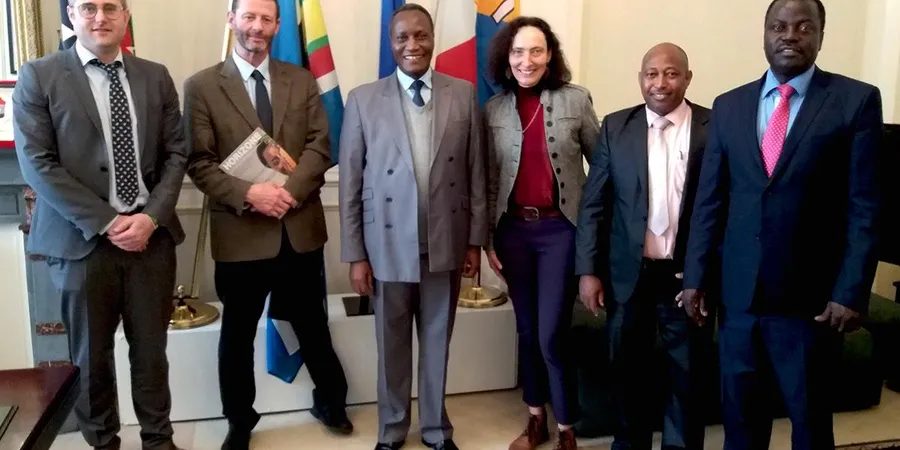
We had a courtesy call meeting this morning at the Embassy of the Republic of Kenya to the Kingdom of Belgium, the Grand Duchy of Luxembourg and the Mission to the European Union to discuss the COLEACP-Fit For Market support for Kenya, one of our main intervention countries.Representing Kenya on the picture : His excellency Prof.Jacob T. Kaimenyi, PhD, EBS, EGH; Ambassador, Richard Githaiga, Agriculture Attaché, and Joshua M. Mugodo, Deputy Head of Mission. Representing COLEACP: Yessie Meyer, Regional Coordinator, Guy Stinglhamber, General Delegate and Jeremy Knops, Director of Operations.
 News
News
COLLECTIVE TRAINING IN KENYA FOR FOOD SAFETY MANAGERS
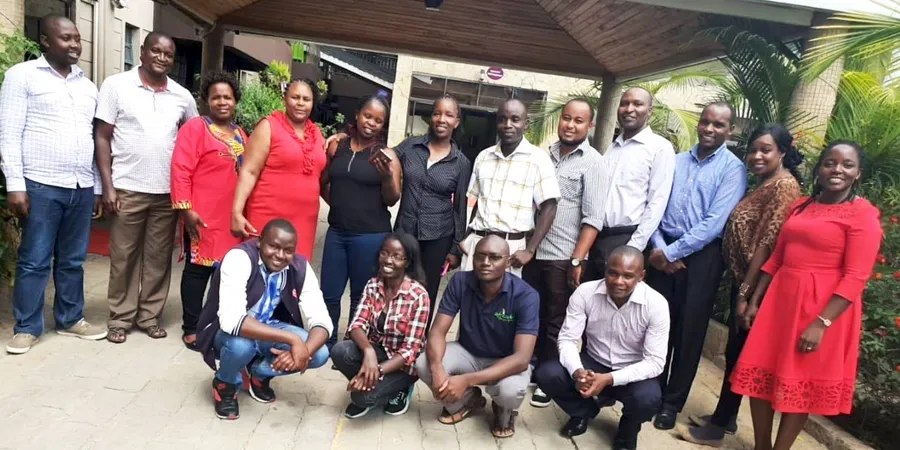
We organized a collective training in Kenya ???????? for food safety managers: "Changes regarding the new version of BRC standard (issue 8)". Due to the high demand from Kenyan and Tanzanian companies for this topic, a second training session is currently taking place in Nairobi.
News
COLLECTIVE TRAINING ON FOOD SAFETY MANAGEMENT
COLLECTIVE TRAINING ON FOOD SAFETY MANAGEMENTWe organized a four-day training in Accra, Ghana, on Food Safety Management. This collective training aimed at strengthening the understanding of the technical staff of Ghanaian exporting companies and cooperatives on the practices and regulations of food safety through discussions and practical exercises.
News
FOOD SAFETY MANAGEMENT
We organized a four-day training in Accra, Ghana, on Food Safety Management. This collective training aimed at strengthening the understanding of the technical staff of Ghanaian exporting companies and cooperatives on the practices and regulations of food safety through discussions and practical exercises.
News
COP 24 in Katowice (3-14 December) : changing together !
24th Conference of the Parties to the United Nations Framework Convention on Climate Change (UNFCCC). The motto of COP24 says: ‘Changing together’ COLEACP can only agree! This is the purpose of its sustainability charter!« As producers and exporters in the Africa-Caribbean-Pacific (ACP) horticultural industry, and importers in the EU, we are committed to running our operations in a sustainable way. We understand sustainability as an on-going process towards the economic, social and environmental well being of all those we touch with our operations: customers, consumers, workforce, suppliers, local communities and other stakeholders »See the COLEACP sustainability charterTo follow COP 24
News
FOCUS: SIERRA LEONE
Collective intelligence is one of the main principles guiding COLEACP’s actions. The association is committed to a continuous improvement process with its members, placing people at the centre to facilitate learning and performance. At the same time, COLEACP encourages and facilitates partnerships wherever possible to serve the competitiveness and sustainability of agricultural sectors. COLEACP’s action in Sierra Leone is a recent, concrete illustration of this approach.In May 2018, COLEACP and three European importers of fruit and vegetables (Belgian, French and English) were invited to participate in a first exploratory mission to Sierra Leone, organized by Brussels Airlines Cargo. The objective was to analyse the potential for adapting current production to the growing needs of the European market for a wide range of fresh vegetables (such as leaf vegetables, peppers, okra and eggplant). Brussels Airlines Cargo aims both to increase the loads of its cargo spaces on return routes, and to participate in the development of a competitive horticultural sector in Sierra Leone.The mission enabled COLEACP, as part of its Fit For Market programme, to identify the best way to support exporting companies in complying with EU regulatory and trade requirements in line with the needs of interested importers, and to analyse the specific needs of local markets. It also enabled the delegates to meet representatives of the services of the Ministry of Trade and the Ministry of Agriculture, and to inform them of developments in European phytosanitary regulations and the exporter registration system (REX).The communications between the various stakeholders in the private and public sectors since the May visit have contributed to planning for a national action plan for the development of the fruit and vegetable sector from early 2019, based on both local and international market access.In the field, COLEACP has already received eight requests for support from exporting companies, producer cooperatives and service providers, as well as an official request from the Sierra Leone Ministry of Agriculture for capacity building in SPS control and certification. Capacity-building activities within enterprises have begun with the training of several technical managers in the basic principles of integrated crop protection. At the same time, a local expert was supervised by a regional trainer in order to strengthen his field of expertise. In January 2019, Sierra Leonean inspectors in charge of phytosanitary controls will receive regional training organized by COLEACP in Senegal.In terms of partnerships, bridges are being considered with the World Bank’s Sierra Leone Agro-Processing Competitiveness Project, and with the European Union as part of its future interventions in horticultural diversification.
News
Review workshop of the Ivorian mango campaign 2018
On 28 November 2018, the Direction de la Protection des Végétaux, du Contrôle et de la Qualité (DPVCQ) of Côte d’Ivoire, with the support of COLEACP, organized a mango campaign review workshop. The event brought together 80 participants from across the supply chain (producers, exporters, service providers and competent authorities).The observations shared were encouraging from a marketing and commercial point of view. Ivorian mango continues to enjoy a good image, particularly in its main export market, the European Union, where it has experienced strong growth over the past few years. More than 30,000 tonnes of Ivorian mangoes were imported by the EU in 2018 compared with 10,000 tonnes in 2010.In 2018, although there has been a decrease in the number of interceptions of Ivorian mangoes entering the European market due to quarantine pests, the number of notifications was still high, offsetting the positive structural trend of Ivorian exports. The November workshop raised awareness of this issue among all stakeholders in the sector. They therefore decided to mobilize quickly by updating and adapting the action plan previously implemented with the support of COLEACP in 2015, when the sector faced a similar phytosanitary problem.Another threat to Ivorian mango is the expansion of competitors, particularly Peru, whose export window is encroaching on that of Côte d’Ivoire (according to data from April and May 2018). The immediate impact has been a fall in market prices due to higher growth in supply than in demand.Through its Fit For Market programme, COLEACP has already received 39 individual requests for intervention from Côte d’Ivoire. These requests cover diverse themes: modern management of mango orchards; implementation of business plans; access to finance; improvement of environmental and social practices; and implementation of quality management systems that meet the standards of supermarkets.On a collective level, the workshop confirmed the need for a 2019 action plan on the SPS issue in a context where European regulations will also evolve next year and become more restrictive.The 2019 challenges for the Ivorian sector are clear. The November workshop offered stakeholders an opportunity to understand them better and to organize themselves, with the support of COLEACP, for the coming campaign.
News
Workshop – avocado supply chain in Kenya focuses on quality
In Kenya the Horticultural Crops Directorate (HCD; formerly Horticultural Crops Development Authority), Fresh Produce Exporters Association of Kenya (FPEAK) and Fresh Produce Consortium of Kenya (FPC), together with COLEACP, organized a two-day workshop on 3 December 2018. The event brought together 140 participants from throughout the country’s avocado value chain (producers, importers, exporters, logistics operators, competent authorities and transport companies).The main reason for the meeting was the current challenge faced by the Kenyan industry to improve the commercial quality of its avocados in order to position itself better in relation to its competitors (e.g. South Africa, Peru) and to promote production on the international market.The meeting enabled all stakeholders to recognize the need to work collectively to meet the commercial challenge and to identify the actions to be implemented as a priority in 2019: collective technical training, specific individual support via the Fit For Market programme, communication towards European importers on the progress made.