
Cultivating
Sustainable Futures
 News
News
COLEACP’S training department is expanding its offer
With new training topics, new online and paper tools, COLEACP’S training department is expanding its offer to meet the needs of companies benefiting from the Fit For Market* (FFM) programme.One of the central pillars of the FFM programme is the COLEACP training system.Designed and implemented during the PIP programmes and later expanded to other projects coordinated by COLEACP (e.g. EDES, Fruit Fly Programme), the programme now offers new teaching resources. Around 100 new training tools (manuals, guides, brochures etc.) are currently being developed on specific topics such as business competitiveness (market access, management of resources) or the sustainable environmental management (management of inputs and outputs, environmental impact assessment, environmental restoration through good practices etc.). 70 on-site training sessions are already scheduled in different countries of Africa, Caribbean and Pacific (ACP) for year 2 of the FFM.In e-learning (11 training courses, more than 2000 users), the training aims to consolidate learners’ technical know-how in agricultural practices and the conformity of produce for export. This complements face-to-face training. The latest addition to the platform is the Experimented level of the Traceability course launched in the “Massive Open Online Courses” format (MOOC**). The 6-week pilot course was facilitated by a tutor, especially via a discussion forum. One of the objectives of this MOOC is to enable the most qualified learners to go on to become tutors in future sessions. Another way to boost the impact and sustainability of the COLEACP training system.http://training.coleacp.org*Via the Fit For Market (FFM) programme, COLEACP supports the fruit and vegetable supply chain in ACP countries, including companies producing and exporting fresh and processed fruit and vegetables, to:Develop and improve their market access Train and sustain their human resources Implement an environmental management policy Improve their competitiveness Facilitate their access to financing**Massive Open Online Course or online training open to all. This is an open form of distance learning that can accommodate a large number of participants.
News
Monitoring RASFF and EUROPHYT notifications
COLEACP follows sanitary and phytosanitary regulations (SPS) very closely to identify the decisions and trends which could have an impact on the fruit and vegetable value chains in Africa, the Caribbean and the Pacific. The information obtained is used to adapt the technical recommendations for producers and inform the ACP suppliers about the measures to be taken.COLEACP tracks the following issues on a monthly basis in particular: MRL exceedances (maximum residue limits) for pesticides on fruit and vegetables arriving on the European market and recorded by the surveillance programmes of the Member States and the European Commission (RASFF notifications) Phytosanitary non conformity alerts via EUROPHYT, due to the presence of harmful organisms on fruit and vegetables imported into the European Market. Starting from October, COLEACP will send a monthly inventory of the notifications by ACP country. This will enable you to stay informed or alert your attention so you may contact COLEACP if required.Find out more about Europhyt:The EU rules governing the protection of plants are intended to protect crops, fruit, vegetables, flowers, ornamental plants and forests against parasites and harmful diseases (harmful organisms) and to prevent their introduction and propagation in the EU. The Member States of the EU are required to inspect and track the incidence of harmful organisms in imported products. The results of the surveillance programme are provided to the public via the Europhyt system at https://ec.europa.eu/food/plant/plant_health_biosecurity/europhyt/interceptions_en.Find out more about the RASFF alert system:Every Member State of the EU monitors pesticide residues, particularly on fruit and vegetables. The RASFF is informed whenever maximum pesticide residue levels have been exceeded. A RASFF notification is required when the food in question presents a risk to consumer health. The notifications are available at http://ec.europa.eu/food/food/rapidalert/rasff_portal_database_fr.htm
News
New EU Plant Health Regulation: anticipating impacts for African, Caribbean and Pacific countries!
On 13 December 2016, the new EU Plant Health Regulation (Regulation (EU) 2016/2031) was introduced*. This is a major overhaul of the EU Plant Health legislation, which has been in place since 1977. It repeals and replaces the 7 existing Council Directives on harmful organisms, and becomes fully applicable on 13 December 2019. In the interim, a series of delegated and implementing acts will be adopted, and competent authorities and operators must adjust to the new rules.One of the main changes under the new regulation is that it addresses all pests – quarantine and non-quarantine - which will be categorised following risk assessment. This will include priority pests, which are Union Quarantine Pests with the most serious potential impact on the EU. They will be subject to enhanced measures including surveys, eradication action plans, and contingency plans. A list of priority pests will be adopted through a delegated act by the time the new regulation is fully applied in 2019.The regulation also introduces specific measures concerning imports, and the movement within the EU, of certain high risk commodities; this is a new level of precaution. Annexes III and IV of Directive 2000/29** under current rules will remain valid, and an additional list of high risk plants or plant products will be adopted.Finally, there will also be important changes concerning requirements for phytosanitary certificates, registration of professional operators, traceability of commodities, plant passports (planting material), and export, re-export and pre-export certificates.While the import of most plants and plant products from non-EU countries will in principle be allowed, under the new regulations they will be subject to more stringent conditions, and there could be some serious implications for trade. The main concerns include the introduction of the regulations itself, the requirement for phytosanitary certificates, and the listing of high risk commodities.During the lead up to the full application of the new EU Plant Health Regulation on 13 December 2019, COLEACP (via FFM) will work hand in hand with ACP representatives at the SPS Committee, competent authorities in ACP countries and industry representatives to avoid any loss or breaks in trade which would have a negative development impact.Contact COLEACP for more details at info@coleacp.orgPrevious news on this topic: “Stringent new European Union plant health regulations introduced”*http://eur-lex.europa.eu/legal-content/EN/TXT/?uri=CELEX:32016R2031 ; http://europa.eu/rapid/press-release_MEMO-16-4310_en.htm**Annex III: Listing of harmful organisms whose introduction and spread within member states (or protected zones) is banned if they are present on certain plants or plant products; Annex IV: plants, plant products and other objects the introduction of which is prohibited in all member states ( or protected zones).
 News
News
Important amendment to EU Plant Health regulations affecting exports of chillies and peppers (Capsicum)
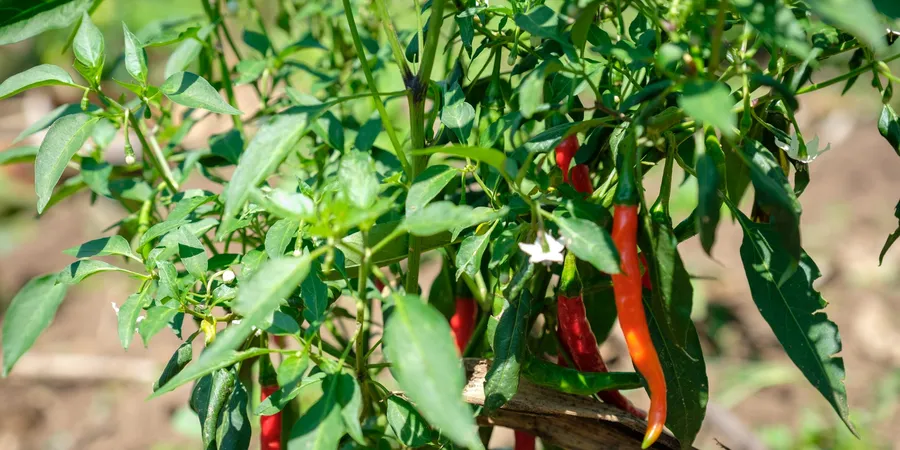
Until the new European Plant Health Regulation comes into force in December 2019, the application of existing EU rules is being reinforced. This has implications for third countries exporting to the EU, including the African, Caribbean and Pacific (ACP) states.On 15 July 2017, the European Commission published Implementing Directive 2017/1279, which sets out important new plant health rules affecting ACP exports. These rules require additional measures for the control of four new quarantine pests, including False Codling Moth (Thaumatotybia leucotreta) on Capsicum (including hot pepper).The new rules will apply from 1 January 2018, but measures need to be taken now in order to prepare for them.More details are provided in the link below, but in summary, it is urgent for the authorities in the countries affected to: Collect pest data to evidence the effectiveness of control methods being used by growers Compile a dossier on the methods used, and data on its effectiveness, and submit to the EU authorities before 1st January 2018 Inform Capsicum growers and exporters about the regulatory changes. It is critically important that they are aware of the new Directive so that they can take appropriate action and decisions on their future production plans, investments, and markets. The example of False Coddling Moth illustrates that it is critically important for each ACP country to have a national capacity to respond not only to the challenges of the new European plant health regulation, but also to the more stringent application of the rules currently in force.The Directive specifies Capsicum exported to the EU from Africa, Cape Verde, Madagascar, La Reunion, and Mauritius. These countries are known to have established populations of False Codling Moth (FCM), and there have been historically high numbers of interceptions on hot pepper. From 1st January 2018, producers in these countries will only be able to export Capsicum to the EU:Either from an area of the country or a place of production that is designated to be free of FCM. This designation must be issued by the National Plan Protection Organisation (NPPO) and according to international standards (IPPC Guidelines). In addition, the production sites must receive official inspections during the growing season to confirm the FCM-free status Or If the produce is given an effective cold treatment (or other effective treatment), that ensures it is FCM free. The method used must be indicated on the plant health certificate, and be communicated in advance to the EC. On 4th August an addendum to the Directive was issued through the WTO (G/SPS/N/EU/196/Add.1). This can be searched using the link: http://spsims.wto.org/. The addendum requires countries concerned to send details to the EC describing the treatment that has been applied to the fruit, together with evidence of the effectiveness of this treatment. This dossier must be sent to the European authorities ( SANTE-G1-PLANT-HEALTH@ec.europa.eu ) before 1st January 2018.The treatments outlined will be assessed by a committee of EU experts; if they accept the treatments as effective, exports can continue. However, if they reject the treatments applied, or if they do not receive the dossier by 1st January, Capsicum imports from the countries concerned will be rejected.No guidance has been provided by the European authorities on the treatments that are likely to be acceptable. Cold treatments are mentioned in the Directive; this is a method used on citrus, but little information is available on its suitability for use on Capsicum, in particular its impact on quality and shelf-life. COLEACP is organising trials to investigate this as soon as possible. Some countries are growing Capsicum in net houses, to create a barrier that excludes FCM from the crop. The NPPOs in these countries must collect pest data (according to IPPC Guidelines) to give evidence to the EU authorities that this method is effective.For more information or additional request please contact COLEACP at info@coleacp.org
News
COLEACP and the climate: Create a capacity to adapt and absorb changes in food safety, social or environmental domains!
Although it is established that the poor countries of the South are and will be the first victims of global warming, and that the most polluting country has stated its intention to withdraw from the Paris Agreement, managing agricultural production on all fronts has become the sine qua non to guarantee access to the most profitable markets.Since 2000, COLEACP has drawn up strategies aimed at updating the knowledge of its members and beneficiaries: a multitude of SMEs, small-scale producers and sometimes even large companies.During the earlier part of the decade, regulations on pesticide residues, food hygiene and various rules ensuring food safety forced a change in mindset regarding the modes of production; control at all stages and the obligation to prove the existence and implementation of control measures .There were two ways of tackling these issues: settling for ad hoc certifications or transforming the value chain in a sustainable way. It is the second option that COLEACP has adopted and continues to apply today through its capacity-building system.To convince producers, this challenge had to be transformed into an opportunity! The case of the traceability of outputs from small-scale producers speaks volumes: implementing this seemed insurmountable, but with support from COLEACP, companies quickly realised that the traceability system was a great opportunity to streamline and optimise their business and control costs.Between 2005 and 2015, the same methods were applied to all European market requirements, such as environmental protection and social welfare.Today, the ‘Fit For Market’ programme applies these instructions with a ‘hard-line’ approach. By strengthening capacities in the short, medium and long term amongst all operators, while providing technical solutions and assistance to immediately apply the new knowledge in situ.Since 2004, over 2,000 business development projects have been supported and implemented with COLEACP.Applying the principles of sustainability, with its three mainstays, to improve business competitiveness is the best example of transforming a problem into an opportunity. Africa, Caribbean and Pacific (ACP) operators understand this well: the Fit For Market programme, which strengthens the competitiveness of ACP SME producers by implementing sustainability measures, has been a huge success to date and is only gaining in momentum with already 250 requests for support in year one.COLEACP and its beneficiaries are accompanying producers in the development of sustainable climate-compatible agriculture which brings with it opportunities for all and especially small-holders.Guy StinglhamberCOLEACP General Delegate.
News
Khadija Niang at the European Parliament for COLEACP
Khadija Niang embodies the future of Africa, the hope of better days for young people from modest but virtuous backgrounds. At the same time she represents all the difficulties faced by this generation from which the leaders of tomorrow must emerge, the executives who must make the African bet work; feed Africa and turn it into one of the biggest agro - industrial forces. To move beyond religious socio-cultural fatalism, by breaking the traditional codes.The only one of a family of nine who has succeeded in getting to third level education, she is taking the risk of going off the beaten track. Having to choose between education and starting a family, taking the risk of being misunderstood by her family, by a potential future husband, are all difficult dilemmas to overcome.She wanted to be a doctor, but the system offered her agronomy. Between feeding or healing one’s neighbor, there is little difference. After 3 years of studying for a professional qualification and 2 years of work experience in large European companies, she realized that her ability to influence her country policies and therefore the future of her peers, was too limited. She decided to find ways to continue her studies to become an engineer at a recognized European university. Savings, part-time jobs and student loans are to be managed in addition to studies.From a distance, she continues to manage the “Green Globe”: a cooperative society that she created 2 years ago which provides agricultural services by young agronomists. On the 22nd of November at the EU parliament, Khadija had the opportunity to speak for the first time in public, which she did with fervor and brilliance.Khadija is the first spokesperson for young African agronomists at COLEACP. Although our activities have always been directed at young people in Africa, we have decided to help them express themselves, be heard and influence the decisions that will shape their world tomorrow. Far from a ‘ fashionable trend’, more like a logical element of our methodology already applied for 5 years.The COLEACP has founded the development of its training programs on the gap between our beneficiary company needs and the real skills on offer by Human Resources. This is how we created 100,000 jobs with our PIP 2 programme and how we are ready to ramp up to millions of jobs…. if we have the means to do so.
News
African youth at the heart of debate for the 2017 AU-EU summit in Abidjan
COLEACP has started the journey towards Abidjan AU-EU summit next week. Yesterday, amongst a sea of promises, political speeches, COLEACP brought a fresh and new voice of reality from Africa’s youth into the heart of the European Parliament to the “High level conference towards a renewed partnership for Africa”.Ms Khadija Niang, “spokesperson” for the young Africans working in agriculture, told her story, shared her struggle for recognised qualifications and training so that she may secure a successful career in horticulture at home in Senegal.Khadija’s story and plea is not unique. She is one of many promising young talents being mentored by COLEACP across the African Union. All of them wishing to access adapted training which is well tuned into the needs of agri-businesses in Africa.Interestingly, the same plea was echoed in the panel speeches and recommendations from the representatives of the EU and African private sector, who realise that without well qualified human resources, sustainability and competitiveness will not be feasible.This is the message which COLEACP will bring to the European African Business Forum next Monday in Abidjan and to the Leadership for Agriculture forum ,Tuesday 28th November, organised on by the African Development Bank & Rockefeller Foundation.Guy StinglhamberCOLEACP General Delegate
 News
News
Start of the year message from the General Delegate
The European dream: from “virtual reality” to “real virtuality”At the end of 2014, having supported the “Agenda for change” during the EDD (European Development Days) through the “PPP4PPP” Brussels declaration, we wrote that the poor did not have time to wait any longer.In 2015, they took to the road by foot, by “boat” and on the shoulders of their parents towards the European dream, in fear of their lives.This dream has taken on a different dimension with the boom in ICT in poor countries. It has been transformed from “virtual reality” to “real virtuality”, identified, geolocalised and far closer than paradise.Hope must be given urgently to the young Africans and this hope must be converted into reality to avoid these tragic exodus and belligerent indoctrinations.The private sector, a source of hope!COLEACP and its members are convinced that good management of their affairs participates - and must participate even more - in the well-being of their entire community. Every business head, from the micro-business to the large multi-national, has a responsibility in the social and economic development of his region.African agriculture is trying to find its way, it must reinvent itself to face up to the challenges of hunger and poverty and feed the world in the not so distant future.Africa has major assets to take up this challenge:- available arable land, - significant margins for improvement, - and above all ingenious, courageous human resources endowed with traditional know-how. For the past fifteen years COLEACP has elected to bank on these human resources.All together, associated with new technologies, they embody the concept of “sustainable intensification”.Europe is also reinventing its agriculture and its agribusiness - closer to man, more nature-friendly -; this could be called “sustainable de-intensification”. Our organisation, COLEACP, is in the front row of these changes. Our traditional members, the ACP exporters and the European importers, are combining with the Small Producers and their organisations to supply a rapidly-changing international, national and regional. Mass distribution is knocking more and more strongly at our door.There is now general agreement in recognising that African agriculture will not be transformed without incorporating the small producers properly in its value chains. Competitiveness cannot be based on poverty. Profitable small producers, dynamic SME and large businesses must therefore bring their technology, their know-how and their ability to invest.This gives us an exceptional opportunity to move this world forward, that explores spatial infinity as infinitely small, but has failed to eradicate hunger and extreme poverty.The large private groups, the public sector and the civil society are joining forces to combat these scourges for the first time. Let us, together, make sure that this is reality, not just an idea. Do not disappoint the small producers, nourish their dreams and turn them into local, non-virtual and distant “real reality”. Let us dream local and consume global!COLEACP has conceived the Sustainability and Competitiveness programme to support them better in this daily challenge.COLEACP is changing its support approach to agri-food businesses in the Southern countries. We have put together a new programme focusing on competitiveness, in line with the post-2015 goals and matching the European Union criteria for support for the private sector.COLEACP has redefined its strategy, its operation and the nature of its missions to pursue this objective. This rationale is based on the observations compiled by its experts during field assignments, the expectations expressed by the ACP agri-food businesses, the consultants and the public authorities and also the guidelines drawn up by the European Union in its recent strategy for support for the private sector in developing countries.The objective is competitiveness. In other words, make sure that the technical skills acquired by the businesses serve to improve their economic performances and, beyond that, help to release the agri-food production potential in developing countries. The COLEACP support will therefore extend to all entrepreneurial development, including such aspects as market analysis, marketing, the cold chain, logistics, invoicing, administration, etc.This diversification is designed to set up a virtuous circle to resolve the main problem of SME in Southern countries - access to credit. By supporting them in consolidating their economic pillar, COLEACP will help to improve their bankability, so that they ease their way towards obtaining financing from credit organisations and thus expand their development.Competitiveness and responsibilityProfitability, competitiveness, bankability - admittedly, but with a broader vision. COLEACP believes that the economic pillar can only be consolidated in line with the two other pillars of sustainable development: contributing to social well-being and minimising the environmental impact. Only this threefold consistency will encourage lasting competitiveness of sectors and businesses.The sustainability charter has been prepared with this in mind. It is gradually being introduced, based on a training programme designed to incorporate its precepts into the day-to-day running of the business. The charter will give the businesses a clear framework to use in communicating their commitment and their progress towards sustainable development without necessarily having to invest in certifications. But COLEACP has gone beyond that, by designing a management tool that is an integral part of the new programme.COLEACP has used its experience to consider both the needs of its beneficiaries and the guidelines of its lending institutions, mainly the European Union.Call for Financial Partners:The Sustainability and Competitiveness Programme, initially designed for a seven-year period with a budget of 80 million euros, has so far found an initial budget of 20 million euros from the European Union. To put all its potential at the service of development and follow the recommendations of technical assessments, COLEACP will shortly be launching a call for financial partners to complete this first budget envelope and achieve the goals set initially.We hope that the institutions will response positively and quickly to this call.See you soon!Guy Stinglhamber COLEACP Delegate General
News
Fit for Market programme – Strengthening business competitiveness through more sustainable practices
“Fit For Market” (F4M) is up and running. F4M is part of the 11th intra-ACP indicative programme (2014-2020) between the European Union and the ACP Group of States. It is due to be rolled out over 5 years (2016-2020) with a total budget of € 25 million (of which € 20 million from the European Union). The specific objective is to enable smallholder farmers, producer groups, farmer organisations, and micro, small and medium enterprises, to access international and domestic fruit and vegetable markets by complying with SPS issues and market requirements, in a sustainable framework. The aim is to support these companies, so that they are able to benefit from current and future opportunities on international, regional and national markets.F4M comes within the scope of COLEACP’s mission to “develop an agricultural and food product sector (especially fruit and vegetables), that is inclusive and sustainable, primarily in the ACP States and between these countries and the European Union”.The first half of 2016 was marked by the end of the activities of COLEACP’s two flagship programmes, PIP2 and EDES. Thanks to the resources made available by the EDF for these two Programmes between 2010 and 2015, companies supported by COLEACP benefited from a 62% turnover increase, creating thereby 100,000 jobs. Results that paved the way for F4M.Read the COLEACP annual report
 News
News
Fit For Market official launch at the ACP House: unanimous enthusiasm!
The official launch of the “Fit For Market” Programme took place at the ACP House on the 6th of December. Besides the launch of a new programme, it was also a great opportunity to celebrate past achievements given the longstanding historical Public Private Partnership between the ACP, the European Commission and the COLEACP.All the positive testimonies on COLEACP actions were appreciated by the staff and members of the Board also present: a real source of motivation and enthusiasm to carry out the future actions of FFM.
News
Let's meet at Fruit Logistica 2017
The COLEACP team will be present at Fruit Logistica 2017 in Berlin from 8th-10th of February to meet existing members of the association, as well as new beneficiaries of the recently launched FIT FOR MARKET (FFM) programme.To help us organize appointments, we would like to invite any African, Caribbean and Pacific (ACP) exporters and European importers who wish to meet with us to contact the COLEACP team as soon as possible by clicking here.For ACP and European companies that will not be attending the exhibition, we are of course at your disposal if you need any information or have particular issues to discuss. In particular, we are available to provide information about the mechanisms for accessing and implementation of FFM. Please note that applications for FFM support are online and can be easily directed to COLEACP.
News
Already more than 100 eligible projects from 23 countries
Launched officially on December 6th at the ACP house, the Fit For Market (FFM) Programme has already received more than 100 requests for support from 23 countries in Africa and the Caribbean.More than 60% of the requests were made by companies and producer groups. They concern the fruit and vegetable sector and, more specifically, support for the sustainability of production and business management systems, as well as food safety and phytosanitary compliance.This dynamic will accelerate with the successive missions carried out by the COLEACP team in the countries of Africa, the Caribbean and the Pacific. Below, find the geographical distribution of the requests for support.