Growing People

Cultivating
Sustainable Futures

Transforming agriculture and food systems sustainably, with the driving forces who bring them to life

Today
140+ countries covered
500 Global members
1200 experts and trainers
50+ years of experience
2030
50 partner countries
250M€ in investments leveraged
100M producers integrated
2000 supported SME
COLEAD · COmmittee Linking Entrepreneurship Agriculture Development
COLEAD News

What's changing, what's happening,
what inspires.

Article featured image News

COLEAD adopts its 2030 strategy at an Extraordinary General Meeting

On 21 April 2026, COLEAD reached a major milestone with the formal adoption of its 2030 strategy during an Extraordinary General Meeting. Submitted to an electronic vote of active members, the strategy was approved by an overwhelming majority: 97% voted in favour, with the quorum comfortably reached. This strong result reflects broad alignment around the proposed vision and collective ambition.A renewed ambition: from organisation to movementMore than a strategic framework, COLEAD 2030 represents a fundamental shift: COLEAD is evolving from an implementing organisation into an international movement committed to transforming food systems. This ambition is grounded in a core belief: achieving sustainable impact requires a systemic approach that connects markets, finance, policies and stakeholders.Three strategic orientations to guide actionThe strategy is structured around three complementary priorities: Assert a strong economic positioning to strengthen viability and attractiveness of food value chainsDeploy a digital, field-rooted organization capable of scaling up.Structure a unifying movement to amplify sustainable collective impactSeven priorities to drive transformationThese orientations are translated into seven key priorities :economic inclusion, especially for women and youthclimate resilience and environmental sustainabilityfairer value distribution across value chainsDigital transformation and innovation for impactNutrition and equitable access to healthy dietsLocal ownership, coherence and sustainability of transformationsQuality, integrity and consistency of action in complex contextsA structured and progressive roadmapThe strategy is operationalised through nine workstreams designed to turn ambition into measurable action, from mobilising investment to building “glocal” alliances and strengthening COLEAD’s influence .It follows a phased trajectory:2026: laying the foundations (credibility, governance, operational strength)2027–2029: demonstrating and scaling impact2030: achieving scale and becoming a recognised referenceA strategy built through a participatory processThe 2030 strategy was developed through a structured and inclusive process, engaging members, teams and partners through consultations, working groups and in-depth analysis. This approach ensured strong ownership and broad supportA shared trajectory towards impactWith the adoption of this strategy, COLEAD reaffirms its ambition: to contribute, alongside its partners, to the sustainable transformation of food value chains by strengthening their economic viability, resilience, and social and environmental impact.COLEAD 2030 is not just a strategy. It is a shared trajectory, driven by a collective movement committed to delivering impact at scale.

2 min.
Read
Article featured image News

Yearly review of EU and GB MRL changes in 2025

Key points This news update is a review of changes that were made in 2025 . European Union (EU) maximum residue levels (MRLs) were changed for 38 plant protection products (PPPs) in 2025, compared with 78 in 2024. These changes include cases where MRLs for certain foods have been raised or lowered. In Great Britain (GB) maximum residue level (MRL) changes concerned 42 plant protection products (PPPs) in 2025, compared with 33 in 2024. Note that EU MRLs still apply in Northern Ireland (GB covers only England, Scotland and Wales). How will ACP producers/exporters be affected? In export crops, meeting the MRLs of the destination market is critical to prevent interception and destruction of merchandise at the border. ACP growers and exporters need to remain up-to-date with regulatory changes to ensure they remain aligned. What should ACP producers/exporters do now? For each substance and crop concerned, the Good Agricultural Practices (GAPs) in place need to be verified and possibly adapted to ensure compliance with new MRLs. The GAPs include dose rate, number of applications, and pre-harvest interval. In some cases, adaptations to the GAPs will allow the new MRLs to be met. However, in many cases, especially where the level is reduced to the Limit of Determination (LoD), it may not be possible to meet the new MRL, and growers will have to look for alternative crop protection solutions. If you have any major concerns about these changes, and fear that you will be left without an effective and locally available alternative, please contact COLEAD at: network@colead.link . If you require more frequent updates on EU MRL changes, we invite you to visit our AGRINFO website and subscribe to the newsletter on EU regulations.

3 min.
Read
Article featured image News

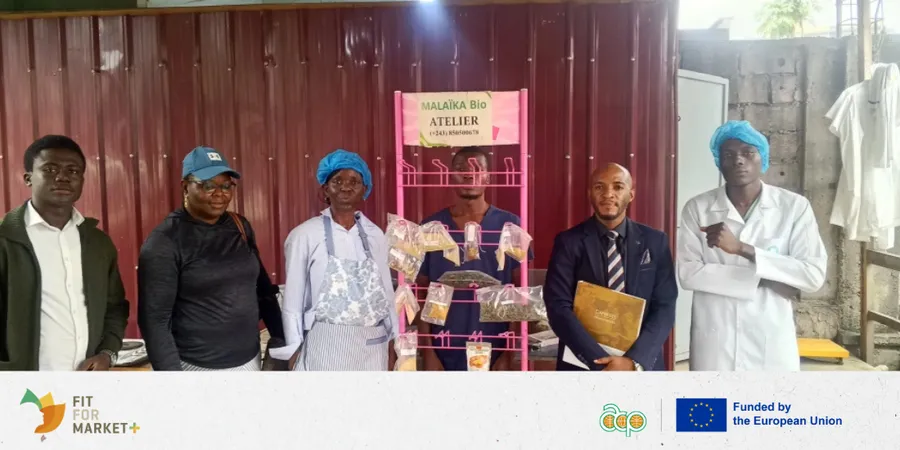
Strengthening food safety while building on local expertise – the example of NSUNGA YA KONGO in the Democratic Republic of the Congo

In brief Through the Fit For Market Plus (FFM+) programme, COLEAD supported NSUNGA YA KONGO (Democratic Republic of Congo) in implementing Good Hygiene Practices (GHP).The mission was carried out by a local Congolese expert: assessing practices, strengthening teams, identifying areas for improvement.Strengths noted: strong management commitment, motivated teams, internal technical capacities.Challenges identified: no dedicated hygiene and quality manager, limited knowledge of GHP requirements, need for further training.Recommendations: staff training, regular monitoring of hygiene practices, suitable technical tools.A mission led by a local Congolese expertThrough the Fit For Market Plus (FFM+) programme, COLEAD supported NSUNGA YA KONGO with a technical assistance mission focused on Good Hygiene Practices. Carried out by a local Congolese expert, it aimed to assess how far GHP were being applied, strengthen staff capacities and identify the improvements needed to enhance food safety management.What the assessment showedThe technical assistance combined discussions with the management team, document reviews and assessments of existing practices. It made it possible to analyse internal procedures and the staff's ability to apply hygiene and quality principles in production, processing and stakeholder support. The mission highlighted several positive aspects — strong management commitment, motivated teams and internal technical capacities — alongside a number of challenges: the absence of a dedicated hygiene and quality manager, limited knowledge of GHP requirements, and the need for further capacity building.Practical recommendationsTo strengthen the organisation's hygiene and food safety management system, several recommendations were made: further staff training, regular monitoring of hygiene practices, and the development of appropriate technical tools and resources.Local expertise at the heart of the approachBy drawing on Congolese expertise, this mission reflects COLEAD's commitment, through the FFM+ programme, to strengthening in-country capacities while supporting agricultural and agri-food organisations in developing safer, more structured and more sustainable production systems.This activity is supported by the Fit For Market Plus (FFM+) programme, implemented by COLEAD within the Framework of Development Cooperation between the Organisation of African, Caribbean and Pacific States (OACPS) and the European Union. This publication receives financial support from the European Union and the OACPS. The content of this publication is the sole responsibility of COLEAD and can in no way be taken to reflect the views of the European Union or the OACPS.

2 min.
Read
Article featured image News

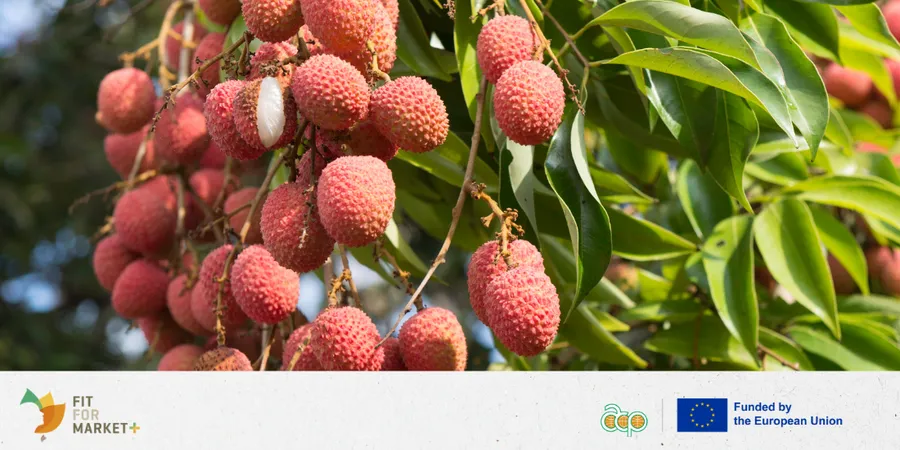
Towards Rainforest Alliance certification for lychee exporters in Madagascar

In briefCOLEAD supported two Malagasy lychee exporters, QUALITYMAD and GASYFRUITS, in their compliance journey towards the Rainforest Alliance standard.The support was delivered under the Fit for Market Plus (FFM+) programme, building on training the companies had already completed.The method: field visits, document reviews and assessment tools, covering management, traceability, agricultural practices and the social and environmental dimensions.QUALITYMAD reduced its non-conformities and consolidated its management tools; GASYFRUITS is pressing ahead despite the damage caused by Cyclone GEZANI.The aim: step-by-step continuous improvement, towards certification.Why this support?Under the Fit for Market Plus (FFM+) programme, COLEAD supported two lychee-exporting companies in Madagascar in their compliance with the Rainforest Alliance sustainable agriculture standard. The intervention built on training the beneficiaries had already completed on this standard. The objectives: reviewing the diagnostics carried out, identifying gaps against the standard's requirements and formulating practical recommendations with certification in view.The support combined field visits, in-depth document reviews and Rainforest Alliance assessment tools. The work covered management systems, traceability, agricultural practices, social aspects and environmental requirements. Beyond identifying non-conformities, it strengthened the companies' understanding of the requirements and set them on a progressive path of continuous improvement.QUALITYMAD: consolidating progressFor QUALITYMAD, active in the export of lychee and other agricultural products, the support focused on its east coast lychee supply chain and its network of more than 45 producers already engaged in certification processes. The review, conducted both in the field and on documents, identified seven non-conformities — mainly relating to system management, traceability, agricultural practices and social aspects. Recommendations covered internal governance, stronger documentary procedures, production traceability and the formalisation of practices already in place. The company is showing encouraging progress: fewer non-conformities than in previous support missions, and several management tools now consolidated.GASYFRUITS: pressing ahead despite the cycloneThe support to GASYFRUITS — which specialises in the production, collection and export of lychee and cloves — took place in a difficult context, marked by the damage caused by Cyclone GEZANI to its infrastructure. Despite this, the mission enabled a detailed analysis of practices and the identification of the main gaps. Recommendations focused on strengthening management mechanisms, formalising inspection and monitoring procedures, improving traceability and documenting agricultural practices. With its GLOBALG.A.P., GRASP, Fairtrade and Tesco certifications already in hand, the company has a solid foundation from which to move towards Rainforest Alliance.What is at stakeSetting both companies on a path of step-by-step continuous improvement, towards a certification that conditions access to demanding markets — while strengthening their resilience to climate shocks.This activity is supported by the Fit For Market Plus (FFM+) programme, implemented by COLEAD within the Framework of Development Cooperation between the Organisation of African, Caribbean and Pacific States (OACPS) and the European Union. This publication receives financial support from the European Union and the OACPS. The content of this publication is the sole responsibility of COLEAD and can in no way be taken to reflect the views of the European Union or the OACPS.

2 min.
Read
Article featured image News

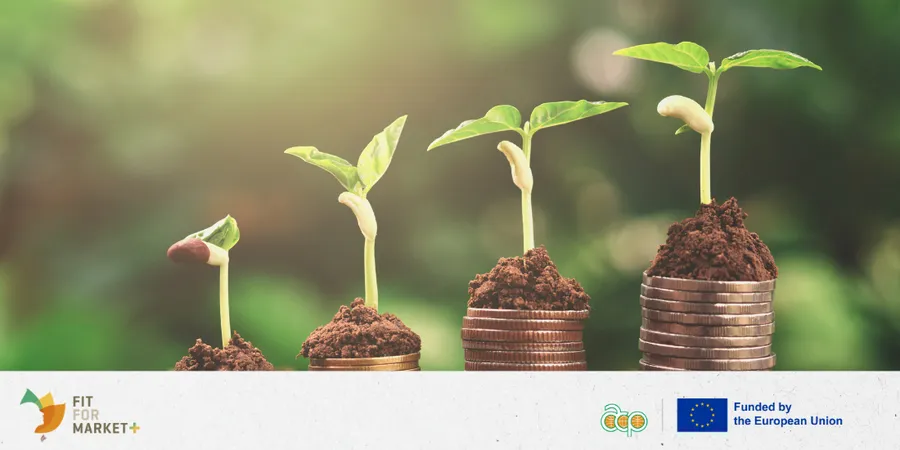
Business plans in agriculture: 50 entrepreneurs trained to make their ventures bankable

In briefFrom 19 January to 6 February 2026, COLEAD ran a three-week training course introducing business plans in the agricultural sector.It was delivered under the Fit for Market Plus (FFM+) programme.Around fifty participants — agri-MSMEs, cooperative managers and consultants — from 19 partner countries in Africa, the Caribbean and the Pacific.The goal: turning hands-on expertise and market knowledge into a bankable business plan.A concrete lever to ease access to finance for horticultural businesses.Why this training?Many horticultural entrepreneurs have strong technical skills, yet the business plan often remains a daunting exercise. Banks and investors, by contrast, expect detailed, well-structured plans. From 19 January to 6 February 2026, under the Fit for Market Plus (FFM+) programme, COLEAD's Training team ran a three-week course — "Introduction to business plans in the agricultural sector" — designed precisely to bridge that gap. Step by step, it guided participants in translating their day-to-day operations and market knowledge into a bankable business plan.Who took part?The session brought together around 50 active participants — agri-MSMEs, cooperative managers and consultants — from 19 partner countries in Africa, the Caribbean and the Pacific: Burkina Faso, DR Congo, Ethiopia, The Gambia, Ghana, Guyana, Kenya, Malawi, Nigeria, Papua New Guinea, Rwanda, Sierra Leone, Solomon Islands, South Africa, Suriname, Tanzania, Trinidad and Tobago, Uganda and Zimbabwe. The cohort was deliberately mixed: some came as early-stage entrepreneurs writing their very first business plan; others, leaders of established cooperatives, were looking to secure funding to expand. It was this mix that fuelled some of the course's richest exchanges.Why it mattersFor an agri-MSME, a credible business plan often makes the difference between a good idea and the funding needed to make it happen. By giving participants the tools and the confidence to write their own plan, the training eases access to finance, sharpens internal decision-making and puts horticultural businesses on firmer footing with the markets and partners they are targeting.This activity is supported by the Fit For Market Plus (FFM+) programme, implemented by COLEAD within the Framework of Development Cooperation between the Organisation of African, Caribbean and Pacific States (OACPS) and the European Union. This publication receives financial support from the European Union and the OACPS. The content of this publication is the sole responsibility of COLEAD and can in no way be taken to reflect the views of the European Union or the OACPS.

2 min.
Read

COLEAD — COmmittee Linking for Entrepreneurship, Agriculture and Development — works towards the sustainable transformation of food value chains, particularly horticultural ones, in countries and regions where development needs are greatest.

An international not-for-profit association founded in 1973, COLEAD brings together farmers, businesses, professional organisations, technical partners and public institutions around one conviction: the sustainable transformation of food systems rests on the economic viability of food value chains, the essential condition for their social and environmental sustainability.

COLEAD is ISO 21001 certified. This certification is a management system standard designed specifically for educational organisations. It covers vocational training in sustainable agriculture and demonstrates COLEAD’s commitment to developing skills and expertise in this field through education, learning and research.

1680870164689
Series · Portraits

Those who
cultivate the future.

A curated selection of agrinnovators around the world — women and men transforming their value chains, territories, and communities.

Discover the portraits
27portraits published
Our action

Closely aligned with those who are transforming the food sector.

Historically rooted in Africa and the Caribbean with partner countries of the European Union, COLEAD now operates on a global scale, on the ground and through its digital tools.

Our action
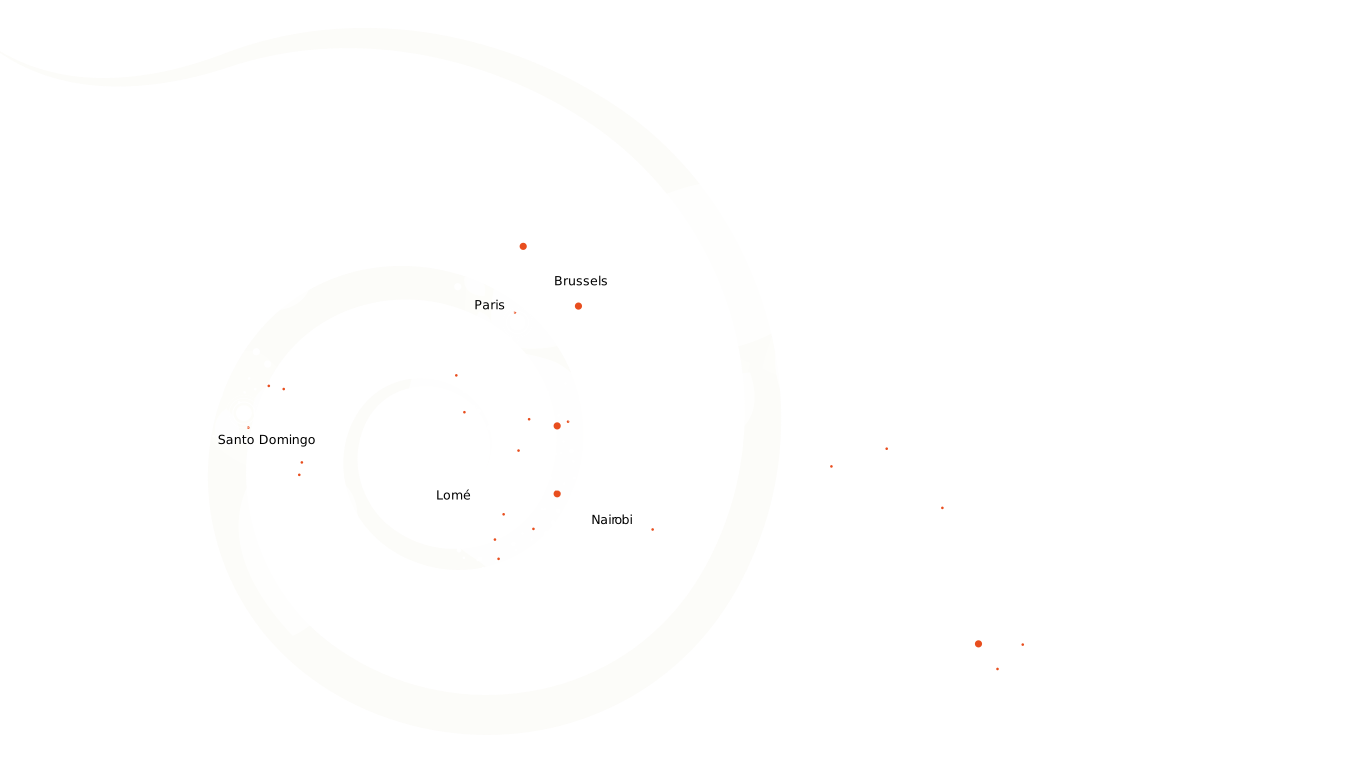
COLEAD offices world map
Paris
Headquarters
Brussels
Europe
Nairobi
East Africa
Lomé
West Africa
Santo Domingo
Caribbean and Americas
Knowledge hub

Access trusted resources to improve performance, competitiveness and sustainability.

elearning banner

Training platform

50,000 registered users · open access

Our e-learning platform offers self-paced courses and group sessions on food safety (SPS), sustainable agricultural practices, business management and many other topics. Whether you want to build your skills on …

Access
Resources Library

Technical library and publications

Open-access resource centre · continuously updated

Our online resource centre gives access to a wide range of technical content: market studies, sector profiles, regulatory guidelines for market access, training tools and much more. Continuously updated by …

Access
European parliament

Regulations and standards (AGRINFO)

The latest on EU AGRI-Food policies impacting low- and middle-income countries

Through the AGRINFO programme, we continuously monitor the regulatory developments of the European Union that affect operators in low- and middle-income countries. Regulatory intelligence essential to anticipate change and prepare …

Access
Resources Analytics

Market information

Interactive dashboards · volumes, values, SPS notifications

Our interactive dashboards enable our partners to monitor market trends in volume and value, as well as SPS notifications and interceptions, across most agri-food value chains.

Access
top-view-people-caring-mother-nature-1

Crop Protection Database and good practices

Database by crop and active substance · compliant with EU MRLs and Codex

Our database supports Integrated Pest Management (IPM) by helping farmers control pests and diseases while minimising negative impacts on people and the environment. Searches can be made by crop and …

Access
Agrinnovators

Business hub — Agrinnovators

Networking platform · business profiles · agri-food sessions

Agrinnovators brings together all information on the agri-food sessions we organise with regional organisations: programmes, speakers, business profiles, impact stories and key topics (agroecology, circular economy, climate resilience, markets and …

Access