
Cultivating
Sustainable Futures
 News
News
News Digest: Agri-food Markets, Production and Trade
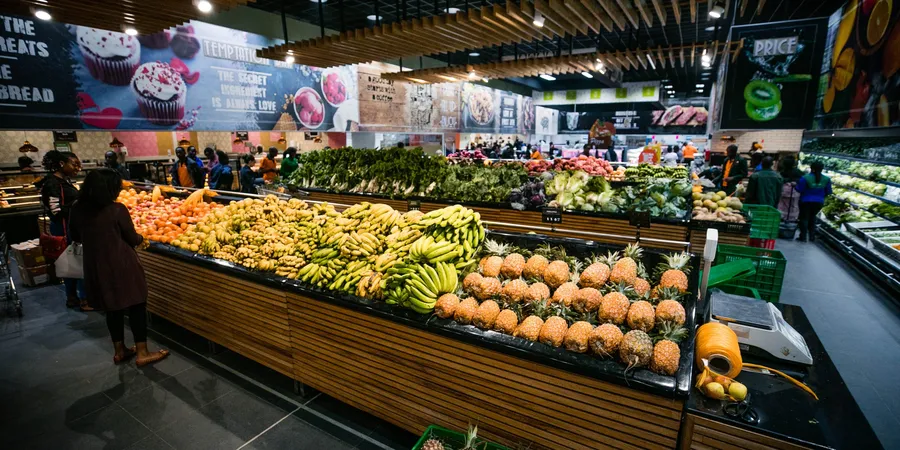
Henk van der Meij of Hars&Hagebauer; reports on mango trade that "the Peruvian season's tail end was unexpectedly long, due partly to shipping delays. So the first part of the African season (Côte d’Ivoire) coincided with the last part of the Peruvian season. That's usually not ideal, but the promotions are keeping the mango sales momentum going. Eventually, the market will also have to start paying the price needed for this fruit and the increased costs. Africa is delivering sufficient volumes. But there are fewer and fewer importers from Africa; it's a risky business.”Source: Fresh Plaza, 4 May 2022
 News
News
NExT Kenya study on bottlenecks in the horticultural sector is supported by evidence from recent NHT mission
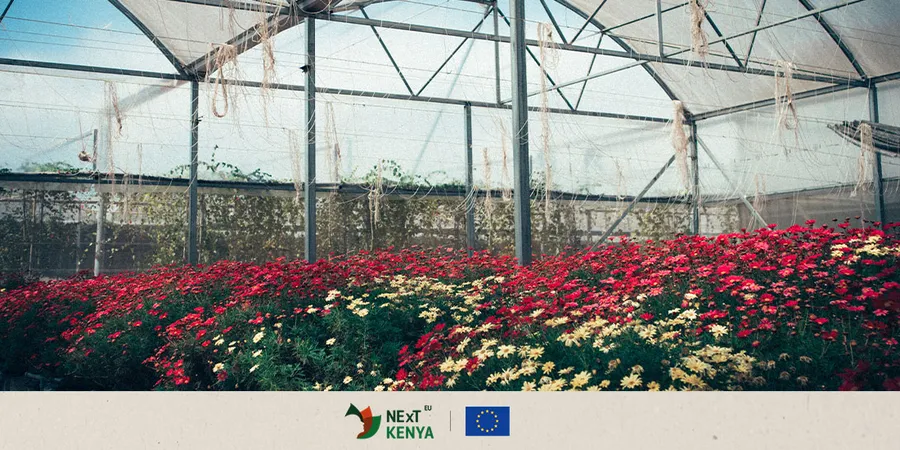
On 5 July, at a meeting with representatives of Kenya’s horticultural public and private sectors, Dr Kedera, NExT Kenya programme coordinator, presented the results of a study on the bottlenecks affecting the competitiveness of Kenyan horticultural exports.These results are the fruit of more than a year's work, which involved local consultants, multiple exchanges with stakeholders in Kenya and Europe and the competent authorities, as well as methodological and coordination work by COLEACP's Markets Insights department.What did the study reveal?No major revelations, but many well-founded confirmations regarding the factors blocking the expression of Kenya's full export potential. These range from a lack of agricultural inputs needed for the continuous improvement of sustainable agricultural practices; through the continuous need for capacity building, especially to support smaller exporters to respond to constraints linked to the ongoing evolution of European market requirements; to an urgent need for the optimisation of logistics via sea freight; and for transparency along the value chain via monitoring systems.The study confirms that Kenya's horticultural exports to the EU (fruit and vegetables, flowers) are a success story that has been key to the continued development of the country's agricultural economy. But challenges and threats have increased in international markets, most recently with Brexit, Covid-19, and now the war in Ukraine.At the same time, other suppliers to the European market competing with Kenya, such as Colombia, Peru, Ecuador and Egypt, have benefited more than Kenya from the growth of the EU market, revealing the better performance of these Kenyan competitors on the EU market.Kenya's image for flowers and vegetables is positive among buyers. This is less so for fruit, such as avocado and mango, where even if Kenyans' efforts are recognised, progress remains to be made in terms of product consistency and quality.The study's value chain approach identified 47 bottlenecks, from which recommendations were drawn up for each link in the value chain and prioritised according to their impact on the sector and an estimate of the feasibility of remedying them.The bottlenecks identified for the flower sector illustrate the urgent and important challenges for the whole sector: the issue of SPS notifications on entry to the European market; integration of the European Green Deal both as a challenge and as an opportunity to develop new sustainable market segments in the EU; and finally the need to communicate to consumers about the societal and environmental sustainability of horticultural production.During the meeting on 5 July, Clement Tulezi, Chairman of Kenya’s National Horticulture Task Force (NHT), reported on the main results of the NExT Kenya mission in France, Belgium, the Netherlands and Germany during March and April 2022. The Kenyan delegation consisted of members of the NHT, key agricultural regulatory agencies, the Kenyan mission to Belgium and the Netherlands, private sector representatives and development partners. Meetings with private and public stakeholders included the European Commission and the European horticultural import industry. Feedback from the mission confirmed and illustrated the results of the study: a need for regular data on the sustainability of the Kenyan horticultural sector; a decrease of SPS notifications on market entry; positive communication on Kenyan production, etc.The challenge for the NHT is now to turn these recommendations into a roadmap and action plans, as agreed by stakeholders on 5 July. The detailed and practical NExT Kenya bottleneck study should be very useful in this respect.These activities are implemented by COLEACP and supported by the NExT Kenya (New Export Trade) programme, established in collaboration with the EU Delegation in Nairobi and Kenyan stakeholders.
 News
News
Sandra, Noël and Rachel – three innovative and inspiring entrepreneurs from Africa and the Caribbean, honoured during EDDs 2022
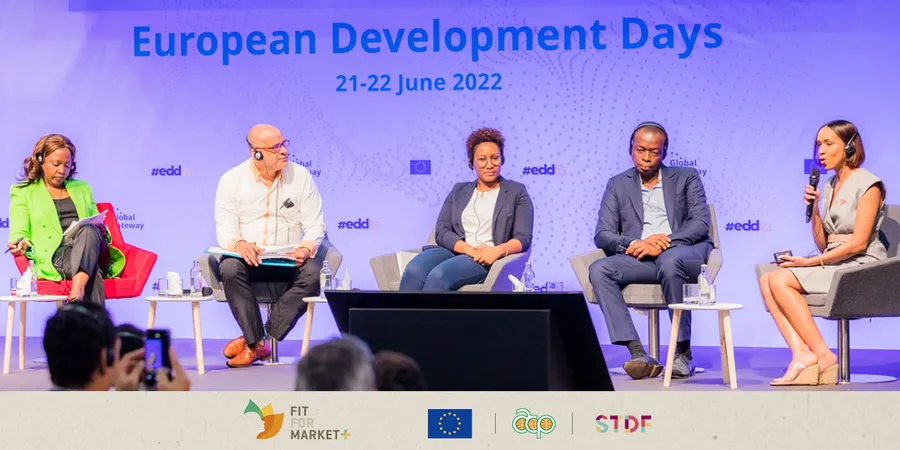
On 22 June, during the European Development Days in Brussels, three young entrepreneurs from Africa and the Caribbean had the opportunity to present their business model promoting sustainability, links with research, development and adoption of technologies, and the use of digital tools in a Lab Debate organised by COLEACP and its partners.The European Union (EU)’s premier forum for international partnerships took place physically in Brussels and online on 21-22 June. It focused on the implementation of the EU's Global Gateway strategy, which aims to develop smart and secure links in the fields of digital, energy and transport, and to strengthen health, education and research systems around the world.The agri-food sector, which provides two-thirds of jobs in sub-Saharan Africa, will be essential to the economies of tomorrow's developed countries. Its future will depend on innovation and the development of skills needed for the emergence of new professions and new generations of entrepreneurs who will make agriculture a sustainable and resilient ecosystem.This is the purpose of the new Fit For Market+ (FFM+) programme, funded by the European Union and the Organisation of African, Caribbean and Pacific States (OACPS), which was officially launched on 1 June and presented at the EDDs via the stand of COLEACP and its partners (EC/INTPA, the OACPS, STDF).
 News
News
Three missions to meet with our partners and collaborators
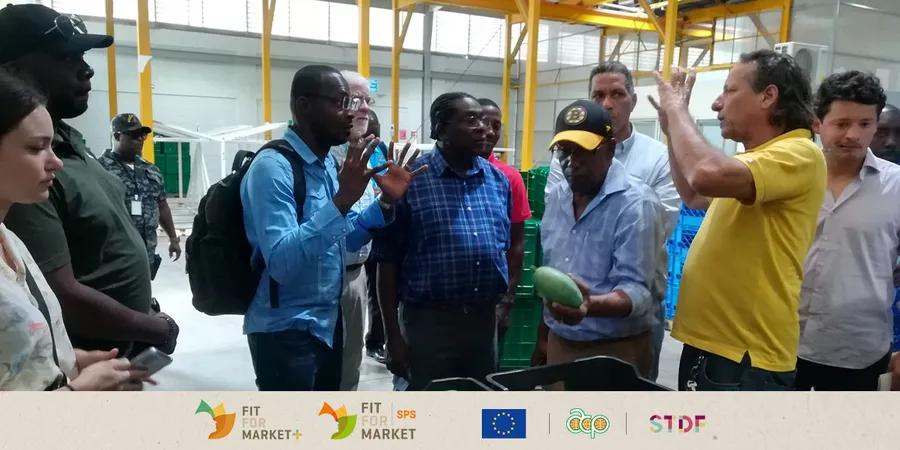
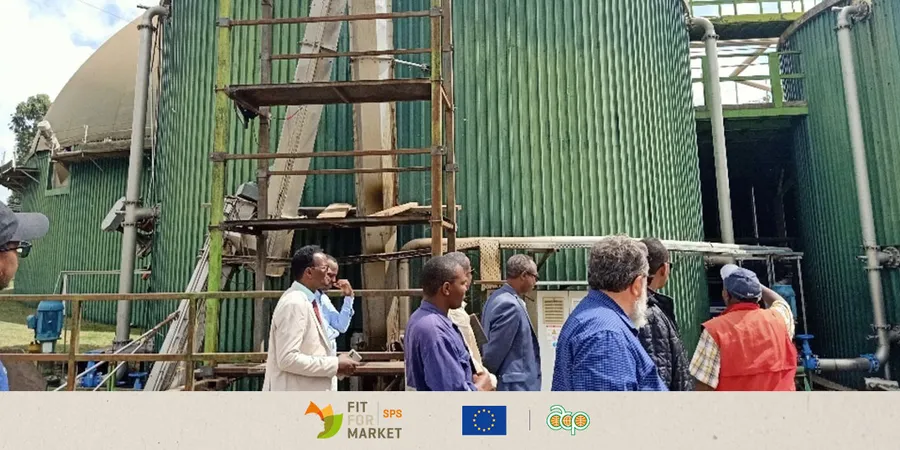
Several meetings were organised with the Direction Nationale de la Protection des Végétaux et des Denrées Stockées (DNPV-DS) of the Ministry of Agriculture in Guinea. Planned capacity building activities (training in sampling and performing official controls) were discussed, as well as possibilities for the establishment of an internal training unit within Guinea’s National Plant Protection Organisation (NPPO).The STDF project in Guinea began in 2019 with the aim to strengthen phytosanitary capacity in Guinea, contributing to the establishment of a monitoring, control, inspection and phytosanitary certification system in the potato and mango sectors, in accordance with international standards on phytosanitary measures and the requirements of the WTO–SPS Agreement. The steering committee meeting in Conakry was attended virtually by the STDF representative in Geneva, and in person by representatives of the DNPV-DS, as well as the National Committee for the Control of Fruit Flies and Other Mango Pests, and local producers. A proposal to extend the project for a further 6 months was validated during the meeting.A visit to the EU Delegation in Conakry gave COLEACP an opportunity to present their activities in Guinea, including the EU-funded Pineapple Sector Revival Project (REFILA). COLEACP has been selected by UNIDO as a partner to provide technical assistance and training services for this project. SPS issues were also discussed, specifically those related to European phytosanitary regulations for mango and the challenges these represent for ACP countries. The EU Delegation was also informed about our new programmes Fit For Market+ and AGRINFO.COLEACP met with several other programmes and structures active in the mango, pineapple and potato sectors. Following discussions with the SyRIMAO project (monitoring fruit fly in the Economic Community of West African States), COLEACP launched the development of a Good Practice Guide for mango in West Africa under the Fit For Market SPS programme. The mission in Guinea offered the opportunity to meet with the national stakeholders involved in its development. Another Good Practice Guide, for the potato sector in Guinea, is under development. A workshop was also held during the visit to present the results of a field survey to the Technical Working Group, and a work plan was drawn up for further activities and collaboration.Since this mission, progress has been made in developing a list of harmful organisms for Guinea, validated during a recent workshop; and in implementing a Phytophthora blight (P. infestans) surveillance system for the potato sector.
 News
News
Study tour to Kenya by Somalia’s competent authorities
In the last week of May, Kenya hosted a study tour by the Somalian competent authorities – the Somali Bureau of Standards (SOBS) and the Somali Agricultural Regulatory and Inspection Services (SARIS), part of the Ministry of Agriculture & Irrigation (MoA). They visited the Kenya Bureau of Standards (KEBS) and the Kenya Plant Health Inspectorate Service (KEPHIS) among other key stakeholders in the country – the Fresh Produce Exporters Association of Kenya (FPEAK), Pest Control Products Board (PCPB), Bureau Veritas and Naivasha VegPro Group.The tour was supported by COLEACP through Fit For Market SPS, in partnership with the EU SPDI (Support to Policy Dialogue on Investment Climate) programme.The objective was to support the Somali authorities to gain a good understanding of the legal and administrative frameworks involved in the successful functioning of a National Plant Protection Organisation (NPPO) and of national standards bodies. The goal was to support the country’s competent authorities to develop a joint strategy for the development of technical regulations and standards for plant health inspection services, based on regional and international best practices.The tour covered a lot of ground, and in particular supported SARIS and SOBS to understand their mandates better and build strong cooperation between the two organisations.The visit also highlighted that the emergence of export associations for agricultural produce will be key to SARIS’ ability to develop efficient, market demand-driven phytosanitary services. The highly perishable nature of agricultural produce requires close cooperation and partnership between NPPOs and exporters to ensure efficient and effective certification operations that can support the competitiveness of the local industry.Building an efficient and effective quality infrastructure for agriculture (livestock, crops and fisheries) – the most important sector of the Somali economy – will be an essential ingredient for competitiveness, access to new markets, productivity improvement, innovation of new products, and environmental protection, as well as the health and safety of local and international consumers.A next step of the collaboration will include support to SARIS with implementation of the Rapid SPS Assessment Tool (R-SAT) for competent authorities. These activities are supported by the Fit For Market SPS programme, implemented by COLEACP within the Framework of Development Cooperation between the Organisation of African, Caribbean and Pacific States (OACPS) and the European Union.
 News
News
Brexit: GB and EU MRLs diverge
As reported in earlier COLEACP Flash Info emails, following the UK’s departure from the European Union the maximum residue levels (MRLs) for Great Britain (GB) have followed a different review process since January 2021.The UK competent authority has recently reviewed 48 active substances to determine some Codex MRLs that could be adopted as GB MRLs.It is likely that in future EU and GB MRLs will increasingly diverge: EU MRLs can be seen via the EU Pesticides database GB MRLs can be seen via the UK Health and Safety Executive (HSE) Maximum Residue Level Search. Note that EU MRLs still apply in Northern Ireland. Great Britain is the mainland comprising England, Scotland and Wales.Details on the GB MRL-setting and review processes are provided on the Health and Safety Executive (HSE) website under MRLs and import tolerances.COLEACP’s regulation monitoring now covers both EU and GB MRL changes, enabling us to keep members and partner-beneficiaries up to date.Look out for our regular Flash Info MRL updates. You can regularly check the list of new and changed MRLs available at www.hse.gov.uk/pesticides/mrls/new-mrls.htm: scroll down to “New and raised MRLs” and download the Excel file.If you need additional information, or face particular problems as a result of these changes, please contact COLEACP at: network@coleacp.org.This activity is supported by the Fit For Market SPS programme, implemented by COLEACP within the Framework of Development Cooperation between the Organisation of African, Caribbean and Pacific States (OACPS) and the European Union.
 News
News
EC “Mirror Clauses” report reiterates importance of WTO rules and support for developing countries
On 3 June 2022 the European Commission published its report on the application of EU health and environmental standards to imported agricultural products. The debate on how EU rules can ensure that imported produce matches EU standards – described as “mirror clauses” – has been a hot topic during France’s presidency of the Council. Several Member States are pressing the Commission to ensure that as the EU strives for higher standards, third countries must be obliged to apply the same rules. Their argument is that failure to set the same levels for imported food would undermine environmental efforts being made in the EU, and give unfair competitive advantage to agricultural exporters abroad.COLEACP, in response to a public consultation on the topic and in meetings with DG SANTE, has joined other stakeholders in emphasising the importance of acknowledging the different production conditions and challenges facing developing countries, including African, Caribbean and Pacific (ACP) states. While ensuring consumer health and addressing climate concerns are also a priority for ACP producers, these objectives may be reached in ways other than those prescribed for EU farmers. Encouraging countries to copy EU legislation may not be the most appropriate or most efficient way to meet these shared goals.The Commission’s report responds cautiously to the drive for “mirror clauses”. The EU is able to adopt measures that place specific demands on those exporting to the EU, for example pesticide residue limits, or rules on animal welfare. However, the Commission emphasises that it can only do so while fully respecting World Trade Organization (WTO) rules and other international commitments. In the report, the Commission reiterates its commitment to adequately support developing countries in advancing sustainability:
 News
News
Agro-ecological transition support project/DEFIA: data collection from producers with the FAO TAPE tool
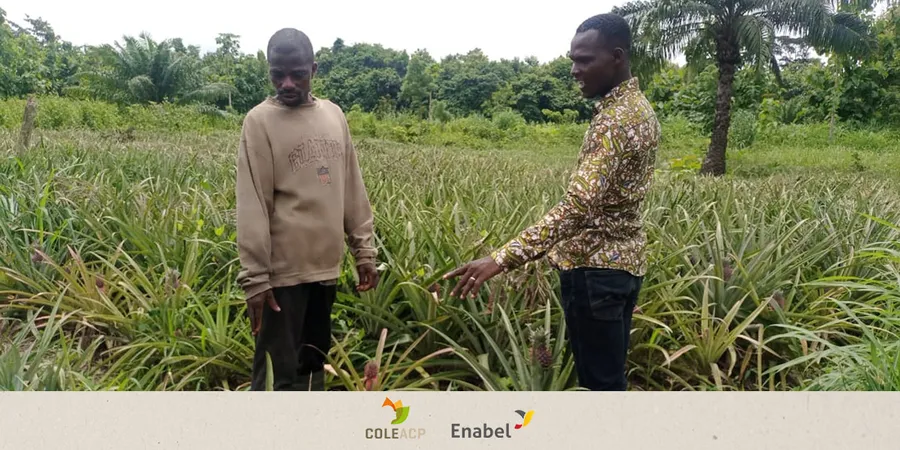
In the framework of the implementation of the project "Support to the agro-ecological transition of the pineapple sector in Benin» and following the training of the interviewers on the FAO TAPE tool, the data collection phase with a sample of 300 pineapple producers who are members of DEFIA's partner groups took place between 2 and 30 June 2022.As a reminder, this activity was organised with the aim of identifying current practices and development potential in terms of agro-ecological practices at the group level. It is hoped this will allow to better target and adapt the support and training activities of the groups.In the coming months, the data collected will be analysed and workshops to validate the support plans per group will be organised.This activity was organised within the framework of the project "Support to the agro-ecological transition of the pineapple sector in Benin", funded by ENABEL through its DEFIA programme and implemented by COLEACP.
 News
News
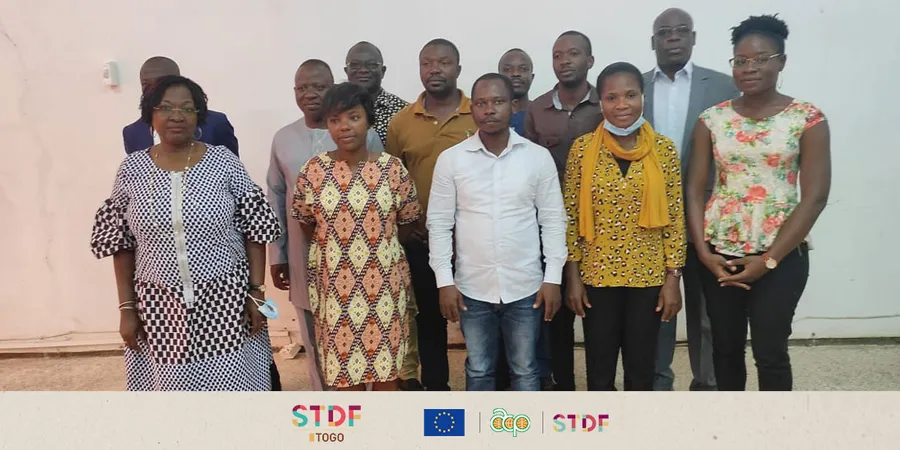
STDF Togo: Meeting of the steering committee (June 2022)
A meeting of the Steering Committee of the "Project to strengthen the phytosanitary control and certification system for the fruit and vegetable sector in Togo (STDF/PG/375)" was held from 29 to 30 June 2022 in Lomé, Togo.The STDF project consists of strengthening the framework and capacities of the services involved in inspection and control, as well as private operators active in the production and export of fruit and vegetables. It should allow better access to markets for fruit and vegetables from Togo, by ensuring absence of quarantine pests. Officially launched in November 2018, the project will close on 31 October 2022.The objective of the meeting was to examine the level of achievement of the activities planned for the first 6 months of the year, to review the indicators of the project's logical framework in preparation for the external evaluation scheduled for August, and to validate the last actions to be organised between July and September. The current difficulties encountered by the fruit and vegetable sector in Togo were also discussed, avenues for improvement were identified, and recommendations were formulated.One of the main activities validated by steering committee is the application of the rapid assessment tool of the SPS system developed by COLEACP (COLEACP R-SAT) to the leafy vegetable, mango, Capsicum and aubergine sectors in Togo. This will allow monitoring of the support activities organised in Togo through the STDF/PG/375 project, the evaluation of their impacts, and the establishment of a roadmap for the remaining efforts to be made after the closure of the project. This activity was organised within the framework of the “Project to strengthen the national phytosanitary control and certification system for fruit and vegetables in Togo”, funded by the Standards and Trade Development Facility (STDF) and implemented by COLEACP.
 News
News
Collective distance training on "Crop Protection" addressed to producers/supervisors
In April 2022, COLEACP has improved two new training programs on "Crop Protection" to help workers in charge of crop protection decision making and the implementation of functional pest and disease monitoring programmes to make well-considered decisions and adopt good practices.Participants are invited to join the training session entitled "Crop Protection & Strategy” to be able to make the appropriate crop protection decisions considering thresholds, feasibility, registered products and production system. Afterwards, participants will have the opportunity to attend the training session entitled “Crop Protection & Execution” to adopt the best practices for pesticide application to reduce risks to the applicator.Both training sessions are very practical with case studies based on the participants' experiences.This activity is supported by the Fit For Market SPS programme, implemented by COLEACP within the Framework of Development Cooperation between the Organisation of African, Caribbean and Pacific States (OACPS) and the European Union, and by the NExT Kenya (New Export Trade) programme, established in collaboration with the EU Delegation in Nairobi and Kenyan stakeholders.
 News
News
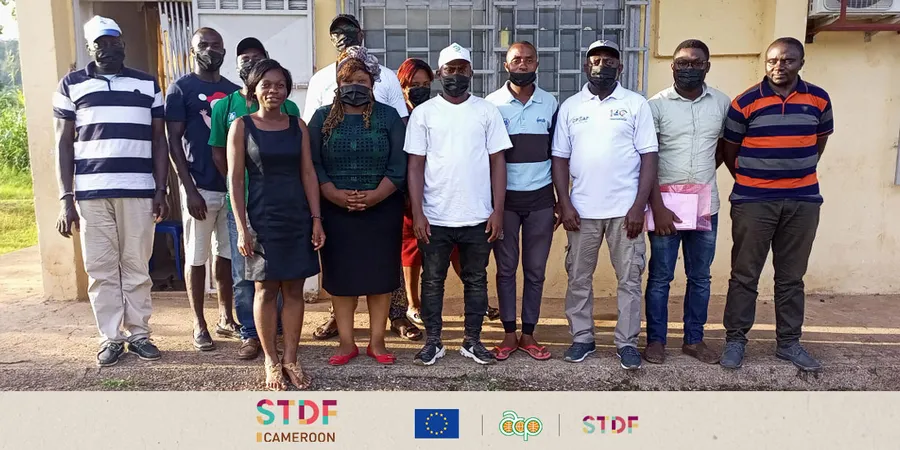
STDF Cameroon: Sharing good Storage practices and safe SPS use for Penja pepper with Cameroon agro-traders
Awareness-raising meetings were held in the basins of the Penja pepper geographical indication in Cameroon, from 3 to 6 May 2022. The meetings brought together 40 agro-traders under the theme: “Good storage practices and rational and safe use of phytosanitary products”. The events were supported by STDF and implemented through the COLEACP project “Strengthening the phytosanitary monitoring and certification system for Cameroon’s fruit and vegetable sector” (STDF Cameroon).During the sessions, sellers of agricultural inputs were given information on the Penja pepper production process, on pests and diseases of the pepper tree and its stakes, as well as a list of phytosanitary products recommended by the geographical indication representative group.At the end of the successful meetings, more than 80% of the participants expressed a wish to take part in a training course on good practices in the use of plant protection products. Such knowledge would allow agro-traders to better support producers in the production of good quality Penja pepper.This activity is organised within the framework of the Project to Strengthen the Phytosanitary Monitoring and Certification System for Cameroon’s fruit and vegetable sector, supported by the Standards and Trade Development Facility (STDF) and implemented by COLEACP.
 News
News
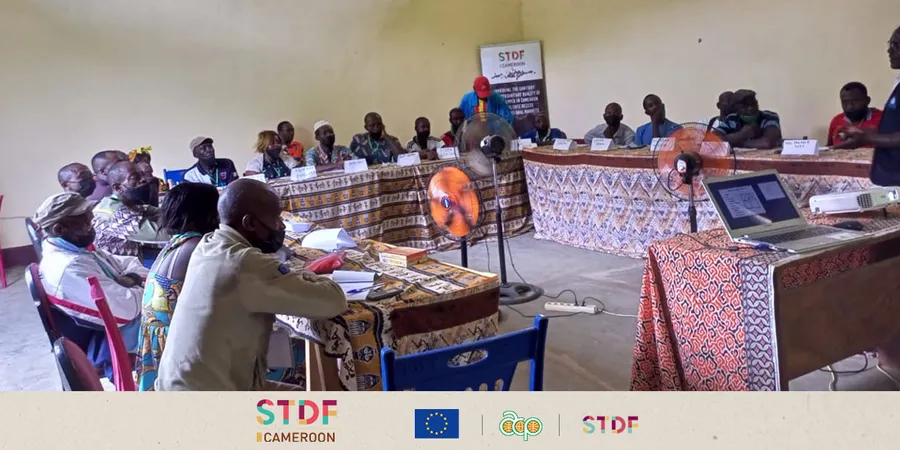
STDF Cameroon: Fifth training session on Penja Pepper for Bouba basin producers
The fifth training session on good production practices for Penja pepper was held on 9 and 10 June 2022, with the objective to develop skills and technical capacities of 27 producers and managers of Penja pepper. The participants were mostly English-speaking, from the Bouba production basin in south-west Cameroon. The training was supported by STDF and implemented through the COLEACP project “Strengthening the phytosanitary monitoring and certification system for Cameroon’s fruit and vegetable sector” (STDF Cameroon).The course has enabled participants to:know the conditions of production of Penja pepper (registration of Penja pepper as a geographical indication, choice of production site, calendar of cultivation operations, etc.);master the conditions for setting up a plot (choosing stakes, staking, plant density, crop association, etc.);master the maintenance of production plots (periods and techniques for pruning stakes and pepper trees, etc.);control the organic and mineral fertilisation of Penja pepper;recognise the different pest attacks on pepper orchards and stakes, and know the control methods in relation to SPS measures;master good phytosanitary practices (biological and agronomic use of phytosanitary products, safe use of pesticides, etc.);control the primary production process;control risky practices at each stage of the production process;be aware of production-related hazards;know the recommended risk control measures for primary production; andknow the stage of maturity of the fruit by type of product and be aware of good harvesting practices.Participants enjoyed a field trip during the course which allowed them to observe the operations carried out on a farm in relation to primary production. They had the opportunity to interview the host producer to identify relevant aspects in the implementation of SPS measures. Exchanges with the host producer and among participants enabled the group to identify good production practices and those that could be improved.This activity is organised within the framework of the Project to Strengthen the Phytosanitary Monitoring and Certification System for Cameroon’s fruit and vegetable sector, supported by the Standards and Trade Development Facility (STDF) and implemented by COLEACP.