
Cultivating
Sustainable Futures
 News
News
Review workshop of the Ivorian mango campaign 2018
On 28 November 2018, the Direction de la Protection des Végétaux, du Contrôle et de la Qualité (DPVCQ) of Côte d’Ivoire, with the support of COLEACP, organized a mango campaign review workshop. The event brought together 80 participants from across the supply chain (producers, exporters, service providers and competent authorities).The observations shared were encouraging from a marketing and commercial point of view. Ivorian mango continues to enjoy a good image, particularly in its main export market, the European Union, where it has experienced strong growth over the past few years. More than 30,000 tonnes of Ivorian mangoes were imported by the EU in 2018 compared with 10,000 tonnes in 2010.In 2018, although there has been a decrease in the number of interceptions of Ivorian mangoes entering the European market due to quarantine pests, the number of notifications was still high, offsetting the positive structural trend of Ivorian exports. The November workshop raised awareness of this issue among all stakeholders in the sector. They therefore decided to mobilize quickly by updating and adapting the action plan previously implemented with the support of COLEACP in 2015, when the sector faced a similar phytosanitary problem.Another threat to Ivorian mango is the expansion of competitors, particularly Peru, whose export window is encroaching on that of Côte d’Ivoire (according to data from April and May 2018). The immediate impact has been a fall in market prices due to higher growth in supply than in demand.Through its Fit For Market programme, COLEACP has already received 39 individual requests for intervention from Côte d’Ivoire. These requests cover diverse themes: modern management of mango orchards; implementation of business plans; access to finance; improvement of environmental and social practices; and implementation of quality management systems that meet the standards of supermarkets.On a collective level, the workshop confirmed the need for a 2019 action plan on the SPS issue in a context where European regulations will also evolve next year and become more restrictive.The 2019 challenges for the Ivorian sector are clear. The November workshop offered stakeholders an opportunity to understand them better and to organize themselves, with the support of COLEACP, for the coming campaign.
News
Workshop – avocado supply chain in Kenya focuses on quality
In Kenya the Horticultural Crops Directorate (HCD; formerly Horticultural Crops Development Authority), Fresh Produce Exporters Association of Kenya (FPEAK) and Fresh Produce Consortium of Kenya (FPC), together with COLEACP, organized a two-day workshop on 3 December 2018. The event brought together 140 participants from throughout the country’s avocado value chain (producers, importers, exporters, logistics operators, competent authorities and transport companies).The main reason for the meeting was the current challenge faced by the Kenyan industry to improve the commercial quality of its avocados in order to position itself better in relation to its competitors (e.g. South Africa, Peru) and to promote production on the international market.The meeting enabled all stakeholders to recognize the need to work collectively to meet the commercial challenge and to identify the actions to be implemented as a priority in 2019: collective technical training, specific individual support via the Fit For Market programme, communication towards European importers on the progress made.
News
« GROWING PEOPLE » : A word from the General Delegate
It is our responsibility to prepare young people for opportunities in the agricultural sector.Young Africans have no choice, they must roll up their sleeves and take ownership of agriculture at all levels, from workers and technicians to land owners and corporations; from the poor to the middle classes and millionaires. It is not up to agriculture to adapt, but for young people to adapt their skills to the needs of tomorrow’s agriculture: modern, efficient, sustainable and profitable. On the other hand, it is our responsibility to advise them and help them to train. The private and academic sectors must work together to define immediate needs. Over the past 15 years, COLEACP has set up a “fair and revolving training system” – fair because it is implemented by local experts who in turn pass their training down to others ; revolving because these local experts provide feedback and participate in identifying needs, improving existing systems and developing new tools.Today our concern is to prepare young people so that they can take advantage of the opportunities that will inevitably arise in the coming decades with the development of agriculture. The ability of these young Africans to seize opportunities will form the fabric of the SMEs that are fundamental to sustainable economic growth. It is these young people who will supply the workforce to meet the needs of large agri-food companies investing in Africa.This is my hope for agricultural companies and sectors in all African, Caribbean and Pacific countries, and in particular in sub-Saharan Africa. As African Development Bank President Akin Adesina often rightly reminds us, Africa will become the youngest continent on Earth in 2050 with 840 million children and adolescents. So many mouths to feed, brains to train well, hopes to be fulfilled – and actors in the sustainable development of Africa.We are more convinced than ever of the importance of the role of the horticultural sector in food security, food improvement and socioeconomic development.Guy StinglhamberGeneral Delegate of COLEACP
News
New EU Plant Health Regulation 2016/2031: update and specific information for ACP competent authorities on high risk plants
(Feel free to contact us if you need additional information or support from COLEACP)The new regulation will become fully applicable on 13 December 2019. Among the main changes include special measures covering imports of certain high risk plants and plant products, as well as new requirements for phytosanitary certificates whereby all living plant material (plants, fruit, vegetables, cut flowers, seeds, etc.) will have to be accompanied by a certificate, except for a list of exempted commodities that are known to be low risk.In July 2018, the first delegated implementing act under the new regulation was published. This specified the list of high risk plants, and the list of plants to be exempted from the requirement to have a phytosanitary certificate: The proposed list of high risk plants contains 39 plant species. These consist mainly of plants for planting. The only fruit/vegetable product affected is Momordica (gourd) originating from third countries, or areas of third countries, where the pest Thrips palmi is known to occur. The proposed list of plants (other than for planting) that will be exempt from the requirement for a phytosanitary certificate includes: pineapple, coconut, durian, figs, banana and dates. Note that in future it is likely that other crops may be added to these lists. Furthermore, the EC may bring in additional emergency measures before December 2019 for specific crop/pest problems such as those recently introduced for False Codling Moth on Capsicum and Fall Armyworm.New Rules and Procedures for High Risk PlantsAfter December 2019, listed high risk plants and plant products will be prohibited from export into the EU unless and until a detailed risk assessment has been carried out to determine if imports are acceptable and, if so, under what conditions.Once a plant is listed, the risk assessments will not be conducted automatically. To trigger the process, a request for trade must first be made to the EU. The risk assessment will then be conducted by the EU authorities, generally using additional data provided by the exporting country. After a risk assessment is completed, an EU select committee will evaluate the findings and decide what, if any, special measures are needed.On December 18th 2018, the EC introduced an implementing act (Regulation (EU) 2018/2018) to explain the rules and procedures that countries will have to follow when they trigger and support risk assessments for high risk plants. The regulation can be found on the EC website and attached to this mail is a supporting publication from the European Food Safety Authority (EFSA); this explains in detail the procedure that must be followed, and the data that will be required from third countries.At the moment it is only countries that are exporting Momordica that must initiate the process. However, it is very important for all NPPOs to be aware of this, as other crops are likely to be added to the high risk list in the future. As Momordica is currently being exported from Ghana, it is important that you act quickly to ensure that a risk assessment is triggered and completed by December, otherwise there may be a break in trade. Please get back to us if you need additional information or support from COLEACP to help with this process.COLEACP will continue to provide you with updates on the new plant health rules as new information becomes available. In the meantime, if you need any further clarification on the changes, please get in touch(link sends e-mail) with COLEACP.
News
WORKSHOP ON AVOCADO SUPPLY CHAIN IN KENYA
In Kenya the Horticultural Crops Directorate (HCD; formerly Horticultural Crops Development Authority), Fresh Produce Exporters Association of Kenya (FPEAK) and Fresh Produce Consortium of Kenya (FPC), together with COLEACP, organized a two-day workshop on 3 December 2018. The event brought together 140 participants from throughout the country’s avocado value chain (producers, importers, exporters, logistics operators, competent authorities and transport companies).The main reason for the meeting was the current challenge faced by the Kenyan industry to improve the commercial quality of its avocados in order to position itself better in relation to its competitors (e.g. South Africa, Peru) and to promote production on the international market.The meeting enabled all stakeholders to recognize the need to work collectively to meet the commercial challenge and to identify the actions to be implemented as a priority in 2019: collective technical training, specific individual support via the Fit For Market programme, communication towards European importers on the progress made.
News
THE ROLE OF PUBLIC AND PRIVATE SECTORS IN SANITARY AND PHYTOSANITARY CONTROL SYSTEMS
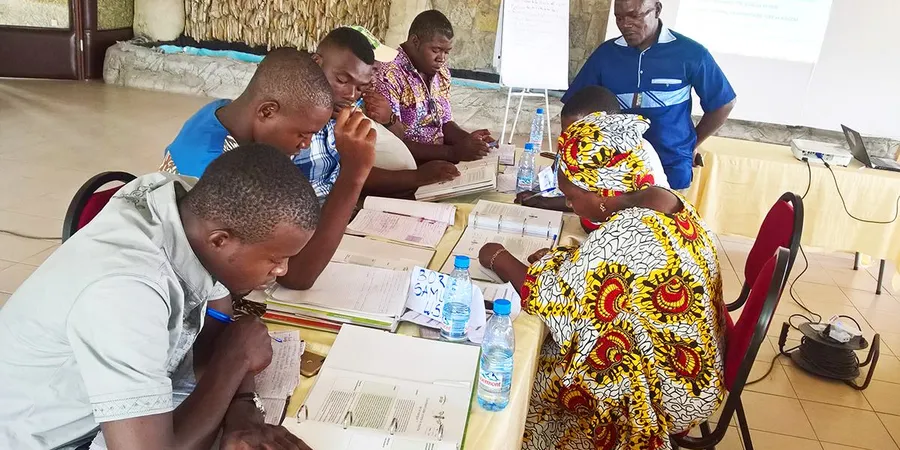
We organized a 2-day workshop in Nigeria ????????️ focusing on "The role of Public and Private sectors in sanitary and photosanitary control systems for the Fruits and Vegetable sub-sectors." More than fifty people from the Public and Private sectors attended this awareness raising Workshop.
 News
News
WORKSHOP ON THE EU PLANT HEALTH REGULATION IN ABUJA
We organized in collaboration with the Agricultural Fresh Produce Growers & Exporters Association of Nigeria an awareness raising workshop on the upcoming changes in the EU Plant Health Regulation in Abuja (????????️). You can find more information about this regulation on our website at : https://www.coleacp.org/…/new-eu-plant-health-regulation-an…Participants included public sector actors as the Plant Quarantine Department (NAQS), the Federal Ministry of Industry, Trade and Investment, National Technical Working Groups as well as representatives of the European Delegation, ECOWAS Commission - The Directorate of Agriculture and Rural Development and private sector.
News
The European Union strengthen farmers’ position in the food supply chain by tackling unfair trading practice
On 12th April, the European Commission proposed new legislation on unfair trading practices (UTPs). This is a very positive development and will offer more protection to farmers and small operators in the food industry who are selling to large European buyers. Most importantly, the legislation covers not only European suppliers, but also those selling into the EU from third countries.Up to now, ACP fresh produce exporters supplying European supermarkets have been at risk to UTPs such as late payments, last minute order cancellations, and unilateral or retroactive changes to contracts. These practices make SMEs insecure and unwilling to invest, and can have a major impact on small farmers and workers, particularly women.The Commission proposal will improve the position of farmers in the food supply chain by banning some of the most common UTPs that they face. Each EU member state will be required to designate a competent authority to enforce the new rules and, for the first time, there will be a standard level of protection across all EU countries. More details are available on: https://ec.europa.eu/info/food-farming-fisheries/key-policies/common-agricultural-policy/market-measures/food-supply-chainThis proposal is the result of several years of discussion and negotiations within the EC and in Member States, several of which have already introduced measures to control UTPs at a national level. Since the establishment of the High Level Forum in 2010 by DG Internal Market, COLEACP has engaged with EC initiatives and consultation designed to improve the functioning of the food supply chain. It has also collaborated with other organisations, in particular the Fair Trade Advocacy Office (FTAO), to provide evidence of the impact of UTPs on suppliers from ACP countries.While COLEACP welcomes this move, it joins with Oxfam, FTAO, IFOAM-EU and FOE Europe in calling on the European Parliament and the Council to further strengthen the Commission’s proposal in order to further protect the most vulnerable people in food supply chains: https://www.oxfam.org/en/pressroom/reactions/key-step-taken-end-human-suffering-eu-supermarket-supply-chains
News
EDD 2018 : Women bear the fruits of our success !
For its twelfth edition, the European Development Days (EDD) 2018 aims at bringing together the European Union’s commitment to gender equality and women’s empowerment with the 2030 Agenda for Sustainable Development. On June 5 and 6 in Brussels, the event will focus on the vital role of women and the need for their full and equal participation and leadership in achieving the Sustainable Development Goals.In full resonance with this commitment, COLEACP will be present in the EDD village (booth n ° 32) via concrete examples of business development showing the essential place of women in agribusiness in ACP countries and in Sub-Saharan Africa in particular. The opportunity also to present the results of the COLEACP Fit For Market programme (financed by EU and AFD) : 50% of the human ressources of the FFM beneficiary companies and their service providers are women.Welcome to our booth !
News
Global Perishable Conference 2018: COLEACP invited by CCA and Air France-KLM-Martinair
The Cool Channel Association CCA is a non-profit organization, founded in 2003, with the aim to reduce wastage and improve the quality, efficiency and value of the temperature sensitive supply chain by facilitating and enabling vertical & horizontal collaboration, education and innovation.The CCA organizes 2 high level panels per year. The event in June focuses on perishable products. The topic in 2018 was “World Without Food Waste – what can air cargo deliver ?”.On 19 June, Jeremy Knops, Coleacp’s Director of Operations, presented ACP-EU international trade through the example of the fruit and vegetable sector. The opportunity to highlight Coleacp’s specific approach to support the value chain and its sustainability through the Fit For Market programme.Click here to read the press release issued at the end of the conference.
News
Water and soil management – first examples of FFM support in Kenya
Kenyan farmers are facing increasingly severe droughts due to significant climate change in production areas. Most small and medium-sized farmers often have limited access to irrigation, and their dependence on reduced rainfall and precipitation is of increasing concern. Several green bean-exporting companies have requested support to help their producers use available water more efficiently and sustainably.Technical assistance is being deployed to develop a multi-stage support and training methodology. Following an initial diagnosis to analyse current practices, it will be possible to identify measures that are easy to adopt; simple (not requiring complex and costly technology); and effective in improving current water-management practices, and to create a water-management training programme. This programme will be deployed by the technical teams of exporting companies. A first diagnostic mission was carried out at the companies Frigoken (which works with 50,000 small producers) and Interveg (350 producers).The same methodology is used to meet a similar demand for land management. The objective is to identify measures that smallholders can easily apply to minimise damage caused by drought conditions and to take advantage of improved soil fertility. These measures must not lead to an increase in production costs for farmers, and must be easily integrated into their agricultural production practices, crop rotation and livestock management. The target crop for this first step is green bean cultivation; the two companies supported are again Interveg and Frigoken. The measures defined will be integrated into a training programme on soil conservation and proposals for alternative practices.
News
Waste management in Cameroon
Technical assistance in setting up a compost unit, organised for the company AfricaBio in Cameroon, illustrates a key aspect of COLEACP’s waste-management intervention strategy.The intervention strategy is based on two complementary axes – reduce the amount of waste produced recover residual waste. It aims to meet growing demand from partner horticultural companies for the management and recovery of processing waste, and also to reduce losses, particularly in post-harvest situations.AfricaBio in Cameroon produces and processes various fruits from organic farming. It produces a large amount of waste from its processing activities, and faces a lack of fertiliser materials that can be used in organic agriculture. However, it does not have a compost-production site. It therefore benefited from an initial diagnosis that made it possible to analyse the sources of raw materials available at the various production and processing sites and link them to fertiliser requirements. The company now has expert recommendations to start setting up an economically viable composting unit that will enable it to manage waste as efficiently as possible and ensure a level of autonomy in the production of fertilising materials.