
Cultivating
Sustainable Futures
 News
News
EU and GB MRL changes in 2023 (July to September)
Changes to EU and GB pesticide maximum residue levels Following the departure of the United Kingdom from the European Union (EU), COLEAD’s monitoring of pesticide regulations now covers maximum residue limit (MRL) changes in both the EU and Great Britain (GB), enabling us to keep COLEAD members and partner-beneficiaries up-to-date. Note that EU MRLs still apply in Northern Ireland (GB covers only England, Scotland and Wales). During the period July-September 2023, we have been highlighting significant changes to EU MRLs that affect 12 active substances, 5 of which are important for ACP export horticulture. During this same period, changes of MRLs in GB affect 2 active substances, both considered key substances for ACP horticulture (fludioxonil and cyprodinil ) . The EU and GB have also recently notified the World Trade Organization (WTO) of additional proposed changes involving a further 10 substances including 3 that are key in ACP horticulture (indoxacarb, thiacloprid and haloxyfop). Note that comments and concerns can be submitted to the WTO via your national contact points . How will ACP producers/exporters be affected? Changes to EU/GB MRLs also apply to products that are exported to the EU/GB. Growers producing for export may need to adapt their practices to meet the new MRL or, if this is not possible, stop using these products and look for an alternative method of pest management. What should ACP producers/exporters do now? For each plant protection products (PPPs) and crop concerned, the Good Agricultural Practices (GAPs) in place will need to be verified and possibly adapted to ensure compliance with the new MRLs. The GAPs include dose rate, number of applications, and pre-harvest interval. In some cases, adaptations to the GAPs will allow the new MRLs to be met. However, in many cases, especially where the level is reduced to the Limit of Determination (LoD), it may not be possible to meet the new MRL, and growers will have to look for alternative crop protection solutions. This is essential to avoid interception and destruction of exported produce at the EU/GB borders. In case there is no available alternative, manufacturers can consider the option of requesting an import tolerance. The process for approving an import tolerance MRL in the EU can take time and may imply costs. It is recommended to contact the PPP manufacturer to assess the feasibility. If you have any major concerns about these changes, and fear that you will be left without an effective and locally available alternative, please contact COLEAD at: network@colead.link .
 News
News
Media Training and Coaching for CEOs of Three Key Horticultural Business Associations in Kenya
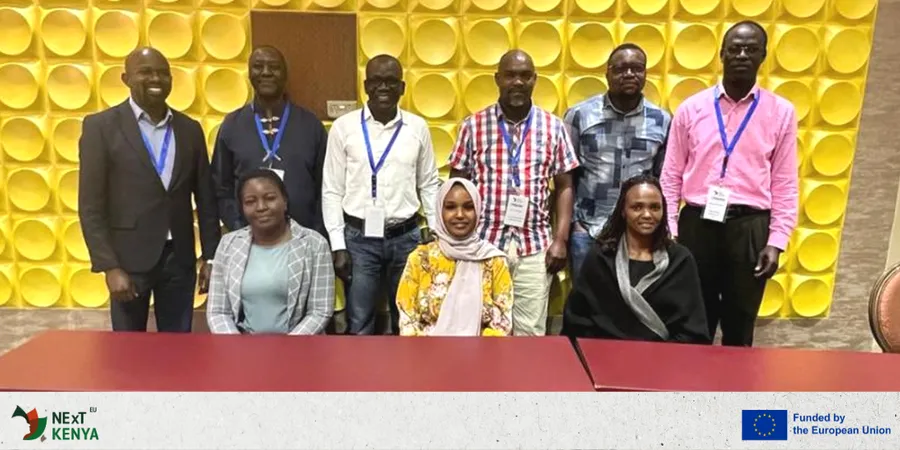
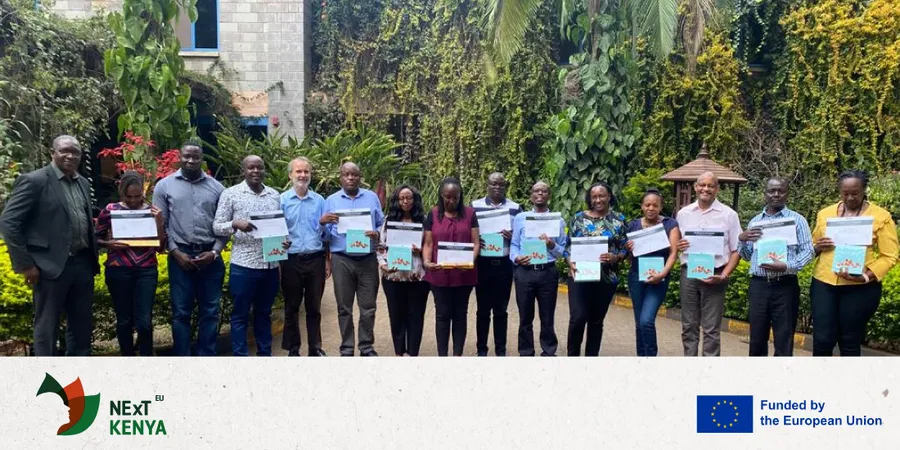
COLEAD recently held a media training session and coaching for CEO’s and communication leads of three business membership organisations such as Kenya Flower Council (KFC); Fresh Produce Exporters Association of Kenya (FPEAK) and Fresh Produce Consortium of Kenya (FPCK). This training comes against a background of increased demand for effective communication for stakeholder engagement, nationally, regionally, and globally. Indeed, in the past few years, communication has become a major issue for all the horticulture stakeholders at the national and international levels as they request for more information related to the entire supply chain.The objectives of this mission was to strengthen the public relations and communication skills of the CEOs with a specific emphasis on interactions with media and specifically radio and video sessions. It consisted of: (1) a training component to support the CEOs and their communication managers to become more effective communicators with the media. (2) personal coaching component to improve public speaking, crisis management and communication skills.The training and coaching programme was highly interactive and practical. The delegates were exposed to live media interview sessions where various media interview scenarios were simulated, recorded on video camera, and reviewed. These practical sessions attracted a lot of interest and provided the best learning opportunity for the CEOs and the communication managers. The participants greatly appreciated the high-level training and the skills and knowledge gained from this training and coaching session and reiterated that the session will undoubtedly improve their work and help them achieve their organizational goals more effectively.This activity are implemented by COLEAD and supported by the NExT Kenya (New Export Trade) programme, established in collaboration with the EU Delegation in Nairobi and Kenyan stakeholders.This publication has been produced with the financial support of the EU. Its contents are the sole responsibility of COLEAD and can under no circumstances be regarded as reflecting the position of the EU.
 News
News
Kenya: Media training and coaching for the CEOs of three key business membership organisations in the Kenyan horticultural sector
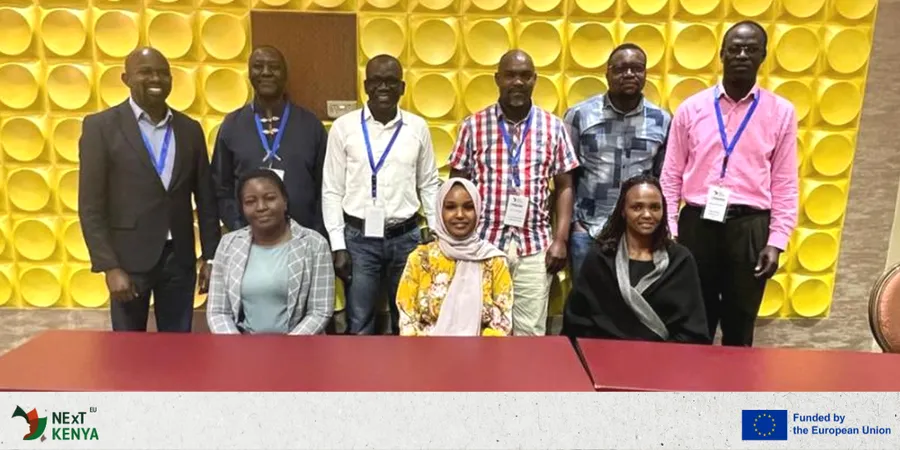
COLEAD recently held a media training session and coaching for CEO’s and communication leads of three business membership organisations such as Kenya Flower Council (KFC); Fresh Produce Exporters Association of Kenya (FPEAK) and Fresh Produce Consortium of Kenya (FPCK). This training comes against a background of increased demand for effective communication for stakeholder engagement, nationally, regionally, and globally. Indeed, in the past few years, communication has become a major issue for all the horticulture stakeholders at the national and international levels as they request for more information related to the entire supply chain. The objectives of this mission was to strengthen the public relations and communication skills of the CEOs with a specific emphasis on interactions with media and specifically radio and video sessions. It consisted of: (1) a training component to support the CEOs and their communication managers to become more effective communicators with the media. (2) personal coaching component to improve public speaking, crisis management and communication skills.The training and coaching programme was highly interactive and practical. The delegates were exposed to live media interview sessions where various media interview scenarios were simulated, recorded on video camera, and reviewed. These practical sessions attracted a lot of interest and provided the best learning opportunity for the CEOs and the communication managers. The participants greatly appreciated the high-level training and the skills and knowledge gained from this training and coaching session and reiterated that the session will undoubtedly improve their work and help them achieve their organizational goals more effectively.
 News
News
World Food Day 2023: highlighting the importance of water for agriculture and food
The 2023 World food Day - with the theme “Water is life, water is food. Leave no one behind.” - highlights the importance of water as a finite and essential element to life. Despite covering 71% of the Earth’s surface, only 2.5% of water is fresh and suitable for drinking, agriculture, and industrial use. Most of the fresh water available, 72%, is used for agriculture.Rapid population growth increasing the global demand for food production combined with urbanization, climate change depleting or polluting freshwater resources has led to an unsustainable demand for the natural resource. Freshwater resources have declined 20% in the past decade, leading to 2.4 billion people today living in water-stressed countries. Those who are most affected by the are smallholder farmers, particularly women, Indigenous peoples, migrants, and refugees, as well as around 600 million people who depend on aquatic food systems for a living.As a network that promotes sustainable agriculture, COLEAD recognises the importance in managing water as an essential resource in food production. COLEAD has developed manuals on sustainable water management and water-saving irrigation to effectively manage water consumption and waste, and use systems, such as irrigation, to effectively protect water resources. COLEAD’s training on sustainable water management focuses on the foundation of water as a resource in agriculture, the global water system, water quality, and water rights. COLEAD’s information of irrigation focuses on developing procedures to improve water retention of soil decreasing waste and improving crop health, reducing water requirements for land management, and diversifying and protecting water resources. These manuals and other resources documentations are available for free on COLEAD’s E-Library.COLEAD also promotes peer-learning and exchanges of goods practices and innovations, including through the organisation of the Innovations Series with the Pan-African Farmers’ Organisation (PAFO). During these online sessions entrepreneurs, farmers, and small and medium-sized enterprises (SMEs) share their innovations and business models to transform food systems and promote sustainability in its social, economic and/ or environmental dimension(s). The last Innovations Session n°14 focused on climate-resilient practices and innovations by agrifood SMEs and discussed the need for adaptation options in agriculture, including by increasing the use of environmentally friendly technics and technologies agriculture to support particularly smallholder farmers, including with water management. Equally important is to address food losses and waste as food waste means also waste of the water used to produce agricultural products. Technological innovations in the agrifood sector and their adoptions by SMEs and entrepreneurs will be the topic of the next Innovations Session n°15 that will be held online on Thursday 9 November 2023, 12:00-14:00 UTC (register here).In partnership with the Inter-American Institute for Cooperation on Agriculture (IICA), COLEAD also supports Caribbean innovative agrifood entrepreneurship and organises the joint Caribbean Agrifood Business Series. Session n°11 will focus on the role of agrifood businesses in promoting circular economy: successes from entrepreneurs and SMEs and be an opportunity to share experiences and practices to not waste natural resources, including water. The online session will be held online on Thursday 16 November 2023, 15:00-17:00 UTC / 10:00-12:00 AST (register here).Photo Crédit : FAO
 News
News
OECD-COLEAD: Operational collaboration for the fruit and vegetable industry
The OECD and COLEAD are committed to working together to collect and share information about the fruit and vegetable sector. Session n°5 of their online series will focus on Innovations and technologies to reduce food waste and losses and was held on Wednesday 11 October 2023 – 08:00-09:30 UTC/10:00-11:30 CET (English/French interpretation available).The OECD has recently published a report on Developing food labels for improved health outcomes - Insights into simplified nutrition labelling policies to improve the integration and use of such schemes and to facilitate trade. The inception work was presented during a joint session on Policies for encouraging healthier food choices (see programme) convened in March 2022 by the OECD Fruit and Vegetables Scheme of the Trade and Agriculture Directorate and COLEAD. Over 300 participants attended this online session, during which experts and operators across the European Union and Global South countries discussed opportunities for the fruit and vegetable sector in contributing to healthy and nutritious diets.Céline Giner, Agricultural Policy Analyst at the OECD Trade and Agriculture Directorate, opened the conversation by presenting Policies for encouraging healthier food choices, a report examining the negative impact of unhealthy diets on health systems and economies. The report also proposes a framework to combine different policy approaches to support the transition towards a healthier food environment in the most effective way. The four-track policy approach focuses on (i) tackling unhealthy food choices via demand side public interventions; (ii) working with stakeholders at the supply-demand interface; (iii) regulations to influence processors and retailers’ behaviour; and (iv) fiscal measures.Nutritional food labelling schemes were identified as a key component of the supply-demand interface as they provide additional nutritional information in the form of a label displayed on food product packaging. While there has been a proliferation of labelling policies across the world, these schemes vary in the content and appearance of the message they share, and their implementation (mandatory or voluntary), and do not use the same nutrient profile models. With its latest report, the OECD aims to develop a common understanding of simplified nutritional food labelling schemes.This session was organised as part of the OECD-COLEAD Fruits and Vegetables Industry Series, which aims to highlight the significance of the sector and its various dimensions (sustainability, nutrition, technologies, etc.).This activity is supported by the Fit For Market Plus (FFM+) programme implemented by COLEAD as part of the development cooperation between the Organisation of African, Caribbean, and Pacific States (OACPS) and the European Union.This publication receives financial support from the European Union and the OACPS. The content of this publication is the sole responsibility of COLEAD and can in no way be taken to reflect the views of the European Union or the OACPS.
 News
News
Using digital technology for a pilot project of a Ugandan professional association
The avocado sector is developing rapidly in East Africa. There are many opportunities to be seized, but to keep avocado yields high and constant while respecting the environment, sustainable soil management is becoming increasingly crucial. However, there is no single sustainable approach, as soil composition and growing conditions vary considerably from one site to another. To preserve soil fertility, it is essential to adopt practices and recommendations that are adapted to the specific characteristics of the soil, while taking account of the farmer’s socio-economic context. However, the cost and accessibility of laboratory soil analyses often prevent their widespread use before fertilisers or other inputs are applied.In Uganda, avocados come mainly from small farms with very diverse production systems. Gaining a better understanding of the profiles of farmers and their farms has become a major challenge for a trade association like the Avocado Association of Uganda (AAU), whose mission is to help its members develop their businesses in a sustainable way. Digital tools make it easier to profile farmers and, beyond that, to find intelligent solutions for the efficient collection, collation and analysis of data from a variety of farms. Hand-held spectrometers have also opened up new perspectives by enabling direct measurements in the field, which can considerably improve decision-making processes and optimise the allocation of resources in avocado growing.It is in this context of both market opportunities and organisational challenges that COLEAD, via the FFM+ programme, has launched a pilot project in partnership with the AAU with the following objectives:Develop a data collection strategy (farm size, location, varieties grown, cultivation practices, yield history, farmers’ income levels, etc.)Calibrate soil scanner measurements (in-depth field tests and comparisons with laboratory soil analyses. The calibration process must consider factors such as soil pH, nutrient content, organic matter and texture)Test and validate digital technologies at scale (pilot programme involving 150 avocado growers; the aim here is to validate the practicality, effectiveness and efficiency of digital tools in real-life scenarios)Conduct a business case forecast (the role and potential benefits of implementing digital technologies with a view to facilitating the adoption of technologies by farmers).A pilot project of this kind, launched with a professional organisation representing a strategic value chain, will make it possible to assess the applicability of new technologies and their projected profitability. Once adapted to the needs of the sector, they can easily be transferred to other associations active in the avocado sector in order to promote informed decisions, optimise the allocation of resources and create a more competitive and sustainable avocado industry in East Africa.This activity is supported by the Fit For Market Plus (FFM+) programme implemented by COLEAD as part of the development cooperation between the Organisation of African, Caribbean, and Pacific States (OACPS) and the European Union.This publication has received financial support from the EU and the OACPS. The contents are the sole responsibility of COLEAD and can in no way be taken to reflect the views of the EU or the OACPS.
 News
News
Benin: Recycling waste as part of the pineapple industry’s agroecological transition
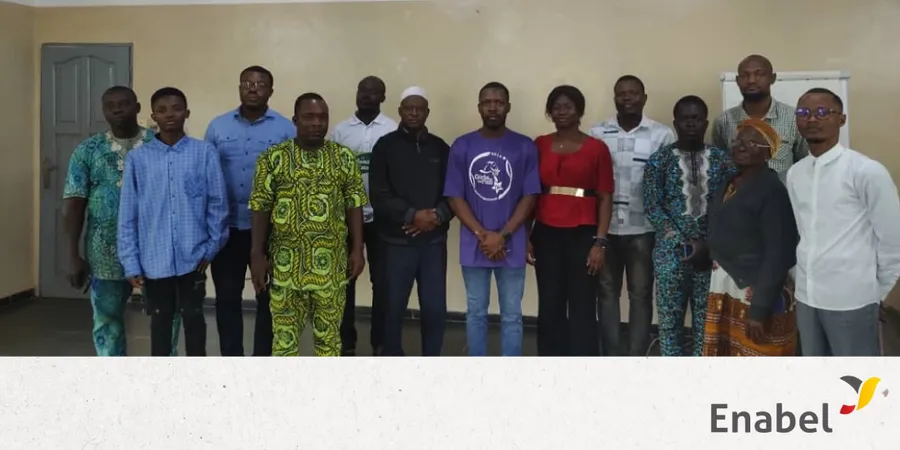
On 13 July 2023, COLEAD led a presentation session on pineapple waste recovery solutions in Allada, Benin, for DEFIA’s partner clusters. The event brought together 14 participants from 12 organisations.The session focused on a mapping of local solutions for recovering production waste and co-products from the fruit and vegetable sectors. The mapping also included an assessment of the volumes and types of co-products/waste generated by each cluster. As a result of this work, the mapping team was able to identify recovery solutions that are particularly suited to their contexts, such as the production of organic fertilisers, ecological charcoal, biogas and animal feed.In the session targeting the pineapple industry, the COLEAD team provided participants with an overview of the essential technical and budgetary considerations in implementing the various possible recovery solutions. In addition, the session aimed to gather information on the interest and capacity of each cluster to implement one or other of the recovery options.The participants expressed their interest in implementing the various recovery solutions presented in their clusters in order to recover their waste and, consequently, optimise their activities.This activity was organised as part of the project to support the agroecological transition of the pineapple sector in Benin, financed by ENABEL through its Programme for the Development of Entrepreneurship in Agricultural Sectors (DEFIA) and implemented by COLEAD.
 News
News
NExT Kenya: 131 projects to improve horticultural exports
Since the operational launch of the NExT Kenya programme, COLEAD has received 188 applications for support. Of these, 131 were transformed into development projects, 40% of which were tailor-made support projects. In Year 4 of NExT Kenya (1 January to 19 September 2023), 36 applications were received and analysed.The vast majority of the programme’s partner-beneficiaries are horticultural micro, small and medium enterprises (MSMEs; 52% of the memorandums of understanding signed), followed by consultancy firms and certification bodies (31%). Other beneficiary partners include public sector stakeholders, professional associations, producer associations/federations, training institutions/laboratories, producer groups and non-governmental organisation (NGOs) or other civil society representatives.Some examples of recent activities implemented via the NExT Kenya programme as part of development projects are:Training for trainers of trainers (ToToT) (12–15 September and 18–21 September 2023)In this activity, 12 Kenyan experts were trained to enhance their teaching, training and coaching skills in the fields of food safety, crop protection, social standards and business management.BRCGS group training course (5–8 September 2023)Twenty-four members of staff from horticultural production and export companies were trained on BRCGS food safety issue 9. The training was attended by a wide range of participants, including compliance officers, quality assurance officers, packhouse managers and internal auditors.Media training and coaching for the CEOs of three key business membership organisations in the Kenyan horticultural sector (10–11 July 2023)Leaders and communications managers from three trade organisations – the Kenya Flower Council, the Fresh Produce Exporters Association of Kenya and the Fresh Produce Consortium of Kenya – were trained and coached against a backdrop of increased demand for effective stakeholder engagement communications at national, regional and global levels.COLEAD-ABSA partnership on access to finance (13 September 2023)COLEAD, in partnership with ABSA Bank Kenya, organised a webinar on access to finance for the bank’s agribusiness and corporate banking team. ABSA bank is one of Kenya’s leading banks and specialises in access to finance for the agricultural sector.These activities are implemented by COLEAD and supported by the NExT Kenya (New Export Trade) programme, established in collaboration with the EU Delegation in Nairobi and Kenyan stakeholders.This publication has been produced with the financial support of the EU. Its contents are the sole responsibility of COLEAD and can under no circumstances be regarded as reflecting the position of the EU.
 News
News
SARA, Fruit Attraction, ANUGA 2023: Facilitating access to regional and international markets
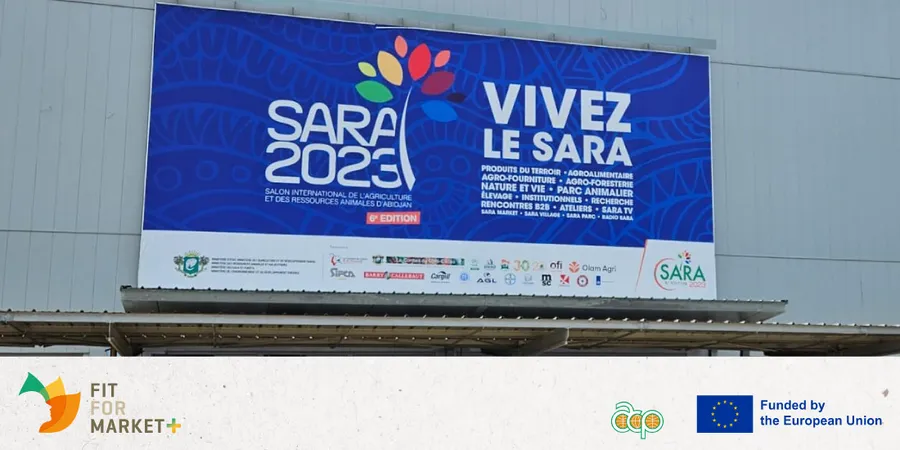
Facilitating access to markets for micro, small and medium enterprises (MSMEs) in the agri-food sector in low- and middle-income countries is at the heart of COLEAD’s mission: to “implement all actions to increase the contribution of agricultural sectors, and horticultural sectors in particular, to achieving the Sustainable Development Goals”.To this end, COLEAD supports the beneficiary partners of its programmes to (i) comply with public and private regulatory requirements for market access; and (ii) access more market information and business opportunities.Members of the COLEAD team regularly take part in specialised trade fairs, which – despite the importance of distance trade – remain key crossroads for national and international trade, particularly for the fruit and vegetable sector. The aim of participating in this type of trade show is threefold: (i) to meet exporting producers, exhibitors or visitors from dozens of countries to inform them of one or more programmes or to take stock of current development projects; (ii) to meet importing buyers to facilitate contacts and understand the latest market developments and requirements, as well as the competitive positioning of certain origins; and (iii) to take part in conferences and workshops to gather quantitative and qualitative information to feed into COLEAD’s training and business development materials and tools.In October 2023, COLEAD participated in three trade fairs via the FFM+ programme: Fruit Attraction in Madrid (3–5 October), SARA in Abidjan (2–6 October) and ANUGA in Berlin (7–11 October). These events illustrate the different markets covered by COLEAD, namely the European fresh fruit and vegetable market, the regional agricultural and food market in sub-Saharan Africa and the international fresh and processed food market. Alongside these on-site meetings, COLEAD – also via the FFM+ programme – is helping African, Caribbean and Pacific MSMEs to promote their products on digital platforms such as tridge.com.This activity is supported by the Fit For Market Plus (FFM+) programme, implemented by COLEAD within the Framework of Development Cooperation between the Organisation of African, Caribbean and Pacific States (OACPS) and the European Union.This publication receives financial support from the European Union and the OACPS. The content of this publication is the sole responsibility of COLEAD and can in no way be taken to reflect the views of the European Union or the OACPS.
 News
News
FFM+: Over 700 development projects, 60% of them for businesses and agricultural cooperatives
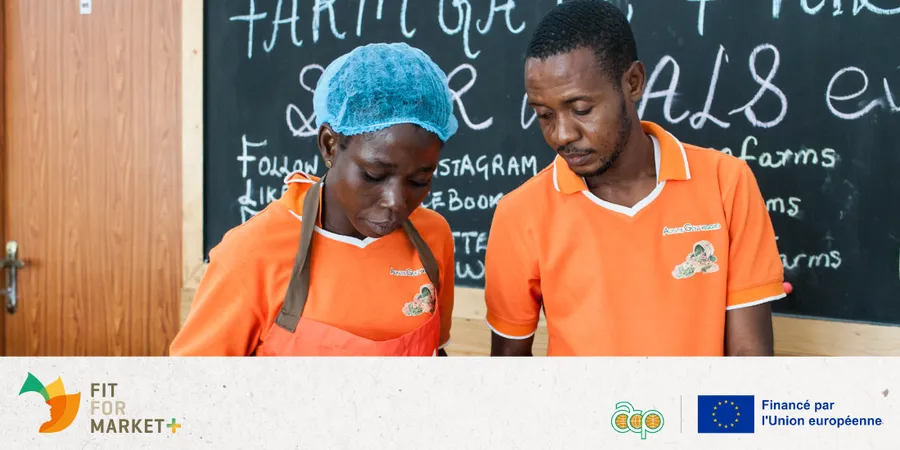
Since the launch of the digital system for receiving applications for support under the Fit For Market+ programme in early July 2022, 716 applications for support (as at 21 September 2023) have been received. Most (60%) of these requests have come from horticultural businesses and cooperatives. Other requests come from the structures that make up the ecosystem of these businesses, namely consultants, support structures, professional organisations, training and research institutes, and the competent authorities.The number of requests for support has stabilised over the last few months, at around 30 to 40 per month. The chart below shows the geographic distribution of these requests.Of the 716 applications received, 74% were analysed and most are now the subject of a second, more in-depth analysis, in particular through the use of the Sustainability Self-Assessment System and/or more technical discussions. Ultimately, 22% of the requests resulted in agreement to support a development project.The large number of requests received and the profile of the requesting organisations (smaller organisations active on the local market) have led us to adopt a more collective approach to our support and to a relatively limited number of intra-organisation support requests, for which the needs are more complex. In this context of standardisation of our offer, the majority of the companies analysed were offered autonomous learning projects (30%) and standard support projects (45%), while 25% will be supported via tailor-made support projects.Collective and intra-organisational support initiatives have been underway since January 2023, including:active promotion of our digital tools, such as the distance learning platform, the E-Library, statistics, regulatory monitoring, etc.more than 70 group training courses during the year, covering COLEAD’s 8 themes for vocational training in sustainable agricultureproviding post-training group support to give participants the opportunity to apply what they have learned in training within their own organisation.the development of intra-organisation support for tailor-made support projects.For example, in September and October 2023, COLEAD’s online resource centre was presented and explained to a group of African, Caribbean and Pacific trade associations via its programmes; training for trainers is underway in Malawi; six Madagascan companies in the lychee sector are being supported as they prepare their action plans to comply with the Rainforest Alliance standard; the R-SAT is being finalised in Ethiopia; and a review of the mango export campaign and interceptions was organised with the National Plant Protection Organisations of the producer countries.This activity is supported by the Fit For Market Plus (FFM+) programme, implemented by COLEAD within the Framework of Development Cooperation between the Organisation of African, Caribbean and Pacific States (OACPS) and the European Union.This publication receives financial support from the European Union and the OACPS. The content of this publication is the sole responsibility of COLEAD and can in no way be taken to reflect the views of the European Union or the OACPS.
 News
News
AGRINFO Botswana-EU: focus on the meat sector
In September, with the support of the Embassy of Botswana in Brussels, COLEAD hosted a webinar to introduce the AGRINFO and Fit For Market Plus (FFM+) programmes to invited guests representing the country’s public and private sectors.FFM+ works to strengthen the sustainability of the ACP horticultural sector, and there has been much interest in the recent launch of the programme in Botswana. Several applications for support have already been received from the fruit and vegetable sector.The AGRINFO team demonstrated the website and information service on EU regulations and standards, with a focus on the meat sector. Animals and animal products are currently the main exports from Botswana to the European Union, and keeping up with the evolving EU regulations in the coming months will be important. Changes to regulations on the use of antimicrobials were explained, as well as ongoing discussions within the European Commission on the reform of animal welfare rules.The webinar was followed by in-depth discussions with Botswana’s Ministry of Trade, and a visit to the country by the AGRINFO and FFM+ teams is planned for November.AGRINFO is a programme funded by the European Union and implemented by COLEAD.This publication receives financial support from the European Union and the OACPS. The content of this publication is the sole responsibility of COLEAD and can in no way be taken to reflect the views of the European Union or the OACPS.
 News
News
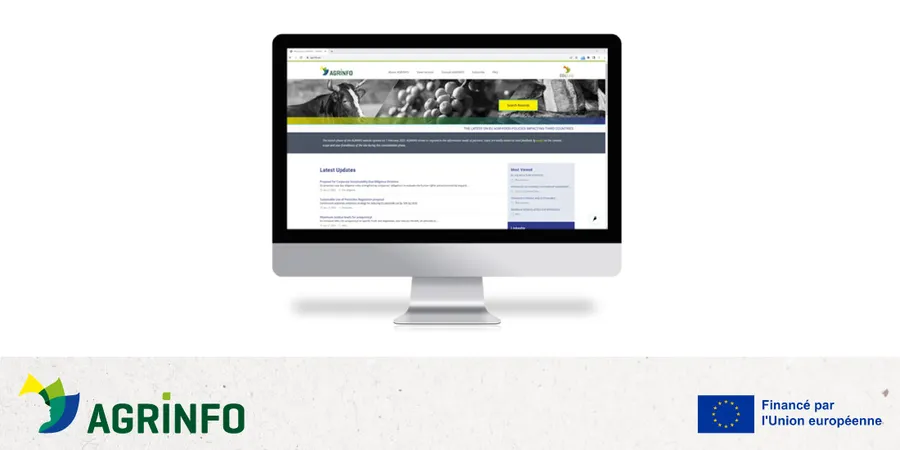
AGRINFO keeps you abreast of EU policy and regulatory changes in the agri-food sector
Launched in January 2023, AGRINFO has just published its 300th record on evolving EU policies, regulations and standards impacting agri-food value chains in low- and middle-income countries worldwide.In its first phase, the AGRINFO programme is focusing on EU policies and regulations and their impacts on non-EU countries. It provides clear information about recent and upcoming changes, timelines, and actions that companies or authorities need to take to meet the new rules.And it clearly informs stakeholders about when and how they can provide inputs to ongoing policy discussions, both directly to the EU and via the World Trade Organization.AGRINFO also provides clear explainers about key EU policies and regulations, and a trade policy digest on recent developments in EU trade negotiations.Subscribers receive regular AGRINFO Update emails highlighting the latest developments and actions. So far in 2023, 12 emails have gone out to 2881 recipients.The content of all the AGRINFO Update emails can be downloaded in pdf format to easily share with colleagues, along with short versions of records that focus on the key points.In addition, the AGRINFO programme communicates with stakeholders in a variety of ways:targeted emails where developments concern specific locations or value chainsAsk AGRINFO via the websiteoutreach via COLEAD’s country relays to national and regional organisationswebinars on request, focusing on specific countries and value chains.Future plansAGRINFO will continue to monitor evolving EU regulations and policies, and a second phase will begin to report on developments in private agri-food standards.Market studies and impact studies are in the pipeline, with pilot impact studies under way on the effect of introducing increased controls under Regulation 2019/1793, and of lowering limits of quantification for pesticide residue analysis.A practical sectoral guide on meeting emergency measures introduced under the EU plant health rules is under development, and further guides are being considered. These guides will provide more detail on new regulations and standards when requested by partner countries/beneficiaries, and in cases where they express particular concern.AGRINFO is a programme funded by the European Union and implemented by COLEAD.This publication receives financial support from the European Union and the OACPS. The content of this publication is the sole responsibility of COLEAD and can in no way be taken to reflect the views of the European Union or the OACPS.