
Cultivating
Sustainable Futures
 News
News
Keeping track of the virus – impact and spread
Restrictions by country Business Insider is continually updating its LIST OF COUNTRIES’ COVID-19 RESTRICTIONS – it reports that currently one-third of the global population is on coronavirus lockdown Global mapping There are a number of global resources mapping the spread of COVID-19, including the World Health Organization’s SITUATION DASHBOARD Johns Hopkins University’s CORONAVIRUS RESOURCE CENTER In ACP countries Africa World Health Organization NEWS and regional dashboard: COVID-19 IN THE WHO AFRICAN REGION The African Union’s Centres for Disease Control and Prevention (Africa CDC) releases regular UPDATES Pacific World Health Organization Western Pacific NEWS Caribbean World Health Organization/Pan American Health Organization (PAHO) NEWS and regional dashboard: Novel coronavirus – COVID-2019 – GEOGRAPHIC DISTRIBUTION IN THE AMERICAS
 News
News
National workshop for the development of an action plan to strengthen the SPS control system for horticulture products exported to the EU from Zimbabwe
As part of its Fit For Market programme, COLEACP and Zimbabwe's Plant Quarantine and Plant Protection Services Institute held a workshop in Harare for key public and private actors in horticulture to identify priorities and build a 3-year action plan for compliance with the EU SPS regulations.
 News
News
Validation workshop on the GLOBALGAP national interpretation guidelines version 5.2 (NIG) for Ghana
A national stakeholders workshop on Ghana's GLOBALG.A.P National Interpretation Guideline for Integrated Farm Assurance (IFA) 5.2 was held by the National Technical Working Group in collaboration with the GIZ - German International Cooperation, the Market Oriented Agriculture Programme (MOAP), Federation of Associations of Ghanaian Exporters - FAGE GHANA (FAGE), and Coleacp's Fit for Market Programme (EU/ AFD - Agence Française de Développement). Discussions covered control points, compliance criteria and general regulations.
 News
News
COLEACP training to ghanian companies in the process of complying with GLOBALG.A.P
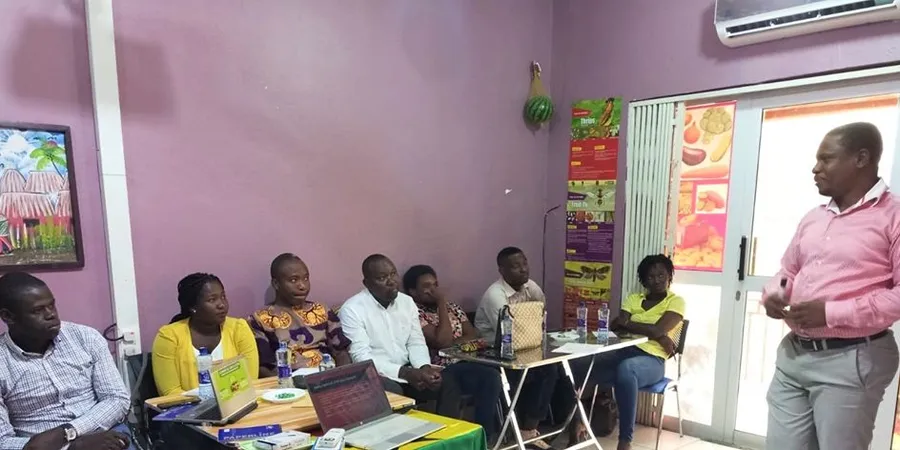
As part of Coleacp's "Fit for Market" programme, several ghanaian companies in the process of complying with GLOBALG.A.P. have been trained to understand the specificities of the EU premium market for vegetables in the context of voluntary standards such as GLOBALG.A.P.
News
Food safety remains a top international priority
The highest guarantees of food safety are a key element for governments’ emergency planning. The World Health Organization (WHO) has published precautionary recommendations on good hygiene practices in food handling and preparation, such as washing hands, and on how to avoid potential cross-contamination. More information can be found on the WHO website.COLEACP’s advice to all operators in the fresh produce sector is to maintain and strengthen their customary strict food safety and hygiene procedures at all stages. Operators should also put in place emergency protocols in anticipation of the arrival of the virus. This is very important, especially in the context of possible staff shortages and emergency staffing due to COVID-19 infection.
News
Impact of COVID-19 pandemic on international trade in fresh produce
International logistics continues to be affected by port closures and congestion in China, which has led to localised shortages in the availability of refrigerated shipping containers. In addition, containers not being unloaded for days or even weeks has led to a 30–50% increase in the cost of reefer containers. This is the case for imports of summer and stone fruits from the southern hemisphere (about 20,000 tons of cherries from Chile, as well as other products from Peru and Argentina).Trade with China also remains a challenge, and worldwide many other governments are now introducing measures such as border closures and restrictions on the movement of people, which have an impact on transport, carriers and trade.At European level, the food trade is exempt from many special measures, and efforts are made to minimise any impact on the food supply chain; priority is being given to keeping food retail outlets open and well stocked. In these challenging times, it is essential to maintain access to healthy and nutritious food for all consumers, including fresh fruit and vegetables.
News
Specific impacts on trade and consumption of fruit and vegetables in Europe
European governments and the private sector will do their utmost to continue to ensure the delivery of food, but at least initially, exotic fruits may not be among the products most in demand. Because restaurants are closed, consumers are looking to stock more food, so there is high demand, particularly for basic fruit and vegetables, especially as people look for healthy foods with a high vitamin C content to bolster their health. There is also expected to be higher demand for canned fruit and vegetables (including tropical produce), which can be easily stored and carries lower risk in the event of a break in the supply chain, such as the closure of a port.As home consumption increases, the European trade is working to guarantee consumers a healthy and balanced diet with continued access to fresh fruit and vegetables.Within Europe, the fresh fruit and vegetable sector is in discussion with the public authorities to guarantee a “fresh corridor” for lorries transporting highly perishable fresh fruit and vegetables to ensure rapid supply. This includes securing vehicles and drivers in good time at the right places and introducing protocols to ensure trade flows. At the same time, all European fresh produce companies are taking steps to offer the best possible protection to workers in the supply chain.However, although transit of goods is allowed and ensured within the EU, some blockages and delays have been reported for goods subject to negotiations between different Member States. In addition, some hauliers do not want to send their drivers and lorries to high-risk areas.Events in China tell us about the likely evolution of consumer behaviour in Europe in the context of COVID-19: Consumers looking for foods that are beneficial to their health, which favours the consumption of fruit and vegetables; Increasing demand for vegetables and fruit (in China, increases of 40% and 37%, respectively); A shift in consumption from restaurants, convenience stores, markets and wholesalers to supermarkets and the internet. The drastic drop in import demand from China could lead to the diversion of large volumes of fruit to Europe and other parts of the world. This could have consequences for Europe’s other supplier countries, such as the ACP countries.
News
(Main) European Union guidelines
The EU guidelines set out the principles of an integrated approach to effective border management to protect health while preserving the integrity of the internal market.Regarding transport of goods and services, the EU guidelines state that control measures should not undermine the continuity of economic activity and should preserve the operation of supply chains, particularly relating to essential goods such as food supplies. Professional travel to ensure transport of goods and services should be enabled, including the facilitation of safe movement for transport workers, including truck and train drivers, pilots and aircrew, across internal and external borders.Regarding the supply of goods, Member States should preserve the free circulation of all goods, in particular essential products such as medicines, medical equipment, essential and perishable food products and livestock. Member States should designate priority lanes for freight transport (e.g. via ‘green lanes’) and consider waiving existing weekend bans. No additional certifications should be imposed on goods legally circulating within the EU single market. Transport workers, especially those delivering essential goods, should be able to circulate across borders as needed and their safety should in no way be compromised. Member States should ensure constant provisioning to meet social needs, to avoid panic buying and the risk of dangerous overcrowding of shops, which will require proactive commitment from the entire supply chain.
News
Standards adapting to the COVID-19 situation
GLOBALG.A.P. has published a procedure for certification extension on its website which should be useful for many companies.If you have specific concerns regarding this initiative or others, do not hesitate to contact the relevant certification bodies to ask for advice.
News
European importers of fruit and vegetables are getting organised
Importers are taking measures and precautions to protect their staff and maintain continuity of service. These measures may include: Teleworking for departments than can work remotely (IT, sales, marketing, administrative and financial), maintening the usual contacts by telephone; Reinforcement of health measures and organisation of operational teams to limit exposure to risk as far as possible; Maintenance of shipping lines, as airlines are likely to decline sharply; Provision of additional inventory where necessary to reduce the potential impact of supply chain disruptions.
News
France: Rungis Market is open, but...
All buyers may enter Rungis Market to buy from all the pavilions at the usual times. However, wholesalers are being strongly affected by the closure of restaurants and canteens.Regarding exotic fruits and vegetables, the situation may be difficult for small retailers in inner-city Paris specialising in African food products. There is likely to be a shift in deliveries of exotic produce to supermarkets, but demand is tending to focus on basic fruits and vegetables such as potatoes, tomatoes, cucumbers and salads.Another disruptive factor for Rungis’ activity is the closure of fairground markets.As freight is often associated with passenger transport, there is likely to be a sharp drop in imports by air.
 News
News
EAC-COLEACP meeting in Brussels
In Brussels, a delegation from the East African Community (EAC), headed by Hon. Christophe BAZIVAMO, Deputy Secretary General, met COLEACP’s team headed by Delegate General Jeremy KNOPS to set up a roadmap for EAC-COLEACP collaboration.The EAC, a regional intergovernmental organisation based in Tanzania, has six partner states: Burundi, Kenya, Rwanda, South Sudan, Tanzania and Uganda. COLEACP is currently supporting all except South Sudan.