
Cultivating
Sustainable Futures
 News
News
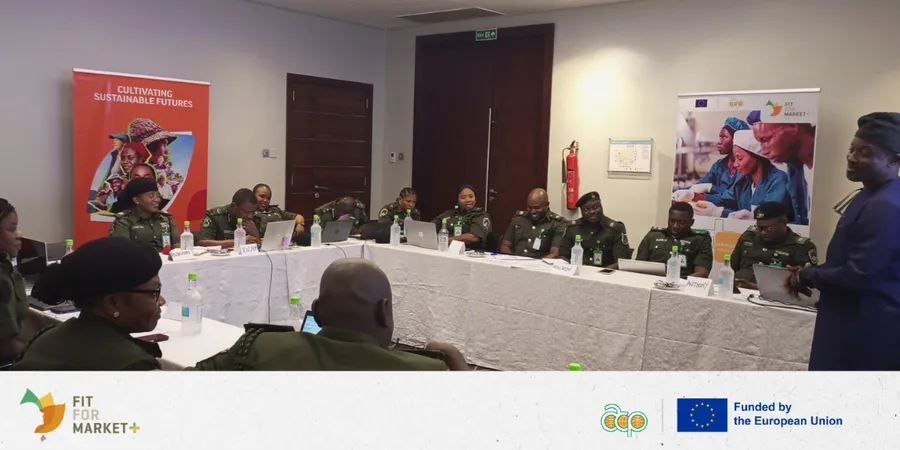
Nigeria: strengthening the SPS quality management system through capacity development of the national plant protection organisation (NAQS)
As Nigeria’s National Plant Protection Organisation (NPPO), the Nigeria Agricultural Quarantine Service (NAQS) plays a central role in safeguarding plant health, preventing the introduction of pests, and certifying agricultural products for export. To strengthen Nigeria’s capacity to meet international phytosanitary requirements, COLEAD, under the Fit for Market Plus (FFM+) programme funded by the European Union and the OACPS, implemented two consecutive training sessions aimed at improving both the organisation and the implementation of official controls.These activities form part of a broader capacity development plan, developed following the 2023 analysis conducted using the Rapid SPS Assessment Tool (R-SAT), which identified several systemic gaps within Nigeria’s SPS system, notably in governance, operational procedures, laboratory services and risk management.The first training, held in July 2025, focused on the organisation of official controls. Its objective was to strengthen NAQS’ institutional capacity to design and manage a structured system of official controls, in line with IPPC principles and European Union plant health regulations. Discussions covered risk-based planning, internal audits, financing of controls, the roles of NPPOs, and governance arrangements. Sixteen NAQS senior managers actively participated in this face-to-face training.The second training, held in Lagos in September 2025, focused on the operational implementation of official controls. It enabled NAQS inspectors and managers to further develop their skills in inspection procedures, sampling, documentation, identification of regulated pests, traceability and compliant phytosanitary certification. A practical visit to a leafy vegetable packhouse strengthened field-based learning. This session brought together 18 inspectors and managers.Taken together, these two training cycles significantly strengthen NAQS’ capacity to deliver credible, effective and internationally aligned phytosanitary controls. By consolidating the national inspection system, these actions support Nigeria’s ambitions to diversify non-oil exports, enhance regulatory compliance and build confidence in the country’s horticultural exports.This activity is supported by the Fit For Market Plus (FFM+) programme, implemented by COLEAD within the Framework of Development Cooperation between the Organisation of African, Caribbean and Pacific States (OACPS) and the European Union. This publication receives financial support from the European Union and the OACPS. The content of this publication is the sole responsibility of COLEAD and can in no way be taken to reflect the views of the European Union or the OACPS.
 News
News
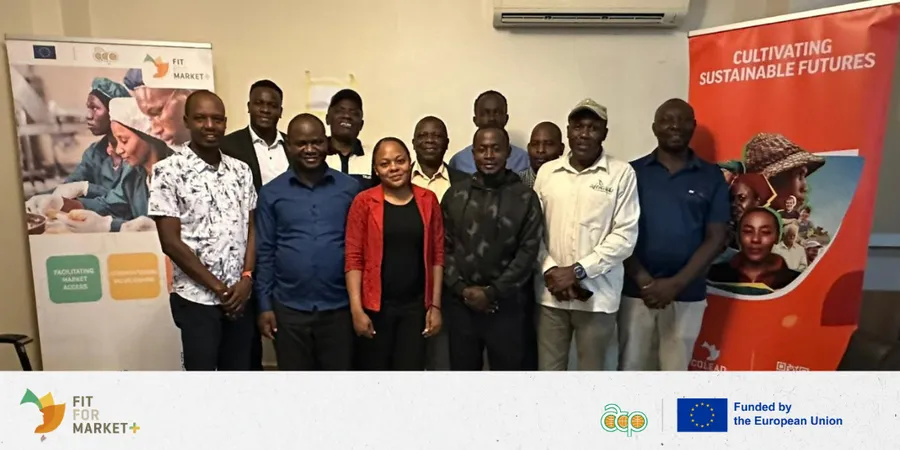
Tanzania: integrating the management of gender dynamics at the heart of horticultural companies
In December, COLEAD organised its first face-to-face training in Tanzania on managing gender dynamics in the workplace, held in Arusha as part of the FFM+ programme. This session is fully aligned with COLEAD’s Gender Strategy and Action Plan (2024–2027), which aims to systematically mainstream gender equality across all interventions and ensure equitable benefits for women and marginalised groups within agricultural value chains.Gender is a key lever under Result 2 of the FFM+ programme, which focuses on strengthening the capacity of smallholders and agricultural MSMEs to adapt, remain competitive and access opportunities through inclusive approaches. The training brought together 22 participants from 18 Tanzanian horticultural companies, representing a wide range of functions, including company management, production, human resources, administration and finance, marketing, health, safety and environment, and career development.Designed as a practical, action-oriented training, the session aimed to strengthen participants’ understanding of gender dynamics within companies and to provide concrete tools for integrating gender considerations into organisational practices. Participants worked on fundamental concepts related to gender and women’s empowerment, conducted simplified gender analyses within their own organisations, and explored ways to integrate these dimensions into internal policies, projects and processes. Particular attention was given to gender-sensitive monitoring and evaluation, the identification of relevant indicators, and the development of concrete action plans.The participatory approach, firmly grounded in the realities of the companies, fostered strong engagement among participants, notably through workplace-based case studies, group work and planning exercises. Several participants highlighted the practical nature of the tools provided and their immediate usefulness in initiating change within their organisations.Beyond strengthening company capacities, the training also enabled COLEAD teams to deepen dialogue with stakeholders in the Tanzanian horticultural sector, promote COLEAD’s programmes, tools and resources, and identify avenues for post-training follow-up, particularly through the implementation of targeted technical support actions.This activity is supported by the Fit For Market Plus (FFM+) programme, implemented by COLEAD within the Framework of Development Cooperation between the Organisation of African, Caribbean and Pacific States (OACPS) and the European Union. This publication receives financial support from the European Union and the OACPS. The content of this publication is the sole responsibility of COLEAD and can in no way be taken to reflect the views of the European Union or the OACPS.
 News
News
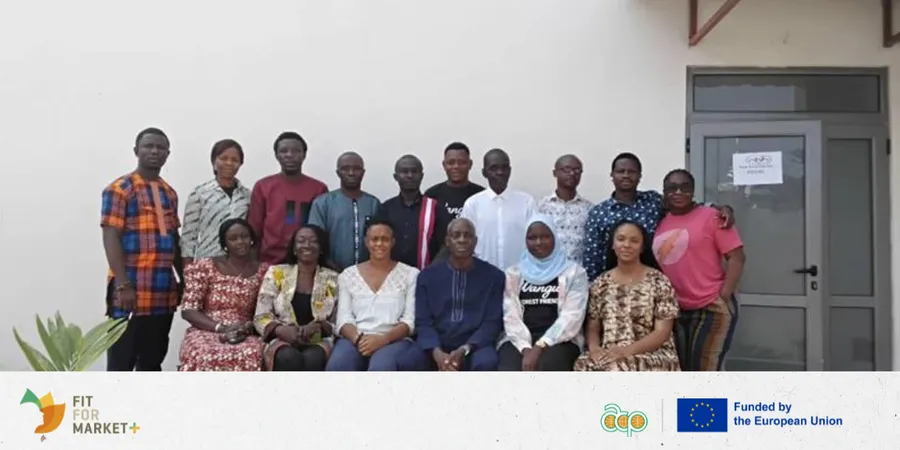
Sierra leone: collective training as a lever for access to formal horticultural markets
COLEAD recently successfully concluded a strategic collective training session dedicated to market access, held in Freetown, Sierra Leone, in November 2025. This face-to-face training was delivered by a COLEAD expert based in West Africa, as part of the FFM Plus programme.The main objective of the training was to strengthen the capacities of horticultural companies and producer organisations currently operating in informal or semi-informal markets, but aiming to transition towards higher-value formal, regional and international markets.The session primarily targeted management teams and key decision-makers, including commercial managers, heads of administration and finance, marketing managers and business owners.The programme was designed to address the complex challenges associated with the formalisation of market access, focusing on three core areas: analysis of business models and the risk–reward balance, understanding target market requirements, and the development of tailored technical and financial roadmaps.A central feature of this collective approach was the strong peer-to-peer exchange dynamic. By bringing together organisations facing similar challenges, the training facilitated the sharing of practical experiences, the identification of common constraints and the co-development of innovative solutions aimed at continuous improvement.This “Market Access” training represents a key milestone for the supported horticultural companies in Sierra Leone. By strengthening the technical and managerial skills of their teams, COLEAD enables them to make informed strategic decisions regarding which formal markets to target and which investments to prioritise. This action directly contributes to sustainable growth and to strengthening the competitiveness of the horticultural value chain in Sierra Leone.COLEAD will continue to support these organisations through post-training follow-up, to assist with the effective implementation of the market access strategies developed by the participants.This activity is supported by the Fit For Market Plus (FFM+) programme, implemented by COLEAD within the Framework of Development Cooperation between the Organisation of African, Caribbean and Pacific States (OACPS) and the European Union. This publication receives financial support from the European Union and the OACPS. The content of this publication is the sole responsibility of COLEAD and can in no way be taken to reflect the views of the European Union or the OACPS.
 News
News
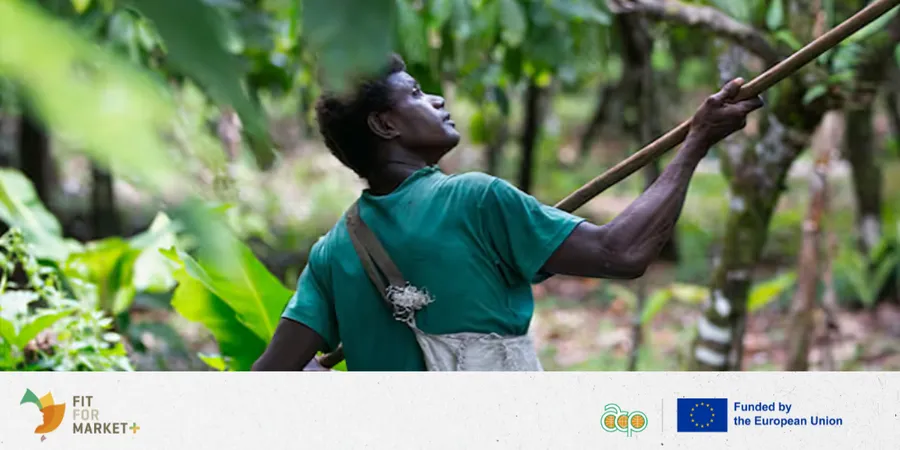
Strengthening access to organic markets in the Pacific: the case of Kokonut Pacific Solomon Islands
Under the Fit For Market Plus (FFM+) programme, the COLEAD continues its commitment to strengthening the capacities of agri-food SMEs and supporting their sustainable access to international markets. In 2025, the COLEAD notably supported Kokonut Pacific Solomon Islands Ltd (KPSI) through a pre-audit of the National Organic Program (NOP), followed by certification support. This assistance builds on earlier engagement, in particular through the completion of the Sustainability Self-Assessment (SAS). This diagnostic highlighted numerous strong sustainability practices, while also identifying areas for improvement to further strengthen the company’s compliance with international organic market requirements.Founded in 2004, KPSI is a social enterprise operating across nine provinces of the Solomon Islands. It works with more than 60 village communities and over 1,200 smallholder farmers engaged in coconut and cocoa value chains. Its model is based on guaranteed prices for producers, continuous technical support, decentralised village-level processing, and central filtration in Honiara. In 2024, KPSI produced 85 tonnes of coconut and 43 tonnes of cocoa, mainly for the Australian, US and New Zealand markets. The company already holds organic, Fair Trade and HACCP certifications and employs 35 staff members, 50% of whom are women, including in management positions.The NOP pre-audit, conducted between August and September 2025 by Paradais Review Services (Papua New Guinea), assessed KPSI’s entire compliance system, including its internal control system, human capacities, infrastructure, traceability, risk management and critical control points throughout the value chain. The audit covered 405 producers, 12 decentralised processing units and two central warehouses, confirming a strong level of operational control.Following the mission, a pragmatic and costed corrective action plan was developed to prepare KPSI for a successful NOP certification audit and to sustainably strengthen market confidence in its organic products.This activity is supported by the Fit For Market Plus (FFM+) programme, implemented by COLEAD within the Framework of Development Cooperation between the Organisation of African, Caribbean and Pacific States (OACPS) and the European Union. This publication receives financial support from the European Union and the OACPS. The content of this publication is the sole responsibility of COLEAD and can in no way be taken to reflect the views of the European Union or the OACPS.
 News
News
Agrinnovators.org: highlighting 100 agrifood talents across Africa and the Caribbean
Our online agrifood partnership sessions and series organised in collaboration with our partners PAFO, IICA, PFO, OECD and UN Women and supported among other through the FFM Plus programme have featured outstanding agrifood entrepreneurs who are transforming food systems, driving innovation, and creating sustainable impact both locally and internationally.As part of our commitment to amplify their voices and highlight their achievements, we are thrilled to celebrate the publication of 100 business profiles.These profiles spotlight:The entrepreneurs’ business journey and origin storiesInnovative solutions and technologies they are deployingTheir contributions to climate resilience, circular economy, sustainable agriculture and to building inclusive communitiesKey lessons learned and success factorsThis initiative reflects our belief that entrepreneur-led innovations are key to building a resilient, inclusive and competitive agrifood sector.All business profiles are available on the Agrinnovators platform.We warmly thank the 100 entrepreneurs featured for their generosity, expertise and leadership. Their journeys continue to inspire a growing community of innovators across Africa, the Caribbean, and beyond!Join the Agrinnovators community and connect with a vibrant network of changemakers!This activity is supported by the Fit For Market Plus (FFM+) programme, implemented by COLEAD within the Framework of Development Cooperation between the Organisation of African, Caribbean and Pacific States (OACPS) and the European Union. This publication receives financial support from the European Union and the OACPS. The content of this publication is the sole responsibility of COLEAD and can in no way be taken to reflect the views of the European Union or the OACPS.
 News
News
Improving energy performance: Bodukwan Multi Fruit Processing Ltd committed to more efficient production in Ghana
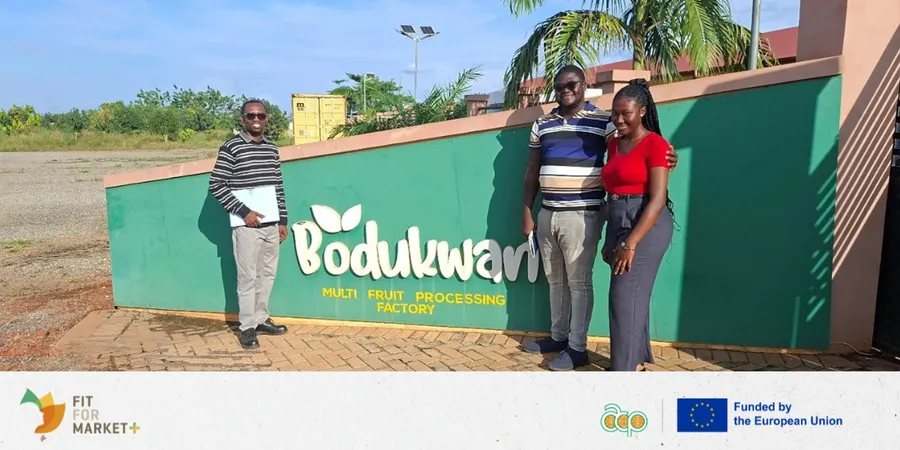
As part of the Fit For Market Plus (FFM+) programme, COLEAD coordinated and facilitated a targeted technical assistance mission to support Bodukwan Multi Fruit Processing Ltd, in Ghana, in improving its energy performance. A certified expert was deployed to carry out a Type 1 energy audit in line with ISO 50002:2014 at the company’s processing facility in Kumasi. The mission aimed to analyse the plant’s energy consumption by source, equipment and process, review existing operation and maintenance practices, and identify concrete, cost-effective opportunities to reduce energy consumption and greenhouse gas emissions. The assessment also made it possible, where relevant, to benchmark performance and assess the feasibility of introducing additional energy management measures.The audit showed that the plant’s annual energy costs are mainly driven by LPG (56%) and grid electricity (41%). The current Specific Energy Consumption, estimated at 11.26 MJ/tonne, could be reduced to 8 MJ/tonne through targeted efficiency improvements. Significant Energy Uses include steam generation, refrigeration systems, extraction and blending lines, air compressors, and building services.Based on these findings, a set of prioritised actions was proposed, ranging from no-cost measures to more capital-intensive investments. No- and low-cost recommendations include optimising boiler settings, repairing steam and compressed-air leaks, improving cold-chain management, and replacing conventional lighting with LED solutions. Medium- and high-cost measures were also identified, such as integrating Variable Speed Drives, recovering condensate, implementing an energy monitoring system, and assessing the feasibility of a solar photovoltaic installation.Following the debriefing, Bodukwan’s management confirmed its commitment to implementing all no- and low-cost measures, while exploring financing options for larger investments. This energy assessment provides the company with a solid roadmap to reduce energy costs, improve process efficiency and strengthen environmental performance, with potential annual savings of up to 15% of total energy consumption.This activity is supported by the Fit For Market Plus (FFM+) programme, implemented by COLEAD within the Framework of Development Cooperation between the Organisation of African, Caribbean and Pacific States (OACPS) and the European Union. This publication receives financial support from the European Union and the OACPS. The content of this publication is the sole responsibility of COLEAD and can in no way be taken to reflect the views of the European Union or the OACPS.
 News
News
Waste management – Malawi Mangoes adopts a circular, efficient and value-creating management model
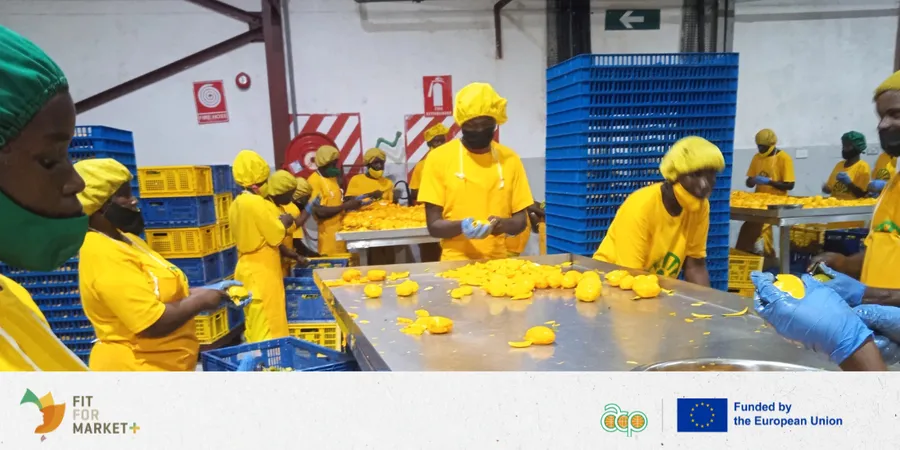
As part of the Fit For Market Plus (FFM+) programme, COLEAD supported Malawi Mangoes (MM) through a strategic mission aimed at transforming its waste management system from a linear and costly approach into a circular, efficient and value-creating model. Implemented between September and November 2025, the mission followed a structured approach, from the initial diagnostic to the co-development of a comprehensive operational strategy.The assessment carried out on the Matumba and Dzuwa farms, as well as at the Salima processing plant, highlighted the lack of waste segregation, organic waste valorisation and formalised procedures, despite the company generating up to 7 tonnes of organic waste per day. These practices resulted in high transport and disposal costs, along with significant economic and environmental losses.The mission enabled a precise quantification of waste streams (around 14% of incoming mangoes), clarification between genuinely rejected fruit and fruit still in the ripening process, and an in-depth feasibility analysis of valorisation options. Several solutions were prioritised, including structured composting, waste stream segregation, improved wastewater management, and in the medium to long term, briquette production, animal feed, biogas, and mango seed kernel oil extraction.Co-developed with Malawi Mangoes’ teams, the final strategy includes an operational roadmap spanning more than 12 months, standard operating procedures (SOPs), a monitoring and evaluation framework, and a capacity-building component. Five staff members were trained as focal points to ensure ownership and long-term sustainability of the system.In the short term, this transition could generate over MWK 80 million in savings per season, while strengthening environmental compliance, enhancing the climate resilience of orchards, and positioning Malawi Mangoes as an innovative circular economy player in Malawi.This activity is supported by the Fit For Market Plus (FFM+) programme, implemented by COLEAD within the Framework of Development Cooperation between the Organisation of African, Caribbean and Pacific States (OACPS) and the European Union. This publication receives financial support from the European Union and the OACPS. The content of this publication is the sole responsibility of COLEAD and can in no way be taken to reflect the views of the European Union or the OACPS.
 News
News
Market access: Rayfield Farms resumes exports from Nigeria to the United Kingdom
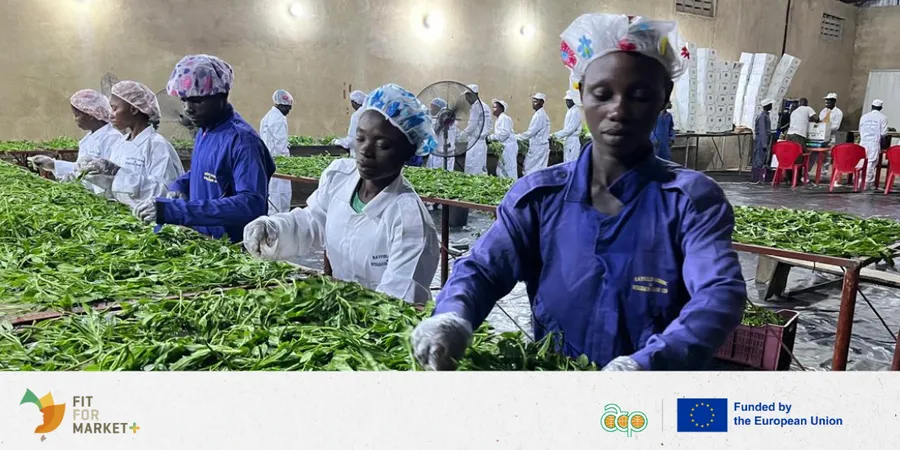
Rayfield Agricultural and Integrated Farms Ltd., a Nigerian family-owned company based in Keffi, Nasarawa State, successfully resumed exports of fresh leafy vegetables to the United Kingdom in June 2025, following targeted technical assistance provided by the COLEAD under the Fit For Market Plus (FFM+) programme.Operating a 156-hectare farm, Rayfield had lost access to its export markets as a result of the COVID-19 pandemic. Despite these challenges, the company’s management remained committed to gradually improving its production and handling practices in order to regain its export potential. According to its Managing Director, Mr. Sardauna Davies, support from the COLEAD played a key role in strengthening operational efficiency and internal management systems.The support combined the COLEAD’s Sustainability Self-Assessment System (SAS) with a needs assessment against the GLOBALG.A.P. standard. On this basis, Rayfield’s management fully engaged in implementing the COLEAD’s recommendations, notably by improving record-keeping, strengthening hygiene controls, aligning processes with HACCP principles, and enhancing agronomic planning.These improvements helped restore buyer confidence and resume commercial shipments. Located approximately two hours from Abuja International Airport, the farm also benefits from a logistical advantage that facilitates access to multiple international markets.This success story clearly illustrates how structured technical assistance can enable Nigerian exporters to meet international standards and sustainably maintain access to high-value markets.This activity is supported by the Fit For Market Plus (FFM+) programme, implemented by COLEAD within the Framework of Development Cooperation between the Organisation of African, Caribbean and Pacific States (OACPS) and the European Union. This publication receives financial support from the European Union and the OACPS. The content of this publication is the sole responsibility of COLEAD and can in no way be taken to reflect the views of the European Union or the OACPS.
 News
News
Strengthening contractual relationships with producers: the Malakass example in the cassava value chain in Madagascar
As part of the Fit For Market Plus (FFM+) programme, COLEAD supported the Malagasy company Malakass, active in cassava processing in the Atsimo-Andrefana region, with the aim of strengthening and sustainably structuring its relationships with local producers. This field mission, carried out from 30 September to 11 October 2025, sought to secure a regular, reliable and high-quality supply—an essential condition for the company’s continued development.The support was built around a participatory approach, starting with an in-depth diagnostic with the Malakass team, followed by a survey of 43 producers. These exchanges made it possible to better understand farming practices, the constraints faced by producers and their expectations towards the company. Field-based coaching sessions complemented this work, with practical demonstrations of good cassava cultivation practices that could be immediately applied by producers.The mission also strengthened coordination with key ecosystem stakeholders. Collaboration with FOFIFA was consolidated, particularly with regard to technical support to producers, the provision of improved varieties and the establishment of a demonstration plot. In addition, a high-level exchange with the Ministry of Agriculture confirmed institutional support for initiatives aimed at structuring the value chain around Malakass.The results are tangible: an operational diagnostic of producers, a contract model promoting more balanced commercial relationships, and a monitoring framework to assess progress over successive agricultural seasons. Building on these achievements, Malakass is now encouraged to structure producer associations, launch pilot contracts and strengthen its field presence.This mission marks a key step towards building sustainable, win-win relationships between Malakass and its producers, and contributes to strengthening the cassava value chain in the region.This activity is supported by the Fit For Market Plus (FFM+) programme, implemented by COLEAD within the Framework of Development Cooperation between the Organisation of African, Caribbean and Pacific States (OACPS) and the European Union. This publication receives financial support from the European Union and the OACPS. The content of this publication is the sole responsibility of COLEAD and can in no way be taken to reflect the views of the European Union or the OACPS.
 News
News
Agritech in Ghana: Complete Farmer strengthens its network of 12,500 smallholder farmers with targeted technical assistance
Complete Farmer, a Ghanaian Agritech innovator, is set to strengthen its outgrower network with technical assistance from EDFI Management Company, delivered by COLEAD.This support, part of the AgriFI Country Window (CW) Ghana facility, will help Complete Farmer enhance its outgrower model and training systems, benefiting over 12,500 smallholder and 163 commercial farmers. Earlier in 2025, AgriFI invested USD 2.5 million (EUR 2.2 million) in Complete Farmer, providing long-term financing to scale operations.COLEAD, selected in 2024 by EDFI Management Company to provide advisory and technical assistance services to the AgriFI Facility, will work closely with Complete Farmer to refine its outgrower model, ensuring sustainable and inclusive growth.Founded in 2017, Complete Farmer connects farmers and buyers through digital solutions. This initiative aligns with COLEAD’s mission to drive innovation and sustainability in agriculture, supporting AgriFI’s goal of catalyzing impactful agribusiness growth in Africa. Together, they aim to create lasting change for Ghana’s agricultural sector.More information about:Complete Farmer - https://edfimc.eu/project/complete-farmer/EDFI-COLEAD collaboration – LINK: https://www.colead.link/programmes-page/agrifi-facility-technical-assistance-services/
 News
News
EPILIMNION in Trinidad and Tobago: expanding greenhouse production capacity to substitute imports
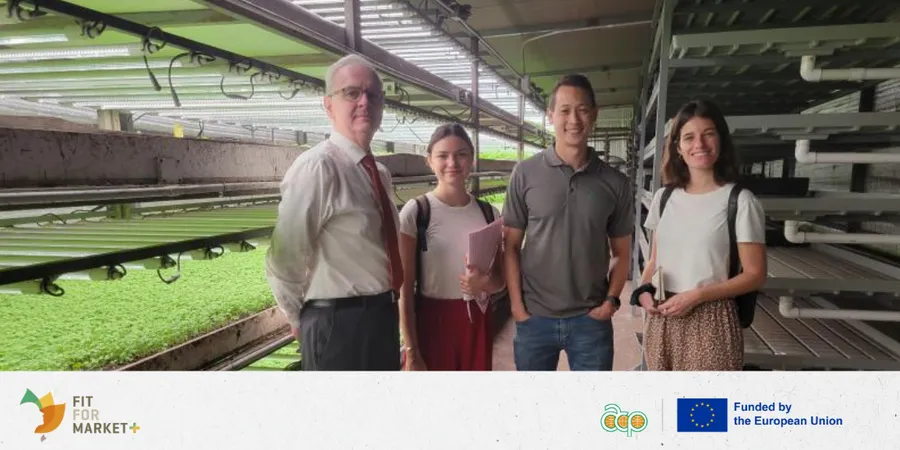
In September 2025, EPILIMNION Ltd., marketing its products under the CRISP brand, benefited—through the FFM+ programme—from in-depth technical support aimed at optimising and expanding its greenhouse production capacity under tropical conditions in Trinidad and Tobago.Specialising in the production of baby greens, microgreens and herbs for local retail and food service markets, EPILIMNION has established itself in recent years as a credible local alternative to imported products, notably during the COVID-19 pandemic. In response to rapidly growing demand, the company is now seeking to increase production volumes while improving the efficiency and sustainability of its production systems. Although it already operates climate-controlled greenhouses and NFT hydroponic systems, fine-tuning these infrastructures to tropical constraints remains a key challenge.The support enabled a comprehensive assessment of existing infrastructure—including greenhouse design, ventilation, shading, climate management and irrigation—and the definition of an expansion plan incorporating a new NFT-based hydroponic lettuce production unit. It also led to the development of a robust financial model covering investment and operating costs over a ten-year period, with an estimated return on investment of 346% over five years. In addition, a target organisational structure and a training plan were proposed to sustainably strengthen the company’s technical and environmental management capacities.This support now provides EPILIMNION with a structured roadmap to improve the climate performance of its greenhouses, enhance the sustainability of its operations and prepare for a well-managed scale-up.Next steps will focus on targeted technical follow-up to support the implementation of priority recommendations—particularly in relation to ventilation, humidity management and environmental performance—as well as on finalising the business plan and supporting investment mobilisation. Recent discussions with an investment fund already familiar with the company open up concrete financing prospects and further confirm the project’s strong potential.This activity is supported by the Fit For Market Plus (FFM+) programme, implemented by COLEAD within the Framework of Development Cooperation between the Organisation of African, Caribbean and Pacific States (OACPS) and the European Union. This publication receives financial support from the European Union and the OACPS. The content of this publication is the sole responsibility of COLEAD and can in no way be taken to reflect the views of the European Union or the OACPS.
 News
News
Coldiron in Zimbabwe: strengthening the bankability and strategic use of a business plan
As part of the Fit For Market Plus (FFM+) programme, COLEAD supported Coldiron, a horticultural company based in Zimbabwe, through post-training support aimed at strengthening the quality, credibility and operational relevance of its business plan. This support followed the company’s participation in the training course “Create a business plan for your agribusiness.”The main objective of this support was to assist Coldiron in reviewing and finalising its business plan, ensuring that it accurately reflects the company’s current operations and meets the expectations of financial institutions. More specifically, the support helped to further clarify concepts covered during the training, provide tailored feedback on the existing document, support its practical implementation, and identify next steps for its use in financing applications and strategic business development.The support was delivered through a combination of in-person and remote exchanges. It began with a scoping phase at Coldiron’s production sites in Marondera and Harare, followed by an in-depth review of the draft business plan. A feedback session then allowed for the alignment of financial projections, clarification of financing needs, and the definition of a shared roadmap.Field-level exchanges also helped identify opportunities for operational improvements, including the digitalisation of monitoring systems, the formalisation of quality control procedures, and the strengthening of financial and commercial data collection.Following this support, Coldiron now has a significantly improved business plan that is more structured, clearer and better oriented towards access to finance. The management team expressed strong commitment to using the business plan as a strategic tool to support growth and market access. The completion of several key components — including detailed budgets, multi-year cash flow projections and complementary market data — will be the next step to ensure the plan’s full bankability and to support the company’s development ambitions, particularly in regional and international markets.This activity is supported by the Fit For Market Plus (FFM+) programme, implemented by COLEAD within the Framework of Development Cooperation between the Organisation of African, Caribbean and Pacific States (OACPS) and the European Union. This publication receives financial support from the European Union and the OACPS. The content of this publication is the sole responsibility of COLEAD and can in no way be taken to reflect the views of the European Union or the OACPS.