
Cultivating
Sustainable Futures
 News
News
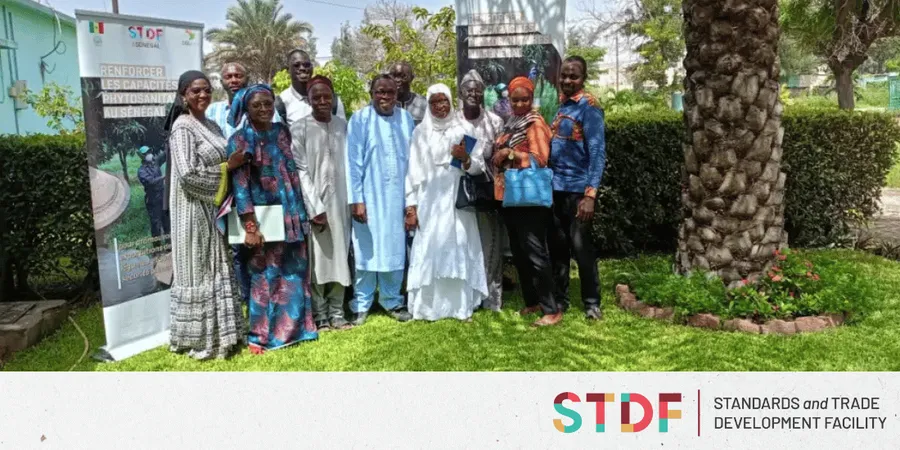
Gender and phytosanitary capacity building in Senegal: indicators aim to ensure that women benefit fully from the opportunities offered by the project
The STDF/PG/946 project "Strengthening phytosanitary capacities to promote exports of horticultural products from Senegal" was officially launched on 6 June. Led by COLEAD in partnership with the Directorate of Plant Protection (DPV) of the Senegalese Ministry of Agriculture, Food Sovereignty and Livestock and funded by the STDF, this three-year project aims to improve and strengthen Senegal's phytosanitary system to bring its practices in line with international standards.In addition to its technical and economic objectives, the project incorporates an ambitious and proactive approach to gender equality, an essential aspect of making agriculture more inclusive and sustainable.Gender mainstreaming: a cross-cutting priorityAn in-depth analysis carried out prior to the project identified several levers for integrating a gender dimension into activities. These results led to the inclusion of specific indicators in the logical framework of the project, including Legal aspect: explicit inclusion of a gender dimension in the revision of phytosanitary legislation to ensure that the policies adopted take into account the specific characteristics and needs of women in the agricultural sector. Skills development: ensuring women’ access to trainings (by inclusion practices) and monitoring data on training participants by gender in order to measure the impact of activities on the empowerment of women and men. Partnerships and awareness-raising: systematic integration of gender awareness-raising in meetings with stakeholders to raise collective awareness and promote equality. These indicators aim to ensure that women, who make up a significant proportion of the agricultural workforce in Senegal, benefit fully from the opportunities offered by the project.As a reminder, the project is based on four main axes: Reviewing the legal framework: drafting inclusive legislation in line with international standards. Strengthening operational capacities: developing the processes, and resources needed for effective phytosanitary management. Training and skills development: Establishing training programmes tailored to the specific needs of the horticultural sector (both public and private). Communication and cooperation: mobilising stakeholders and promoting inter-institutional cooperation with a gender awareness component. Expected impact: fairer and more competitive agricultureBy integrating a gender-sensitive approach, the project aims to make Senegal a regional model for inclusive phytosanitary system. The aim is to ensure that women and men contribute equally to the modernisation of the agricultural sector, while benefiting from the economic and social spin-offs.With this approach, Senegal is not only strengthening its export potential, but is also resolutely moving towards the Sustainable Development Goals (SDGs), in particular gender equality (SDG 5) and the promotion of sustainable and inclusive agriculture (SDGs 2 and 12).These activities were supported by the STDF/PG/946 project. The STDF/PG/946 project is implemented by COLEAD, funded by the STDF. This communication has been produced with the financial support of the STDF. Its contents are the sole responsibility of COLEAD and can under no circumstances be regarded as reflecting the position of the STDF.
 News
News
Regulatory changes for honey exports to the EU: 67 partner countries interested in AGRINFO information
In November 20-24, AGRINFO organised three webinars to present a new guide developed by the programme on the regulations governing the export of honey to the European Union. This outlines a number of recent regulatory changes affecting countries wishing to export honey to the EU.The webinars were organized on a regional basis and included: 25 November: Session in French for African countries 26 November: English session for ACP countries 27 November: Session in English for Asian, Pacific and Central European countries. A session in Spanish for the Caribbean and Latin America is planned for early 2025.The webinars focused on : the EU honey market the five key regulatory areas covering exports of honey to the EU, with details of recent changes and timeframes. Participants were encouraged to subscribe to the AGRINFO to ensure that they remain up-to-date with any future amendments. ParticipationThese three events were well received with 394 registrations from 67 countries and 258 participants. Thirty of these countries are not yet authorised to export honey to the EU and additional information is being provided on request to assist them countries in their compliance procedures.On 25 November there was considerable interest from Côte d'Ivoire, Madagascar, Togo and Morocco, notably on the issue of food safety and the registration of export establishments. On 26 November Egypt, Kenya and South Africa discussed in particular the process for their countries to be added to the list of approved exporters. Finally, on 27 November, several Pacific countries joined the webinar as well as Armenia, Malaysia, the Philippines and Pakistan, Moldova and Ukraine. Questions mainly concerned the new legislation on the use of antibiotics and products made with honey.Follow-up actions Armenia: A dedicated webinar was organised on 4 December with translation into Armenian. Morocco: A meeting was held on 3 December with the Moroccan export agency to make better use of AGRINFO services. Ethiopia: On 13 December, a training session was organised for the Ethiopian authorities on the use of TRACES, in particular for the listing of establishments. The recording of the 26 th November session is available HEREThe Guidance “Exporting Honey to the European Union” is available HEREThe Guidance is also available in French and SpanishThese activities were supported by the AGRINFO programme. The AGRINFO programme is implemented by COLEAD and funded by the European Union (EU). This communication has been produced with the financial support of the EU. Its contents are the sole responsibility of COLEAD and can under no circumstances be regarded as reflecting the position of the EU.
 News
News
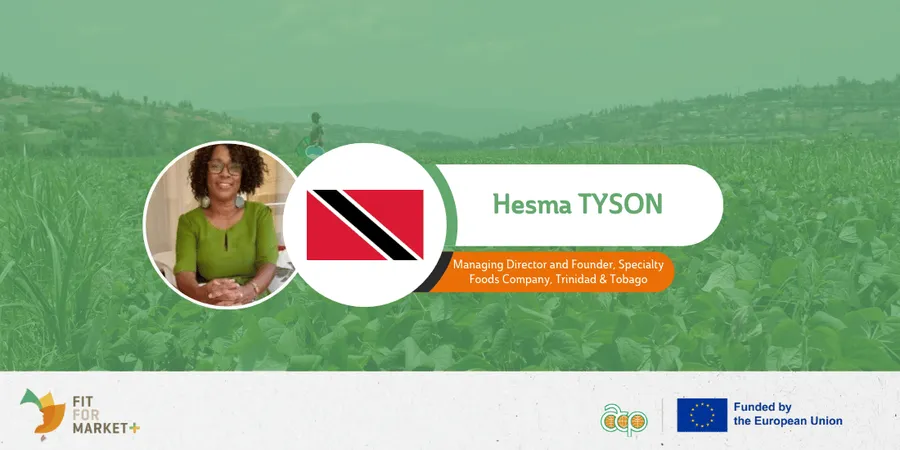
Hesma Tyson inspires us and you?
Hesma Tyson, Managing Director and Founder, Specialty Foods Company, Trinidad & TobagoHesma Tyson founded Caribbean Specialty Foods Company Limited in 2008 to change the way hot sauces are made, without artificial ingredients, and to see her favourite condiment on the international stage. Hesma has worked in the food industry for over 15 years. She was inspired by the experience of mixing sauces in her home kitchen. The company was formed after three years of research and development, during which time the founder had no formal training in food technology, but eventually managed to produce her first batch of natural, shelf-stable hot sauce. Today, Caribbean Specialty Foods produces unique, natural and vegan Caribbean condiments, including four ranges of hot sauces, three ranges of dips and green seasonings - all free from artificial colours, preservatives and flavours.The company has two main aims: To produce natural Caribbean condiments. To market the products in the CARICOM region, North America and the EU. Relationships with producers, youth and womenThe company uses locally and regionally available raw materials and supports local farmers in marketing their products. Its raw materials come from farmers in the area where its factory is located, in Moruga, a rural farming community. In the year the factory began production, founder Hesma established the Moruga Sauce Farmers Group, made up of farmers who agreed to supply products to tenants of the Moruga Agro Processing Industrial Park. The company also recruits its factory staff from the local community.In addition to her role as managing director of Caribbean Specialty Foods, Hesma is a mentor for Youth Business Trinidad and Tobago, where she helps young entrepreneurs set up businesses in the agri-food industry. She also consults with start-ups and MSMEs looking to expand their businesses.As an entrepreneur, Hesma has joined the She Trades TT movement, launched by the International Trade Centre (ITC) to improve economic opportunities for women around the world and promote fairer, more inclusive global trade.Winner of the 2024 Entrepreneur of the Year AwardOn 7 November 2024, the Trinidad and Tobago Chamber of Commerce and Industry presented Hesma with the 2024 Entrepreneur of the Year Award. This is the most prestigious award given by the country's business community and has been well received by players in the SME agri-food sector.Hesma has also been selected to take part in the Celebrating Women in Entrepreneurship event organised by She Trades to mark International Women's Day in 2023.The Speciality Foods Company is a member of the Agrinnovators.org community. As part of the FFM+ programme, the company participated in the IICA trade mission to the Caribbean in November 2022, organised jointly with COLEAD. Hesma Tyson presents her company:
 News
News
The SIA (Sanidad e Innovación Agropecuaria) project, a collaboration between COLEAD and the Dominican Ministry of Agriculture, has made significant progress since its launch this year
Funded by the Inter-American Development Bank (IDB), the initiative aims to transform the food safety management and control system and improve the competitiveness of the Dominican Republic's agricultural sector.Progress and achievementsBy the end of the first quarter 2025, all 46 planned activities will have started , ensuring a structured and rapid implementation of the project's objectives.The project team consists of 17 experts from six countries (Chile, Spain, Belgium, Argentina, Honduras and the Dominican Republic) who bring a wealth of knowledge and experience to the initiative. Their expertise has been instrumental in organising high-impact workshops on agricultural health intelligence, SWOT analyses of regulatory frameworks and the development of institutional strategies around the following:Modernising SPS infrastructure: Efforts are underway to improve the country's SPS systems, in particular by updating regulations and developing a comprehensive national SPS policy.Strengthening surveillance: Sanitary and phytosanitary surveillance programmes will be strengthened to maintain and improve the phytosanitary status of the Dominican Republic.Innovation and technology transfer: Advanced technologies and practices will be introduced to increase agricultural productivity and environmental sustainability.Making a lasting impactThe SIA project not only addresses current agricultural challenges, but also paves the way for a more resilient, sustainable and competitive future for the Dominican Republic's agricultural sector. By focusing on good agricultural practices, certification and evidence-based policy development, it is promoting long-term improvements in food security and market access. COLEAD remains committed to supporting the Dominican Republic on its path to sustainable agricultural growth. The SIA project continues to demonstrate how strategic partnerships, innovation and capacity building can lead to significant change in the agri-food sector.
 News
News
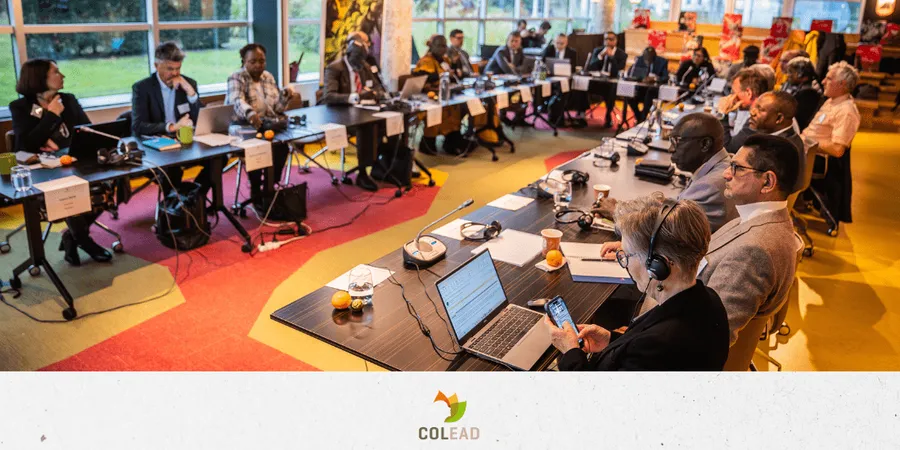
2024 Consultative Committee: COLEAD and its partners are embarking on a participatory process to develop a 'COLEAD 2030 Strategy' to accelerate and maximise the positive impact of its actions on the SDGs
The COLEAD 2024 Consultative Committee, held on the 4th of December in Brussels and online, in a shorter format than in 2023 but extended to include more partners, marked an important strategic step by launching a participatory process to develop the COLEAD 2030 strategy. Bringing together key stakeholders (board members, technical and financial partners and COLEAD management) in an international context marked by geopolitical and climate challenges, this committee confirmed the priorities for strengthening COLEAD's impact on the Sustainable Development Goals (SDG).The review of COLEAD's activities in 2024, presented on this occasion, highlighted the progress made, particularly in terms of concrete results in the implementation of programmes and improvements in the technical resources available to partner beneficiaries, as well as the strengthening of the organisation and, in particular, its network of communities. Special attention was also paid to projecting the planned development of the organisation in the coming years, in order to improve the efficiency and impact of its actions on the SDG. To effectively prepare for the period leading up to 2030, COLEAD has employed the Theory of Change to illustrate its holistic approach. This framework not only clarifies the organization’s SDG-related actions at macro, meso, and micro levels but also highlights the expected contributions of the stakeholders who will be engaged and consulted.The strategic alignment of COLEAD's actions with global EU initiatives, such as the Global Gateway and the Green Deal, was confirmed at the CC 2024 by the various partners represented (EC, OACPS, AFD, FAO, STDF-WTO…). The EU also encouraged COLEAD to further increase its impact and relevance and invited it to work more closely with innovative international funding organisations such as IFAD and the World Bank.A call to action was issued to all stakeholders represented in the CC to actively participate in the iterative process of developing the COLEAD 2030 strategy, which will start in early 2025. This will essentially be an invitation to contribute to the co-construction of an ambitious, inclusive strategy, aligned with local and global priorities, over several months through an online interface and consultations.Overall, the Committee confirmed - if confirmation were needed - the importance of partnerships, collaborative approaches and stakeholder input in building an ambitious, inclusive and impact-driven strategy. Discussions also highlighted the need for COLEAD to continue to strengthen itself in order to cope with the growing complexity and thus reinforce its role as a key player in the sustainable development of agri-food systems. At the end of this CC 2024, COLEAD looks forward with optimism to defining its 2030 strategy and consolidating its mission for greater global impact.
 News
News
COLEAD selected to support Groupe Omer-Decugis & Cie implement a comprehensive sustainability reporting framework
The Corporate Sustainability Reporting Directive (CSRD) is a European directive that requires companies to publish comprehensive reports on their sustainability performance. It expands and strengthens the requirements of the previous Non-Financial Reporting Directive, in particular by introducing dual materiality analyses, covering both the impact of the company's activities on the environment and society, and the risks these issues pose to the company itself. The CSRD will be phased in by 2026 and already affects thousands of companies in the European Union. This obligation is part of a broader vision of the European Union to align economic activities with the Sustainable Development Goals (SDGs) and the commitments of the Green Deal for Europe.A strategic partnership between COLEAD and Groupe Omer-Decugis & Cie (Groupe OD)Within this demanding regulatory framework, Groupe Omer-Decugis & Cie has entrusted COLEAD with the development of a sustainability reporting framework. This partnership is based on a shared ambition: to go beyond legal obligations and turn these constraints into opportunities for sustainable progress. The OD Group aims to become a benchmark in sustainability, integrating social and environmental objectives into its practices and creating a positive impact in all its activities.Mission objectivesCOLEAD's mandate is to establish a robust and operational reporting framework in line with the requirements of the CSRD. This framework includes : A detailed mapping of issues and impacts using a dual materiality approach ; The definition of meaningful and contextualised indicators, accompanied by ambitious and achievable targets ; Involving internal and external stakeholders to ensure consistency and buy-in. A positive impact for all stakeholdersThe OD Group's ambition is clear: to capitalise on its historic commitment to sustainability to strengthen its leadership position while contributing to a better world. With COLEAD's support, the Group intends not only to meet its regulatory obligations, but also to structure its approach for the long term to maximise its social and environmental impact.The year 2025 will mark not only the 175th anniversary of Groupe Omer-Decugis & Cie, but also a new stage in its commitment to integrated and exemplary sustainability. Through this strategic collaboration, the Group is positioning itself as a key player in the transition to a more responsible future.At the same time, COLEAD is strengthening its expertise in supporting international companies that need to integrate new European regulatory requirements and transform a legal obligation into a sustainable development project for all stakeholders, especially for vulnerable communities of suppliers of agrifood products in low- and middle-income countries.
 News
News
Improving crop protection practices in Uganda and Rwanda: building local capacity through training of trainers
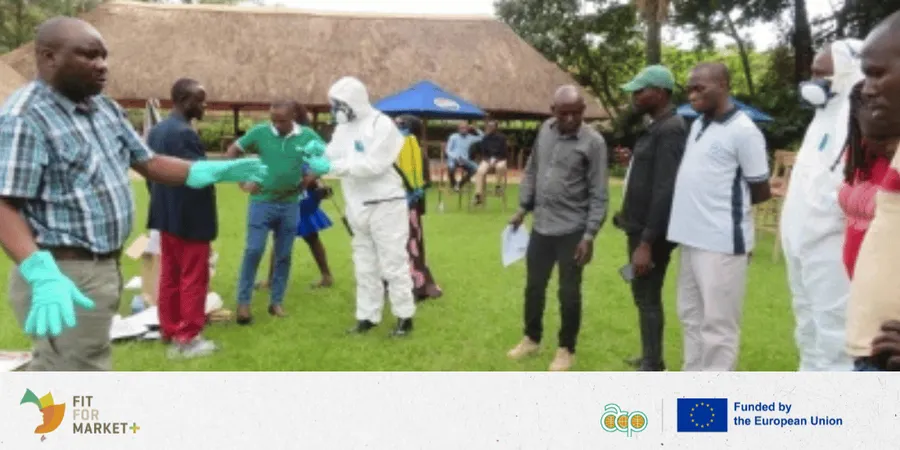
Through the Fit For Market Plus (FFM+) programme, COLEAD works with small and medium enterprises (SMEs) in the horticultural sector. This has recently been the case in Uganda and Rwanda as part of initiatives to improve agricultural practices.In response to requests from these SMEs, COLEAD has recently developed targeted training courses to strengthen crop protection practices and promote the safe use of crop protection products.Building local capacity through training of trainersRecognising the importance of sustainable knowledge transfer, COLEAD has developed a Training of Trainers (ToT) programme to equip in-house trainers and extension workers in these SMEs. The programme is based on the innovative methodology developed by COLEAD, the “training workshop in the field”.Many of the participating SMEs also expressed the need to improve the teaching skills of their supervisors so that they could train the producers they work with more effectively. COLEAD responded to these needs by including pedagogical modules in the training, focusing on adult learning techniques and their practical application.Training highlightsThe ToT workshop, held in November, brought together 17 in-house trainers from Uganda and Rwanda for five days of intensive training in Kampala. Participants gained hands-on experience of best practice in crop protection and safe pesticide use, enabling them to pass this knowledge on to farmers in their networks.A collaborative effortThe success of this training course was due in particular to the expertise of the two trainers, Ms Cate NAKATUGGA from Uganda and Mr Wesley Cheruiyot from Kenya. Their commitment and positive feedback played a key role in the success of the workshop.In addition, COLEAD representatives Marian RENKENS and Kelvin MAINA, who were present during the training, had the opportunity to present COLEAD's wider initiatives and to interact directly with the participants. Their presence enriched the sessions and provided valuable feedback from the participants.Impact and next stepsThis ToT initiative illustrates COLEAD's commitment to building local capacity and promoting sustainable agricultural practices in FFM+ ACP partner countries. By training trainers within SMEs, the FFM+ programme creates a multiplier effect that ensures the dissemination of knowledge and the use of safe and effective pest management practices in horticultural value chains.COLEAD would like to thank all participants, trainers and collaborators who contributed to the success of this training course. Together we are moving towards safer and more sustainable horticultural practices.This activity is supported by the Fit For Market Plus (FFM+) programme, implemented by COLEAD within the Framework of Development Cooperation between the Organisation of African, Caribbean and Pacific States (OACPS) and the European Union. This publication receives financial support from the European Union and the OACPS. The content of this publication is the sole responsibility of COLEAD and can in no way be taken to reflect the views of the European Union or the OACPS.
 News
News
Innovation: Valorisation of pineapple waste for animal feed Innovative trials launched in Benin
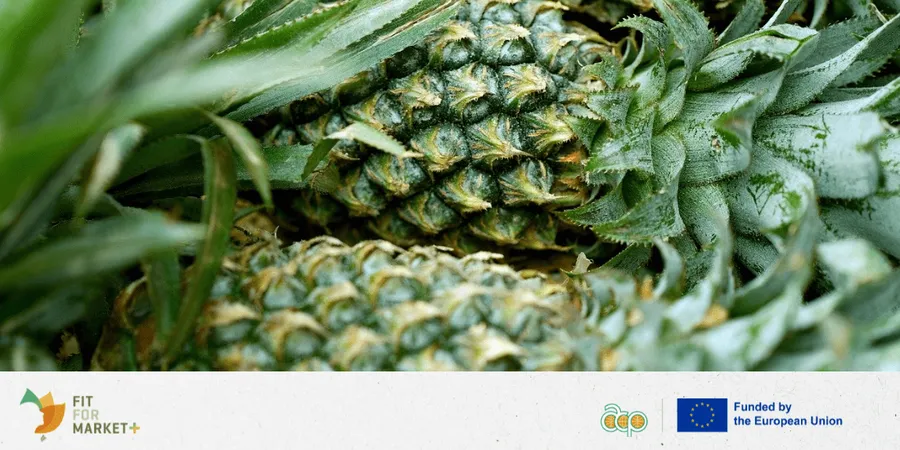
In an important step towards sustainable agriculture, a trial has begun in Benin to valorise pineapple waste from the juice industry. The initiative, part of the Fit For Market Plus (FFM+) programme, aims to convert pineapple by-products into nutritious animal feed, addressing both environmental challenges and economic opportunities.Pineapple (Ananas comosus) is an important crop in Benin and plays a key socio-economic role, creating jobs, particularly for women and young people, in fruit production and processing. However, these activities generate significant amounts of waste - including leaves, peels, crowns and pulp - which pose environmental and logistical challenges.In response to these challenges, IRA (Institut de Recherche Agricole), a COLEAD partner-beneficiary, sought support to explore the valorisation of these by-products. The ongoing trial focuses on assessing the nutritional value of pineapple waste and its potential use in animal feed for sheep and poultry. Key activities include determining nutrient composition, formulating balanced rations, measuring zootechnical effects and assessing economic and market viability.By converting waste into feed, this initiative will promote sustainable livestock production, reduce feed costs and provide an environmentally friendly solution to agricultural waste management. The results of the trial are expected to add value to Benin's agricultural sector, improving both economic and environmental sustainability.The project, supported by FFM+, underlines COLEAD's commitment to fostering innovative solutions in line with the United Nations Sustainable Development Goals (SDGs). If successful, the trial could serve as a model for similar waste valorisation efforts in other agricultural sectors.This activity is supported by the Fit For Market Plus (FFM+) programme, implemented by COLEAD within the Framework of Development Cooperation between the Organisation of African, Caribbean and Pacific States (OACPS) and the European Union. This publication receives financial support from the European Union and the OACPS. The content of this publication is the sole responsibility of COLEAD and can in no way be taken to reflect the views of the European Union or the OACPS.
 News
News
Recycling waste from the lychee industry in Madagascar
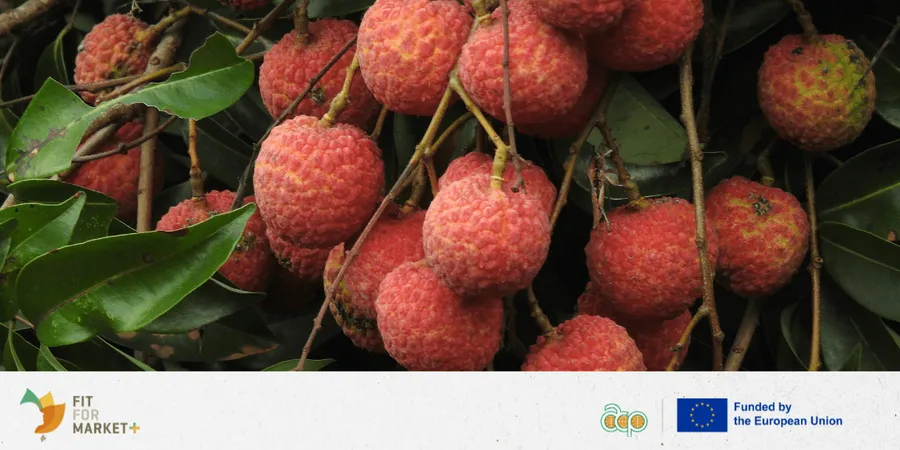
In October 2024, COLEAD through the Fit For Market Plus programme, initiated an innovative collective training course in Madagascar entitled "Assessment, reduction and recovery of waste from the lychee sector", aimed at improving the competitiveness of local companies while addressing environmental and social issues. This event is the first stage of a three-phase training project that will allow the knowledge acquired to be progressively adopted and applied directly in the participating companies.A three-stage training model Before the lychee picking campaign (October): introduction to the basic concepts of waste management and monitoring.During the lychee campaign (November-December): on-site measurement of waste quantities.After the campaign (January 2025): Analysis of the data collected and exploration of waste reduction and recovery solutions.Why this approach?The main objective is to enable companies in the lychee sector to identify losses and turn waste into economic and environmental opportunities.Studies have shown that optimising waste management in the lychee sector canreduce product lossesprovide economic recovery solutions such as compost or energy productionminimise environmental impacts, particularly soil and water pollution.Promising first resultsIn the first phase, participants were trained to understand the economic and environmental benefits of better waste management, to identify the types and causes of waste along the production chain, and to set up a precise monitoring system using record sheets. The knowledge gained from this training will enable the participants to implement systems adapted to their operational realities.The second phase is now underway. It includes remote coaching to help companies collect data during the campaign. The data collected will be used to assess the best reduction and recovery options, taking into account technical and financial realities.Participants will meet in January 2025 toanalyse the data collectedexplore appropriate waste recovery solutionsshare experiences and discuss future training and support needs.This initiative is fully in line with COLEAD's commitment to the transition to more sustainable agri-food systems. By helping stakeholders in the lychee sector to improve their practices, COLEAD is contributing to the achievement of the Sustainable Development Goals, particularly in terms of responsible resource management and reducing environmental impacts.This activity is supported by the Fit For Market Plus (FFM+) programme, implemented by COLEAD within the Framework of Development Cooperation between the Organisation of African, Caribbean and Pacific States (OACPS) and the European Union. This publication receives financial support from the European Union and the OACPS. The content of this publication is the sole responsibility of COLEAD and can in no way be taken to reflect the views of the European Union or the OACPS.
 News
News
Flashback 2006 : “80% of the experts assigned by the PIP are now local experts”
Source : PIP Magazine n° 10, December 2006“Today, 80% of the services funded by the PIP are provided by ACP consultants, compared to 20% at the programme’s start-up. ACP expertise is thus massively replacing European expertise. This situation enables companies to find economically viable solutions to their problems at the local level and to build the anticipation capacity of stakeholders in the ACP fruit and vegetable sector. The local experts also offer the advantage of being very familiar with production conditions in the country and the local environment.“This strategy aimed at enhancing the value of national expertise by ensuring a transfer of knowledge and skills is justified, in my view. It enables local companies to find qualified and reliable service providers on location”, explains Olga Kouassi, a consultant in Côte d’Ivoire. “And even after the programme’s conclusion, the expertise will be there to guarantee the continuation of what has been done and at a cost companies can pay”, she concludes. Frank Dumas, Quality Director for Sélectima, a company based in Côte d'Ivoire that has been receiving PIP support since 2003, also considers it vital to have quality advice locally.“The local experts carried out their assignment very well. They have met our expectations. They were all highly competent and knew their subject perfectly. Their human qualities, their attentiveness to our concerns and their availability made them very valuable advisors for our company”, he confirms. Helping companies become better organised and more competitive The introduction of traceability in companies has been and remains one of the PIP's priority projects.“With the support of the PIP, we set up an effective traceability system that enables us to comply with regulatory requirements and our clients' needs. In the event a client has a complaint, we can easily trace the origin of the problem and take remedial action. We see this as a tool for product safety and quality”, explains Alexander Agudelo of the Compagnie des Bananes de Côte d’Ivoire. A traceability software tool specifically adapted to the needs of ACP producers has also been developed by the PIP's experts and made available to companies. Firms in Burkina Faso, Kenya, Ghana, Senegal, Cameroon and Uganda have already adopted it. To help ACP producers grow fruit and vegetables in accordance with good practices and the requirements of European regulations on maximum residue limits (MRLs), the PIP has drawn up reference crop protocols for around 10 crops. These protocols or production guides have been validated through field testing carried out in collaboration with the main manufacturers of plant protection products and the ACP producers themselves.In parallel with the preparation and validation of the reference crop protocols, the PIP coordinates a registration adjustment programme for the ACP states. In addition to complying with European sanitary and phytosanitary standards, the plant protection products recommended by the PIP must also be authorised for use in the countries where the fruit and vegetables are produced. Following on from the Permanent Inter-state Committee for Drought Control in the Sahelian Zone (ICDCS), which already has a harmonised registration procedure, two new regional pesticide registration bodies have been set up in Africa in recent months with the support of the COLEACP/PIP (…)”.The Pesticides Initiative Programme (PIP) was financed by the European Development Fund. The ACP Group of States and the European Commission entrusted responsibility for its implementation to COLEACP (today COLEAD).
 News
News
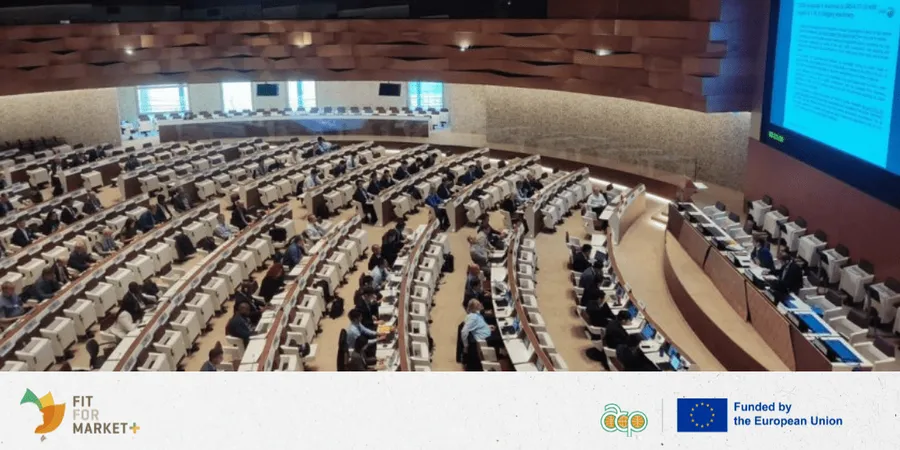
COLEAD at the UNECE Working Party (WP7) in Geneva
COLEAD continues its active participation in the standards-related work on Quality Standards for Fresh Fruit and Vegetables.In November 20-24, delegates representing the member states of WP7 reviewed and adopted a number of proposed standards that had been developed or revised by the four specialised sections during the year, coveringFresh fruit and vegetablesDried fruit and nutsSeed potatoesMeatRound table on a sustainable and efficient food systemA highlight of this session was the Round Table on Sustainable Food System and Resource Efficiency. Discussions focused on advances in digitalisation, capacity building and the management of agricultural losses and food waste.In this context, COLEAD (Denis Felicité Zulma) through the FFM+ programme, presented its recent achievements in these areas:The creation of a Job Descriptions Framework to promote agricultural careers.The ISO 21001 certification of its training system, which attests to the quality and impact of its training courses for professionals.The development of a training module dedicated to the development of training plans within companies.Organising thematic webinars highlighting the success stories of fresh and processed fruit and vegetable companies, in partnership with professional organisations in ACP and OECD countries.Addressing agricultural losses and exploring economic opportunities for their recovery.Adoption of new standardsA number of important standards were adopted at the meeting:Sweet potato, which will be the subject of an OECD interpretative brochure.Dried rose hips, adopted as a recommendation for a period of one year.The interpretative brochure on cashew nuts.Next step for dried mangoFAO has announced that the proposal to introduce a new nomenclature for dried mango has been accepted by the Nomenclature Review Committee of the Harmonised System of the World Customs Organisation (WCO). The review is scheduled for early 2025, with a likely entry into force in 2028.Forthcoming meetingsThe Specialised Section on Fresh Fruit and Vegetables will meet in Geneva from 23 to 25 April 2025.The Working Group on Agricultural Quality Standards will meet in Geneva from 17 to 19 November 2025.The final report of the session is available here.© UNECEThis activity is supported by the Fit For Market Plus (FFM+) programme, implemented by COLEAD within the Framework of Development Cooperation between the Organisation of African, Caribbean and Pacific States (OACPS) and the European Union. This publication receives financial support from the European Union and the OACPS. The content of this publication is the sole responsibility of COLEAD and can in no way be taken to reflect the views of the European Union or the OACPS.
 News
News
Highlights of the 2024 survey of partners benefiting from COLEAD programmes
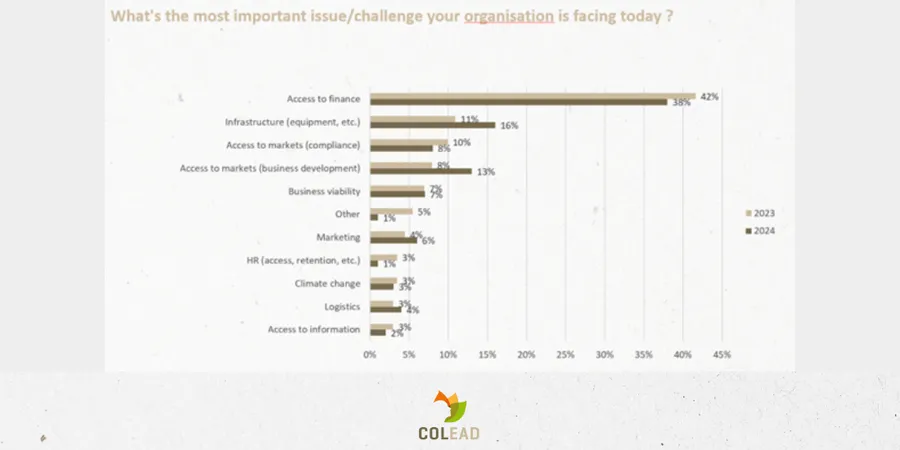
At COLEAD, we value the insights and feedback of our partner-beneficiaries (PBs) i.e. partners who have benefited from a programme implemented by the organization, to refine our practices and enhance the impact of our support. Our annual Pulse Survey, conducted each summer, continues to serve as a cornerstone for assessing our performance and aligning our efforts with the evolving needs of our stakeholders.Here are the key findings from the 2024 survey:Enhanced engagement: This year, the survey was sent to all organisations with a signed Development Project at the time of launching the survey (all programmes/projects). The survey reached 557 organizations across 32 countries, achieving a notable 33.2% response rate—a significant increase from 23% in 2023. Of the respondents, 59% represented “new” organizations (partners supported for less than three years), bringing a fresh perspective to our evaluation.Positive trends in support quality: The general quality of COLEAD’s support was rated at an average of 7.32 out of 10, improving to 7.93 for those supported for more than three years. Respondents highlighted the professionalism, responsiveness, and reliability of the COLEAD team.Key challenges: Access to finance remains the primary challenge, followed by infrastructure needs. These findings reaffirm the importance of our focus on enabling market access and providing financial and technical resources to PBs.Significant impacts: Partner-beneficiaries cited key benefits from COLEAD’s support, including improved access to markets, enhanced skills, networking opportunities, and better product quality. Notably, contributions to the UN Sustainable Development Goals (SDGs) were particularly impactful on SDG 12, promoting responsible consumption and production.Strong advocacy: Respondents scored 8.21 out of 10 on their likelihood to recommend COLEAD to fellow professionals, underscoring the tangible improvements in skills and outcomes facilitated by our support programs.COLEAD remains committed to leveraging your feedback to strengthen our programmes. Thank you to all who participated in this year’s survey! Together, we continue to grow and achieve sustainable progress across the agri-food sector.Take the Survey Next Year! Missed this year’s survey? Stay tuned for the next edition in summer 2025. Your voice is essential in shaping COLEAD’s journey forward.