
Cultivating
Sustainable Futures
 News
News
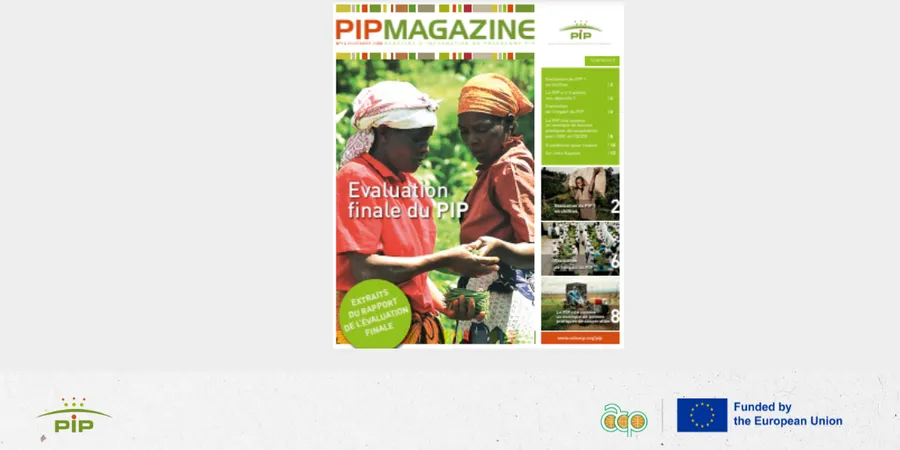
Flashback 2008 : “The PIP cited as an example of good practice in technical cooperation by WTO and OECD”
Source PIP Magazine November 2008“A study was organized jointly by the WTO SPS Committee, Standards and Trade Development Facility (STDF) and the Organisation for Economic Cooperation and Development (OECD) Report / September 2008). The research was based on replies from WTO Members and the OECD Development Assistance Committee Contact Points in response to a request for information on good practice in SPS-related technical cooperation. Members were asked to identify one or more SPSrelated technical assistance projects which could be considered as examples of good practice. A total of 24 projects were nominated by 19 organizations. PIP was selected for in-depth analysis as an example of good practice. * (Good Practice in SPS-Related Technical Cooperation East Africa Region Report / September 2008)Good practice in project design Across beneficiaries in the private and public sectors there was strong support for the design of the PIP. The project was seen as addressing a real problem – the potential threat to exports of fresh produce to the EU. While it was recognized that the activities of the PIP were constrained by its design, the PIP was considered more flexible than other projects. One of the recurring themes in discussions with beneficiaries was the level of engagement of the PIP with the private sector; this was considered a positive attribute of the project among respondents in both the private and public sectors. The long duration of the PIP was also considered a strength; the fact that the project had secured funding and a defined schedule of activities for five years was seen as presenting real opportunities for capacity enhancement.Good practice in project implementation Overall, the implementation of the PIP was evaluated positively by beneficiaries, indeed it was considered to stand out as an example of good practice. In particular, efforts to engage with a wide range of stakeholders across the public and private sectors and at both the individual and collective levels were lauded. Further, activities had been adjusted over time according to ongoing learning processes and identified (and revised) priorities. The PIP employed a demand-driven approach which enabled the support provided to be adapted to the needs of particular beneficiaries, who were also able to play a role in designing the assistance they received.At the same time, the fact that beneficiaries had to apply for support and write formal applications meant that there was some upfront cost and effort that eliminated those who did not have the basic minimum level of preexisting capacity. Support to industry task forces and the development of local service provider capacity was also seen as positive (…)”The Pesticides Initiative Programme (PIP) was financed by the European Development Fund. The ACP Group of States and the European Commission entrusted responsibility for its implementation to COLEACP (today COLEAD).
 News
News
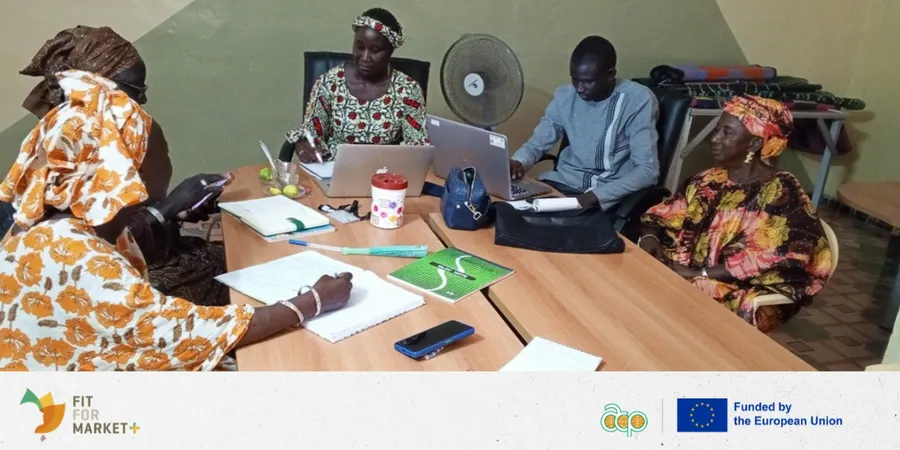
Empowering women entrepreneurs - example through coaching of 4 micro-enterprises in Casamance, Sénégal
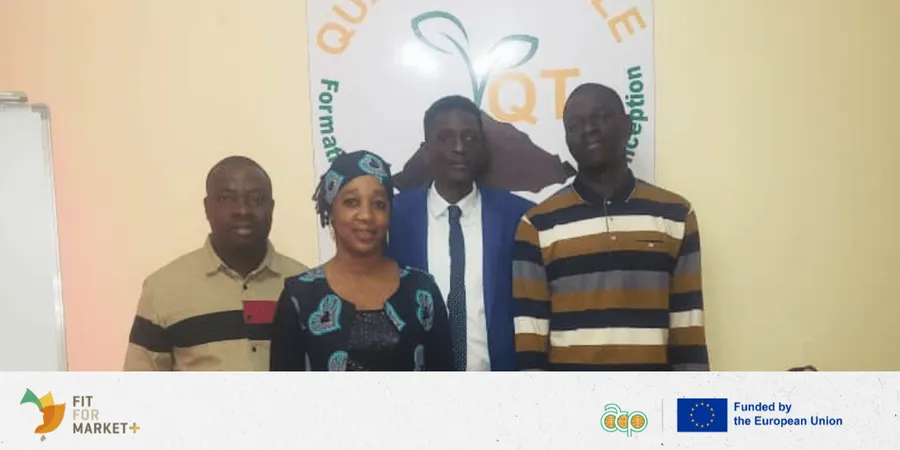
COLEAD is supporting four women-led micro-enterprises in Casamance, Sénégal, as part of the Fit for Market Plus (FFM+) programme. This initiative illustrates COLEAD's commitment to the economic empowerment of women in the agricultural sector.Concrete support for better financial managementBetween October and November 2024, a coaching mission was carried out to help these businesses apply the knowledge acquired during the "Accounting and Financial Management" training in December 2023. This support enabled the entrepreneurs to assess the profitability of their activities and to set up simplified management tools such as cost accounting, operating accounts and preliminary budgets.Promising resultsThese micro-enterprises specialise in processing local products such as dried mango, ginger and cereals. The support enabled them to identify strategies to improve their profitability. In particular, Hawa Kane, president of the Mame Sadou Kane EIG, became aware of the potential of her business and decided to intensify her agro-food production.To consolidate the gains, monitoring tools such as production protocols and income and expenditure records were introduced. These tools will enable the entrepreneurs to better structure their activities and make informed decisions to ensure the growth of their businesses.This approach highlights the development potential of this type of micro-enterprise. Regular monitoring remains essential to consolidate the results of the training and maximise the impact of these initiatives on the local economy. This initiative also illustrates COLEAD's commitment to supporting women-owned small and medium-sized agricultural enterprises to strengthen their resilience and competitiveness.This activity is supported by the Fit For Market Plus (FFM+) programme, implemented by COLEAD within the Framework of Development Cooperation between the Organisation of African, Caribbean and Pacific States (OACPS) and the European Union. This publication receives financial support from the European Union and the OACPS. The content of this publication is the sole responsibility of COLEAD and can in no way be taken to reflect the views of the European Union or the OACPS.
 News
News
Djaïli Amadou Amal patron of the international poetry and song competition launched on 8 March by COLEAD "Women farmers cultivate sustainable futures"
Would you like to take part? Click hereTo mark the International Year of Women Farmers, proclaimed by the United Nations for 2026, COLEAD is launching ‘Voices from the Earth”, a global poetry and song competition, which aims to celebrate the essential role of women farmers in food security and rural development. The 2025/26 theme is therefore: ‘Women farmers cultivate sustainable futures’, fully in line with both the theme chosen by the United Nations and COLEAD’s mission.The competition benefits from the exceptional patronage of Mrs Djaïli Amadou Amal for its launch, a Cameroonian woman of letters internationally committed to the cause of women.Objectives of the 2025/26 competitionThe main objective of “Voices from the Earth” is to help give a voice to those who are working towards a better world for human beings and their social, cultural and economic environment, and in particular the voice of the producers who feed humanity. More specifically, the initiative aims to contribute to:Raise awareness: Emphasise the importance of women farmers in reducing hunger and promoting sustainable economic, societal and environmental development.Celebrate: Honour their committed work and their driving role in the sustainable development of global agriculture.Inspire: Encourage and inspire the world to speak out in defence and promotion of the work of agricultural producers.Unite:Create a global platform for sharing experiences, cultures and values around a shared vision for a better and fairer world.Official launch on International Women’s Day, 8 March 2025The competition will be open from 8 March 2025 to all persons, with no age limit or geographical location. Participants may submit their work in one of the following categories:Poetry: Original texts in free or regular verse honouring female farmers and entrepreneurs in a sustainable world.Song: Original song lyrics or musical compositions honouring female farmers and entrepreneurs in a sustainable world.A jury of experts in agriculture, art and communication will review the submissions based on their originality, relevance and impact.Awards and recognitionWinners will receive special prizes, promotions and international events in 2026. The best poetry and song texts will be published in a book.Why and how to participate?This competition offers a unique opportunity for authors to contribute to a global movement aimed at highlighting the essential roles of women in agriculture and promoting the values of solidarity, diversity and sustainability. It’s only a short step from agriculture to culture!Let’s celebrate women farmers all over the world and their invaluable contributions!To participate, just click hereMore information about the competition rules here.
 News
News
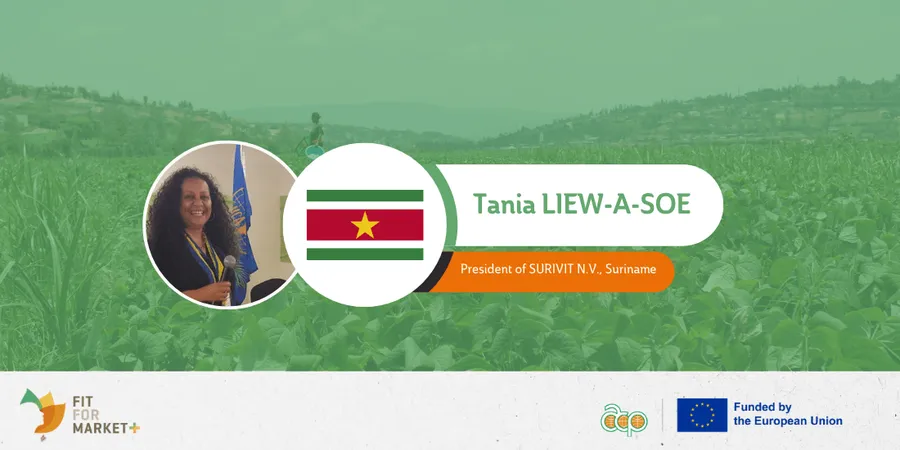
Tania Lieuw-A-Soe inspires us and you?
Tania Lieuw-A-Soe, President of SURIVIT N.V., is a leading figure in social entrepreneurship in Suriname.SURIVIT N.V. is a thriving social enterprise specialising in cassava processing that embodies a model of commitment to food security, economic growth and the emancipation of women in rural areas.A career rooted in agricultureBorn into a farming family, Tania developed a passion for the land and entrepreneurship at an early age. After studying in Suriname and the Netherlands, she founded a company in 2004 that produced juices from local exotic fruits, which were distributed to Surinamese hotels and restaurants. This first experience of entrepreneurship laid the foundation for her future initiatives, all aimed at sustainable development and the empowerment of rural women.In 2013, Tania founded Wi! Uma Fu Sranan, Suriname's first women's farmers' cooperative, bringing together cassava farmers from the rural communities of Klaaskreek and Kapasikele. Now with 38 members, the cooperative's mission is to provide its members with comprehensive training in food production, processing, marketing and distribution.Wi! Uma Fu Sranan was behind the creation of SURIVIT N.V., a social enterprise that operates on an inclusive model. In 2020, the two companies inaugurated a modernised factory for processing cassava into high-quality gluten-free products such as flour, pancake and porridge preparations, and baby food that meets Codex Alimentarius standards. The factory currently employs 15 women.International recognition and strategic partnershipsTania Lieuw-A-Soe is also president of the Surinamese Network of Rural Women Producers (SUNRWP), which is part of the Caribbean Regional Network of Rural Women Producers (CANROP), and president of the Surinamese Farmers' Federation. For her achievements, she was named Entrepreneur of the Year in 2015 by the national ABC broadcaster.The initiatives she leads have attracted support from a variety of sources, including the Inter-American Development Bank (IDB), the European Union and international agricultural organisations. These partnerships have helped to modernise production equipment, improve packaging design and expand business opportunities, including exports to the Netherlands and Trinidad and Tobago.SURIVIT is a partner beneficiairy of the Fit for Market Plus programme and member of the agrinnovators.org platform.This activity is supported by the Fit For Market Plus (FFM+) programme, implemented by COLEAD within the Framework of Development Cooperation between the Organisation of African, Caribbean and Pacific States (OACPS) and the European Union. This publication receives financial support from the European Union and the OACPS. The content of this publication is the sole responsibility of COLEAD and can in no way be taken to reflect the views of the European Union or the OACPS.
 News
News
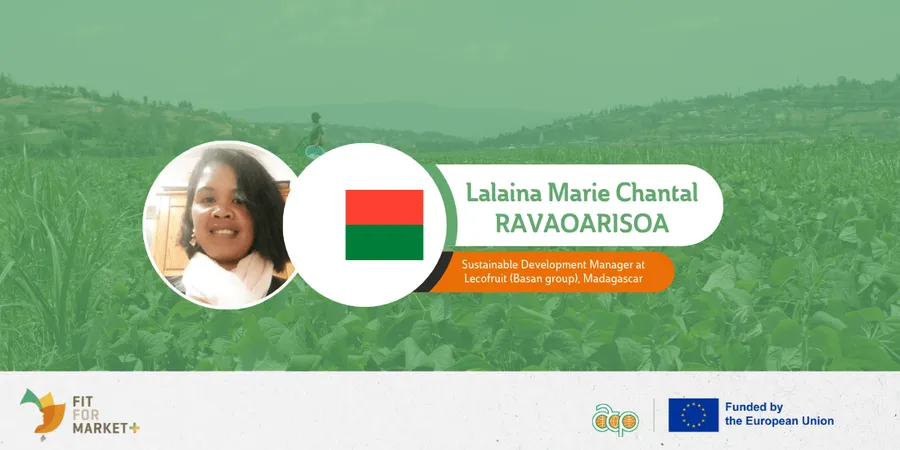
Lalaina Marie Chantal RAVAOARISOA inspires us and you?
Lalaina Marie Chantal is Sustainable Development Manager at Lecofruit (Basan Group), MadagascarIn the demanding landscape of modern agribusiness, Lalaina Marie Chantal RAVAOARISOA stands out as a passionate and committed player in sustainable development. With a clear vision and unwavering determination, she now holds the position of Sustainable Development Manager at Lecofruit, where she combines innovation, social impact and respect for the environment.For several years, Lalaina has embodied the vital link between economic issues and sustainability at Lecofruit, a company renowned for its commitment to responsible agriculture in Madagascar: driven by a deep respect for the land and those who cultivate it, she has instilled a positive dynamic that places ethics and resilience at the heart of the company's strategies.A holistic approach to a sustainable futureUnder her leadership, Lecofruit has strengthened its sustainable farming practices, promoting systems that protect biodiversity, reduce carbon emissions and improve the livelihoods of local farmers.Lalaina doesn't just manage projects, she sees them as solutions for the future: by facilitating ongoing training for small producers and promoting innovative farming techniques, she is helping to create sustainable and inclusive agricultural ecosystems.An inspiring and committed leaderKnown for her rigour and benevolence, Lalaina is a true leader, able to engage her teams and partners in a collective approach. Her collaborative approach fosters constant dialogue between producers, local communities and industry players to respond to climate and social challenges.Lalaina Marie Chantal RAVAOARISOA, a mother and very active woman, embodies a new generation of leaders in sustainable development. With courage and humanity, she is helping to write a greener, more united page for Madagascar and beyond.Through her conviction in supporting concrete, high-impact projects, she reminds us that sustainable development isn't just an ambition: it's a reality that can be built, step by step, with intelligence, commitment and passion.Lecofruit (Basan Group) is a partner beneficiary of COLEAD, notably through the FFM programmes.LECOFRUIT in Madagascar: an example of a responsible company, winner of 2 CSR awardsMore information on Lecofruit (Basan Group).This activity is supported by the Fit For Market Plus (FFM+) programme, implemented by COLEAD within the Framework of Development Cooperation between the Organisation of African, Caribbean and Pacific States (OACPS) and the European Union. This publication receives financial support from the European Union and the OACPS. The content of this publication is the sole responsibility of COLEAD and can in no way be taken to reflect the views of the European Union or the OACPS.
 News
News
COLEAD e-learning platform: 30,000 learners reached. A promising future, fully in line with the EU's 'Global Gateway' strategy, with more and more sustainable connections at the service of citizens and the planet
COLEAD's distance learning platform has just reached a milestone in its history: more than 30,000 learners have now joined our learning community!This new milestone is the result of our commitment to continuously improve the user experience and provide content tailored to the needs of the agricultural sector.Here are just a few of the features that illustrate the quality of the platform's content:An interactive guided tour: so that every user can easily find their way from the first click.A personalised placement test: to guide each learner to the most relevant courses according to their needs and skills.Highlight your successes: share your achievements directly on LinkedIn and inspire your network!Regularly updated content: to meet the challenges of today and anticipate those of tomorrow.New content from 2024:Business Plan: turn your ideas into concrete, ambitious projects.Climate change: understand and act on this major global challenge.This ongoing development, which has accelerated since COVID 19, has been implemented through programmes such as today Fit For Market Plus.Distance learning is a key element of COLEAD's ISO 21001 certified training system. In an increasingly interconnected world, it is also a real lever for the future to multiply the impact of COLEAD's actions in line with the European Union's Global Gateway Strategy, with more and more sustainable and reliable connections at the service of citizens and the planet.This milestone of 30,000 learners from all over the world belongs first and foremost to you. Thank you to all our learners, partners and teams for your trust and contribution to this great momentum.Let's continue to learn, share and grow together.This activity is supported by the Fit For Market Plus (FFM+) programme, implemented by COLEAD within the Framework of Development Cooperation between the Organisation of African, Caribbean and Pacific States (OACPS) and the European Union. This publication receives financial support from the European Union and the OACPS. The content of this publication is the sole responsibility of COLEAD and can in no way be taken to reflect the views of the European Union or the OACPS.
 News
News
Strengthening national regulatory frameworks: the NPPOs of Suriname, Saint Lucia and Saint Kitts act
Between September and December 2014, the National Plant Protection Organisations (NPPOs) of Suriname, Saint Lucia and Saint Kitts received support from the FFM+ programme to strengthen their knowledge and expertise in regulatory frameworks. This initiative focused on the mandatory registration and traceability of operators and the establishment of a risk-based operator classification system. Divided into six sessions, the training provided practical tools and key insights tailored to the needs of competent authorities from English-speaking Caribbean countries.Outcomes and feedback from participantsThe training enabled participants to pilot the classification of operators according to their risk profiles. This classification is a crucial step towards improving the effectiveness and efficiency of sanitary and phytosanitary (SPS) systems in the region. By bringing them into line with international standards, these strengthened systems should promote agricultural and commercial opportunities.Participant from the St Lucia NPPO:
 News
News
SIA project in the Dominican Republic: first progress in food safety and agricultural innovation
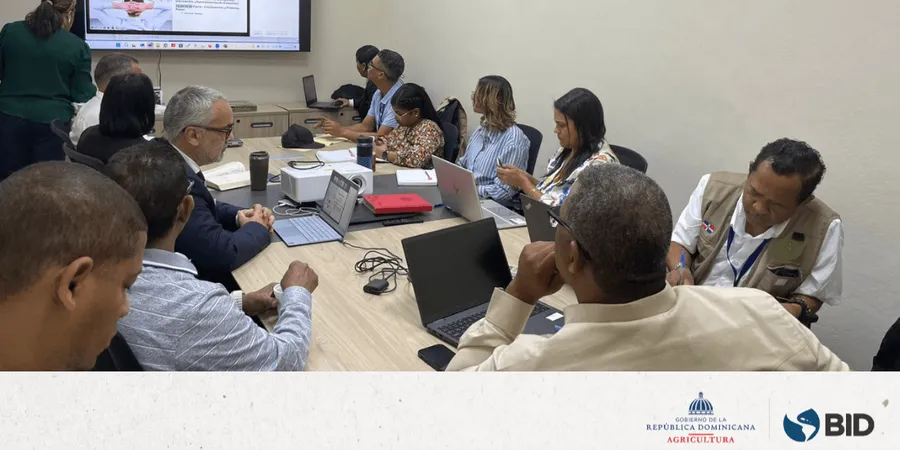
The Sanidad e Innovación Agropecuaria (SIA) project, implemented by COLEAD for the Ministry of Agriculture of the Dominican Republic, is making steady progress. Structured around four strategic ‘blocks’, the project aims to mobilise institutional infrastructures and strengthen the country’s capacity in the field of sanitary and phytosanitary safety. A team of 12 international and local experts mobilised by COLEAD is working closely with local stakeholders to deliver the 46 products expected by August 2026.Key achievements in the four components of the projectBlock 1: Institutional strengthening and integration of One Health principlesResult 1: The reorganisation of the processes of the sanitary and phytosanitary services was completed during the summer of 2024. Complementary outputs, such as the financial sustainability mechanism for the Agriculture and Food Safety Agency and the contractual arrangements for certain services, are in the process of being approved.Result 2: The draft regulatory framework and updated health procedures are being developed through collaborative workshops held in n November 2024. This work should lead to the drafting of new laws and regulations by spring 2025.Result 3: A national policy on sanitary and phytosanitary measures (SPS) will be developed once the institutional foundations are in place.Block 2: Development of integrated health information systemsThe integrated health intelligence system, based on a risk-based methodology, is in the implementation phase. The COLEAD team will finalise the first tools of this system by the summer of 2025, while the other outputs will follow as planned.Block 3: Improving health surveillance programmesOriginally scheduled for May 2025, work on this component has been brought forward to January 2025 to avoid any delays and ensure that the objectives are met on time.Block 4: Development of good practice manualsThis block is well underway, with more than half of the 26 good practice manuals already drafted. These essential tools will benefit the various health services and the private sector, consolidating health practices on all fronts.A mobilised team for concrete resultsCOLEAD's blended approach, combining a presence on the ground with regular visits by international experts, ensures rigorous monitoring and timely implementation of actions. This exemplary collaboration between local and international teams reflects COLEAD's commitment to delivering a quality project that meets the needs of the Ministry of Agriculture and the Dominican agricultural sector.First Steering Committee meetingThe first Steering Committee meeting was held on 20 January. It was attended by representatives of the Ministry of Agriculture, the Inter-American Development Bank (IADB) and COLEAD. It was an opportunity to review the progress of the project as outlined above and to highlight the positive points such as: the excellent collaboration with the Project Implementation Unit (UEP) of the Dominican Ministry of Agriculture, whose competent staff facilitates the work; the Ministry's constant commitment to the project's objectives; the support of international organisations and partner agencies in the Dominican Republic (FAO, USAID, APHIS, etc.); and the expertise of the COLEAD team, which contributes effectively to the implementation of the project.Overall, the IADB welcomed the progress made by the project, and expressed its commitment to support it.This activity is supported by the SIA project (Sanidad e Innovación Agropecuaria), implemented by COLEAD on behalf of the Ministry of Agriculture of the Dominican Republic and financed by the Inter-American Development Bank (IDB) under loan no. BID-4909/OC-DR. This publication has been produced with the financial support of the IDB. The contents are the sole responsibility of COLEAD and in no way reflect the views of the Dominican Ministry of Agriculture or the IDB.
 News
News
Sustainable innovation: recent example in Kenya supporting the basil, avocado and mango value chains with the registration of two new biopesticides
Two new biopesticides have been officially registered by the Kenyan regulatory authority, the Pest Control Products Board (PCPB), for use on 3 minor crops:Eco-Bb (Beauveria bassiana strain R444 2.0×10⁸ cfu/g) to control aphids, whiteflies and thrips on basil.Eco-Bb (Beauveria bassiana strain R444 2.0×10⁸ cfu/g) to control false codling moth (FCM) and fruit flies on mango.Levo 2.4 SL (Oxymatrine 2.4%) for the control of FCM on avocado.These registrations, which are the result of field trials supported by COLEAD through the FFM-SPS, FFM+ and NExT Kenya programmes, in collaboration with a plant protection product (PPP) manufacturer; Andermatt Kenya Ltd (Eco-Bb) and Sineria Holland BV (Levo 2.4 SL), represent a significant advance in the pest management solutions available to basil, mango and avocado growers in Kenya.At COLEAD, we are committed to addressing the production challenges faced by suppliers, including smallholders, based in tropical and subtropical areas, through comprehensive research and practical solutions. Our activities include identifying priority pests and diseases where current solutions are inadequate, and conducting field trials to assess the effectiveness of potential new technologies and practices recommended by our experts. The overall goal is to expand farmers' toolboxes to support the operationalisation of integrated pest management (IPM) strategies, thereby reducing the overall use of plant protection products, in line with the objectives of the European Union's (EU) Farm-to-Fork strategy.Challenges met: lack of availability of PPPs to combat pests and notifications on the EU marketA survey conducted in 2019 highlighted the limited availability of registered PPPs in Africa, highlighting the urgency of addressing this issue. In Kenya, the Minor Crops Technical Working Group (MCTWG) highlighted the critical need for registered PPPs for minor crops due to the limited number of available PPPs and the challenges of SPS interceptions. Priority crop-pest combinations were identified following the African survey and a prioritisation exercise conducted by COLEAD in collaboration with the MCTWG in 2020. Following these exercises, COLEAD, through the above programmes, has been working with PPP manufacturers to conduct efficacy and residue trials to fast-track registration of PPPs for the identified priority crop-pest combinations in various ACP countries. Aphids, thrips and whiteflies on basil, FCM and fruit flies on mango, and FCM on avocado were some of the priorities identified for Kenya.A multi-stakeholder participatory process serving an entire regionEco-Bb and Levo 2.4 SL are now available to growers in Kenya, completing the toolbox for farmers to effectively manage the pests in question and address this current trade barrier in the region. These biopesticides are compatible with integrated pest management strategies.The list of registered PPPs in Kenya is available here. The Research and Innovation Brokerage Department is now exploring ways to replicate and disseminate these successful results within the East African Community (EAC).This work is a participatory and interactive process where all stakeholders (farmers, governments, PPP manufacturers, etc.) are invited to contribute to the identification of the most relevant research and innovation activities. If you would like to contribute to this challenging and impactful research work, or if you have any questions, please contact us at: network@colead.link.This activity is implemented by COLEAD and supported by the NExT Kenya (New Export Trade) programme, established in collaboration with the EU Delegation in Nairobi and Kenyan stakeholders. This publication has been produced with the financial support of the EU. Its contents are the sole responsibility of COLEAD and can under no circumstances be regarded as reflecting the position of the EU.
 News
News
From data to knowledge, from knowledge to action: agri-food market information tools and activities delivered in 2024 and planned for 2025
The Market Insights department is part of COLEAD's Facilitating Access to Markets division. Its main objective is to translate qualitative and quantitative data into (i) an in-depth understanding of agri-food markets and (ii) concrete initiatives for the benefit of partners benefiting from COLEAD and its programmes in terms of marketing or sales. To this end, the team facilitates the exchange of information and the establishment of B2B relationships useful to support the decision-making processes. The team is made up of internal and external experts specialised in the international agri-food sector. The year 2024 has produced a number of outputs, which are listed below:Knowledge sharingEight webinars were organised this year as part of the FFM+ programme, with 1,150 participants. You can follow or discover these webinars in English or French on the COLEAD YouTube channel.15 dashboards on the COLEAD Market Analytics page have been improved and updated. Navigation has been improved and each dashboard now includes a home page and a guide to configuring the main data filters. All dashboards now have a common layout and configuration, making it easier to navigate between volumes and values. The data covers all countries and a wide range of agricultural products (cereals, cocoa, livestock, fisheries, etc.).How to use the new COLEAD statistical dashboardsInternational fairs and events In 2024, as part of FFM+, the department participated in more than 10 international fairs and conferences, including Fruit Logistica, Biofach, Macfrut and SIAL. These events allowed us to carry out in-depth research on products such as citrus, mango and pineapple and to identify the latest trends in the sector.PublicationsSeveral studies and profiles were carried out in 2024 as part of the FFM+ programme: studies on the mango, avocado, citrus and (Kenyan) flowers sectors; market profile on papaya. These and other materials can be found in the COLEAD online library.Materials and activities planned for 2025. Stay tuned!Webinars: systematic presentation of market dashboards, market profile on papaya, market profile on coffee from Tanazania, feedback from international trade fairs, fruit and vegetable markets in West Africa, agricultural packaging (regulations and trends).Statistical dashboards: Continuously updated, in particular by integrating TRACES and RASFF notifications on the EU market.Publications: Sector studies on pineapples, mangoes from the Dominican Republic, fruit and vegetables from sub-Saharan Africa, and others on honey, fisheries and coffee value chains.Trade fairs and conferences: Focus on Middle East and UK markets with presence at Gulfood (Dubai) and IFE (London), Fruit Logistica, Biofach, Fruit Attraction, Mac Frut, ExpoMango25, IAT 2025, ...Database: Continuously enriched and available on request with key contacts (importers, equipment and packaging suppliers) identified at trade shows.This activity is supported by the Fit For Market Plus (FFM+) programme, implemented by COLEAD within the Framework of Development Cooperation between the Organisation of African, Caribbean and Pacific States (OACPS) and the European Union. This publication receives financial support from the European Union and the OACPS. The content of this publication is the sole responsibility of COLEAD and can in no way be taken to reflect the views of the European Union or the OACPS.
 News
News
Improving the sustainability of production systems by enhancing the teaching skills of experienced trainers. A recent example from Senegal
In January 2025, COLEAD organised a training session in Dakar as part of the Fit For Market Plus (FFM+) programme. The aim of this initiative was to strengthen the teaching skills of expert trainers to better communicate key messages on hygiene, traceability and safe use of plant protection products to horticultural businesses.As part of a regional capacity-building initiative, this session targeted 16 experts from West and Central Africa who had previously been trained in ‘training and communication techniques’ and responded to a request from Senegalese companies for post-training support on good hygiene practices.An educational and highly practical programme The training enabled participants to:Master the structuring and delivery of educational presentations to effectively communicate complex technical messages;Prepare and lead training sessions using active teaching methods and group management techniques;Use innovative tools to optimize learning outcomes.The session included practical workshops in which participants simulated short training modules. Each simulation was followed by group debriefing to identify strengths and areas for improvement for each expert trainer.Strong commitment and promising resultsThe experts from Senegal and Guinea played an active role in the training. They demonstrated an excellent ability to adapt to the teaching techniques taught, demonstrating the potential impact of this initiative on local capacity.This kind of support from COLEAD, here in Senegal, is a crucial step in promoting good agricultural practices to improve the sustainability of production systems and meet the demands of local and international markets.This activity is supported by the Fit For Market Plus (FFM+) programme, implemented by COLEAD within the Framework of Development Cooperation between the Organisation of African, Caribbean and Pacific States (OACPS) and the European Union. This publication receives financial support from the European Union and the OACPS. The content of this publication is the sole responsibility of COLEAD and can in no way be taken to reflect the views of the European Union or the OACPS.
 News
News
Côte d'Ivoire, Uganda and Guinea: 3 new local programmes entrusted to COLEAD by the European Union and ENABEL
COLEAD manages and implements international and local programmes/projects funded by partners. Since 2015, COLEAD has diversified its financial partnerships by becoming more firmly rooted at local level via national programmes that complement multi-country intra-ACP interventions such as Fit For Market. It is in this context and with this rationale of deepening and increasing COLEAD's action and impact at ‘country’ level that new programmes have recently been signed with the European Union delegations for the Republic of Côte d'Ivoire and Uganda and with ENABEL in Guinea.Côte d’IvoireThe overall objective of the Programme d'Appui à la Sécurité des Aliments pour la République de Côte d'Ivoire (PASA-Côte d'Ivoire) entrusted to COLEAD by the EUD in Côte d'Ivoire is to strengthen the contribution of the Ivorian agri-food sector to the economic growth, food security and sustainable development of the Republic of Côte d'Ivoire by improving the competitiveness, resilience, inclusiveness and sustainability of agri-food value chains. The specific objective of PASA-Côte d'Ivoire is, in close collaboration with the relevant Ivorian authorities, to strengthen the capacity of private players in the agri-food sector - with particular emphasis on the two targeted value chains - to manage and control the sanitary and phytosanitary quality of food and to adapt to changing market requirements (regulatory, including SPS, commercial, social and environmental).UgandaThe ‘Improving sanitary and phytosanitary standards in horticulture in Uganda (SPS Uganda)’ programme entrusted to CABI for its implementation has the general objective of strengthening the capacity of public and private sector organisations in Uganda to comply with phytosanitary and food safety measures for fresh fruit and vegetable value chains on export markets, in particular the regulatory and commercial requirements of EU phytosanitary and food safety regulations, in order to safeguard consumer health and increase exports to the EU. COLEAD is a co-applicant of the programme and will be involved in activities relating mainly to the following specific objective: To improve production and product handling processes among private sector actors in order to improve the compliance of Uganda's fruit and vegetable value chains with phytosanitary and food safety regulations and market standards.Guinea The ‘Support for the agro-ecological transition of the pineapple, potato and horticultural value chains in Guinea’ programme entrusted to COLEAD and ICRA by ENABEL has the general objective of helping to improve the incomes of stakeholders in the potato, pineapple and horticultural value chains in the Kindia and Mamou regions, particularly young people and women. The specific objective is to enable Guinean pineapple, horticultural and potato value chain operators to make an inclusive commitment to a gradual transition to agro-ecology, while meeting market requirements.Stay tuned in the coming weeks for more information and especially on how to access these programmes!