
Cultivating
Sustainable Futures
South Africa: better anticipating EU regulatory requirements for market access
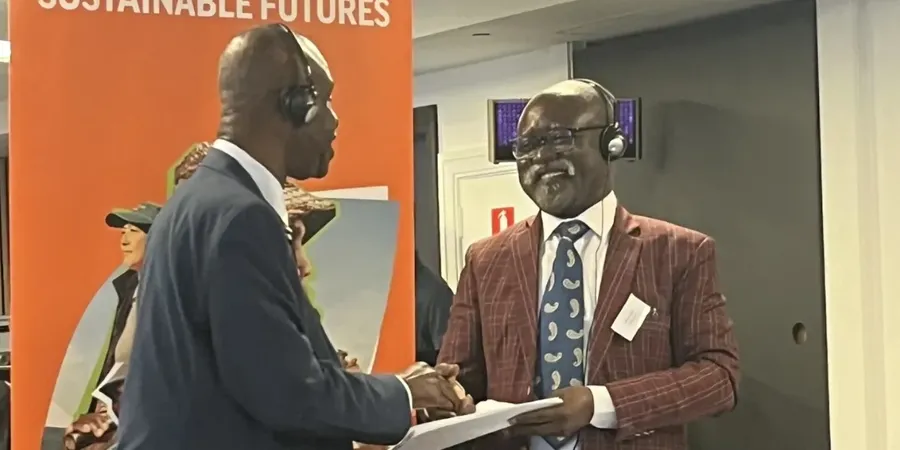
In late May 2026, operators, regulators and experts came together in South Africa around a shared goal: helping agri-food exporters better anticipate European Union (EU) requirements. Discussions focused on two complementary areas — access to regulatory information and the new EU packaging rules.ePing national workshopA national workshop on the ePing SPS & TBT platform was held in Pretoria from 25 to 27 May. On this occasion, Axelle Rupert, EU Policy and Regulations Expert, presented how AGRINFO complements ePing by helping users monitor, understand and anticipate EU regulatory developments affecting agri-food trade. ePing is a free online platform that enables users to track sanitary and phytosanitary (SPS) and technical barriers to trade (TBT) notifications, access information documents and engage with regulators before new requirements enter into force. By improving access to information and facilitating dialogue, ePing helps exporters better prepare for regulatory changes and reduce compliance risks.The workshop was organised by the World Trade Organization (WTO) as part of the project Improving the use of the ePing SPS&TBT Platform to enhance transparency for market access. Funded by the Standards and Trade Development Facility (STDF), this project aims to improve the ePing user experience through technological enhancements to the platform and new capacity-building approaches.New EU packaging requirements under discussionDiscussions then turned to the implications of new EU packaging legislation for South African agri-food exporters, in particular the Packaging and Packaging Waste Regulation (PPWR) and the ban on bisphenol A (BPA) in food contact materials, which will begin to apply from July and August 2026 respectively. The discussions brought together agri-food exporters, packhouses, recycling organisations and government representatives, providing valuable insights into the opportunities and challenges that South African agri-food value chains may face in adapting to the new requirements.AGRINFO also presented its ongoing work on EU packaging legislation and shared available resources designed to help operators better understand and prepare for the requirements. Stakeholders expressed strong interest in AGRINFO's activities, including a proposed impact study on EU packaging requirements in South Africa, which would build on and complement an earlier impact study conducted in Ghana.AGRINFO will continue to share updates and analysis on EU packaging requirements through the AGRINFO platform and its newsletter. Feedback and questions can be sent to agrinfo@colead.link.This activity is supported by the AGRINFO programme, implemented by COLEAD and funded by the European Union (EU). This publication receives financial support from the European Union. The content of this publication is the sole responsibility of COLEAD and can in no way be taken to reflect the views of the European Union.

Food safety: a collaboration with CAHFSA that resonates beyond the Caribbean
In three months, COLEAD's support for food safety in the Caribbean has mobilised hundreds of professionals from more than 40 countries — an engagement presented in early June at the third annual meeting of the Caribbean Task Force on Food Safety, and one that reflects both strong demand and a now well-established collaboration with CAHFSA (the Caribbean Agricultural Health and Food Safety Agency).Delivered in partnership with CAHFSA, this series of thematic webinars addressed issues at the heart of market access for the region's agrifood sectors: good hygiene practices and hazard control, traceability, antimicrobial resistance and phytosanitary legislation. Each session combined technical capacity building with open-access learning resources that can be used well beyond the event itself.Demand reaching beyond the region's bordersThe scale of participation illustrates the interest generated. The refresher session on good hygiene practices (GHP) and Hazard Analysis and Critical Control Points (HACCP) attracted 272 registrations from 43 countries, while the session on traceability, aligned with the requirements of the US Food and Drug Administration (FDA), drew 317 registrations from 38 countries. The awareness-raising session on antimicrobial resistance (AMR), a growing food safety concern, brought together 140 participants from 32 countries. Within the region, interest was particularly strong in Trinidad and Tobago, Suriname, Jamaica, Grenada, Belize, Saint Lucia and Dominica, among others.The webinar dedicated to the phytosanitary legislation training kit, organised jointly by COLEAD and FAO in collaboration with CAHFSA, is a good illustration of this momentum. Rescheduled for April 2026 at a time suited to Caribbean time zones — after an initial launch in November 2025 that was not easily accessible to the region — it was aimed primarily at the Caribbean but open to participants worldwide. The result: a diverse audience in which Zimbabwe and Jamaica were among the most represented countries, a sign that this support is finding an echo well beyond the Caribbean region alone.What's next?In addition to the live sessions, all of this content remains available through COLEAD's open-access learning resources, allowing new professionals to benefit from it at any time. This collaboration with CAHFSA consolidates COLEAD's role as a long-term partner of Caribbean agrifood value chains, working towards strengthened food safety and improved market access.
Agroecology for Caribbean SMEs: not a one-size-fits-all solution, but a practical and systemic path towards resilience
In June 2021, the Inter-American Institute for Cooperation on Agriculture (IICA) and COLEAD launched the Caribbean Agrifood Business Series to highlight the innovations and successes of farmer-led agricultural businesses and small and medium-sized enterprises (SMEs) in the Caribbean.The 21st session took place on 16 June and explored the opportunities available to Caribbean SMEs to adopt agroecological practices. It brought together 398 registrants from across several continents.Drawing on the experiences of entrepreneurs and experts from Saint Lucia, Barbados and Trinidad, the discussions presented concrete examples of regenerative agriculture, agroforestry, permaculture, biodiversity-based pest management, renewable energy integration and participatory research. Speakers showed how these approaches can help restore degraded soils, improve water retention, enhance biodiversity, increase resilience to climate shocks and strengthen local food systems.One message recurred throughout the webinar: agroecology is not a one-size-fits-all solution. While many Caribbean farming systems already incorporate agroecological principles, their successful implementation depends on adapting practices to local ecological, social and economic realities. Panellists stressed that healthy soils and ecological diversity form the foundation of resilient farming systems, but that scaling up sustainable practices also requires knowledge exchange, innovation, technical support, enabling policies and viable business models. Ultimately, the discussions highlighted agroecology as both a practical and systemic approach to strengthening the long-term sustainability, productivity and resilience of Caribbean agriculture.Highlights and recordings are available on Agrinnovators.This activity is supported by the Fit For Market Plus (FFM+) programme, implemented by COLEAD within the Framework of Development Cooperation between the Organisation of African, Caribbean and Pacific States (OACPS) and the European Union. This publication receives financial support from the European Union and the OACPS. The content of this publication is the sole responsibility of COLEAD and can in no way be taken to reflect the views of the European Union or the OACPS.
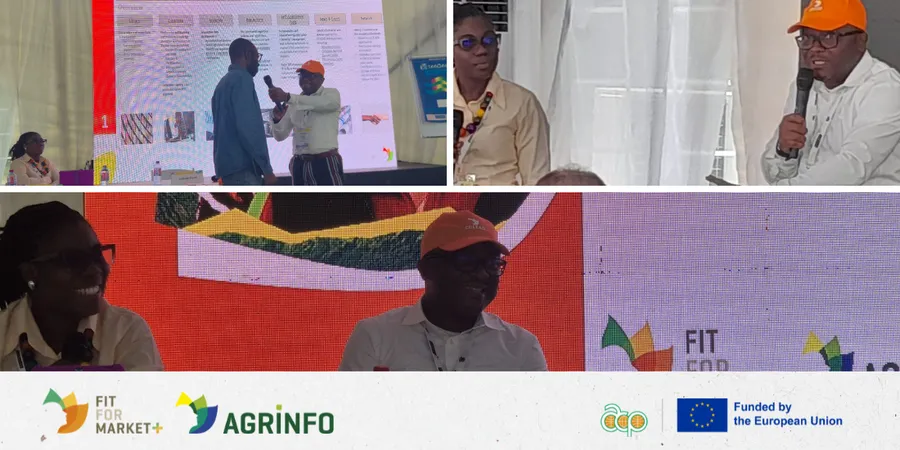
eLearning Africa 2026: Harnessing digital innovation for employment-oriented technical and vocational education and training
Digital innovation is transforming both African agriculture and the landscape of Technical and Vocational Education and Training (TVET). COLEAD contributed to these discussions at eLearning Africa 2026 in Ghana, represented by David Sodade, Senior Project Manager in COLEAD's Training Department, who presented the organisation's integrated technical assistance approach and its learning resources.A "glocal" approach to TVETCOLEAD delivered a presentation entitled "Understanding a future-proof 'glocal' approach to TVET as a panacea for upskilling industry-ready professionals", followed by a discussion on how its open-access learning resources and competency-based training models are transforming TVET by taking learning beyond the traditional classroom and grounding it in real-world professional practice.The session brought together consultants, EdTech solution providers, TVET experts and institutions. Dr Mark Tutu Sarpong, an expert trainer, shared his experience of working with COLEAD and demonstrated how its interventions, delivered through its various programmes, support the sustainable development of skills across the agri-food MSME ecosystem—enhancing graduate employability while fostering sustainable private sector development.Exchanges and future perspectivesThe event also provided an opportunity to gather feedback from COLEAD trainers in Ghana as part of the organisation's continuous improvement process, while strengthening connections with EdTech service providers and TVET institutions. In addition, it offered valuable insights into emerging pedagogical and technological trends in e-learning, which will help inform COLEAD's strategic reflection on the future development of its learning platform and the enhancement of its training offer under the FFM+ programme.This activity is supported by the Fit For Market Plus (FFM+) programme, implemented by COLEAD within the Framework of Development Cooperation between the Organisation of African, Caribbean and Pacific States (OACPS) and the European Union; and by the AGRINFO programme, implemented by COLEAD and funded by the European Union (EU). This publication receives financial support from the European Union and the OACPS. The content of this publication is the sole responsibility of COLEAD and can in no way be taken to reflect the views of the European Union or the OACPS.
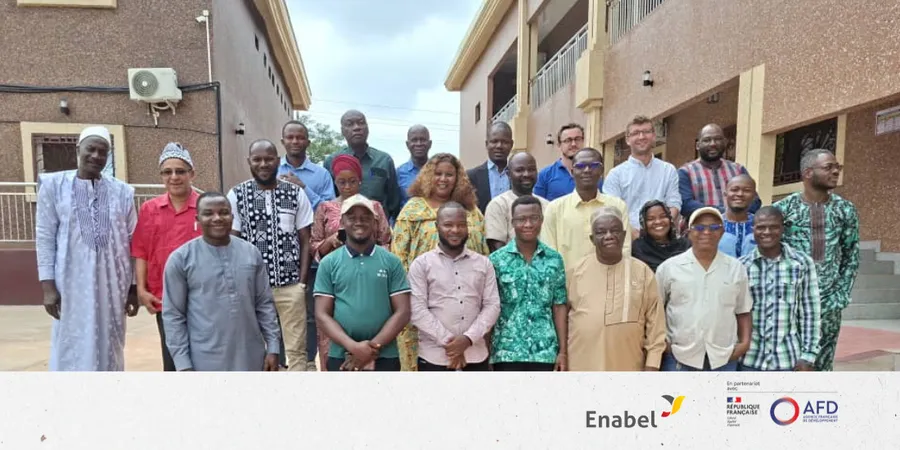
Guinea – Enriching the study on factors blocking the development of the horticultural sector through dialogue with professional organisations and other local stakeholders
On 9 June 2026, COLEAD brought together around thirty stakeholders from Guinea's horticultural sector for an exchange workshop in Kindia, under the Agriéco (Enabel) and PRCC (AFD) programmes. On the agenda: the presentation of two studies — on the services provided by federations to their members and on the factors blocking the sector's development — and the prioritisation of concrete courses of action.Organised in a hybrid format (27 participants in person and 3 online), the workshop was the highlight of the mission carried out in Guinea from 8 to 12 June. It brought together leaders of professional organisations, representatives of government technical services, and technical and financial partners, including Enabel and the Delegation of the European Union to Guinea.The first part was devoted to the results of the quantitative survey on the services provided to federation members and their level of satisfaction, conducted among 565 producers. With an overall satisfaction score of 3.48/5, discussions focused mainly on the still limited awareness, understanding and use of certain services — access to finance, market access and advocacy — and on the importance of strengthening the federations' accountability to their members. Notably, participants largely recognised themselves in the findings presented, a sign of the relevance of the approach.The second part focused on the presentation of the study on the factors blocking the horticultural sector, structured at the macro, meso and micro levels. Participants confirmed the relevance of the main constraints identified (organisation, access to markets, finance and inputs, mastery of good practices) and enriched the analysis, paving the way for the establishment of a public-private dialogue framework.Finally, participants discovered the content of the technical brochures currently being developed by COLEAD on the potato value chain (certified seed, integrated late blight management) and the pineapple value chain (weed management, sucker production and waste valorisation), whose relevance they welcomed.Beyond the presentations, the quality of the discussions was the main added value of this workshop: they made it possible to prioritise concrete courses of action and inform the planning of upcoming support to the federations, in a spirit of complementarity between the Agriéco and PRCC programmes.Through this participatory approach, the Agriéco project is pursuing its objective of strengthening the capacities of agricultural stakeholders and supporting the agroecological transition towards more sustainable, resilient and inclusive food systems in Guinea.This activity is supported by the PRCC (Trade Capacity Building Programme), implemented by COLEAD, with financial support from the French Republic through the French Development Agency (AFD). This communication has been produced with the financial support of AFD. Its content is the sole responsibility of COLEAD and can in no way be taken to reflect the position of AFD. The Agriéco project, implemented in Guinea with financial support from the Belgian Development Agency (ENABEL). This publication was produced with financial support from ENABEL. Its contents are the sole responsibility of COLEAD and cannot in any way be considered to reflect the official position of ENABEL.
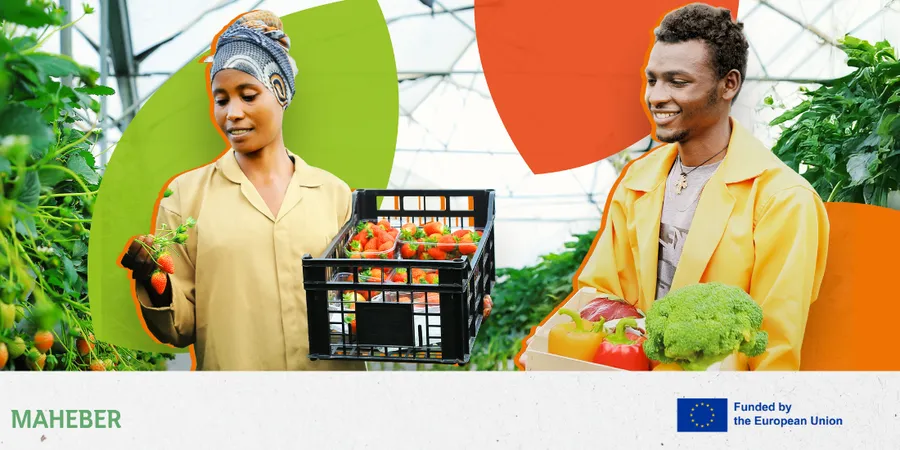
Ethiopia: MAHEBER delivers its first results - The programme has launched activities with key sector partners
Launched in April 2025 for a five-year period, the MAHEBER programme — funded by the European Union with €6 million and implemented by COLEAD — supports the Ethiopian horticultural sector, with direct support to fruit and vegetables and indirect support to flowers. A little over a year after its start, the programme has completed the key steps of its operationalisation and begun its first activities in the field.Fifteen years of engagement in EthiopiaMAHEBER builds on COLEAD's continuous presence in Ethiopia since 2011, through the successive PIP2, EDES, FFM and FFM Plus programmes. It pursues three expected results: strengthening the capacities of agribusinesses (MSMEs) and producer groups to compete on domestic, regional and international markets; improving the capacity of the Ethiopian horticultural sector's enabling environment to strengthen the competitiveness and sustainability of the Ethiopian origin; and addressing the bottlenecks affecting the competitiveness and sustainability of Ethiopian horticultural exports through enhanced policy dialogue and public-private collaboration.The foundations are in placeThe first year focused on setting up the programme's operations: adapting COLEAD's intervention methodology to the specific context of Ethiopia, developing online application forms for six categories of partner beneficiaries, and conducting targeted outreach to agrifood MSMEs and producer groups. The programme was officially launched in collaboration with the Ethiopian Horticulture Producer Exporters Association (EHPEA) and the EAA.First activities with key partnersPriority activities are already under way with these two partners: support to HortiCampus alongside EHPEA, and preparation for the DG SANTE audit with the EAA. In parallel, an expertise mapping exercise and active follow-up of training have been launched to expand the pool of Ethiopian service providers, in line with COLEAD's transversal tender procedures. All of these milestones serve the programme's specific objective: to build and ensure the capacity of horticulture stakeholders in Ethiopia.This activity is implemented by COLEAD and supported by the MAHEBER Program (Mobilizing Actors in Horticulture for Entrepreneurship and Boosting Ethiopian Resilience), funded by the European Union through the EU Delegation in Ethiopia. This communication has been produced with the financial support of the EU. Its contents are the sole responsibility of COLEAD and can in no way be taken to reflect the views of the EU.
Market analysis at the service of value chains - Since 2021: 17 market profiles, 16 value chains, 15 countries for the VCA4D project
Since 2021, COLEAD's Market Insights department has been contributing its market intelligence expertise to the VCA4D project (Value Chain Analysis for Development), funded by the European Union. A look back at a little-known collaboration.VCA4D, evidence for decision-makingValue Chain Analysis for Development (VCA4D) is an EU-funded methodology that assesses the economic, social and environmental sustainability of agricultural value chains, to support evidence-based policy and investment decisions.COLEAD's contribution: the market perspectiveFor each selected VCA4D study, Market Insights prepares a market profile providing an external market perspective that complements the country-level value chain analysis. These profiles cover international, regional and domestic market dynamics; supply, demand and trade trends; price intelligence and competitiveness; market access conditions (SPS, regulations, standards); and market opportunities, including emerging market segments. The added value of the exercise: connecting local value chain diagnostics with global market realities, to strengthen the interpretation of their competitiveness and sustainability.The track record at a glance17 market profiles, covering 16 value chains in 15 countries: cocoa in Colombia, Ecuador and Sierra Leone, coffee in Ecuador and Tanzania, fisheries in Guinea-Bissau and Tanzania, shrimps and groundnuts in Madagascar, sesame in Chad, cowpeas and groundnuts in Niger, mango in Burkina Faso, as well as cheese in Colombia, aquaculture in Georgia, cotton in Tajikistan and cashmere in Mongolia.
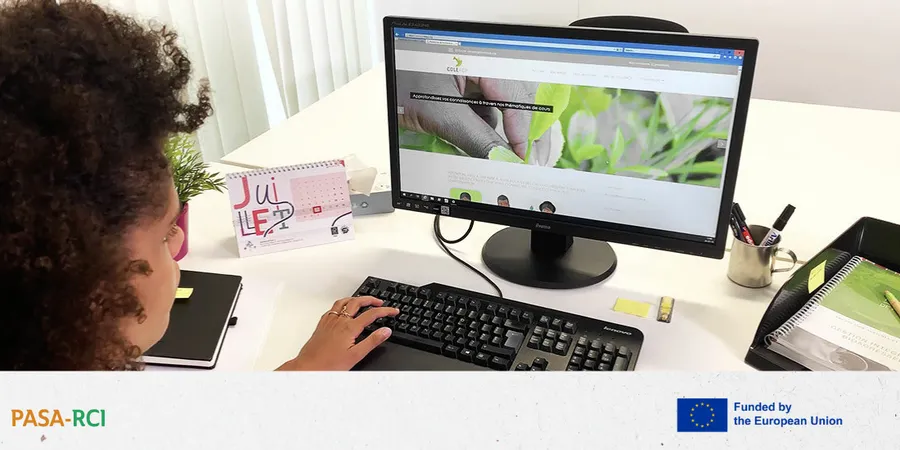
Sustainability self-assessment adapts to artisanal fisheries — The SAS, a pillar of the sustainability approach, is now applied to fish-processing cooperatives
Under the Food Safety Support Programme (PASA — Programme d'Appui à la Sécurité des Aliments), COLEAD has adapted its Sustainability Self-Assessment System (SAS) to the realities of artisanal fisheries. The tool, originally built for agricultural value chains such as horticulture, is now being mobilised to support fish-processing cooperatives.A pillar of the sustainability approachThe SAS is one of the three pillars of COLEAD's sustainability approach, alongside the Sustainability Charter and the training system. Designed to drive continuous improvement of operators' practices, it has been adapted to artisanal fisheries — with a focus on post-catch — under PASA in Côte d'Ivoire, as part of the programme's tools and methodology development component. This adaptation reflects field realities: resource management, working conditions, food safety, traceability.Why apply it?COLEAD has received support requests from fish-processing cooperatives, and the analysis of these applications is ongoing. The SAS makes it possible to assess each structure's maturity level, with a focus on food safety, and then to design development projects and monitor the progress of supported structures over time.How the tool worksIn practice, the SAS for fisheries takes the form of a simple Excel workbook comprising the instructions, a company profile with key data, five assessment grids and a graphic summary of the results. Five areas are reviewed: management; trade and finance; hygiene, quality and food safety; social; environment. Each criterion is rated 0 (non-compliant), 1 (partial) or 2 (fully compliant). The tool distinguishes four maturity levels, from L1 (informal enterprise) to L4 (high-performing enterprise, a model in the sector): moving up to the next level requires meeting at least 80% of the criteria at the current level. The first level rests on 10 essential base criteria; each subsequent level adds 8 to 15 more. The result is a summary chart showing the percentage of criteria met per area and per maturity level — a clear snapshot of each structure's situation, and an objective basis for targeting support.This activity is implemented by COLEAD and supported by the Food Safety Support Programme for the Republic of Côte d’Ivoire (PASA-Côte d’Ivoire), funded by the European Union through the EU Delegation in Côte d’Ivoire. This communication has been produced with the financial support of the EU. Its contents are the sole responsibility of COLEAD and can in no way be taken to reflect the views of the EU.

A new collection of manuals to strengthen training quality : From design to materials: three complementary guides for better training
Under the FFM+ programme, COLEAD is developing a series of three manuals designed to strengthen the quality of its capacity-building work. The first — on the design of training materials — has just been published in English; the next two, on training schemes and training methods, are in preparation.Training lies at the heart of COLEAD's work: strengthening the skills of agri-food stakeholders is essential to improving their competitiveness and market access over the long term. This commitment to quality is recognised through ISO 21001 certification, the international standard for management systems of education and training providers. To ensure consistency across its activities — collective or individual, in person or remote — COLEAD relies on a structured approach to training design. It is within this framework that a new collection of three complementary manuals has been developed, designed to support teams throughout the training design cycle.The first manual: designing quality materialsThe first manual, "Designing and Developing Training Materials", is available now in English. It supports trainers in creating teaching materials that are clear, engaging, inclusive and tailored to learners' needs. Beyond the underlying principles, it offers practical tools to produce effective visual materials (presentations, infographics, guides), write clear and well-structured content, incorporate digital technologies and artificial intelligence into resource design, and encourage active, lasting learning. Illustrated with examples drawn from COLEAD projects, it shows how quality materials contribute directly to skills acquisition and improved performance in the field.Two more manuals to comeThe collection is aimed at training officers, coordinators, instructional designers and Skills & Careers managers. The second manual, on training schemes (currently being laid out), guides training professionals in designing a continuing-training offer, from identifying needs through to evaluating its impact: analysing and prioritising skills needs, setting learning objectives, choosing learning formats and measuring outcomes. The third, on training methods (written and awaiting layout), focuses on the teaching approaches best suited to each audience and setting — in person, remote or hybrid — to encourage active learning, improve retention and strengthen learner engagement.Tools within a wider systemThese manuals are not standalone resources: they are building blocks of an integrated, coherent training system. In practice, they are used as part of specific action plans, defined together with the partners benefiting from COLEAD's programmes, and they come into their own when combined with the coaching, methods and schemes that structure the training offer. It is this overall approach — rather than the manuals taken in isolation — that ensures the quality and impact of training on the ground.A resource soon to reach furtherTogether, these three manuals will cover the three essential dimensions of training design: designing a scheme, choosing the right teaching methods and producing quality materials. A French translation of the first manual is planned by the end of the year, to open up this new resource to a wider audience.This activity is supported by the Fit For Market Plus (FFM+) programme, implemented by COLEAD within the Framework of Development Cooperation between the Organisation of African, Caribbean and Pacific States (OACPS) and the European Union. This publication receives financial support from the European Union and the OACPS. The content of this publication is the sole responsibility of COLEAD and can in no way be taken to reflect the views of the European Union or the OACPS.
Lean Management in Fiji: cutting waste, boosting efficiency Post-training support helps Terra Wholefoods on its continuous improvement journey
Under the Fit For Market Plus (FFM+) programme, COLEAD carried out a Post-Training Support mission with Terra Wholefoods Ltd in Fiji, helping the company turn the principles of Lean Management into practical improvements across its processing operations.An SME with its sights on exportTerra Wholefoods Ltd is a growing Fijian agri-food company currently specializing in the production and processing of fresh turmeric and ginger for local and export market with plans to expand to other value-added agricultural products including herbs and spices.. After completing the collective training "Lean Management for Horticultural Companies", it carried out a self-assessment to identify its priorities. Two high-impact areas emerged: Value Stream Mapping (VSM) and 5S workplace organisation. The company then requested targeted technical support to help put them into practice.From the whiteboard to the shop floorDelivered remotely through a series of interactive coaching sessions, the mission brought together Terra Wholefoods' management and technical teams. The expert guided staff through hands-on exercises: waste identification (Muda Hunting), Value Stream Mapping, inventory analysis, cycle-time studies, process capacity assessment and 5S audits. The company took an active part in gathering data, analysing performance and defining concrete actions.What the mission changedThe mission improved the company's understanding of its production flows, helped pinpoint bottlenecks and non-value-adding activities, and established baseline performance through cycle-time and process capacity analysis. It also introduced the first 5S principles and strengthened staff ownership of the approach. Several working tools were delivered — VSM maps, cycle-time worksheets, 5S audit checklists and inventory analysis tools — together with recommendations for taking the roll-out further.A journey that continuesLean Management is a path of continuous improvement rather than a one-off intervention. Terra Wholefoods now has the tools and a structured method to embed these principles for the long term, extend them to other areas of its operations, and strengthen its competitiveness in both local and export markets.This activity is supported by the Fit For Market Plus (FFM+) programme, implemented by COLEAD within the Framework of Development Cooperation between the Organisation of African, Caribbean and Pacific States (OACPS) and the European Union. This publication receives financial support from the European Union and the OACPS. The content of this publication is the sole responsibility of COLEAD and can in no way be taken to reflect the views of the European Union or the OACPS.
COLEAD 2026 General Assembly: 2025 Annual Report approved and new Board of Directors elected
At its Annual General Assembly held on 25 June 2026, COLEAD members elected the association's new Board of Directors and Executive Committee.Board of DirectorsGabriel OUIDI (OCAB, Côte d'Ivoire)Hans-Willem VAN DER WAAL (AgroFair Europe, Netherlands)Jacqueline SAUZIER (Chambre d'Agriculture de Maurice, Mauritius)Jean-Marie SOP (UNAPAC, Cameroon)Karim DOSTMOHAMED (Frigoken – Spieken EPZ, Kenya)Leena MALDE (Wealmoor, United Kingdom)Maren PETERS (Tradin Organic Agriculture, Netherlands)Moctar FOFANA (AOM, Mali)Thomas HILDENBRAND (SIPEF, Belgium)Vincent OMER-DECUGIS (SIIM / Omer-Decugis & Cie, France)Executive CommitteePresident: Jean-Marie SOPVice-President: Leena MALDETreasurer: Vincent OMER-DECUGISSecretary General: Karim DOSTMOHAMEDThe General Assembly also paid tribute to Stephen Mintah, thanking him for his outstanding commitment and leadership as President over the past thirteen years.COLEAD warmly congratulates all newly elected members of the Board of Directors and Executive Committee and wishes them every success in implementing the COLEAD 2030 Strategy, working with members and partners to advance sustainable, inclusive and resilient agrifood systems.
 News
News
Yearly review of EU and GB MRL changes in 2025
Key points This news update is a review of changes that were made in 2025 . European Union (EU) maximum residue levels (MRLs) were changed for 38 plant protection products (PPPs) in 2025, compared with 78 in 2024. These changes include cases where MRLs for certain foods have been raised or lowered. In Great Britain (GB) maximum residue level (MRL) changes concerned 42 plant protection products (PPPs) in 2025, compared with 33 in 2024. Note that EU MRLs still apply in Northern Ireland (GB covers only England, Scotland and Wales). How will ACP producers/exporters be affected? In export crops, meeting the MRLs of the destination market is critical to prevent interception and destruction of merchandise at the border. ACP growers and exporters need to remain up-to-date with regulatory changes to ensure they remain aligned. What should ACP producers/exporters do now? For each substance and crop concerned, the Good Agricultural Practices (GAPs) in place need to be verified and possibly adapted to ensure compliance with new MRLs. The GAPs include dose rate, number of applications, and pre-harvest interval. In some cases, adaptations to the GAPs will allow the new MRLs to be met. However, in many cases, especially where the level is reduced to the Limit of Determination (LoD), it may not be possible to meet the new MRL, and growers will have to look for alternative crop protection solutions. If you have any major concerns about these changes, and fear that you will be left without an effective and locally available alternative, please contact COLEAD at: network@colead.link . If you require more frequent updates on EU MRL changes, we invite you to visit our AGRINFO website and subscribe to the newsletter on EU regulations.