
Cultivating
Sustainable Futures
 News
News
First COLEAD mission to the Dominican Republic as part of the new IDB-funded SIA project
From 20 to 30 May, COLEAD carried out a mission in Santo Domingo, Dominican Republic, as part of the launch of the SIA Project (Sanidad e Innovacion Agropecuaria). This project has been officially signed with the Dominican Ministry of Agriculture and is funded by the Inter-American Development Bank (IDB).The overall objective of the project is to improve food safety and the competitiveness of the agricultural sector in the Dominican Republic by increasing productivity, food safety and access to markets. The specific objectives are to improve :health services and food safety.innovation and transfer of animal and plant health technologies.the agricultural statistics system.The mission included twenty-six meetings with all the stakeholders involved in the project, in particular the various public services affected by the challenges of implementing a health policy based on a "One Health" approach. At the same time, a series of field visits enabled to meet some key players in Dominican agricultural production.During the first months of the project, COLEAD will support the Ministry of Agriculture and its departments in developing a new structural and legal framework. To this end, COLEAD and the Dominican Ministry of Agriculture will work together on 4 main areas of work, covering all the specific aspects of the Dominican agriculture and livestock sector, in the form of modules:Sanitary reform, including updating regulations and developing a national SPS policy.Improvement of SPS systems for better decision making based on scientific and factual data.Strengthening sanitary and phytosanitary surveillance programmes to maintain the country's phytosanitary status.Improve health management within the Food Safety Department, focusing on good agricultural practices and certification.This activity is supported by the SIA project (Sanidad e Innovación Agropecuaria), implemented by COLEAD on behalf of the Ministry of Agriculture of the Dominican Republic and financed by the Inter-American Development Bank (IDB) under loan no. BID-4909/OC-DR. This publication has been produced with the financial support of the IDB. The contents are the sole responsibility of COLEAD and in no way reflect the views of the Dominican Ministry of Agriculture or the IDB.
 News
News
eLearning Africa in Kigali: an edition rich in opportunities for collaboration to continuously improve digital learning
Launched in 2005, eLearning Africa takes place each year in a different country on the African continent. The event welcomes visitors and speakers from over 100 countries around the world, more than 75% of whom are from Africa. Topics covered include digital learning, training and skills development. For several years now, COLEAD has participated with a dual objective: to present and share its progress in e-learning in the agri-food sector in the context of the implementation of programmes, and to meet the players in the sector to forge targeted partnerships.The 17th edition of Elearning Africa was held in Kigali from 29 to 31 May. Plenary sessions, conferences, group discussions, presentations and demonstrations, and knowledge-sharing workshops took place over three days of intense activity. COLEAD was represented by its Training Department (David Sodade and Géraud Gnanga). This participation enabled to identify new trends and opportunities in the field of digital learning, which will allow to improve the COLEAD e-learning platform, currently mainly being developed and promoted under the Fit For Market Plus (FFM+) programme. It was also an opportunity to meet new potential and existing partners (universities, service providers, donors) to explore the possibilities of collaboration on the issues raised in the requests for support from FFM+ partner beneficiaries.During the mission, the team also met specifically with programme partner beneficiaries based in Rwanda, as well as with the European Union Delegation in Kigali. This was an opportunity to facilitate multi-stakeholder discussions and question-and-answer sessions on the current challenges faced by Rwandan horticultural associations/enterprises and to present the latest progress of the FFM+ and Agrinfo programmes.This activity is supported by the Fit For Market Plus (FFM+) programme, implemented by COLEAD within the Framework of Development Cooperation between the Organisation of African, Caribbean and Pacific States (OACPS) and the European Union. This publication receives financial support from the European Union and the OACPS. The content of this publication is the sole responsibility of COLEAD and can in no way be taken to reflect the views of the European Union or the OACPS.
 News
News
Improving access to finance for agripreneurs - upcoming webinars on plaftorms listing sources of finance (18 June and 2 July)
COLEAD’s approach on access to finance aims to improve the ability of agripreneurs to effectively navigate the financial ecosystem. Through its global Fit for Market Plus (FFM+) programme, funded by the European Union (EU) and the Organisation of African, Caribbean and Pacific States (OACPS), COLEAD supports partner beneficiaries to build their capacity in this area by offering training, technical assistance, and access to finance.Responding to the needs of partner beneficiariesIn response to the critical needs expressed by agripreneurs through a programme such as FFM+ in terms of business management and access to finance, COLEAD has adapted its training offer to include tools such as the Business Model Canvas, which enables them to test the viability of their projects before seeking finance. In addition, modules on the basic concepts of finance have been included, providing essential knowledge for informed decision-making.Relationships with funding sourcesIn addition to analysing and responding to specific requests from entrepreneurs, the access to finance department is constantly consolidating and structuring a network of potential funding sources, thanks to ongoing interactions with key players such as Kampani, Shared Interest, ABSA, I&P;, CSAF, AgriFI and BIO Invest. These collaborations allow us to showcase COLEAD's resources and identify companies that could benefit from them.Next webinars on 18 June and 2 July The next webinar will take place on 18 June 2024. It is organised as part of the FFM+ programme and will focus on navigating relevant funding platforms to identify suitable funding opportunitiesfor agripreneurs. .Practical information: Date and time: Tuesday 18 June 2024, from 15:00 to 16:00 (CET). Burkina Faso, Ghana: 13:00Angola, Nigeria: 14:00Rwanda, Zimbabwe: 3 pmEthiopia, Kenya, Tanzania, Uganda: 4 pm Duration: approximately 1 hour (including Q&A;) Language: English (the webinar in French will be held on 2 July). Registration: register today to reserve your seat by clicking here. The recording and presentation slides will be sent to all registrants. Webinar programme:Introduction to databases of funding sources, including grants, loans and investment opportunities specific to agricultural projects.Practical advice on how to effectively navigate each online platform to find relevant funding sources.Q&A; session: discussions with our expertsNetworking opportunities with like-minded professionals and potential collaborators to expand your network.This activity is supported by the Fit For Market+ programme, implemented by COLEAD in the framework of the development cooperation between the Organisation of African, Caribbean and Pacific States (OACPS) and the European Union. This publication receives financial support from the European Union and the OACPS. The content of this publication is the sole responsibility of COLEAD and can in no way be taken to reflect the views of the European Union or the OACPS.
 News
News
LECOFRUIT in Madagascar: an example of a responsible company, winner of 2 CSR awards
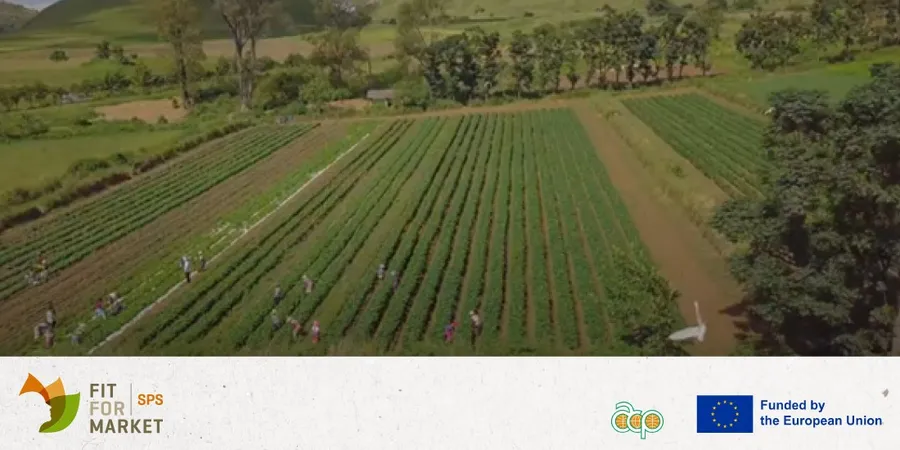
Lecofruit, a Madagascan company and member of COLEAD, produces and exports vegetables, mainly to the European Union.In 2022, the FFM SPS programme supported LECOFRUIT to adopt and develop its corporate social responsibility (CSR) commitments. Since then, LECOFRUIT has continued its commitment in this area and has received two awards for its CSR approach:CSR Award 2023: 'Local and Responsible Purchasing' in recognition of its solid partnership model with small producers.Company Committed by Ecovadis, which evaluates its CSR approach on the basis of 4 themes: Environment, Social and Human Rights, Ethics and Responsible Purchasing.Congratulations to Lecofruit and its entire team, who are committed to continuous social and environmental improvement.More information about Lecofruit here and here.This activity is supported by the Fit For Market SPS programme, implemented by COLEAD within the Framework of Development Cooperation between the Organisation of African, Caribbean and Pacific States (OACPS) and the European Union. This publication has been developped with financial support of the European Union and the OACPS. The content of this publication is the sole responsibility of COLEAD and can in no way be taken to reflect the views of the European Union or the OACPS.
 News
News
72nd UNECE Specialized Session on Fruit and Vegetables: new standards and nomenclatures in progress
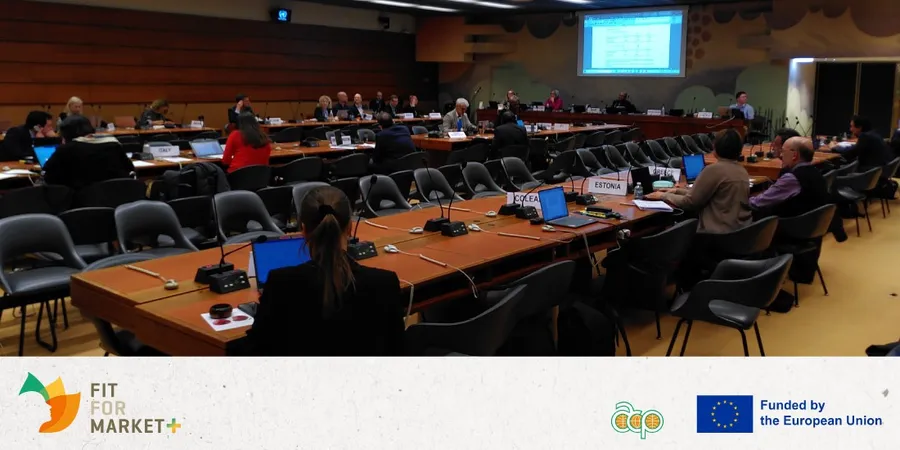
As part of its FFM+ programme, COLEAD participated in the 72nd Specialised Session on Fruit and Vegetables of the United Nations Economic Commission for Europe (UNECE), which took place from 6 to 8 May at the Palais des Nations in Geneva. The event brought together some thirty delegations representing national inspection authorities, professional organisations (such as Union Fleurs and COLEAD) and international institutions such as ITC/UNCTAD, ISO, FAO and OECD.The decisions taken at this meeting will be submitted for approval to the Working Party of the Committee for Agricultural Products in November. The adopted standards will then be published on the UNECE website and officially applied.Among the highlights, the new standard for sweet potatoes, to which COLEAD contributed through a working group of exporting and importing members, was slightly modified in terms of sizing, minimum size and uniformity of size for categories 1 and 2. After a one-year recommendation period, this standard will be proposed for final adoption in November next year.Other vegetable standards are also being revised, particularly with regard to tolerances for defects and size uniformity, with the aim of reducing agricultural losses and food waste. Carrots have been selected as a pilot product to study the feasibility of an in-depth revision in this respect.The meeting also examined a possible revision of the standards for flowers, which were established in 1986 and revised in 1994. Union Fleurs presented the evolution of the world market for cut flowers, the new varieties being traded and their origins. Although the UNECE standards serve as a contractual basis, supplemented by the private standards of the VBN (Dutch Flower Auction Association), the trade currently sees no need to revise the existing standards.Finally, FAO's Trade and Markets Department presented the process of modifying customs nomenclatures in line with the International Harmonised System. Based on surveys of national statistical offices in 190 countries and an analysis of significant product volumes, FAO has submitted a request to the World Customs Organisation for changes to create new nomenclatures for certain tropical products. These changes, which concern codes 0804.50 (mangoes, mangosteens, guavas) and 0810.90 (lychees, longans, pitahaya, pomegranates, passion fruit), will enter into force on 1 January 2028.This activity is supported by the Fit For Market Plus (FFM+) programme, implemented by COLEAD within the Framework of Development Cooperation between the Organisation of African, Caribbean and Pacific States (OACPS) and the European Union. This publication receives financial support from the European Union and the OACPS. The content of this publication is the sole responsibility of COLEAD and can in no way be taken to reflect the views of the European Union or the OACPS
 News
News
Corporate governance training for new board members of the Kenya Flower Council (KFC)
COLEAD recently organised corporate governance training for the new board members of the Kenya Flower Council (KFC), a leading Business Membership Organisation (BMO) in the Kenyan horticulture sector.The training included a comprehensive assessment of KFC’s strategic plan, aimed at extracting key takeaways and lessons to inform and provide insights to the new board as they embark on their term. The corporate governance intervention and two-day training (22 to 23 March 2024) not only focused on strengthening the BMO's governance framework but also aimed at empowering the board members with the necessary knowledge and skills to effectively steer the organisation towards its strategic objectives.The training was crucial in fostering good governance practices, ensuring board effectiveness, and promoting responsible and sustainable business operations. A concluding remark for the members was:
 News
News
EU and GB MRL changes in 2024 (January – May 2024)
Changes to EU and GB pesticide maximum residue levels COLEAD’s monitoring of pesticide regulations covers maximum residue limit (MRL) changes in both the EU and Great Britain (GB). Note that EU MRLs still apply in Northern Ireland (GB covers only England, Scotland, and Wales). During the period January – May 2024, we have been highlighting significant changes to EU MRLs that affect 61 active substances, 38 of which are important for ACP export horticulture. During this same period, changes of MRLs in GB affect 23 active substances, including 18 that are key in ACP horticulture. The EU and GB have also recently notified the World Trade Organization (WTO) of additional proposed changes involving a further 7 substances including 5 that are key in ACP horticulture (cyproconazole, spirodiclofen, pyridaben, tebufenpyrad and thiacloprid). Note that comments and concerns can be submitted to the WTO via your national contact points . How will ACP producers/exporters be affected? Changes to EU/GB MRLs also apply to products that are exported to the EU/GB. Growers producing for export may need to adapt their practices to meet the new MRL or, if this is not possible, stop using these products and look for an alternative method of pest management. What should ACP producers/exporters do now? For each plant protection products (PPPs) and crop concerned, the Good Agricultural Practices (GAPs) in place will need to be verified and possibly adapted to ensure compliance with the new MRLs. The GAPs include dose rate, number of applications, and pre-harvest interval. In some cases, adaptations to the GAPs will allow the new MRLs to be met (see Crop Protection database ). However, in many cases, especially where the level is reduced to the Limit of Determination (LoD), it may not be possible to meet the new MRL, and growers will have to look for alternative crop protection solutions. This is essential to avoid interception and destruction of exported produce at the EU/GB borders. In case there is no available alternative, manufacturers can consider the option of requesting an import tolerance. The process for approving an import tolerance MRL in the EU can take time and may imply costs. It is recommended to contact the PPP manufacturer to assess the feasibility. If you have any major concerns about these changes, and fear that you will be left without an effective and locally available alternative, please contact COLEAD at: network@colead.link .
 News
News
COLEAD research and advocacy supporting the vanilla sector in the face of changing EU regulations - 150,000 producer families potentially affected
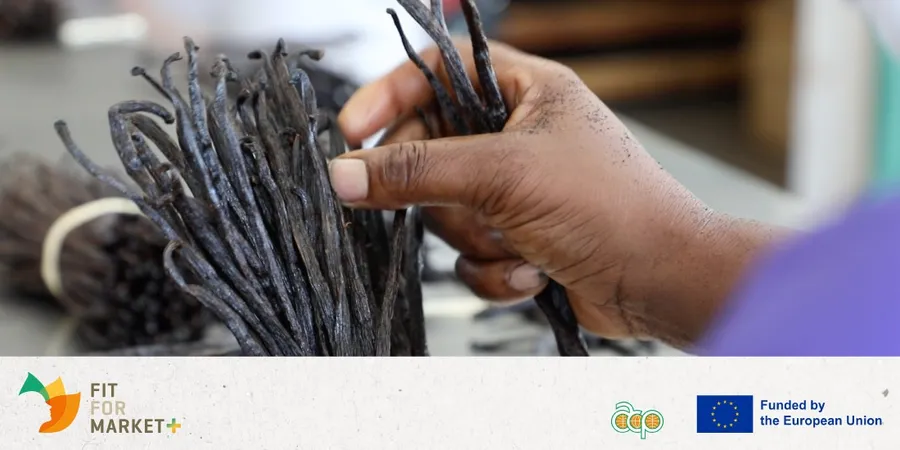
Commission Regulation (EU) 2023/377 was published in February 2023, reducing the nicotine maximum residue levels (MRLs) for seed spices and fruit spices to the limit of determination (LOD). This change was not because of any identified risk to consumer health but was based on data submitted to the Commission indicating the nicotine levels occurring in these products under current practices. The LOD was first set at 0.02 mg/kg, but subsequently revised to 0.05mg/kg, based on new information from the European Union Reference Laboratories (Commission Regulation (EU) 2023/1536).Unfortunately, the data submitted to the Commission was subsequently found to be unrepresentative, and the Madagascan vanilla sector reached out to COLEAD for support when they became aware of the change. Preliminary data collected by vanilla exporters/importers indicated that 81% of export samples analysed would exceed the proposed EU MRL of 0.02 mg/kg and 63% the proposed the EU MRL of 0.05 mg/kg (to enter into force in September 2023). An MRL at the LOD was thus a major threat to the sector.Madagascar is the main source of vanilla for the European Union, and Madagascar and the Comoros alone account for about 80% of vanilla exports worldwide. Losing access to the EU market for potentially 80% of exports would have a drastic impact on the industry as a whole, and on the local economy. Some 80,000 farms, more than 150,000 farming families, and more than 6,000 intermediaries depend on vanilla production in Madagascar. The value of the vanilla export sector in 2017 ($680.2 million) represented approximately 6.8% of the country's GDP, exceeding 7% with exports of vanilla extract included (World Bank, 2021).COLEAD rapidly implemented the following activities through the Fit For Market Plus programme:Development of roadmap to tackle the problem.Workshop in May 2023 in Madagascar, organized by the EU Delegation, presenting the EU regulatory processes and explaining how third parties can provide feedback and influence.Assistance to the sector for the collection, collation and submission of new representative data to the EU to support a review of the MRL.Facilitation of dialogue and coordination between key stakeholder groups (EU importers, European Spice Association, Exporters in Madagascar,) and with the European Commission.Field surveys in Madagascar to assess practices and identify potential contamination routes along the supply chain.Collection of vanilla samples at different steps of the supply chain to identify the factors/processes responsible for the nicotine contamination (analysis ongoing).Preliminary research conducted by CIRAD and IPS2 University in Paris identified a potential precursor of nicotine - nicotinate - in the pod. A concept note has since been prepared in collaboration with CIRAD and IPS2, for a genetic/metabolism study to assess whether nicotine production could be endogenous.COLEAD was instrumental in facilitating dialogue between the key stakeholders including Groupement des Exportateurs de Vanille de Madagascar (GEVM), Sustainable Vanilla initiative (SVI), European Spice Association (ESA), Embassies in Brussels, and relevant EU bodies (DG SANTE, DG INTPA, DG TRADE).Thanks to its research team, network, and unique position at the interface between private and public sectors (in Madagascar and the EU), COLEAD was able to foster effective coordination between stakeholders that enabled the collection, collation, analysis and submission of data from 600+ vanilla samples. This data was used by EFSA (combined with other datasets) to conduct a new risk assessment by the end of 2023 that resulted in the modification of the vanilla MRL back to the original value of 0.3 mg/kg by 27 February 2024 (Commission Regulation 2024/451).The actions of COLEAD helped to avoid a potentially major disruption of the trade in vanilla between Europe, Madagascar and the Comoros. It is an example of COLEADs capacity to mobilize its expertise, and facilitate public-private coordination, through a programme such as FFM+, to launch a response when a trade-SPS emergency such as this arises.This activity is supported by the Fit For Market Plus (FFM+) programme, implemented by COLEAD within the Framework of Development Cooperation between the Organisation of African, Caribbean and Pacific States (OACPS) and the European Union. This publication receives financial support from the European Union and the OACPS. The content of this publication is the sole responsibility of COLEAD and can in no way be taken to reflect the views of the European Union or the OACPS.
 News
News
Participating in consultations on changes to EU agri-food and fisheries legislation: feedback from the webinars held on 28 and 30 May 2024
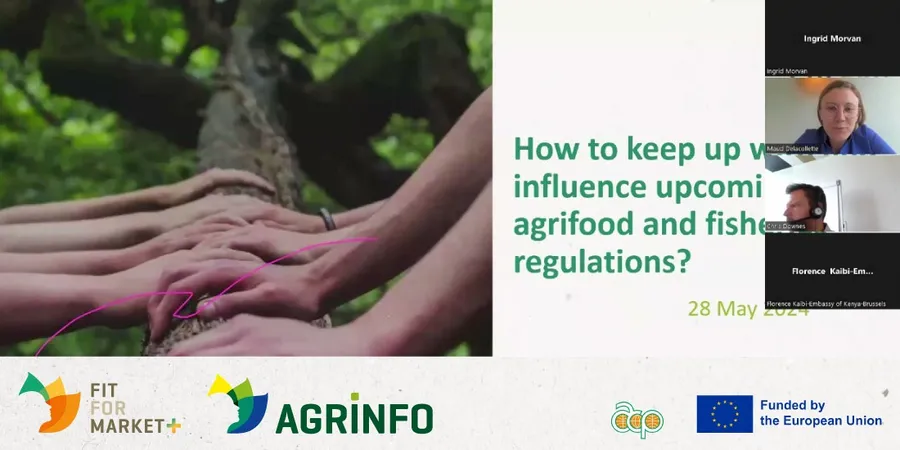
As part of the FFM+ and AGRINFO programmes, COLEAD, through its Regulations & Standards and Technical Assistance departments, organised an informative webinar on the procedures for monitoring and participating in consultations on future changes to the European Union's agri-food and fisheries regulations.The webinar, which attracted a total of 273 participants (mainly from BMOs and Competent authorities in member countries of the OACPS), was held in two sessions: in English on 28 May and in French on 30 May.The discussions focused on a number of key issues:the challenges faced by the EU's partner countries, particularly in Africa, the Caribbean and the Pacific (ACP), in monitoring changes to EU rules.how the EU is addressing these challenges and the opportunities for participation in consultations;mechanisms for being informed about and making effective use of consultations;the potential impacts of certain changes;the investments required to meet new safety, social and environmental standards and who will bear the costs;the ability of ACP producers to adapt within the timeframe set by the EU.The EU's 'Have Your Say' consultation system and WTO consultations offer opportunities for influence. The results of these consultations are essential for informing EU policy decisions, and the participation of ACP stakeholders is crucial, but currently too limited.To keep abreast of the consultations, participants were encouraged to subscribe to AGRINFO’s newsletter, which is sent out every 2-3 weeks. To subscribe, click here.The AGRINFO website (https://agrinfo.eu) also provides links to EU SPS/TBT notifications and WTO draft texts, with clear explanations of forthcoming changes, their implications and recommended actions.During the webinar, COLEAD outlined the benefits available to ACP countries under the Fit For Market Plus programme:support for the establishment of a monitoring and data collection systemfacilitation of public-private dialoguefacilitating regional/intercontinental exchanges to share experiencesresearch and innovation (e.g. trials) to feed indicators and dataA survey conducted during the webinar showed that the majority of participants were not aware of the EU and WTO consultation systems or their national contact point for submitting comments via WTO/ePing. This encourages us to implement and multiply this type of initiative.This activity is supported by the Fit For Market+ programme, implemented by COLEAD in the framework of the development cooperation between the Organisation of African, Caribbean and Pacific States (OACPS) and the European Union; and AGRINFO, is a programme funded by the European Union and implemented by COLEAD. This publication receives financial support from the European Union and the OACPS. The content of this publication is the sole responsibility of COLEAD and can in no way be taken to reflect the views of the European Union or the OACPS.
 News
News
Black bananas, Zuchiolo, seedless lemons, sweet red onions... new AI technology.... The sector is innovating and putting on a show at EU trade fairs!
Through the FFM+ programme, the COLEAD Market Insights team keeps an eye on trends and innovations at major trade shows in Europe and beyond. We meet our stakeholders, visit stands and talk to as many people as possible to gather the latest news and trends. Want to know more about the big stories from the shows or the latest varieties to hit the fruit and vegetable market? In this article, we share some of the discoveries we made during the 2024 trade fairs.Since the beginning of the year, we have explored the exciting future of produce at Fruit Logistica 2024, BIOFACH 2024 and Macfrut 2024. From the Black Banana to the award-winning Zuchiolo 🏆, and the emergence of seedless lemons, sweet red onions and exotic fruits like the Rubyglow Pineapple, the industry is evolving rapidly.As well as exciting new varieties, cutting-edge technologies such as AI are shaping the future. We have also discovered innovative processing methods, such as freeze-drying, which offer exciting culinary experiences and ultimate convenience.Black Banana: extended shelf-life and rich taste[caption id="attachment_18695" align="alignleft" width="226"] Black banana from Ebonfare at FL24. “Rich caramel aroma, deliciously creamy texture” and accredited Great Taste.[/caption] Black Banana: a novel processed form of bananas, apples and pears obtained by slow drying under controlled conditions. The resulting products are black in colour, with a caramel flavour and soft texture. They also have a shelf life of 2 years. At FL24, we had the opportunity to review the analytical reports of the products from the microbiological analysis tests. The inventor of the black banana, Krisztián Nagy, could imagine bringing the slow-drying technique to Africa. Let's see if this could be a new option for adding local value and reducing food waste!Zuchiolo: A pioneering vegetable mix that won the FL24 2024 Innovation Award[caption id="attachment_18698" align="aligncenter" width="342"] The Zuchiolo: on the outside it looks like a squash, but once cut it looks more like a zucchini.[/caption] Zuchiolo: The only new vegetable at FL24 and winner of the FL24 2024 Innovation Award. The Zuchiolo is a previously unknown vegetable with a blend of colours and flavours, of which the yellow Zuchiolo variety is completely new. Zuchiolo is very versatile, it can be cooked and eaten fresh and can be kept for several weeks without refrigeration. The taste is a cross between courgette and cucumber, while the vegetable also has some characteristics of a pumpkin. It is the result of 5 years of cross breeding by Beyond Seeds and IFAPA and is adapted to greenhouse production in Mediterranean climates. How did you win the FL24 Innovation Award? By creating an attractive product with a wide range of uses, but also by adding a good story! The Zuchiolo is a social project, with 50% of the proceeds going to social causes such as the fight against cancer.Innovative varieties: Seedless lemons, sweet red onions, miniature apples and more!Other exciting innovative varieties includeSeedless lemonsAlthough introduced a few years ago, we have seen seedless lemons become increasingly popular in the marketplace. The variety is still patented by LemonGold TM, but it is being grown by many growers in different countries and the product seems to be very well received by consumers. Demand is currently higher than supply, which we believe makes it an interesting investment for new growers. Other recurring trends in citrus have been the introduction of new early and late varieties such as the Sweet Cott, special pigments such as pink lemons or spotted oranges, and a general focus on sweet, juicy, easy-peeling fruit with almost no pips.Sweet red onions
 News
News
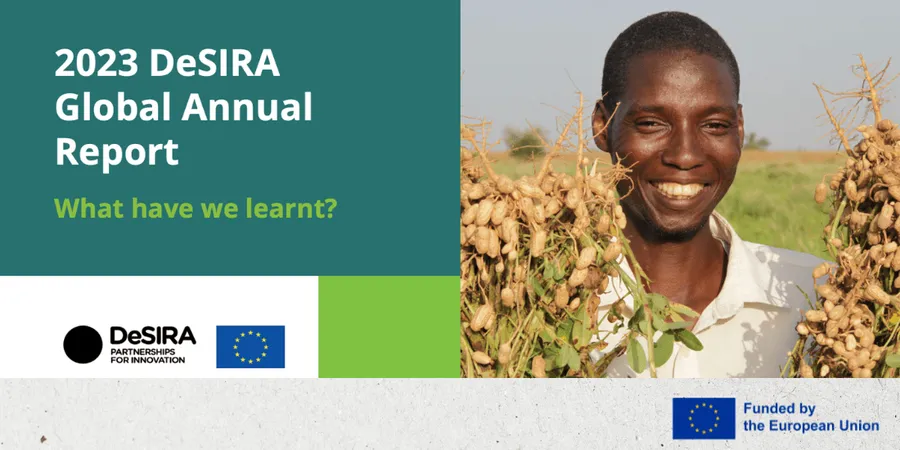
2023 DeSIRA Global Annual Report
The Development Smart Innovation through Research in Agriculture (DeSIRA) Initiative, supported by the European Commission (DG INTPA), supports research and innovation (R&I;) projects in low and middle-income countries in Africa, Asia and Latin America through 68 projects (2019-2025). DeSIRA encourages a climate-relevant, productive and sustainable transformation of agriculture and food systems by adopting climate-smart and agroecological innovations through multi-stakeholder collaboration, and capacity development at individual and organisational levels to promote innovation. COLEAD is the lead of the second service area (with support from the Natural Resources Institute) of one of these projects: DeSIRA-LIFT. By “Leveraging the DeSIRA initiative for agri-food systems transformation”, this project aims to catalyse DeSIRA programme current and future activities (June 2021–May 2025).Each year, the DeSIRA Initiative assesses its performance based on the DeSIRA Global Monitoring and Evaluation Framework to steer the DeSIRA Initiative, assess overall achievements and communicate on new approaches to agricultural R&I.;The Annual Global Report 2023 was recently published and provides updates about the progress of 46 DeSIRA projects that have been implemented for at least two years as of December 2022. While the impact assessment of the DeSIRA Initiative requires a long-term perspective that goes beyond the projects’ timeframes, several organisations strengthened by DeSIRA projects are expected to achieve a positive impact on food system and innovation system transformation.Links to the (summary) reports are below: · Brief summary · Annual Global Report 2023 (full report)Key figures about the outputs of the DeSIRA projects include:234 multi-stakeholder innovation mechanisms strengthened or developed at international national, and local/subnational levels (output 1)955 climate-smart or agroecological innovations under development for use at farm level (output 2)250,000 smallholder farmers reached by R&I; initiatives (output 3)34 curricula or training programmes have been upgraded or developed to respond to the needs for agricultural innovation at national level (output 3)598 knowledge products developed, including 54 scientific publications (output 5)61 policy dialogues on agriculture and food policy development organised, and 63 policy documents produced (output 6)Key figures about the outcomes of the DeSIRA projects include:187 innovations adopted by smallholder farmers (outcome 1)150 national research entities, 157 farmers’ organisations and 75 local NGOs and community-based organisations in the process of strengthening their innovation capacity (outcome 2)182 agriculture and food-related micro, small or medium enterprises (MSMEs) strengthened or created (outcome 3)43 countries or international organisations have increased their ability to sustainably transform agriculture and food systems and/or adapt to climate change (outcome 4).Photo credit : DESIRA LIFT Community
News
Potential MRLs reduction for thiacloprid, a widely used pesticide on fruits and vegetables
Thiacloprid is a neonicotinoid insecticide used on a wide range of horticultural crops to control sucking and chewing insects.The EU’s approval for thiacloprid has not been renewed in 2020 due to concerns about its toxicity and groundwater contamination risks. Consequently, in July 2023, the European Commission proposed setting maximum residue levels (MRLs) for thiacloprid to the limit of determination (LOD) in all products, except where import tolerances or Codex MRLs are considered safe (G/SPS/N/EU/651). However, the European Parliament rejected this proposal and requested all MRLs to be reduced to the LOD, citing concerns about public health and the impact on bees.Subsequently, France took proactive measures by implementing a national regulation prohibiting the placement of fruit and vegetables containing thiacloprid above the LOD of 0.01 mg/kg on the French market. This temporary Regulation remains valid for one year or until a new EU Regulation is adopted.The Commission presented the 8 May a new proposal (G/SPS/N/EU/763) on thiacloprid MRLs in which all MRLs are lowered to the LOD. These new MRLs are expected to enter into application by mid-2025.Until then, current EU MRLs apply except in France, where MRLs for fruit and vegetables are reduced to the LOD from 25 February 2024. The new French MRLs do not apply to fresh fruit and vegetables acquired by the importer or marketer no later than 1 month after the entry into force of the new Regulation. In practice this means that the new MRLs only concern fresh fruit and vegetables acquired after 25 March 2024.Important horticultural products from ACP countries for which new MRLs could have an impact are summarized in table 1. Considering the wide range of applications and the very short grace period, users of thiacloprid on products for the French market are advised to look for alternatives immediately. Should you encounter specific issues regarding this matter, please contact COLEAD at: network@colead.link.Table 1. European Union (EU) proposed maximum residue level (MRL) and France temporary MRLs for thiacloprid on key crops affecting African, Caribbean and Pacific (ACP) horticultureCOLEAD has compiled a dashboard presenting registered products containing thiacloprid and their respective conditions of use in ACP countries. This also outlines the ACP countries where the EU MRL changes for thiacloprid might have repercussions for export. It is based on information extracted from the latest national lists of registered plant protection products made available by 34 ACP countries. COLEAD is making all effort to provide you with relevant and updated information. To confirm if your country is included and the version of the list of registered products considered in this review, please refer to the list here.If your country is not listed, we highly recommend reaching out to your national authorities to check which products might be affected by these changes.What should ACP producers/exporters do now?It is essential that suppliers of fruit and vegetables to the French market are aware of these changes, verify their use of thiacloprid, and take measures to ensure compliance with the new MRLs as soon as possible. In this case, as the level is reduced to the LOD, it might not be possible to meet the new MRLs, and growers will have to look for alternative crop protection solutions. This is essential to avoid interception and destruction of exported produce at the French borders. Producers and exporters should also take measures to ensure compliance with the upcoming EU lowered MRLs.Competent authorities of countries that are members of the WTO can submit comments on the EU’s proposal by emailing the EU SPS Enquiry Point until 7 July 2024.If you have any major concerns about these changes, and fear that you will be left without an effective and locally available alternative, please contact COLEAD at: network@colead.link.For further information on the proposed new rules and their implications, see Maximum residue levels for thiacloprid record developed by AGRINFO programme implemented by COLEAD.ReferencesLewis, K.A., Tzilivakis, J., Warner, D. and Green, A. (2016). An international database for pesticide risk assessments and management. Human and Ecological Risk Assessment: An International Journal, 22(4): 1050-1064. DOI: 10.1080/10807039.2015.1133242République Française (2024). Arrêté du 23 février 2024 portant suspension d'introduction, d'importation et de mise sur le marché à titre gratuit ou onéreux en France de fruits et légumes frais provenant de pays tiers à l'Union européenne ayant fait l'objet d'un traitement avec un produit phytopharmaceutique contenant la substance thiaclopride.European Commission (2023). Draft Commission Regulation [rejected by the European Parliament] as regards maximum residue levels for thiacloprid in or on certain products.European Commission (2024). Draft Commission Regulation as regards maximum residue levels for thiacloprid in or on certain products.This activity is supported by the Fit For Market Plus programme, implemented by COLEAD within the framework of Development cooperation between the Organisation of African, Caribbean and Pacific States (OACPS), and the European Union (EU). This publication has been produced with the financial support of the EU and the OACPS. Its contents are the sole responsibility of COLEAD and can under no circumstances be regarded as reflecting the position of the EU or the OACPS.