
Cultivating
Sustainable Futures
 News
News
Taking the time to Connect, Listen and Observe
BIOFACH was a great opportunity for COLEAD to connect with our partners-beneficiaries.Joyce Kamugisha from JJ Agro Growers Ltd., Tanzania, shared that the knowledge she gained from the training on “Access to market” was extremely valuable.Joyce shared the three key messages with us: Start from where you are – opportunities are in front of you Look at your local market – test your product locally Three words international clients want to hear from you before doing any business: sustainability, certification and traceability Joyce took this opportunity to thank the expert Cristina Tallens for sharing her knowledge and experience. It is reaCOLEAD supports horticultural companies by providing technical assistance and trainings to their employees, to help them to access the market by complying with EU regulations and requirements.If you want COLEAD to be a part of your journey, send your application for the Fit For Market Plus support.This activity is supported by the Fit For Market Plus (FFM+) programme, implemented by COLEAD within the Framework of Development Cooperation between the Organisation of African, Caribbean and Pacific States (OACPS) and the European Union.
 News
News
Change of maximum residue limits (MRLs) from the CODEX ALIMENTARIUS
Every year, the use of many plant protection products is affected by changes to permitted Maximum Residue Limits (MRLs). As a result of COVID, the 2020 review of MRLs by the CODEX committee on pesticide residue did not take place. In 2021, MRLs were changed for 68 active substances and recently published in the CODEX Pesticide MRL database.These changes often have a direct impact on producers who may need to change production methods (Good Agricultural Practices - GAP) in order to comply with the new MRLs.It is essential for producers to keep up-to-date with MRL changes, and to make any necessary adjustments in time to ensure compliance with the regulations, either by adapting the GAP, or by using alternative control methods. Any non-compliances can lead to the interception and destruction of goods, thus causing significant financial loss as well as reputational damage.This News focuses on key CODEX MRL changes for the ACP horticultural sector. The changes presented in Table 2 include the setting of new MRLs, and changes to previous CODEX MRLs.
 News
News
Over 400 companies have used the COLEAD Sustainability Self-Assessment System
The Sustainability Self-Assessment System (SAS) is a tool designed to facilitate, monitor and evidence the adoption of good practice that will enable producers and MSMEs become more sustainable, competitive and resilient.The SAS is one of the three pillars of the COLEAD sustainability approach, along with the Sustainability Charter and training system.The SAS has four key objectives: To provide a framework for continuous improvement in the application of sustainability good practice, with a particular focus on practices where there is a strong business case for adoption by growers To facilitate market access by aligning practices with industry sustainability standards (certification schemes and buyers’ demands) Through access to critical data, to act as a business management tool to help companies become more competitive and resilient, with better business planning To create a framework for COLEAD to plan, deliver and monitor its individual support projects. Following two well-attended training sessions on the SAS in December 2022, an ongoing training programme includes completion of a self-study course, peer exchanges and mentoring/coaching sessions.
 News
News
Côte d’Ivoire : new plant protection product for mango fruit flies
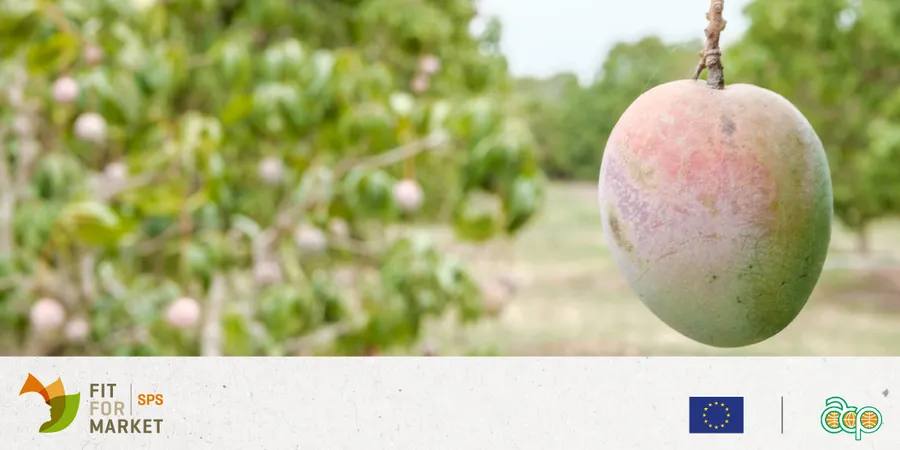
Fruit flies remain a major challenge for West African mango exports to the EU. For species classified as ‘union quarantine pests’, fruits containing larva cannot enter the EU, and infested consignments will be rejected by the European phytosanitary services. The problem facing producers is compounded by the limited range of products authorised for their control.In a step towards overcoming this challenge, a new plant protection product has recently been registered in Côte d’Ivoire and will be available to producers for the 2023 mango season. The new product, Bb-Protec (Beauveria bassiana), is a pre-harvest treatment to be used in orchards and is compatible with organic production (producers should confirm this with the destination market).The fast-track registration of Bb-Protec was granted by local authorities thanks to the quality of the successful field trials and associated reports generated with the support of COLEAD's Fit For Market SPS programme in 2021.This activity is supported by the Fit For Market SPS programme, implemented by COLEAD within the Framework of Development Cooperation between the Organisation of African, Caribbean and Pacific States (OACPS) and the European Union.
 News
News
AGRINFO – Launch of a new global agri-food information programme
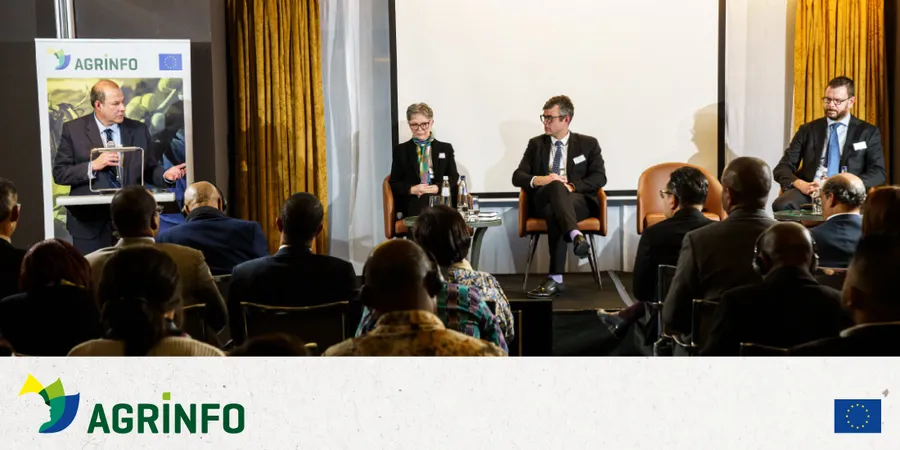
Brussels, 31 January 2023: The AGRINFO programme launch was attended by 119 participants including Embassy representatives from 45 countries worldwide, alongside EU Commission Services and industry associations. Following an introduction to the programme’s evolution and its new information platform and dissemination tools, those attending were able to meet and catch up with colleagues and friends.The AGRINFO programme, funded by the EU and implemented by COLEAD, is designed to keep low- and middle-income countries up-to-date on new EU policies, regulations and standards with potential impacts on all agri-food value chains.The event was introduced by Dr Leonard Mizzi, Head of Unit at the European Commission, Directorate-General (DG) for International Partnerships (DG-INTPA). Representing COLEAD, Jeremy Knops (Delegate General), Morag Webb (Head of Science and Policy) and Chris Downes (Policy and Law Lead Expert) presented the pressing need for this new information programme, its aims, and progress to date.Agri-food products account for a large share of traded goods from developing and emerging economies to the EU. The evolution of market requirements under the Farm to Fork strategy of the European Green Deal presents an opportunity to positively influence production and trade in developing and emerging economies – but it will be critically important to ensure that this transition is aligned with the Sustainable Development Goals, and that the poorest and most vulnerable players are not left behind.So the aim of AGRINFO is to ensure that information about new EU regulations and standards, and their implications, is transferred promptly, and in a digestible form, to the people who need it. These include producers, processors, traders and competent authorities in developing and emerging economies who must take action to ensure that exported produce – including that from small-scale producers and operators – remains compliant and retains access to the EU market. The value chains covered include food and feed of non-animal origin, animals and products of animal origin (including fish), plants and plant products, with a primary focus on agri-food.The programme supports all those involved in global agri-food value chains via: a new, open-access AGRINFO website presenting clear summaries about the “what, why and when” of recent and upcoming changes, and actions needed to adjust to new rules AGRINFO UPDATE – all interested stakeholders can subscribe to receive regular email alerts every 2 weeks listing the most recent developments. The programme also provides facilities specifically for programme partners in low- and middle-income countries (as defined by the OECD): the competent authorities at national/regional level and national SPS committees; also business membership organisations and national farmer associations The facilities available to partners are: AGRINFO TOPICAL BRIEFING emails, as and when needed, with more detailed information relevant to their own sector and locality Consult AGRINFO via the website to request clarification about the content, and to raise concerns about the potential impacts on their value chain of changing policies, regulations and standards. AGRINFO is at the start of its journey and will be evolving over the coming months and years. COLEAD and the AGRINFO team are keen to receive feedback on all aspects of the website and the programme.Sign up for regular AGRINFO updates here.The AGRINFO programme is funded by the European Union and implemented by COLEAD. The AGRINFO information platform was created and maintained with the financial support of the EU; its contents do not, however, reflect the views of the EU.
 News
News
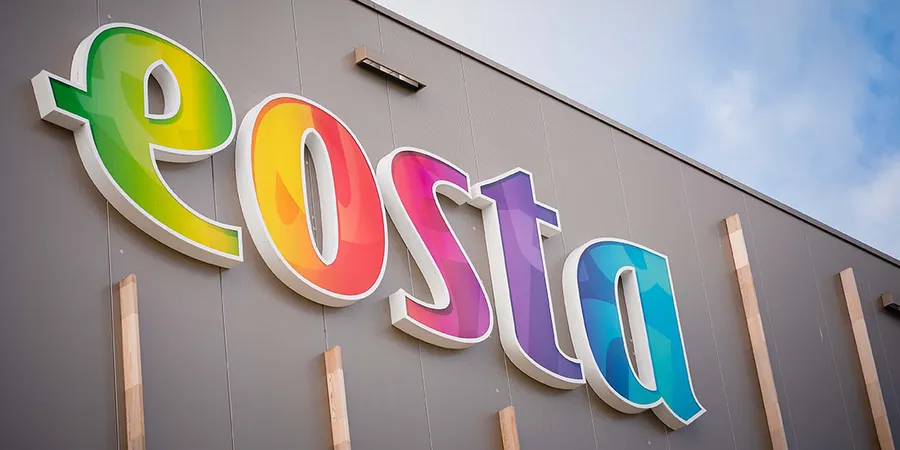
COLEAD member spotlight: Eosta, more than organic
Eosta is an international distributor of fresh organic and fair fruits and vegetables, with a focus on overseas fruit and greenhouse crops. The company operates worldwide, maintaining a close working relationship with more than 1,000 growers.Food transparency is at the heart of Eosta’s ethos. The company’s ‘trace & tell’ system, Nature & More, provides consumers with transparency about organic products.In late 2016, Eosta, through Nature & More, introduced the application of a ‘natural branding’ laser technique to mark organic fruit and vegetables, to help reduce the use of stickers and packaging in supermarkets – see “Eosta’s natural branding technology saves the fifty millionth piece of plastic packaging”.As the article mentions, to date, Eosta estimates that its laser branding of organic fresh produce has saved the equivalent of an incredible 50 million pieces of plastic packaging. This corresponds to 500,000 kg of plastic, 216,000 square metres of paper, and an energy saving of 2.2 million kg of CO2 emissions.Natural branding involves marking fruit and vegetables using laser light, which creates a mark be removing a small amount of pigment from the outer layer of the skin or peel. According to Eosta, “this method saves plastic and paper and huge amounts of energy and emissions: a laser mark requires a mere fraction of the energy required for a sticker.” In 2018, Eosta received the Sustainable Food Award for this innovative packaging method.Currently, Eosta primarily uses natural branding for ginger, avocadoes, mangoes and sweet potatoes, in addition to cucumbers, kiwifruit and other products. The company is also investigating methods to brand citrus and other fruit varieties.Eosta believes that consumers are extremely enthusiastic about efforts to reduce the amount of plastic used to package organic fruit and vegetables.Paul Hendriks, Eosta packaging manager, said, “The most sustainable packaging is the absence of packaging, and for organic products, this is achieved using natural branding. Studies show that consumers are very happy about this, because they naturally prefer buying their organic products free from plastic packaging.”Volkert Engelsman, CEO of Eosta, is a member of the COLEAD Board of Directors.
 News
News
Become informed, trained and assessed and make progress with COLEAD's resources
COLEAD is a network of businesses, professional associations and experts committed to inclusive and sustainable agriculture. As a non-profit private sector organisation, our mission is to facilitate and implement action to increase the contribution of the agricultural sector to the undertaking of the Sustainable Development Goals (SDGs).To achieve this, COLEAD provides you with access to tools and means of action that have been consolidated over the past 20 years in the implementation of development programmes funded mainly by the EU and the Organisation of African, Caribbean and Pacific States (OACPS): Online platforms for learning, training, monitoring markets and regulatory developments in the EU market A sustainability self-assessment system tailored for MSMEs A sanitary and phytosanitary quality control system assessment tool adapted to public inspection services An information system on trends and news in the agri-food sector A community of like-minded professionals, enabling continuous learning between partners, sharing of experiences and opportunities for joint activities Prioritisation of future technical and policy developments that facilitate the implementation of concrete and operational responses to the SDGs. Would you like to contact us? Click hereDo you want to send us a request for support in the framework of our ongoing programmes*? Click hereDo you wish to join the association? Welcome!* Currently, these programmes are available for companies or organisations active in the horticultural sector in African, Caribbean or Pacific countries.
 News
News
Kenya: Improving KEPHIS communication and relationship dynamics with various stakeholders
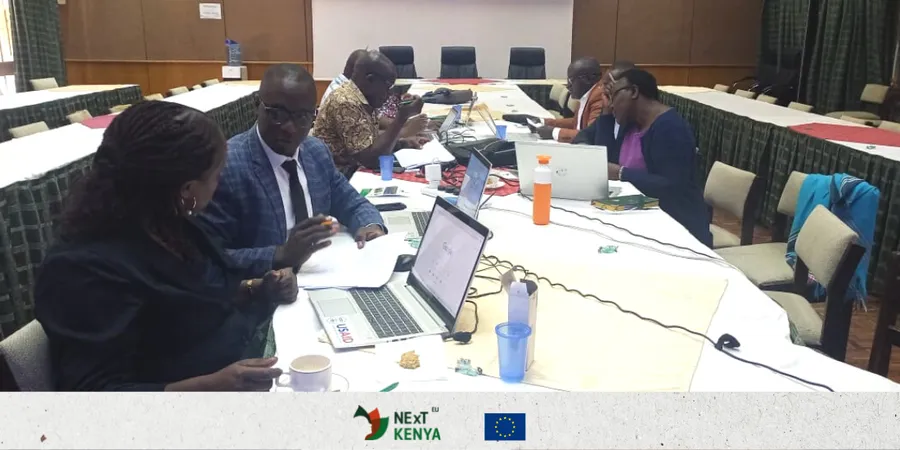
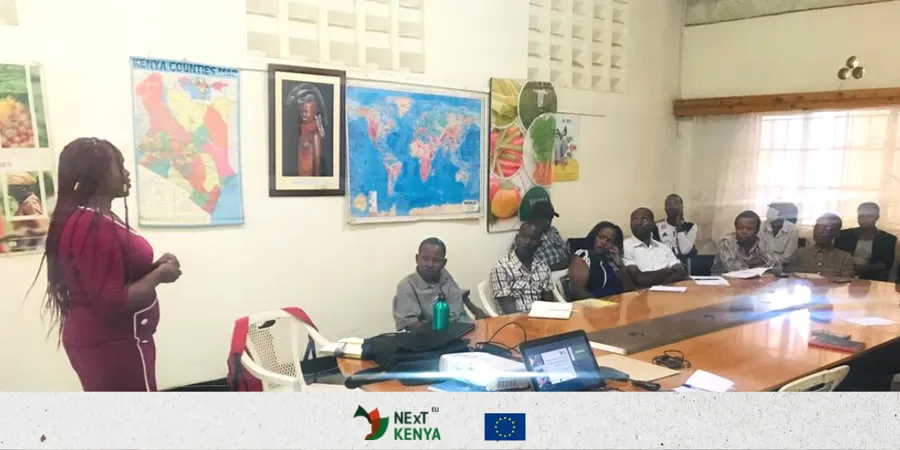
Consistent and regular communication of official government information and international SPS requirements is a challenge to many agencies. There is therefore a need to ensure proactive, transparent and effective communication with stakeholders on market requirements and risks.Communication is key for a National Plant Protection Organisation (NPPO): the Kenya Plant Health Inspectorate Service (KEPHIS) needs to communicate with agricultural industry players, government agencies/departments and donors. Communication can be informative but can also be used for specific targets to relay information to both internal and external stakeholders. Public communication is important but delicate. Government officials are confronted with four main constraints typical of the public sector compared to the private sector. These constraints are more complicated due to (i) Unpredictable environment; (ii) Lack of capacity to understand legal and formal restrictions; (iii) Low capacity on knowledge of procedures; and (iv) Lack of understanding on the diverse objectives.COLEAD, through the NExT Kenya programme, supported KEPHIS to understand its communication dynamics through a needs assessment exercise. This was done both virtually and during a physical session to collect more information. Among the challenges identified were (i) communicating change; (ii) effective use of technology; (iii) delayed communication especially on market trends; (iv) management communication; (v) slow uptake of emerging change due to low responsiveness to communicated messages; and (vi) frequent negative/misrepresentation especially by media. These needs implied that there are serious rifts in communication, especially regarding equipping and communication of the message to the intended users. The proposed recommendations included: (1) capacity building for management on communication with their staff as well as media; (2) effective packaging of approaches dealing with destination markets; (3) development of institutional memory through archiving and data storage; (4) adoption of versatile and official approaches whilst communicating with stakeholders (both internal and external); (5) adoption of proactive engagement with the media; (6) development of key messaging whilst communicating on particular subject matters aligned with the KEPHIS strategic plan.Subsequently, COLEAD, through the NExT Kenya project, organized a Training of Trainers (ToT) targeting regional KEPHIS managers within the phytosanitary services on 23–25 November 2022 at the KEPHIS offices. The aim was to majorly open the communication channels at the workplace through encouraging efforts towards healthy working relationships between all workers and their managers. Mid-level managers were the primary target of the training – they are key to the success of any organisation due to their strategic positioning between senior management and low-level staff members. They are central to the communication flows within the organization, with most communication flowing from and through them to other areas of the organisation, effectively causing actions to be undertaken to achieve set objectives for the organisation. Mid-level managers are the bridge between bottom-up, lateral, and top bottom communication within the organisation. They are well placed to cascade any learnings to all levels of the organisation given their interface with low-level staff and senior management.The training was tailored to equip mid-level managers with intuitive aspects of communication that can be shared with all levels of staff to inspire change at the workplace by unlocking information flow and nurturing a conducive environment for effective communication. Participants were sensitised to handle all types of communication with tact as they held leadership positions and needed to effectively communicate in order to inspire team spirit among staff members. The training also addressed issues of branding and brand communication to stakeholders to ensure that (i) external stakeholders interact with the brand and know KEPHIS services; (ii) services offered by KEPHIS are well known by existing and potential clients; (iii) visibility of regional offices is enhanced through KEPHIS leadership; (iv) regulatory aspects of the KEPHIS are well understood by the public for cohesive cooperation; and (v) food security and sustainable development are achieved through an informed public and development partners. Mid-level managers were motivated by witnessing the importance mid level management attaches to the training and to their development of communication skills. The training helped staff, including management, to ascertain the importance of KEPHIS in improving its capacity to tell its own success stories.Finally, COLEAD supported the development of the KEPHIS communication strategy. The overall objective of this communication strategy is to improve current communication practices at KEPHIS to ensure they are fit-for purpose to enable KEPHIS to deliver on its phytosanitary mandate. The communications strategy applies current best practice templates and ensures all key components for the success of the strategy are analysed in detail. These include target audiences, key messages, communication tactics and a proposed implementation plan for some selected activities. The specific objectives of this strategy include: Raise the profile and visibility of the KEPHIS to the general public and especially at the grassroots levelExploit innovative and existing communications channels and techniques to maximise awareness and promote understanding of KEPHIS with its stakeholders in a bid to encourage more interaction and cooperation.Sustain and establish new relations and partnerships with the media to influence them to report positively on KEPHIS activities and its public mandate.Participate in worthwhile Corporate Social Sustainability initiatives to project KEPHIS as an institution that gives back to society and participates in community development through its corporate social responsibility programmes under corporate good governance.Maintain a corporate identity and perception for KEPHIS by undertaking a corporate re-branding of the organisation.Position KEPHIS as Kenya’s flagship centre for phytosanitary excellence through the continuous development of a Phytosanitary Centre of Excellence (COPE) curriculum for training and benchmarking with audiences in Kenya and abroad.The KEPHIS regional management checked the strategy to validate it to ensure it was suitable for their communication needs. KEPHIS Principle Corporate communications officer, Ms. Catherine Muragori, believes that this document will be instrumental in enhancing the communication agenda within KEPHIS. It will also assist them to lobby for a communication budget to enable them tell stories both at the national and regional levels.This activity is implemented by COLEAD and supported by the NExT Kenya (New Export Trade) programme, established in collaboration with the EU Delegation in Nairobi and Kenyan stakeholders.
 News
News
Kenya: Energy assessments and audit for WAMU Investments Ltd
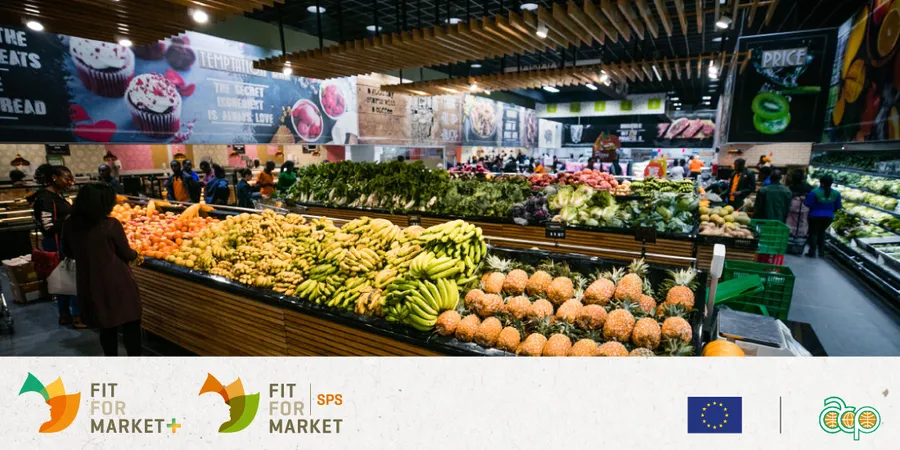
To reduce energy use and environmental emissions, growers need to understand where their energy is being used. Soaring energy costs continue to put growers under pressure and much of the agri-food supply chain is being heavily impacted by unprecedented price increases. Energy has always been important to growers – as they strive to reduce costs and protect their profits, finding ways to improve their energy efficiency remains a priority. Sustainable agriculture, which includes energy efficiency, can help to ensure economic, social, and ecological sustainability.WAMU investments Ltd., established in 1966, is a Kenyan producer and exporter of fruits and fine vegetables. WAMU relies heavily on electricity from the grid for its operations. Although it is impossible to arrive at an exact figure, energy is certainly a major input cost at packhouse level for the fresh fruits and vegetables industry.WAMU, through the support of COLEAD’s NExT Kenya programme, conducted an energy assessment to determine and document energy usage and provide an estimation of energy savings from use of alternatives energy sources (solar energy). The assessment highlighted the costs incurred using grid and the type of investments that are needed to implement the use of alternative energy sources for WAMU’s operations at the packhouse. The project also included training for WAMU’s staff to improve their technical skills to enable energy efficiency strategies focused on competencies. In the previous audit, supported by COLEAD, WAMU was able to reduce its energy costs to by 20% based on recommendations from the expert.This activity is implemented by COLEAD and supported by the NExT Kenya (New Export Trade) programme, established in collaboration with the EU Delegation in Nairobi and Kenyan stakeholders.
 News
News
Freshfel Europe developing state-of-the-art environmental footprint methodology for fresh produce
As part of the work of the Freshfel Environmental Footprint Initiative, Freshfel Europe is developing shadow Product Environmental Footprint Category Rules (PEFCR) for fruit and vegetables. The objective of the shadow PEFCR is to create a state-of-the-art, standardised environmental footprint methodology for the fresh produce sector.COLEAD, through its Fit For Market SPS and Fit For Market+ programmes, is part of the Steering and Technical Committee representing the ACP in the development of the shadow PEFCR that will be applied to imports into Europe. COLEAD will seek to ensure that the interests of the private sector in ACP countries are well-represented in the further development of the PEFCR methodology.To date, efforts within the fresh produce sector to address product sustainability through consideration of the environmental footprint have been highly fragmented. To address this, the shadow PEFCR will enhance benchmarking and comparison of the environmental footprint of products within the fresh produce category. This will improve sector transparency and accountability on environmental matters, and support communication on the strong positive environmental aspects of fresh produce consumption. Fruit and vegetables are one of the most sustainable food categories. The shadow PEFCR methodology will help the sector better communicate this in the shift towards healthy, sustainable plant-based diets. The whole sector will benefit from the shadow PEFCR now and into the future.Nicola Pisano, Freshfel Europe Director for Sustainability The shadow PEFCR for fruit and vegetables will take two years to develop and will be open for public consultation twice during this period. Once developed, the shadow PEFCR for fruit and vegetables will be available for sector-wide use as an open resource.An explanatory fact sheet on the shadow PEFCR for fruit and vegetables, ‘Addressing sustainability in the fresh produce sector’, is now available. This activity is supported by the Fit For Market+ and Fit For Market SPS programmes, implemented by COLEAD within the Framework of Development Cooperation between the Organisation of African, Caribbean and Pacific States (OACPS) and the European Union.
 News
News
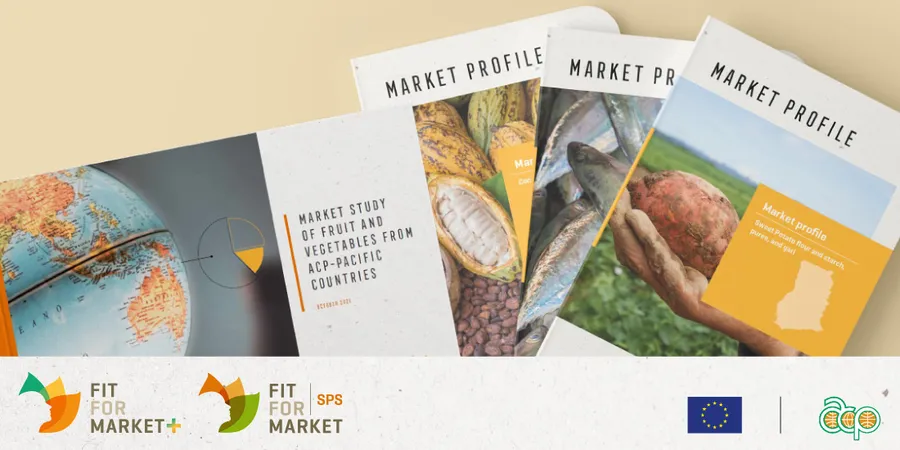
Recap of 2022 publications by COLEAD Market Insights Department: 9 new studies and market profiles and what to expect in 2023
The COLEACP Market Insights department translates qualitative and quantitative data into a deep understanding of markets, concrete initiatives for our partner beneficiaries that facilitate their B2B match making and decision-making processes driving their sustainable development. In 2022, 9 new reports were developed.Click on the image to access the reports :
 News
News
Training on pineapple processing techniques in Benin
In December 2022, COLEAD organised a 3-day collective training on pineapple processing and conservation techniques in Benin, as part of the project “Support to the agroecological transition of the pineapple sector in Benin”. The project is being carried out in collaboration with Enabel, the Belgian development agency, as part of its Development of Entrepreneurship in Agricultural Sectors Programme (DEFIA).The training was designed to benefit DEFIA’s partners through helping them to achieve their goals of improving sustainability, by reducing waste and losses of non-marketed products, and improving the food security of populations in the target region. Pineapple processing and conservation techniques make it possible to reduce post-harvest losses, increase shelf life, diversify the forms of use and add value to the product.This activity was organised within the framework of the Support to the agroecological transition of the pineapple sector in Benin, financed by ENABEL through its Development of Entrepreneurship in Agricultural Sectors Programme (DEFIA) and implemented by COLEAD.