
Cultivating
Sustainable Futures
 News
News
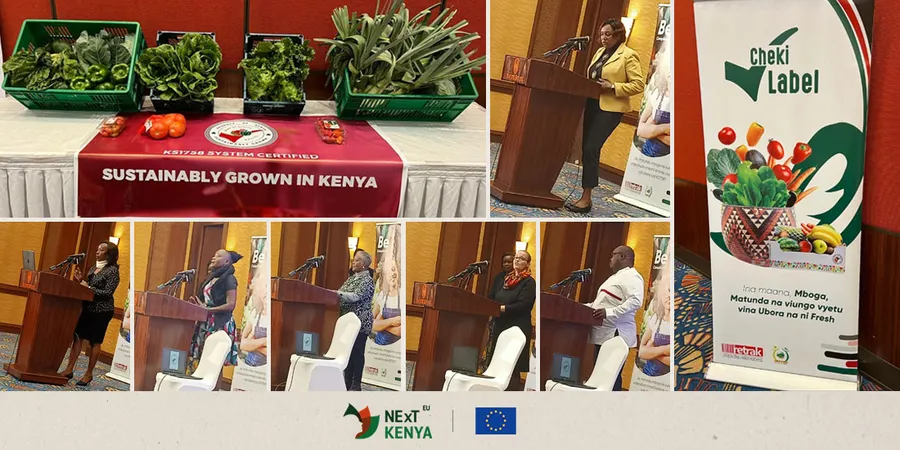
KS1758 Certification Awards to farms via the Retail Trade Association of Kenya (RETRAK)
The Retail Trade Association of Kenya (RETRAK) supported by the Rockefeller Foundation, working with Horticultural Crop Directorate (HCD), the Standards Projects Committee and agriculture sector industry players, has been running KS1758 – Part 2: Implementation Project, with a focus on fruits and vegetables. It is expected that adoption of Kenya Bureau of Standards (KEBS) standard KS1758 will enhance food safety and food quality and facilitate sustainable market access for the Kenyan domestic market.Additionally, the standard will promote good agricultural practices, social welfare, consumer protection and conservation of the environment; it will also enhance compliance with applicable laws and regulations that interface with agriculture.The four farms to be certified are:Siavonga Farm, EmaliSeeds in His Garden, KitengelaWoodfresh Farm, KiambuWangu Farm, Tigoni.The issuance of these certificates is a great milestone towards achieving safe food in the Kenyan domestic market and is a legacy to be celebrated by all industry stakeholders.The NExT Kenya programme supported the development of the implementation guidelines for KS1758 through the NExT Kenya programme supported by the European Union. KS1758 benchmarks against international standards, and farmers in Kenya are encouraged to adopt KS1758 to reduce public health concerns related to food. The processes involved in acquiring the standard include water, soil, and infrastructure testing as well as an audit. To attain the standard, farmers need to invest 200,000 Kenyan shillings. To date, three supermarkets in Kenya are selling KS1758 accredited products: Naivas, Carrefour and Quickmart. The standard will address issues raised by Kenyan consumers who have concerns regarding the safety of food produced in the country.This activity is implemented by COLEACP and supported by the NExT Kenya (New Export Trade) programme, established in collaboration with the EU Delegation in Nairobi and Kenyan stakeholders.
 News
News
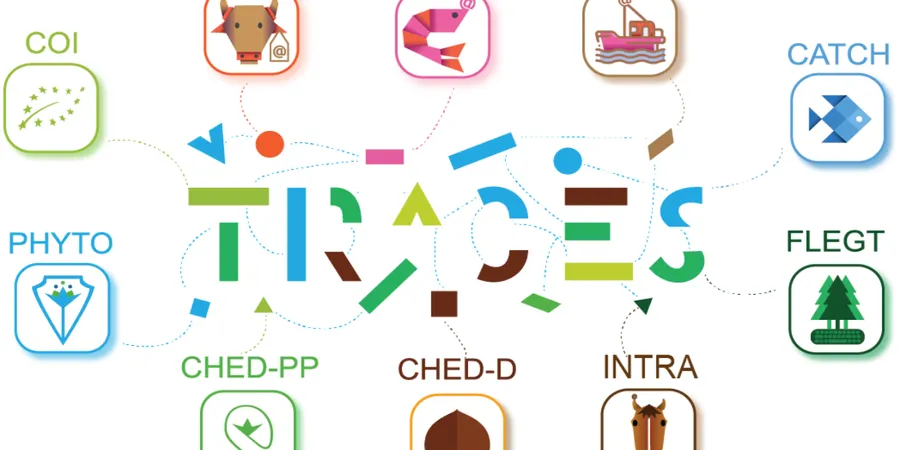
New procedure for notifying non-compliances to third countries in TRACES-NT
Some weeks ago, the EU sent out a notice to let third countries know that the system for notifying plant health interceptions (via email) would be replaced with a new system that uses the TRACES-NT platform. It is important to disseminate this information to all the National Plant Protection Organisation (NPPO) officials that are responsible for the follow-up of shipments of plants and plant products to the EU (and any associated interceptions).To access the new system, designated NPPO contact persons first need to be registered in TRACES-NT. Once registered, they are able to check whether there are any notifications relevant to their national exports. They can also monitor the import status of plant/plant product consignments entering the Union by accessing the entry documents ("CHED-PP") that are issued by EU border control posts. These entry documents record the outcome of any official controls that have been carried out.The latest changes were introduced in an amendment to the EU legislation[1], which was applied on 6 December 2021, accompanied by new developments in the use of TRACES-NT. EU border officials now record plant health interceptions in the entry documents using a new tab called “details on non-compliance”, alongside any decisions taken about the consignment.Access to the CHED-PP module by NPPO contact points is in “read-only” mode (so no changes can be made), but it allows officials in exporting counties to monitor the status of their shipments in real time, and to take any necessary corrective action.In the event of a rejection, the details of the non-compliance can be accessed via a separate tab in the CHED-PP module; this notes the reasons for the rejection and any actions taken regarding the consignment.
 News
News
EU and UK : notification of changes to plant protection product (PPP) approvals - April-June 2022
Following the departure of the UK from the EU, COLEACP’s monitoring of pesticide regulations now covers both EU and GB approval changes, enabling us to keep COLEACP members and partner-beneficiaries up-to-date.The European Commission (EC) has recently issued notification of changes to plant protection product (PPP) approvals within the EU, some of which are important for ACP horticulture. These include: Approval of Beauveria bassiana strain 203 Approval of Spodoptera exigua multicapsid nucleopolyhedrovirus (SeMNPV), isolate BV-0004 as a low-risk substance Renewal of approval of bifenazate Non-approval of 1,3-dichloropropene and chloropicrin Changes of the conditions of approval of sulfoxaflor Changes of the conditions of approval of paraffin oils (CAS No 64742-46-7, 72623-86-0, 97862-82-3) Expiry of Isopyrazam approval period Notification to the WTO of changes to the conditions of approval of penflufen Great Britain (GB) recently approved the substance cinmethylin. How will ACP producers/exporters be affected? Non-approval, withdrawal of approval, or expiration of approval mean that EU/GB maximum residue levels (MRLs) are likely to be reduced to the limit of determination (LoD) which, in most cases, will mean that they can no longer be used on crops for export to the respective countries. What should ACP producers/exporters do now? If you currently use 1,3-dichloropropene, chloropicrin or isopyrazam on crops destined for the EU market, you need to ensure that current uses allow you to comply with EU MRLs, or start looking for alternatives. If this is likely to cause you significant problems, and you fear being left without effective and available alternatives, please contact COLEACP at: network@coleacp.org.We will keep you informed as more information becomes available. In this Flash Info, ‘key active substances’ refers to those used/registered in one or more ACP country on horticultural crops that are frequently exported regionally or internationally.While COLEACP makes every effort to provide comprehensive information about EU and GB PPP regulatory changes, it is possible that some PPPs or crops relevant to you are not included in our list of key substances/crops. We recommend therefore that you review the following section, which details all the changes made so far in 2022, to check for any others that could affect you. If you see any PPP that you use on crops for export to the EU or GB, we recommend that you check the regulation itself using the link provided. Changes of approval in the EU Beauveria bassiana strain 203 Beauveria bassiana is a naturally occuring fungal parasite used to control various pests on a wide range of crops.The European Commission (EC) has published Commission Implementing Regulation (EU) 2022/501 approving the use of Beauveria bassiana strain 203 in the EU. Spodoptera exigua multicapsid nucleopolyhedrovirus (SeMNPV), isolate BV-0004 Spodoptera exigua nucleopolyhedrovirus is a virus widespread in nature and used to control armyworms on horticultural crops.The European Commission (EC) has published Commission Implementing Regulation (EU) 2022/496 approving Spodoptera exigua multicapsid nucleopolyhedrovirus (SeMNPV), isolate BV-0004 as a low-risk substance for use in the EU. Bifenazate Bifenazate is an effective pesticide for phytophagous mite control (spider mites, six-spotted spider mite, etc.) used in particular on avocado, curcubits, apples & pears, quince, eggplants, cucumbers, watermelon, strawberries and tomatoes.The European Commission (EC) has published Commission Implementing Regulation (EU) 2022/698 renewing the approval of bifenazate. New expriration date was set to 30 June 2037. 1,3-dichloropropene 1,3-dichloropropene is a soil nematicide used pre-planting as a fumigant to control soil-borne pests and for suppressing weed seed germination.1,3-dichloropropene is currently not approved in the EU. Following submission and review of the registration dossier, the data provided was deemed not sufficient and EFSA was not able to finalize the risk assessment for this product. The decision was therefore taken not to approve 1,3-dichloropropene for use in the EU (Commission Implementing Regulation (EU) 2022/740).In ACP countries this decision only concerns the use of 1,3-dichloropropene on crops that are exported to the EU, where growers will have to comply with the EU MRLs at the limit of determination (0.01 mg/kg).It is possible that this decision could be changed if a further application for the approval of 1,3-dichloropropene in the EU is submitted. Chloropicrin Chloropicrin is a pre-plant soil fumigant used to control soil borne fungi, diseases and nematodes. It is also a fumigant insecticide used in a wide variety of crops (strawberries, peppers, onions, curcubits, tomatoes, ornamentals, nursery stock, tree crops, olives). Pests controlled include caterpillars, aphids, scale insects, spidermites, whiteflies and nematodes.Chloropicrin is currently not approved in the EU. Following submission and review of the registration dossier, the data provided was deemed not sufficient, and EFSA was not able to finalize the risk assessment for this product. It was therefore decided not to approve chloropicrin for use in the EU (Commission Implementing Regulation (EU) 2022/751).In ACP countries this decision only concerns the use of chloropicrin on crops exported to the EU, where growers will have to comply with the EU MRLs at the limit of determination (0.01-0.005 mg/kg).It is possible that this decision could be changed if a further application for the approval of chloropicrin in the EU is submitted. Sulfoxaflor The European Commission (EC) has published Commission Implementing Regulation (EU) 2022/686 regarding the conditions of approval of sulfoxaflor.Using the data provided by the manufacturer, EFSA was not able to assess the risk for bumble bees and solitary bees for outdoor uses. In light of all the available pertinent information, it was considered inappropriate to maintain the approval of the active substance for outdoor use at this time. As of 19 May 2022, the use of sulfoxaflor in the EU will be restricted only to uses in permanent greenhouses.At the present time, this change only affects uses of sulfoxaflor within the EU. It does not concern crops for export in ACP countries. Paraffin oils (CAS No 64742-46-7, 72623-86-0, 97862-82-3) Paraffin oils are used in the field and under glass to control sucking and chewing insects on fruit and other crops (vines, ornamentals). They are also used as a commodity chemical and as an adjuvant. Pest controlled include in particular scale, mites and thrips.The European Commission (EC) has published Commission Implementing Regulation (EU) 2022/800 autorising the use as a fungicide in addition to the uses as an insecticide and acaricide in the EU. Isopyrazam Isopyrazam is a persisent and broad spectrum fungicide for use on cereals and other crops (including banana, vegetables, ornamentals and various speciality crops) to control Septoria tritici, rusts, Black sigatoka (banana leaf spot disease), scab, powdery mildews and Alternaria.The European Commission (EC) has published Commission Implementing Regulation (EU) 2022/782 withdrawing the approval of this product in the EU (date into force: 6 june 2022).It is expected that the EC will lower the MRLs of this substance at the end of the grace period (8 December 2022). No information has yet been published by the EC, but COLEACP will issue an update as soon as more details become available. Changes of approval in GB Cinmethylin In May 2022, cinmethylin was approved for use in GB. The regulation entered into force on 7 June 2022. Cinmethylin is a selective, pre-emergence herbicide used mainly for rice and cereal crops. This change was coupled with the review of MRLs on various commodities (GB MRL 2022/008), and values were maintained at the limit of determination (0.01 mg/kg). All PPP approval changes introduced in 2022 Table 1 shows all changes to PPP approvals so far introduced in the EU and GB in 2022.If you require additional information, or face particular problems as a result of these changes, please contact COLEACP at: network@coleacp.org. Further proposed approval change Table 2 presents WTO notifications of a Draft Regulation that contains some active substance approvals with a potential impact on ACP horticulture products.Table 2. World Trade Organization (WTO) notifications of Draft Regulation (European Union (EU) and Great Britain (GB)) concerning active substance approvals, potentially affecting horticulture products
 News
News
Support project for agro-ecological transition/DEFIA: training of Beninese relay experts
As part of the project to support the agro-ecological transition of the pineapple sector in Benin, COLEACP organised a training for trainers’ session from 27 June to 9 July 2022 in Cotonou.Sixteen experts took part in the session, which is the second of a three-phase training cycle aiming to strengthen the skills of relay experts on technical and pedagogical subjects so that they can subsequently support DEFIA's partner groups in their agro-ecological transition projects.This second session aimed to build participants' capacity on the concept of agro-ecology, and to show them the key processes that can be fostered in order to initiate change in one or more directions; then, through the analysis of concrete examples, to enable them to understand how this knowledge can be used to design production systems/technical itineraries that meet the objectives of sustainable development and the main principles of agro-ecology as defined by the FAO, CIDSE and IPES FOOD.Through the project, COLEACP intends to facilitate reflection and initiate a process of agro-ecological transition of the sustainable production system for the pineapple sector in Benin, by providing Beninese operators with qualified service providers in key areas such as agro-ecological practices, preservation and restoration of soil fertility, crop associations, etc.This activity was organised within the framework of the "Support project for the agro-ecological transition of the pineapple sector in Benin", financed by ENABEL through its programme Development of Entrepreneurship in Agricultural Sectors (DEFIA) and implemented by COLEACP.
 News
News
Fit For Market Plus – apply now for programme support
In total, close to a 1000 participants attended six regional events and the intra-ACP official launch event for the new FFM + programme. These events were the opportunity to present the rational behind the programme, to detail foreseen activities for stakeholders from the ACP horticultural sector, and to explain how to access support. Funded by the EU and the OACPS (25 Million EUR over a period of 5 years), this new programme aims to mitigate the impacts of Covid-19 by strengthening the sustainability of the ACP horticultural sector. Partner beneficiaries can now submit their applications for support under FFM+. LEARN MORE ABOUT FFM+ PROGRAMME
 News
News
Amendments to EU plant health rules for False Codling Moth - July 2022
The COLEACP Flash info issued on 20th June (and our website) gives an overview of recent AMENDMENTS TO THE EU PLANT HEALTH LEGISLATION. The latest regulation introduces new rules for False Codling Moth, which will apply from 14 of July 2022.We have updated our Guidelines on the export of Capsicum from Africa to incorporate the latest changes, and this is now available from our e-library. You may also be interested in the recent updates of our guidelines on eggplant and tomatoes, citrus, and mango. Please find more details and links below:COLEACP Plant Health GuidesCOLEACP provides plant health guidelines on the export of several ACP horticultural crops. These have been updated to incorporate all recent changes including those introduced under Regulation (EU) 2021/2285 and the new regulation (EU) 2022/959 of 16 June 2022: Guidelines on the export of fresh guava, papaya, and Annona (version 2022) Guidelines on exporting fresh capsicum from the Caribbean(version 2022) Guidelines on the export of Capsicum from Africa, Madagascar, Cape Verde, and Mauritius (version June 2022) Guidelines on exporting fresh eggplant and tomato from Africa, Madagascar, Cape Verde, and Mauritius (version 2022) Guidelines on exporting fresh citrus from Africa, Madagascar, Cape Verde and Mauritius (version 2022) Guidelines on the export of fresh mango to the European Union (version 2022) These guides provide a clear explanation of what needs to be done in order to ensure that exported produce is in compliance with EU phytosanitary requirements. They detail the information to be provided, and actions to be taken, at all stages from production to export by producers and exporters, as well as by the national authorities and inspection services.Those documents are publicly available in our E-library.
 News
News
More effective control of potato blight in Fouta-Djallon with a new warning system
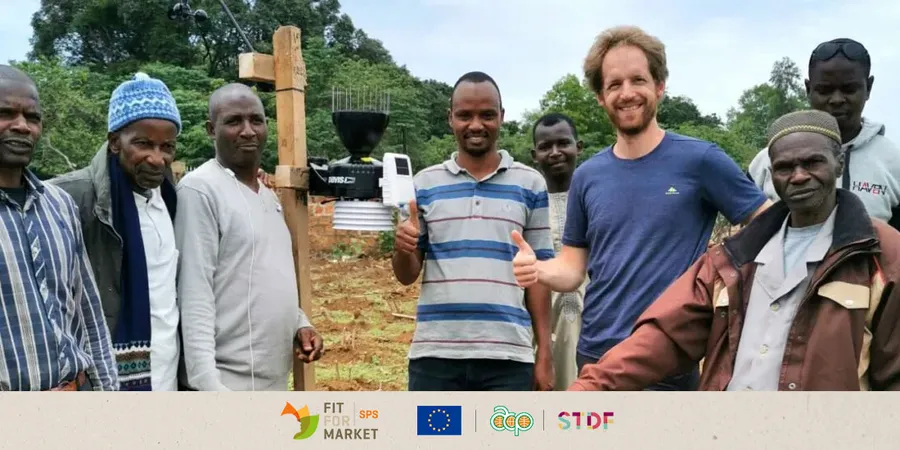
In Fouta-Djallon, central Guinea, potato is a major crop, widely exported to countries in the sub-region, with more than 45,000 tonnes produced per year and 38,000 affiliated producers – 64% of whom are women.One of the major problems faced by potato crop is blight. Extremely prevalent during the rainy season, mildew limits the cultivated area of potato and forces producers to apply numerous phytosanitary treatments to ensure production. Surveys carried out as part of the development of the Guide to Good Potato Production Practices – currently being developed –have shown losses ranging from 15% to the destruction of potato production by this disease. Depending on the scenario, a 15% loss of yield results in a loss of income equivalent to a monetary value ranging from 12,510,000 Guinea Franc/ha, approximately 1,380 euros, to 16,680,000 FG/ha, approximately 1,840 euros, depending on the price of the potatoes sold.In addition to the loss of income, most of the current control methods for blight are preventive fungicides. It is therefore imperative to know the optimal application date to guarantee effective control of the disease and to limit fungicide use to the strict minimum to reduce not only economic costs, but also risks to the health of the producer and the environment.It is in this context that the STDF/PG/498 project for the reinforcement of the phytosanitary control and certification system in Guinea is intervening to ensure the implementation of a warning system (surveillance) that will allow the producer to be advised on the best time to treat their field to maximise the effectiveness of the intervention.A warning system was developed by the Centre pour l'Agronomie et l'Agro-Industrie du Hainaut (CARAH) 30 years ago and has been improved over the years as knowledge of the pathogen, and technology have evolved. The warning system is based on a computer model that predicts the risk of blight infection. The model is based on the acquisition of weather data by a weather station – accurately measuring temperature, rela 2022tive humidity, and rainfall – installed in a representative potato plot in the region. The data from the weather station is sent every hour – or every day, although the accuracy is greatly reduced – to a central server on which disease development curves are calculated.
 News
News
COLEACP’s 2021 Annual Report is just published
Our new look annual report is available here.Get a quick overview of our 2021 programmes (Fit For Market, Fit For Market SPS, NExT Kenya, STDF projects) and our contributions to collaborative projects (with UNIDO and Enabel, among others) – and view snapshots of selected programme activities.The report also gives a brief summary of the EU and ACP horticultural markets in 2021.
 News
News
Suriname: Eggplant R-SAT Validation Workshop
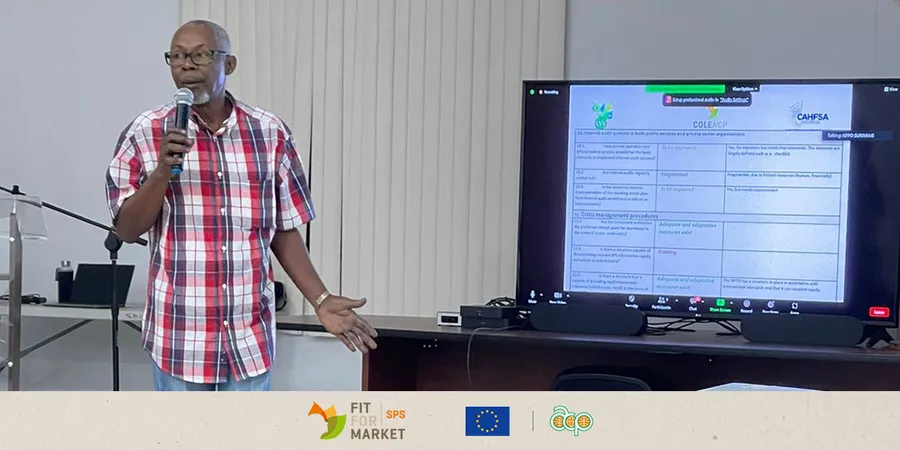
On 24 May the Ministry of Agriculture, Animal Husbandry & Fisheries of the Republic of Suriname, in collaboration with COLEACP (Fit For Market SPS programme) and the Caribbean Agricultural Health & Food Safety Agency (CAHFSA), held a one-day Eggplant R-SAT Validation Workshop in Paramaribo, bringing together 20 key representatives from the public and private horticulture sectors.Prior to the Suriname workshop, a COLEACP expert team facilitated the dialogue and engagement between key stakeholders, both public and private, in their assessment of Suriname’s national SPS systems using the Rapid SPS Assessment Tool (R-SAT). The goal of this exercise was to facilitate the development of a national priority action plan to strengthen SPS systems that is grounded in a common strategic vision, agreed by all stakeholders.During the workshop, the team presented the results of the application of R-SAT to the country’s SPS control system, and identified priority activities. The workshop concluded with a presentation of the updated national priority action plan, which was endorsed by key players in the sector.R-SAT provides a practical, step-by-step guide to assist ACP countries in their assessment of national SPS systems to strengthen them in line with international standards and regulations. The COLEACP R-SAT does not replace existing tools such as the FAO and WHO guidelines; the Phytosanitary Capacity Evaluation (PCE) developed by the IPPC; or STDF’s Prioritizing SPS Investments for Market Access (P-IMA) framework. Rather, it is designed to be complementary to these tools, allowing rapid preliminary assessment and generating information that can be fed into these more in-depth evaluations as necessary.This activity is supported by the Fit For Market SPS programme, implemented by COLEACP within the Framework of Development Cooperation between the Organisation of African, Caribbean and Pacific States (OACPS) and the European Union.
 News
News
New market study analyses trends and potential for ACP-Pacific horticulture
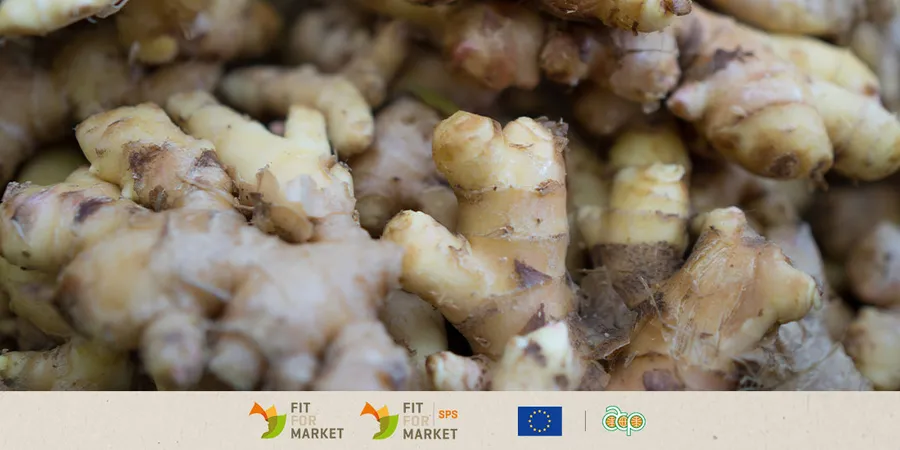
A new study on the Pacific region by COLEACP's Market Insights service aims to gain an in-depth understanding of regional, national and international trade dynamics and market trends, and to identify value-added supply chains for ACP-Pacific fruit and vegetable industry players.Although production is growing generally, and particularly for ginger, the region is increasingly dependent on imports, mainly due to the growth of the tourism sector and urban populations' greater appreciation of imported processed foods.The most imported products are potatoes, onions and dried peas, as well as apples, oranges and grapes, fruits that cannot be grown in the islands. Most imports of processed products are for the hotel industry, such as frozen potatoes, mixed juices and groundnuts.Regional trade is mainly in mixed juices; fresh, frozen and processed potatoes; and frozen vegetable mixes. Fiji is the destination for 95% of intra-regional exports, acting as a trade hub. However, the Covid-19 pandemic has complicated inter-island transport. Internationally, the bulk of exports are to Australia and New Zealand, mainly ethnic roots and tubers, cassava and ethnic vegetables. Trade with the rest of the world is much less important.There are opportunities for some fresh vegetables, especially roots and tubers, in regional markets and in the tourism sector. For international markets, products and spices such as ginger, vanilla, turmeric, kava, virgin coconut oil and noni have the potential to be developed, particularly in organic forms, to improve their access to niche markets.You can read the full study here.
 News
News
COLEACP’s New Board
As the term of office of COLEACP’s Board Members expired in June 2022, elections were held at the COLEACP Ordinary General Meeting on 22 June.Sixteen Board Members were elected:
 News
News
News Digest: Agri-food Markets, Production and Trade
Henk van der Meij of Hars&Hagebauer; reports on mango trade that "the Peruvian season's tail end was unexpectedly long, due partly to shipping delays. So the first part of the African season (Côte d’Ivoire) coincided with the last part of the Peruvian season. That's usually not ideal, but the promotions are keeping the mango sales momentum going. Eventually, the market will also have to start paying the price needed for this fruit and the increased costs. Africa is delivering sufficient volumes. But there are fewer and fewer importers from Africa; it's a risky business.”Source: Fresh Plaza, 4 May 2022