
Cultivating
Sustainable Futures
 News
News
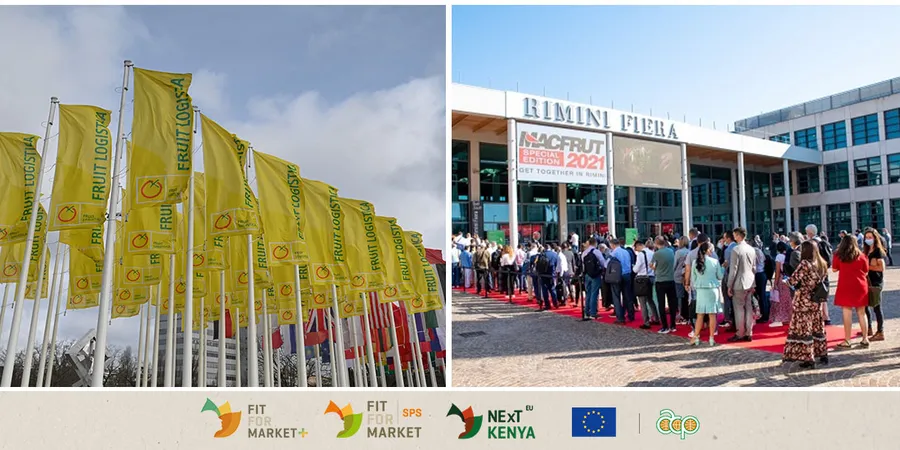
Fruit Logistica and Macfrut 2022– it was good to be back!
After a long but necessary delay, we were happy to represent the EU-funded Fit For Market SPS and Fit For Market Plus programmes at two trade fairs, as well as the NExT Kenya programme, and to meet up again with our members and partners. Numbers were up at Macfrut 2022 The international trade show for the fresh produce industry, held from May 4 to 6 at Rimini Expo Center, registered 38,500 visitors, an increase of +18% compared to the edition of September 2021.
 News
News
INNOVATIONS SERIES: Business Profiles of the SMEs showcased in the first 7 sessions
In November 2020, the Pan-African Farmers’ Organization (PAFO) and COLEACP launched the Innovations Series on innovations and successes of African farmer-led businesses and small and medium enterprises (SMEs).SMEs, despite the numerous challenges they face, have unprecedented opportunities to supply local, regional and export markets. Moreover, innovation is a driving force in transforming food systems, promoting sustainable agriculture and leveraging investment.In this context, PAFO and COLEACP hold a two-hour session, every two months, to share best practices from entrepreneurs, farmers and agripreneurs, with a focus on innovations in production methods, markets development, digital solutions, technologies and circular economy. They also feature views on the supporting policy, research, finance and investment environment.Hundreds of participants from more than 100 countries worldwide gathered during the first seven Innovations Sessions and discovered the impact of inspiring entrepreneurs on the following topics: Increased market opportunities through added-value and branded products (Session n°1), Grow local: Conquering local markets (Session n°2), African Continental Free Trade Area (AfCFTA): opportunities for SMEs and businesses in the agri-food sector (Session n°3), Sustainable food systems: the key role of SMEs and businesses (Session n°4), Food and Nutrition Security: the contribution of SMEs and businesses (Session n°5), Promoting sustainable agriculture and agroecological practices: the key role of MSMEs and farmers organisations (Session n°6), Innovations in the African agroprocessing sector: the key role of SMEs and businesses (Session n°7). The recordings of all Innovations Sessions are available to view on PAFO’s and COLEACP’s YouTube channels.Business profiles have been developed to present each successful business model and development. Meet (again) the featured African entrepreneurs, many of them members of COLEACP, and (re-) discover their inspiring stories below! This business support is provided through the Fit For Market programme, implemented by COLEACP within the Framework of Development Cooperation between the Organisation of African, Caribbean and Pacific States (OACPS) and the European Union, and co-funded by the French Development Agency (AFD).
 News
News
Project to support the agroecological transition/DEFIA: Awareness session on organic farming
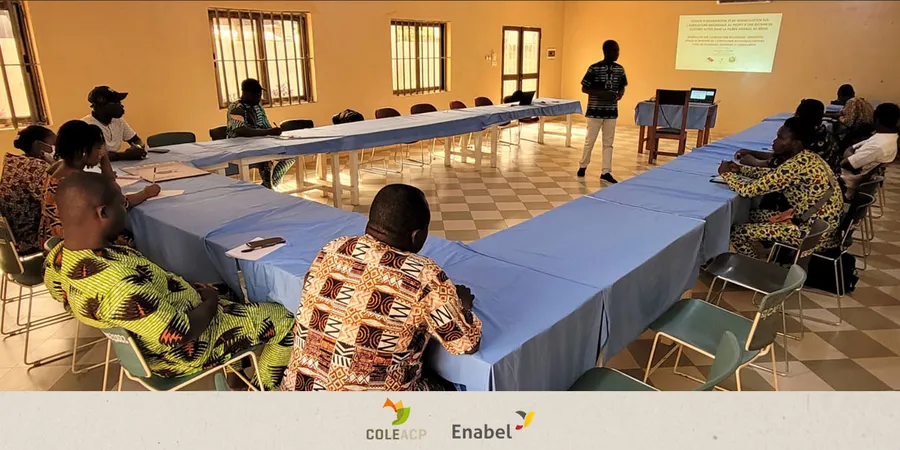
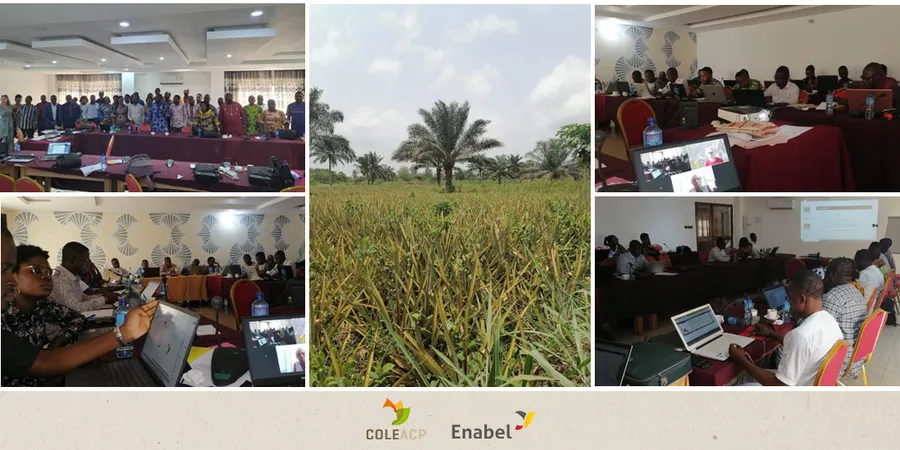
Suite au lancement en février du projet "Appui à la transition agroécologique de la filière ananas au Bénin" [qui fait partie du programme DEFIA (Développement de l'Entreprenariat dans la Filière Ananas) géré et financé par Enabel], plusieurs groupes ont exprimé leur intérêt à bénéficier de l'appui du projet.Le 12 avril, une séance d'information et de sensibilisation a donc été organisée pour ces groupes afin de discuter des fondements, des règles et principes, des exigences et des contraintes de l'agriculture biologique. Les thèmes abordés ont été les suivants : aperçu de l'agriculture biologique exigences du protocole de culture pour la production d'ananas biologiques système de contrôle interne (structure, rôles des intervenants et outils) Système de garantie participatif (SGP) processus de certification par des organismes tiers les grandes lignes du nouveau règlement européen sur l'agriculture biologique qui est entré en vigueur le 1er janvier 2022. Les 20 participants qui y ont pris part sont désormais en mesure de prendre des décisions éclairées sur la valeur économique et les avantages d'un passage à la certification biologique, sur la base des quantités exportées vers des marchés qui exigent cette certification, et d'investir dans les ressources humaines, les équipements et les infrastructures nécessaires à la mise en place d'un système de production biologique.Ce projet de 18 mois vise à permettre aux opérateurs de la chaîne de valeur de l'ananas au Bénin d'entamer une transition progressive vers l'agroécologie, tout en répondant aux exigences des marchés locaux, régionaux et internationaux.Cette activité a été organisée dans le cadre du projet " Appui à la transition agroécologique de la filière ananas au Bénin ", financé par Enabel à travers son programme DEFIA et mis en œuvre par COLEACP.
 News
News
Join us for your regional launch of Fit For Market Plus
In the framework of the development cooperation between the Organisation of African, Caribbean and Pacific States (OACPS) and the European Union, the OACPS and the Directorate General INTPA of the European Commission have entrusted COLEACP with the implementation of the new Fit For Market + (FFM+) programme.FFM+ has been designed and will be implemented in line with the FFM programmes and the results of COLEACP's COVID action plan from March 2020. This 5-year €25 million programme is funded by the EU and the OACPS.Please note on your agenda that FFM+ will be launched regionally in the form of a webinar according to the following schedule:
 News
News
New market study analyses trends and potential for ACP-Caribbean horticulture
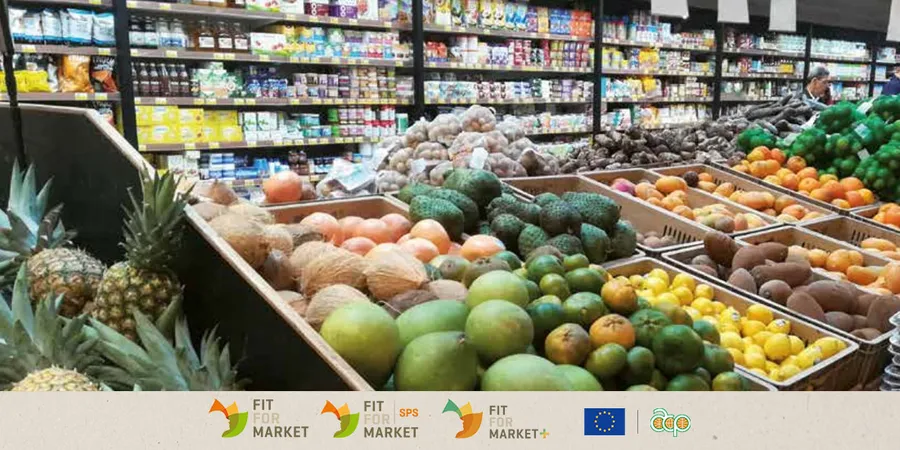
This new market study, researched and published by COLEACP's Market Insights service through the Fit For Market and Fit For Market SPS programmes, provides a detailed overview of the current situation and potential for development of the fruit and vegetable sector in ACP countries in the Caribbean region.The study includes a comprehensive analysis of import and export flows with the main trading partners of the ACP Caribbean countries, and is also a marketing tool to assist exporters and importers aiming to look for new market opportunities.COLEACP members and partner-beneficiaries can read the full study here.Despite the context of extreme weather events, pest and disease outbreaks (particularly affecting citrus), the COVID-19 crisis, and Brexit, over the past decade the horticultural sector registered a notable 28% growth in production to reach a volume of 18,541,000 tonnes, with Grenada, Guyana and the Dominican Republic registering the strongest growth trends. Organic agriculture is growing, with the Dominican Republic leading the way, and there is still untapped potential to develop large-scale organic production, for example in Guyana and Suriname.
 News
News
Support to the agroecological transition/DEFIA: First stage of training-of-trainers in Benin's pineapple sector
As part of the project “Support to the agroecological transition of the pineapple sector in Benin”, COLEACP organised a training of trainer’s session in Cotonou from 28 to 30 March 2022.About twenty selected experts participated in this session, which is part of a training cycle planned in three stages and which aims to strengthen the skills of relay experts on technical and pedagogical subjects so that they can subsequently accompany DEFIA's partner clusters in their agro-ecological transition projects.This first session focused on the basics of sustainable agriculture and was led by expert trainers in various fields (sustainable management of soils, water resources, biodiversity, waste, and emissions; organic farming; integrated pest management; and social responsibility).The next two sessions of the training cycle for relay experts will focus on the basic principles of agroecology, and on accompanying clusters on their journey towards agroecology.As a reminder, through the project “Support to the agroecological transition of the pineapple sector in Benin”, COLEACP intends to facilitate reflection and the initiation of a process of agro-ecological transition of the sustainable production system for the pineapple sector in Benin, by providing Beninese operators with qualified service providers in key areas such as agro-ecological practices, preservation and restoration of soil fertility, crop associations, etc.This activity was organised within the framework of the Support to the agroecological transition of the pineapple sector in Benin, financed by ENABEL through its Development of Entrepreneurship in Agricultural Sectors Programme (DEFIA) and implemented by COLEACP.
 News
News
EU approval expires for three key PPP – flubendiamide, spinetoram and spirotetramat - April 2022
The European Commission (EC) has recently issued notification of changes to 10 plant protection product (PPP) approvals within the European Union (EU), some of which are important for ACP horticulture. These include:Non-renewal of flubendiamide, spinetoram and spirotetramatNotification to the WTO of its intention to renew the approval of bifenzate
 News
News
Summaries of the two first OECD-COLEACP Fruit and Vegetables Industry Sessions
In 2021, OECD Fruit and Vegetables Scheme and COLEACP launched the Fruit and Vegetables Industry Series to highlight the significance of the sector and to celebrate the United Nations 2021 International Year of Fruits and Vegetables (F&V;).The series aims to share knowledge of both local and export markets and operators; enhance understanding of the sector’s contribution to sustainable production and consumption; promote the contribution of fruit and vegetables to healthy and nutritious diets; and showcase successes and innovations of private sector operators across the EU and Southern countries, as well as lessons learned.2 sessions have been held gathering more than 500 participants from different continents. The sessions are available for (re-)viewing in English and French on COLEACP’s YouTube channel.Moreover, summaries capturing each session main messages, along the programmes and speakers’ biodata are available below:
 News
News
GLOBALG.A.P. remote training for Kenyan MSMEs
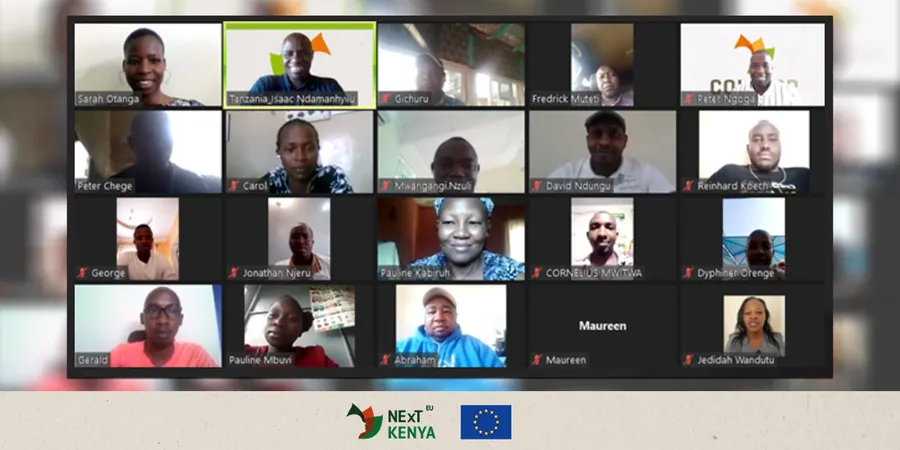
Through the NExT Kenya programme, COLEACP has been providing training for Kenyan companies on the GLOBALG.A.P. Standard (Modalities and Checklists).By the end of 2021, about 16 Kenyan participants from nine horticultural companies had successfully completed the training.A representative of one participating company, Elmas Greens Limited, says:"The company situation has changed and the GlobalG.A.P. standard is a gateway to the EU market, hence training on GlobalG.A.P. standards is under way for more staff involved in food safety."Over several years, COLEACP has been working with Kenyan companies that produce and export fresh fruit and vegetables to European markets to develop and implement food safety management systems.Many efforts have been undertaken by participating companies to set up comprehensive quality management systems in order to meet changing market requirements. Some have been working with their outgrowers to implement the GLOBALG.A.P. standard for the first time; others have been extending their reach to include an additional number of external producers under their certification scheme. Today, some of these companies want to refresh their knowledge of the GLOBALG.A.P. standard, strengthening their capacities on the principles, regulations, checklist, and compliance criteria linked to GLOBALG.A.P. version 5.2.This activity is implemented by COLEACP and supported by the NExT Kenya (New Export Trade) programme, established in collaboration with the EU Delegation in Nairobi and Kenyan stakeholders.
 News
News
Summaries of the five first IICA-COLEACP Caribbean Agrifood Business Sessions
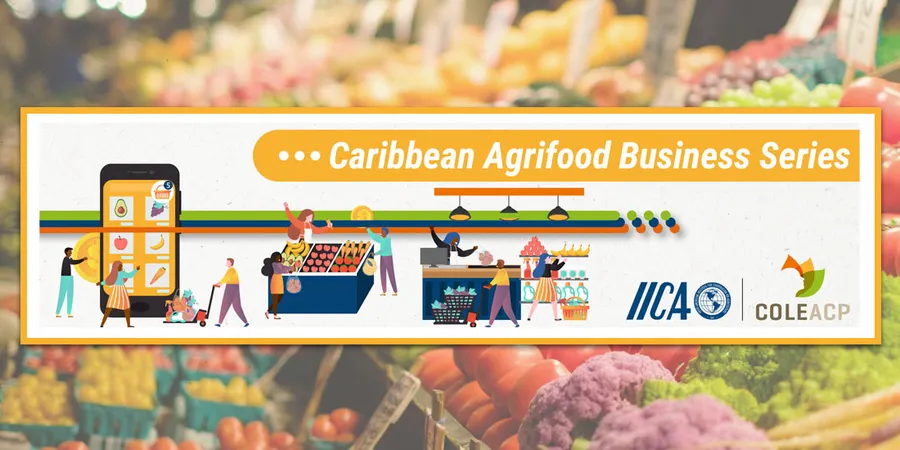
Within their collaboration to develop a more sustainable and resilient agriculture sector in the Caribbean region, the Inter-American Institute for Cooperation on Agriculture (IICA) and COLEACP launched in June 2021 the Caribbean Agrifood Business Series aimed at showcasing innovations and successes of Caribbean farmer-led businesses and SMEs.5 sessions have been held gathering more than 1,200 participants from more than 70 countries on different continents. The sessions are available for viewing in English, French and Spanish on COLEACP’s YouTube channel.The Caribbean Agrifood Business Series looks at the contribution of entrepreneurs, farmers, agripreneurs and SMEs to business models which are economically, environmentally and socially viable. 18 inspiring entrepreneurs and farmers groups presented their businesses and shared their best practices, innovations and technologies to support others to embrace the unprecedented opportunities offered by local, regional and export markets. Find out more about the 18 featured entrepreneurs and farmers groups in this article.The series focuses on various topics, including COVID-19 resilience; rebuilding tourism with increased linkages to agriculture; bioeconomy and green businesses; food safety and quality; as well as agriculture trade and opportunities in export markets. Summaries capturing each session main messages are available below, along the programmes and speakers’ biodata:
 News
News
Kenya: Human resources support for Interveg
Interveg EPZ Ltd is a Kenyan company, established in 2005, that exports vegetables to the European Union. The company's packing facilities are located at the Export Processing Zone (EPZ) in Athi River, Kenya.Following participation in our Performance Management training in July 2021, one of the company's directors realised that Interveg faces challenges and gaps in terms of human resources (HR) policy.As a follow up, the director met the NExT Kenya programme unit at COLEACP's Nairobi office. An individual action plan for support was developed, after which NExT Kenya contracted an HR expert to help the company assess the gaps in its HR management policy, review job descriptions, evaluate current performance appraisals, review remuneration and benefit packages; and monitor the compliance level to relevant applicable HR laws in Kenya.In addition, there are plans for the senior management of Interveg to take part in coaching on the adoption and implementation of improved HR practices.Currently, the HR expert is developing improved HR documents that will constitute the HR manual for Interveg EPZ.This activity is implemented by COLEACP and supported by the NExT Kenya (New Export Trade) programme, established in collaboration with the EU Delegation in Nairobi and Kenyan stakeholders.Photo credit: Unsplash
 News
News
Update on EU MRL changes - April 2022
Since the start of 2022, we have been highlighting significant changes to EU MRLs that affect 23 active substances, 9 of which are important for ACP export horticulture.The European Commission has also recently notified the World Trade Organization (WTO) of some additional proposed changes involving a further 5 substances, including 1 that is key for ACP horticulture (hexythiazox). How will ACP producers/exporters be affected? Changes to EU Maximum Residue Limits (MRLs) also apply to products that are exported to the EU. Growers producing for export may need to adapt their practices to meet the new MRL or, if this is not possible, stop using these products and look for an alternative method of pest management. What should ACP producers/exporters do now? For each use of the plant protection products (PPPs) involved, the Good Agricultural Practices (GAPs) in place will need to be checked and probably adapted to ensure compliance with the new MRLs. This is essential to prevent interception and destruction of merchandise at the border.If you use these PPPs, it is important to liaise with your producer/exporter associations and national authorities to check that the GAPs you apply are compliant with the new MRLs. In most cases, adaptations will be needed (dose rate, number of applications, application method, pre-harvest interval).If you have any major concerns about these changes, and fear that you will be left without an effective and locally available alternative, please contact COLEACP at: network@coleacp.org.