
Cultivating
Sustainable Futures
 News
News
A MoU signature between KEPHIS and COLEACP under the NExT Kenya programme
As part of its responsibility to assure the quality of agricultural inputs and produce to prevent adverse impact on the economy, the environment and human health, Kenya Plant Health Inspectorate Service (KEPHIS) on 7 May 2021 signed a MoU with COLEACP under the NExT Kenya Programme.
 News
News
Launch of group distance training on Environmental Sustainability Management
This monday, 3 group distance trainings of 4 weeks will start on: "Environmental Sustainability Management". These trainings will address the Sustainable soil management, Sustainable water management, Sustainable waste management and valorization. The training courses are designed to encourage the adoption of more sustainable practices in order to achieve a restoration of environmental quality in horticultural companies. These trainings aim to explain the consequences of agricultural practices on the environment so that horticultural companies can reduce their impact on the biodiversity loss and the climate change. They will also provide tools to estimate the environmental impact of the practices and prioritize the required interventions. We wish participants and trainers pleasant training sessions. This activity is supported by the Fit For Market programme, implemented by COLEACP within the Framework of Development Cooperation between the Organisation of African, Caribbean and Pacific States (OACPS) and the European Union, and co-funded by the French Development Agency (AFD).
 News
News
Start of the 2021 mango season in Togo – a reminder of the mango dossier
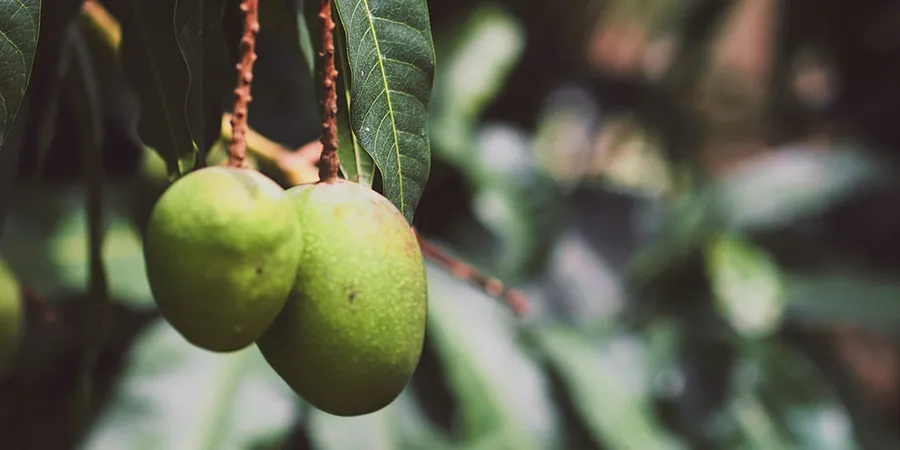
On 7 May, in collaboration with the Direction de la Protection des Végétaux du Togo (DPV), COLEACP organised a virtual workshop for the start of the 2021 mango campaign. The workshop brought together 24 participants from horticultural companies and organisations (including the DPV, Direction des Filières Végétales, GIZ/ProDRA, Interprofession mango), aiming to remind exporters of the main points of the mango dossier before the start of the 2021 campaign in Togo. Discussions focused on the key points of the dossier, in particular the implementation of integrated management measures (national surveillance, surveillance of orchards and stations, sanitation); the inspection and certification system (organisation, state of play, management of notifications); and protective measures. The workshop also offered an opportunity to remind participants of the measures companies need to implement to limit the spread of COVID-19. This activity is supported by the Fit For Market SPS programme, implemented by COLEACP within the Framework of Development Cooperation between the Organisation of African, Caribbean and Pacific States (OACPS) and the European Union.
 News
News
Launch of training-of-trainers in management and business development
By nature, farmers are entrepreneurs, and are used to taking and managing risks. But why do some businesses succeed and grow, while others don’t? Why have some managers been able to seize the opportunities that come their way, but not others? How do some companies manage to adapt to new realities or integrate new production standards, and remain profitable, while others disappear? Managing and developing a company is a global approach that requires many skills.Whatever the size of the company, you must be able to anticipate, innovate, manage, control, organise, delegate, lead and direct your team – and communicate with your customers. To manage your sales, you must have a good capacity to analyse the market and know your customers' needs. You must know your production costs. You must be able to set a selling price that guarantees a profit. You must be able to negotiate. You have to keep track of your cashflow and inventory. Like sustainable development, which is a process of continuous improvement in the sustainable management of a horticultural enterprise, all dimensions must be taken into account in an integrated manner: governance, resource and skills management, customer relations, productivity and innovation, workforce and succession, health and safety, training and skills development, and community relations, as well as business practices and ethics. So COLEACP needs to build the skills of not only its leaders, but also its managers, in all these areas. COLEACP has created seven online courses on "Business Management and Development", with about 20 training sessions offered to business personnel in the coming months. Whether distance or face-to-face, we aim to build these courses together. To ensure a quality offer, we need to have the best trainers. But above all, we want providers who are committed to what they do, out of respect for the learners.This activity is supported by the Fit For Market programme, implemented by COLEACP within the Framework of Development Cooperation between the Organisation of African, Caribbean and Pacific States (OACPS) and the European Union, and co-funded by the French Development Agency (AFD).
 News
News
Suriname company Surivit receives business e-coaching support
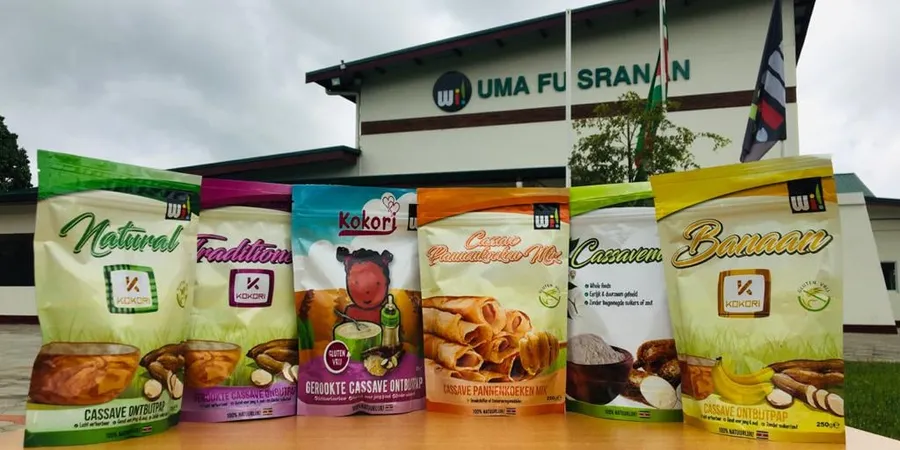
Horticultural processing company Surivit is receiving personal e-coaching from a business expert to help tackle the macro- and micro-economic consequences of the Covid-19 pandemic. Through COLEACP’s Fit For Market programme. Surivit works closely with women’s cooperative Wi! Uma fu Sranan (WUFS), in English “We the women of Suriname”), an organisation that aims to improve the living standards of female producers, to produce cassava flour, baby porridge, cassava pancake mixes and cassava flakes both for local use in Suriname and for export markets. This activity is supported by the Fit For Market programme, implemented by COLEACP within the Framework of Development Cooperation between the Organisation of African, Caribbean and Pacific States (OACPS) and the European Union, and co-funded by the French Development Agency (AFD).
 News
News
Support for setting up organic pineapple production at TROPICAUX
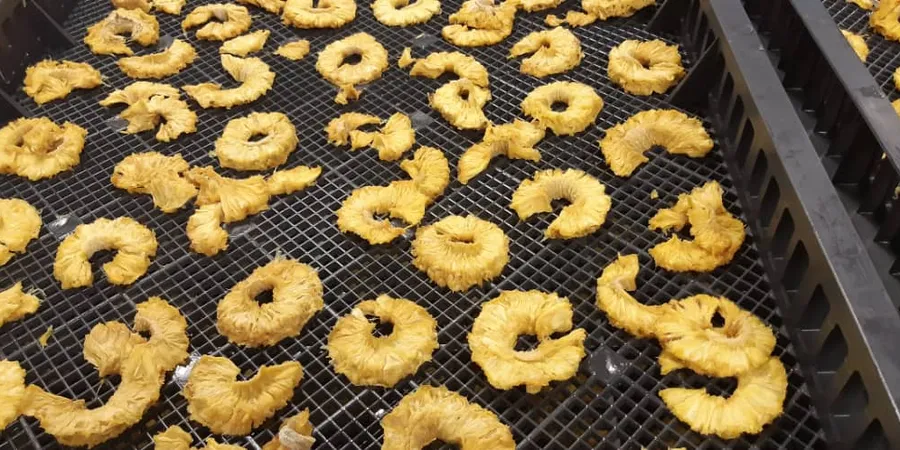
COLEACP has been supporting the setup of organic pineapple production at the TROPICAUX company in Guinea. This activity has two objectives – to provide training and accompany TROPICAUX in the implementation of its pineapple plots according to the organic agriculture reference system; and to reinforce the capacities of a Guinean expert in pineapple production. There are several elements involved: diagnosis of the plots envisaged by the company; providing training for managers on the technical itinerary for organic pineapple; and working with the company to implement the technical itinerary and develop the tools for organic certification. Tropicaux is a young Guinean company of conditioning, transformation and export of fresh and dried mangoes and pineapples located in the region of Kindia. The company works with external producers. Today, it wishes to set up its own pineapple and mango productions. This activity is supported by the Fit For Market and Fit For Market SPS programmes, implemented by COLEACP in the framework of development cooperation between the Organisation of African, Caribbean and Pacific States (OACPS) and the European Union. Fit For Market is co-financed by the French Development Agency (AFD).
 News
News
Group training for technical staff of Kenyan exporters’ associations
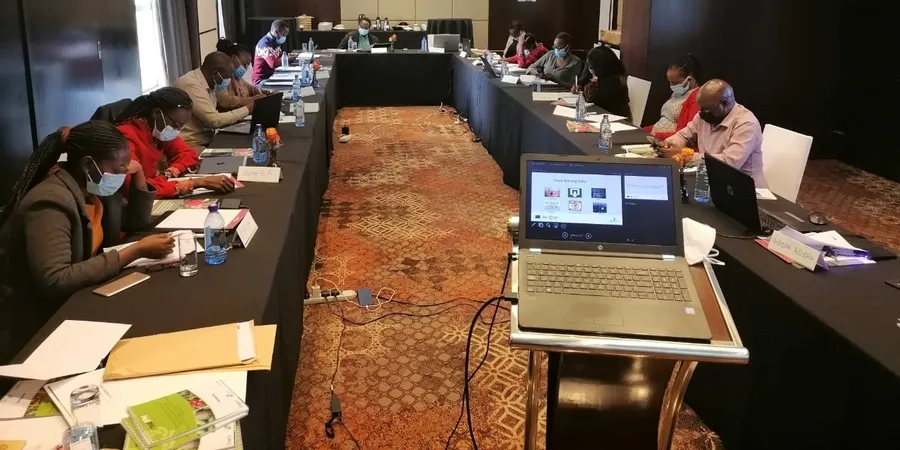
In Nairobi, technical staff of Fresh Produce Exporters Association of Kenya (FPEAK), Fresh Produce Consortium of Kenya (FPC) and Kenya Flower Council (KFC) took part in group training on effective implementation of protocols for the management of false codling moth (FCM, Thaumatotibia leucotreta) as part of COLEACP’s NExT Kenya programme. The technical training focused on effective implementation of the FCM protocol for roses, and troubleshooting/coaching for companies, to support the associations in offering these services to their members. The training will be followed by in-company coaching sessions for about 16 Kenyan flower companies on implementation of the FCM protocol.This activity is implemented by COLEACP and supported by the NExT Kenya (New Export Trade) programme, established in collaboration with the EU Delegation in Nairobi and Kenyan stakeholders.
 News
News
NExT Kenya – Live update
On 29th of April, COLEACP hosted a digital event on its 5-million EUR NExT Kenya programme, funded through the EU to enhance Kenya’s horticultural exports. 150 participants had the opportunity to listen to our high-level panelists, to find out what has happened in the first year of the programme and how to partner with the programme.Following speakers all shared their views on the current challenges and opportunities of the Kenyan horticultural industry and how this programme is designed to address them: Apollo Owuor (Chairman FPEAK and COLEACP Board Member), H.E. Katrin Hagemann (Acting Head of Delegation of the European Union to Kenya), Prof Hamadi Boga (Principal Secretary, Crops Development and Agricultural Research, Ministry of Agriculture, Livestock, Fisheries and Cooperatives), Clement Tulezi (co-Chair National Horticulture Taskforce and CEO Kenya Flower Council), Jeremy Knops (General Delegate of COLEACP) and Dr. Chagema Kedera (NExT Kenya programme coordinator) If you could not join us, do not hesitate to watch the session recording.
 News
News
St Vincent & The Grenadines: Update 27 April
For the past two weeks the government has been mobilising the international community to request financial support for reconstruction. The latest estimate by the Ministry of Finance was for $500 million (50% of St Vincent & The Grenadines' annual GDP). The United Nations has launched an appeal for solidarity and some countries have already replied positively.The Prime Minister and the Ministers of Finance and Tourism visited the North region (up to the Red zone limits) to see the impact - 30 explosions have been registered since 9 April. One third of the North region is devastated (crops, houses, roads). The authorities want to offer financial support to evacuees, who represent 20% of the population of St Vincent (16,000 living with family/friends, 4,000 living in government shelters mainly in schools). They have started to clean up roads into the Orange, Yellow and Green zones to prepare for the next threats: possible new major explosions; and the hurricane period starting in 4 weeks up to October, with Lahar (volcanic mud flows) due to heavy rains moving the huge amount of fallen ash. This Lahar phenomenon can be very destructive for houses and infrastructure.According to the Prime Minister, St Vincent is not in a food scarcity situation. Crops (roots, bananas, vegetables....) in the Orange, Yellow and Green zones can feed the population, and some exports are still organised to other islands in the region. But water supply is a serious problem for people in the Orange and Yellow zones due to regular cutoffs. And for the limited number of people remaining in the Red zone, there no water supply. The authorities and individuals have organised shuttles by road and by sea to supply water and food to these people.
 News
News
Suriname: Capacity building bears fruit
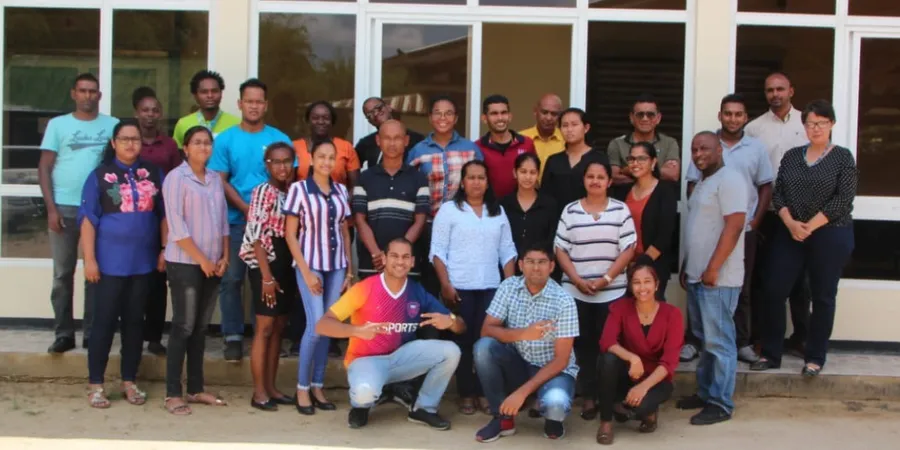
Ministry extension staff (group 2) trained in the COLEACP Field Training Workshop method Training-of-trainers on safe use of pesticides, crop protection and Field Training Workshops for extension workers and researchers of MAAHF SurinameIn Suriname, the primary support to famers is provided through the extension services of the Agriculture sub-directorate of the Ministry of Agriculture, Animal Husbandry and Fisheries (MAAHF). A need was identified for Ministry extension staff to receiving training in COLEACP’s Field Training Workshop method to upgrade their technical and training capacity. Support was provided under two projects: the Inter-American Development Bank-Japan Special Fund Poverty Reduction Program (IDB/JPO) project “Strengthening Female Entrepreneurship in Brokopondo, Wanica, Sipaliwini and Marowijne”; and the Food and Agriculture Organization (FAO) Suriname Agriculture Market Access Project. In 2019, each of these projects held training-of-trainers, for 20 and 27 participants, respectively. The objective was for participants to improve their adult education skills and technical knowledge to be better able to advise farmers on implementing standards of Good Agricultural Practices (GAP), and to disseminate technical knowledge to farmers, particularly on crop protection and safe use of pesticides. The training is fully in line with the Ministry's efforts to implement GAP standards at farming level. The extension workers received coaching while they trained farmers using the COLEACP Field Training Workshop method. By September 2019, the extension workers had passed on training to 89 farmers. However, due to the Covid-19 pandemic and restrictive measures in place, no classroom training courses in GAP have been delivered yet. The training was facilitated by Jenna Wijngaarde, Farm Assurer Manager for Capricorn Projekt BV in Suriname and COLEACP National Relay in the country. Jenna herself was a participant in COLEACP training-of-trainers, and was able to pass on the baton to a new field of trainers.
 News
News
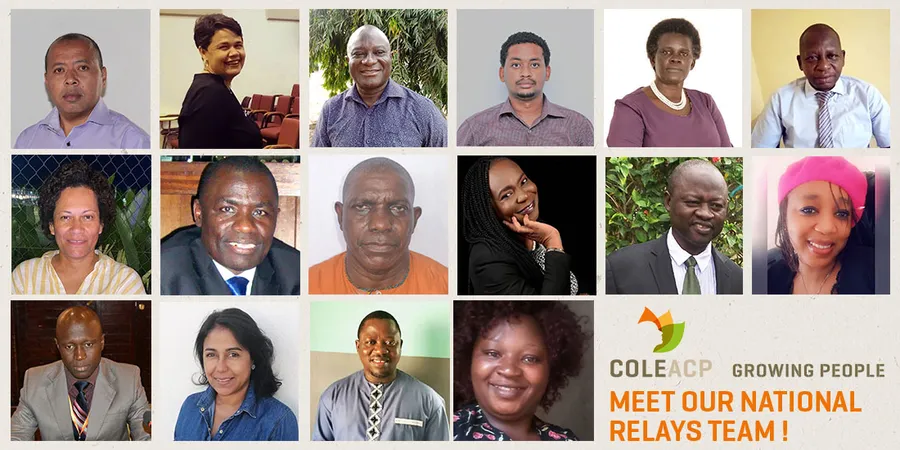
Our team of national relays
COLEACP has long depended on a committed team of local representatives (“relays”), who contribute their wide-ranging in-country and regional expertise in each of the three African, Caribbean and Pacific regions, keep us in touch with our value chains “on the ground”, and enhance our networks. Meet the team! COLEACP National Relays AFRICA Burkina Faso Edit Patric KABRÉ is an expert in food safety and SPS issues Cameroon Guy Jacques WAMBA is an agricultural engineer specialising in plant protection and organic agriculture Côte d'Ivoire Olga KOUASSI ASSOVIE is an agricultural engineer and food safety expert Ethiopia Mikyas BEKELE holds an MBA in project management and a BSc in Horticulture Guinea Mamadou CONDE is an agricultural engineer with experience in agricultural sector development and export promotion Madagascar Eddy RANDRIAMIHAJASOA holds Master's degrees in Strategic and Operational Management, and Economic Management Studies Senegal Wédji FALL SYLLA is an agrobiologist specialising in food safety Tanzania Isaac NDAMANHYILU holds a Bachelor's degree in Agriculture from Sokoine University of Agriculture, Tanzania Togo Bodomziba TCHALA is an agricultural engineer and an expert in sanitary and phytosanitary measures Uganda Grace AKAO, an agricultural scientist (crop entomology), is an expert in seed technology, plant health, SPS standards and food safety CARIBBEAN Dominican Republic Karina DE POOL is an Industrial Engineer specialising in international commerce and private sector development Suriname Jenna WIJNGAARDE is a Farm Assurer Manager for Capricorn Projekt BV in Suriname PACIFIC Fiji Mereia VOLAVOLA holds an MBA in Banking and Finance, and specialises in private sector development, value chain supply and agribusiness National Coordinators of Standards and Trade Development Facility (STDF) Projects | STDF Cameroon Blondelle Arlette GHOMFO has a PhD in Plant Pathology at FASA, University of Dschang and a professional Master's in Standards and Quality Control of Agropastoral and Forestry Products STDF Guinea Mamadouba CAMARA is an agricultural engineer with an MSc in Agroecology; he specialises in administration management and is an SPS expert STDF Togo Kadjala KPATCHA has a degree in Project Management and is a Senior Technician in Agriculture; he works with Togo’s Plant Protection Directorate (DPV)
 News
News
News digest: policy
On 13 April the International Food Policy Research Institute (IFPRI) launched its 2021 Global Food Policy Report. Covid-19 upended our food systems in 2020, leading to lost livelihoods, food insecurity and rising poverty. The report looks at the critical lessons learned from the pandemic so far and explores opportunities for transforming our food systems to be more resilient, healthy, sustainable, efficient and inclusive going forward. Critical questions addressed include:What different challenges did the pandemic spark in Africa, Latin America and Asia, and how did these regions respond?How did companies accelerate ongoing trends in digitalisation and integration to keep food supply chains moving?Who felt the greatest impact from falling incomes and food system disruptions caused by the pandemic?Can better integration of agricultural and ecosystem polices help prevent the next pandemic?Source: IFPRI, 13 April