
Cultivating
Sustainable Futures
 News
News
News digest: Brexit
Ghana and the UK have finalised negotiations on a new Interim Ghana-UK Trade Partnership Agreement (Ghana-UK Joint Statement, 4 February). The agreement will enter into effect following the completion of relevant internal procedures required in both Ghana and the UK. But while trade negotiations have now been finalised, duty-free access has still not been restored for Ghanaian exports to the UK, and Ghanaian exporters continue to pay import tariffs on banana unloaded in the UK (EPA Monitoring, 9 February). Urgent action is required from the UK Government to add Ghana to the list of countries subject to the "bridging mechanism" applied to a range of other countries where trade negotiations have been completed, but agreements have not yet been signed.
 News
News
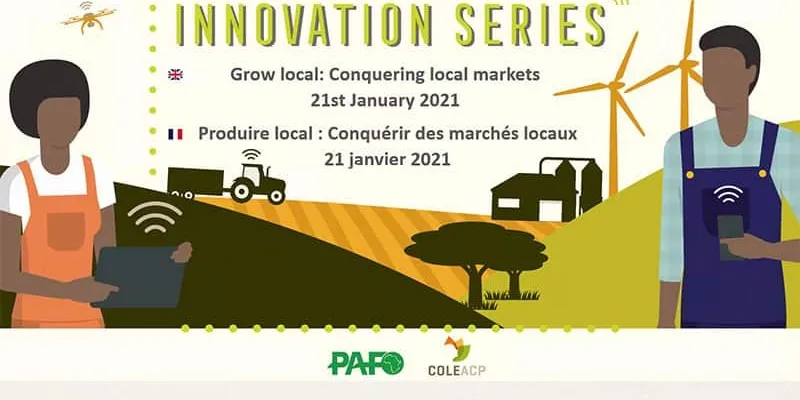
VIEW THE WEBINAR: INNOVATION SERIES – SESSION N°2 – GROW LOCAL: CONQUERING LOCAL MARKETS
The second session of the Pan African Farmers Organization (PAFO)-COLEACP Innovation Series, held on 21 January, focused on ‘Grow local: Conquering local markets’.You can view the whole session in French and English.07:03 Jeremy KNOPS, General Delegate, COLEACP 17:41 Affiong WILLIAMS, Founder & CEO, Reelfruit, Nigeria 28:29 Catherine KROBO EDUSEI, Managing Director, Eden Tree Limited, Ghana 40:58 Komi AGBOKOU, President and Founder, Choco Togo 56:27 Bertille Guèdègbé MARCOS, Les Jus Tillou, Benin 01:09:29 Escipión OLIVEIRA GOMEZ, Assistant Secretary-General, Dept Sustainable Economic Transformation and Trade, Organization of African, Caribbean and Pacific States (OACPS) 01:25:11 Debisi ARABA, Managing Director, AGRF, Kenya 01:33:45 Dimitry VAN RAEMDONCK, Fund Manager, EDFI AgriFI 01:40:24 Question & answer session 02:12:41 Elizabeth NSIMADALA, President, Panafrican Farmers Organisation (PAFO) Session N°3 – African Continental Free Trade Area (AfCFTA): Opportunities for SMEs and businesses in the agrifood sector – will be on 18 March (12h00-14h00 GMT).
 News
News
NExT Kenya: Business skills training for Flamingo extension staff
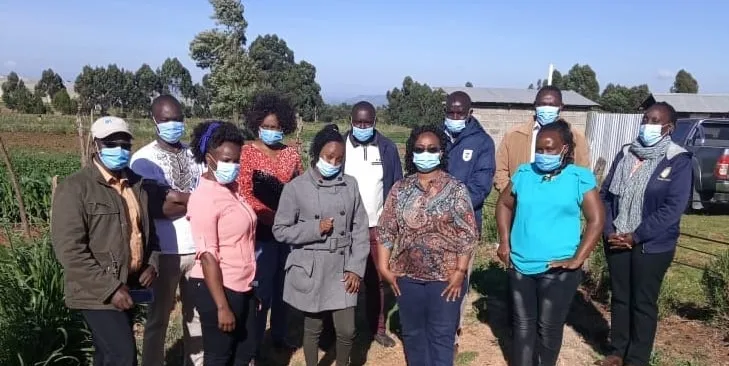
In December 2020, extension staff of Flamingo Horticulture Kenya Ltd, a large grower with various production sites (vegetables and flowers), participated in COLEACP training to assist the company's outgrowers with book keeping and cost-benefit calculations. This was the second step in a series to introduce the concept to the small-scale outgrowers, which began in 2019. The training took place at the production areas in Nanyuki, Kenya, while Covid-19 measures were in place and strictly adhered to throughout the training.
 News
News
Nigeria - DANGOTE engaged in progressive training sessions
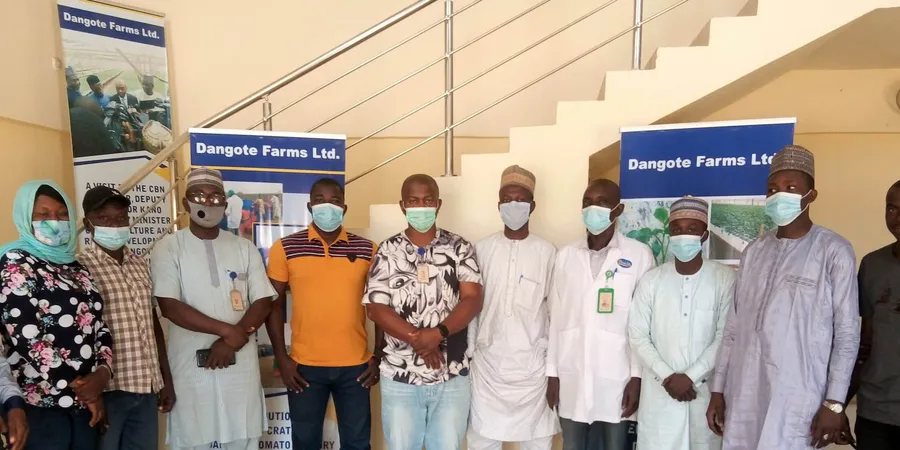
At the end of January, COLEACP facilitated training on crop protection, safe use of pesticides and the Field Training Worksohp method for Dangote Farms Limited in Nigeria. The company grows tomatoes with over 5,000 smallholders in the area around Kano, processing the crop into tomato paste for the domestic market. The extension staff who took part in the training are planning to make use of the skills they acquired to impact both junior staff during in-company training, and Dangote Farms' 5000+ smallholder outgrowers. The Field Training Workshop method Companies taking part in coaching on COLEACP's Field Training Workshop method learn how to sensitise their workers and small-scale producers about good agricultural practices – as well as how to implement these good practices themselves. Deploying hands-on field training sessions and demonstrations, coupled with the use of COLEACP's dedicated tools and materials, has the potential to cause substantial ripple effects in the field. Dangote Farms' Extension Manager Mr Tajuddeen Abubakar drew attention to the "unique teaching methodology and skills" of COLEACP's expert trainers, and stated that:
 News
News
Kenya - Business skills training for Interveg’s extension staff
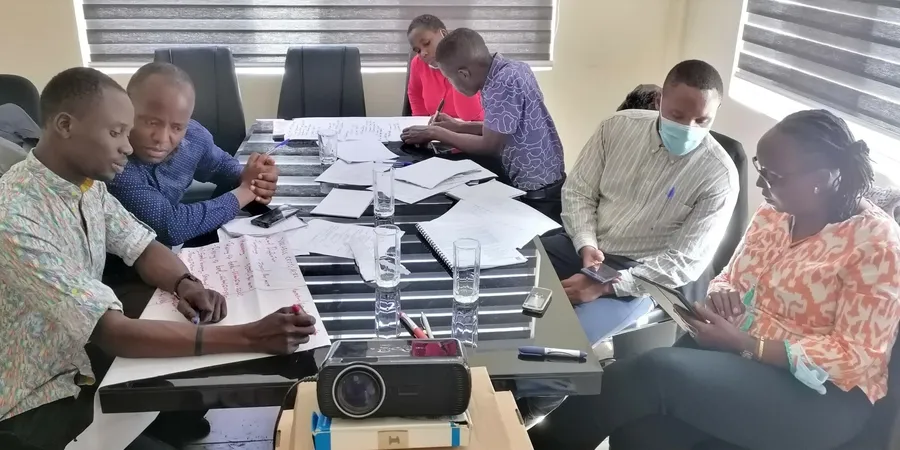
Extension staff of Interveg, Kenya are participating in training on book keeping and cost-benefit calculations. Interveg works with French bean outgrowers, and through this training extension staff will be better equipped to guide these farmers on how to use their land and resources as a business. The training is provided as part of COLEACP's Fit For Market programme.The training will provide Interveg's extension staff with the necessary background to coach farmers, with practical examples of cost-benefit analysis and record-keeping for producers. It will enable them to calculate the profitability of each plot/crop, helping farmers to gain insight into their activities and stimulating them to consider their farm cashflow as separate from their household spending. It should help them to invest in production, plan for the future, and avoid cashflow problems during key production moments. The training also aims to introduce farmers to the critical difference between cashflow and profitability.
 News
News
Proxifresh Co. Ltd - support for the conservation of processed products and waste recovery
COLEACP member Proxifresh Co. Ltd in Mauritius is receiving support for the conservation of processed products and waste recovery as part of the Fit for Market programme.The aim is to identify suitable methods to increase the shelf life and stability of processed products, and to propose concrete actions to optimise packaging and processing facilities, as well as ways of recovering waste from its various activities.Proxifresh Ltd specialises in the import, export and distribution of fruit and vegetables under the VegMe brand for supermarkets, hotels and restaurants.Find all the news of our actions in Mauritius here.
 News
News
Dominican Republic: JAD-COLEACP webinars
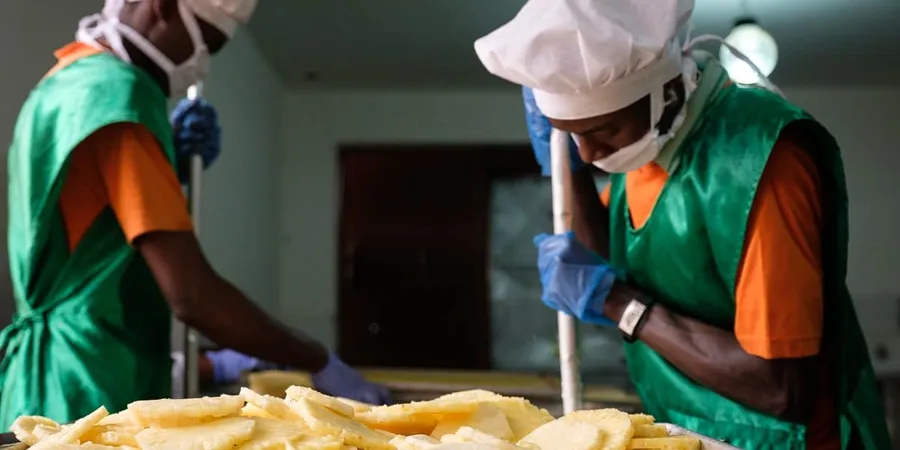
In collaboration with the Dominican Agroenterprise Board (Junta Agroempresarial Dominicana, JAD), COLEACP is organising a series of webinars on market access for processed products in the pineapple, mango and avocado sectors. These are part of the CALIFRUP project "Quality enhancement for the development of MSMEs in the processed fruit value chain", which aims to support the strategy of value chain development and, specifically, to strengthen the processed fruit value chain. The first webinar, on “The international market for processed products”, was held on 3 February. It covered trends (frozen products, pulp, dry products, kernel butters, cosmetics, etc.); the expectations of international consumers and importers; and innovative technologies. Webinar 2, on 17 February, will focus on the needs of European markets, covering: health regulatory requirements packaging and labelling requirements traceability certifications required by importers criteria for the industrialisation of fruit production safety of pre-packaged food good manufacturing practices for pre-packaged products.The objective will be to identify the measures that need to be implemented to comply with regulatory and private requirements. At the end of the webinar, participants will be able to draw up an action plan with the various measures they need to implement within their company before being able to export to Europe. Webinar 3, in the week of 15 March, will discuss how to build a good project, covering the supply chain; assessment of costs–benefits; and financial planning. At the end of this webinar, participants will be able to draw up a business plan for their export project.
 News
News
New COLEACP Rapid SPS Assessment Tool – promoting dialogue and engagement
COLEACP's new Rapid SPS Assessment Tool (R-SAT) provides an integrative change management model to help competent authorities in ACP countries assess their national sanitary and phytosanitary (SPS) systems. At the heart of the model is the facilitation of dialogue and engagement between the key stakeholders, both public and private. In the final stage of developing R-SAT, online training sessions are taking place with SPS experts: one in English in the second half of February, and one in French in the first week of March. Experts will receive instructions on using the tool in a pilot country, and their feedback will inform the final version of the tool. R-SAT provides a practical, step-by-step guide to assist ACP countries in their assessment of national SPS systems in order to strengthen them in line with international standards and regulations. The aim is to facilitate the development of a national priority action plan to strengthen SPS systems that is firmly based on a common strategic vision, agreed by all stakeholders. The COLEACP R-SAT does not replace existing dedicated tools such as the various Food and Agriculture Organization and World Health Organization guidelines to assess national food safety systems; the Phytosanitary Capacity Evaluation (PCE) developed by the International Plant Protection Convention; and the STDF’s Prioritizing SPS Investments for Market Access (P-IMA) framework. Instead, it is designed to be complementary to these tools, enabling a rapid preliminary assessment and generating information that can be fed into these more in-depth evaluations as necessary.
 News
News
COLEACP information meetings for NPPOs
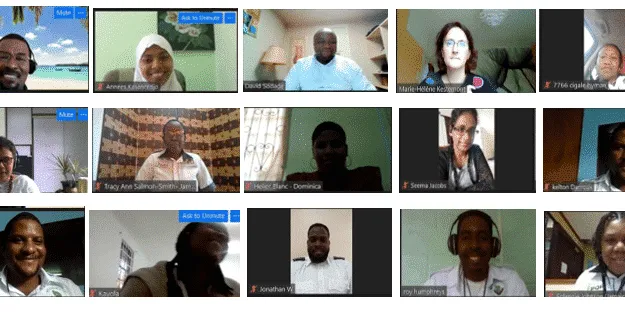
COLEACP's videoconference for National Plant Protection Organisations (NPPOs) on 19 January, on "Use of the European TRACES NT system in ACP countries", was well attended.Resources The following additional support is available on using TRACES NT: From late March 2021, virtual training courses will be provided by Better Training for Safer Food (BTSF). COLEACP will provide details when more information becomes available. Distance support and training from the TRACES helpdesk is available on request: contact sante-traces@ec.europa.eu The TRACES website provides FAQs Advice on using TRACES for the first time can be found here: Getting Started Paper versus electronic It is important to note that paper certificates will still be accepted by the EU for the foreseeable future. However, COLEACP would like to emphasise that there are many advantages to using the electronic system. Electronic certification is likely to become more and more important in the near future, and the greater flexibility and reliability of using electronic certificates has been demonstrated during the Covid pandemic. TRACES NT versus e-Phyto A question that is frequently asked relates to the difference between TRACES NT and e-Phyto (IPPC HUB). One of the main differences is that TRACES NT is designed only for trade with Europe, and automatically gives specific European requirements for each product. Next topic: Banana fusarium wilt TR4 The next e-meetings for NPPOs will focus on TR4 (Fusarium oxysporum f.sp. cubense tropical race 4), an aggressive strain of banana fusarium wilt, which is one of only six strains that attack Cavendish bananas. The first of these regional meetings will be for West Africa.
 News
News
BREXIT - Update of COLEACP's general information document
The UK’s withdrawal from the EU customs union and single market took place on 31 December 2020 on the basis of an agreement concluded between the EU and UK on 24th December 2020. This event has both important implications for the ACP horticultural trade with the UK, particularly for goods delivered to the UK via initial ports of landing in the EU (so called “triangular supply chains”). In order to inform and support its partners, COLEACP has updated its general information document for ACP horticultural exporters. This document addresses, amongst other things, the main challenges and implications, and analyses the different supply chains impacted, such as : Direct exports to the UK Direct exports to the EU27 Indirect exports to the UK via the EU27 Indirect exports to the EU27 via the UK Indirect exports to the Republic of Ireland via the EU27 and the UK Read the full document
 News
News
Online training for Caribbean NPPOs
COLEACP is providing training in the Caribbean on Implementation of official controls for inspectors, controllers and technical staff involved in phytosanitary control, inspection and certification activities.This online training for NPPOs will be provided from 1 February until 26 February 2021. Spread over 4 weeks, it requires a daily time commitment of 3–4 hours. It is provided via COLEACP’s online training platform, and will be delivered through web conferencing, quizzes, educational videos and other digital tools. COLEACP’s expert trainers are always available to answer any questions about the training or the use of the platform.The training is provided by COLEACP Relais National Jenna Wijgaarde and Jeffrey Jones of Capricorn Project in Suriname, and organised in collaboration with the Caribbean Agricultural Health and Food Safety Agency (CAHFSA).
 News
News
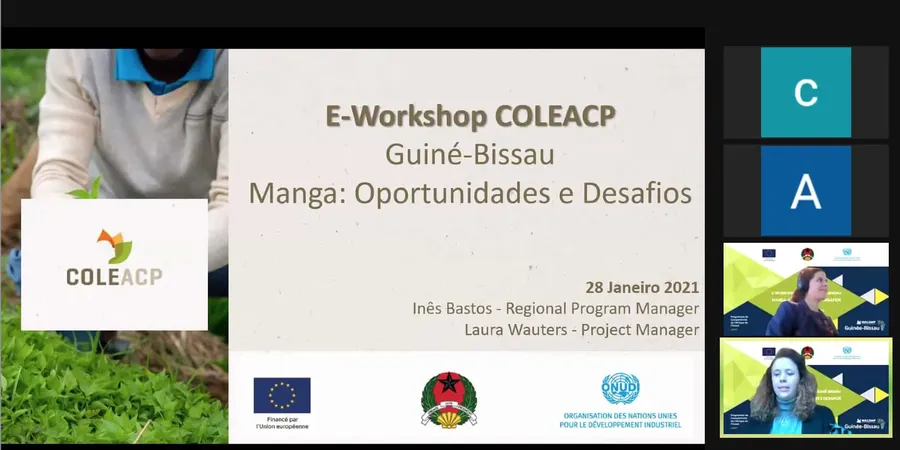
Guinea-Bissau: COLEACP Mango Online Workshop
You can find the Portuguese version belowOn 28 January COLEACP organised a Mango Online Workshop as part of the West Africa Competitiveness Programme in Guinea-Bissau (WACOMP-GB).The meeting was convened for WACOMP-GB by Mr Adalberto Vieira (Chief Technical Advisor) and Ms Siham Chafak (international expert) and attended by representatives of the European Union, the Ministry of Industry, associations, producers, NGOs, and different private and public sector stakeholders with an interest in the mango value chain.Mrs Inês Bastos (Regional Programme Manager) and Ms Laura Wauters (Project Manager) of COLEACP presented key issues related to the challenges and opportunities of the mango export market, the importance of quality, and the roles of actors in the mango value chain. They also introduced COLEACP's e-learning platform for training of producers and private sector actors.WACOMP-GB focuses on the mango value chain and how local producers can get the most out of investing in mango production.A poll taken during the meeting asked participants what they consider to be the biggest challenge in the mango export market. Most (25%) felt the greatest challenge is organisation of the mango value chain, followed by SPS regulations (20%), quality required by markets (20%), importers' requirements (15%), and staying competitive despite additional costs (5%).The workshop was the first of a series of several COLEACP activities that will be organised in collaboration with WACOMP. Further activities – training and technical cooperation for both public and private sectors – will be implemented by COLEACP in Guinea-Bissau up to June 2022.WACOMP is financed by the European Union and implemented by the United Nations Industrial Development Organization–Quality Infrastructure (UNIDO-QI). The programme, which has 16 national components and one regional component, aims to support selected value chains at national and regional levels to promote structural transformation and better access to regional and international markets, while taking into account social and environmental concerns.