
Cultivating
Sustainable Futures
 News
News
Strengthening fruit and vegetable exports and SPS in Togo
On 27 August, 40 representative of member companies of the Association of Producers, Processors and Exporters of Vegetables and Fruit of Togo (APROTELF) met in Lomé. Those attending the meeting included representatives of horticultural companies, the Plant Protection Directorate and GIZ/ProDRA (the German Development Agency’s Rural Development Programme).Participants discussed the status of fruit and vegetable exports from Togo. The country primarily exports pineapples, leafy green vegetables and some other local products to Europe. Togo’s fruit and vegetable exports to Europe have more than doubled over the past decade, but remain relatively limited. Boosting the country’s fruit and vegetable exports could have a profound impact on development.During the meeting, participants also considered ways to raise awareness of the approved and recommended phytosanitary products for the treatment of fruit and vegetables. Since 2018, the Standards and Trade Development Facility (STDF) project has worked to strengthen Togo’s phytosanitary control and certification system for fruit and vegetables. This project is implemented by COLEACP under the guidance of Kadjala KPATCHA, national coordinator for the STDF in Togo.Progress on the Good Practice Guide for leafy vegetables in Togo, presented on 9 July, was also discussed at the meeting. While it is being supported by COLEACP’s Project to Strengthen the National Phytosanitary Control and Certification System for Fruit and Vegetables in Togo, the guide is being developped - and will be reviewed and validated - by stakeholders including APROTELF, the Plant Protection Directorate, Institute for Technical Advice and Support, the Togolese Institute of Agronomic Research and private sector companies.This activity was organised within the framework of the project “Strengthening of the phytosanitary control and certification system for the fruit and vegetable sector in Togo”, funded by the Standards and Trade Development Facility (STDF) and implemented by COLEACP.
 News
News
News digest: COVID-19
Concerns over a new COVID-19 variant detected in South Africa have prompted fresh travel restrictions in Italy and Germany on as Brussels considers EU-wide flight restrictions. The EC will propose to suspend air travel from southern Africa amid concerns over the variant, EC President Ursula Von der Leyen said. Germany and Italy have already announced measures to restrict air travel from the region. Rome has banned entry on its territory to anyone who has stayed in southern Africa “during the last 14 days”, said health minister Roberto Speranza, invoking “maximum precaution” in the face of the new variant. The countries targeted by this measure are South Africa, Lesotho, Botswana, Zimbabwe, Mozambique, Namibia and Eswatini, the minister said. German Health Minister Jens Spahn said airlines coming from South Africa will only be able to transport German citizens. Travellers will need to go into quarantine for 14 days whether they are vaccinated or not.Source: Euro News, 26 November 2021
 News
News
COLEACP training-of-trainers: "From face-to-face to distance learning"
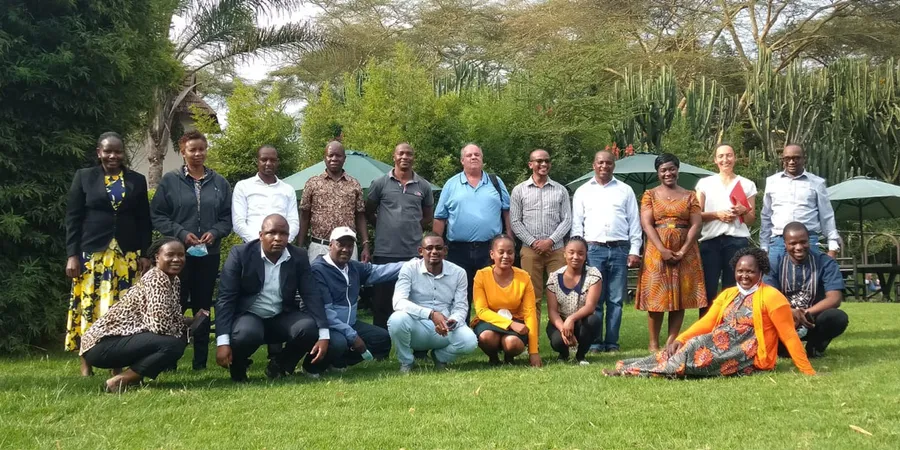
In 2020, due to Covid-19 restrictions, it became urgently necessary to develop digital tools and distance learning methods.COLEACP mobilised quickly, and in April 2020 a training course on the basics of digital training was organised urgently for COLEACP’s ACP experts and the training department team, in partnership with the Digital and Multimedia Teaching Support Centre at the University of Lausanne.The transition to digital involves mastering new tools, learning new teaching methods, and operating a platform to host the training. Although the first courses were experimental, COLEACP quickly moved towards offering a professional distance learning service, with state-of-the-art software and tutoring methods specifically designed for training-of-trainers through distance learning.In October–December 2020, an 8-week project-based training-of-trainers course, organised through the Fit For Market programme, aimed to familiarise ACP experts with the tools they need – and to build online training that can be replicated within horticultural companies and National Plant Protection Organisations (NPPOs).Under the supervision of Jules Talom and David Sodade, 22 ACP experts became familiar with various digital tools, and designed 11 online training courses using the COLEACP e-learning platform. You can see the participants’ views on their experiences here:
 News
News
IICA-COLEACP Caribbean Agrifood Business Series: Ensuring food quality and safety
The fourth session of the Caribbean Agrifood Business Series, organised by the Inter-American Institute for Cooperation on Agriculture (IICA) and COLEACP, focused on “Ensuring food quality and safety in the Caribbean: the key role of SMEs and businesses”. The online session on 9 December reunited 240 participants from the Caribbean and other parts of world, including 15 African countries.Entrepreneurs, food safety and quality specialists, and experts on policy and finance highlighted the importance of food and nutrition security in the agrifood sector, and how food safety contributes to it. In the current COVID-19 context, high levels of food quality and safety are even more critical for the agrifood businesses supplying not only export but also local and regional markets. Strict sanitary and phytosanitary (SPS) measures and stringent standards are required by high-value formal markets, and by consumers whose awareness about health issues and the consequences of foodborne-related illnesses is increasing.Three inspiring women entrepreneurs, Tania Lieuw-A-Soe, (CEO, Surivit N.V., Suriname), Rita Hilton (Founder and Managing Director, Carita Jamaica Ltd, Jamaica) and Theophilia Stoute (Founder and Managing Director, O’s Inc., Barbados) presented their business success stories about supplying safe and heathy food that contributes to food and nutrition security, as well as to employment and empowerment of local communities, especially of women.You can view a recording of the session here:
 News
News
Development of Good Practice Guide on Avocado
Kenya is one of the fastest growing fresh produce exporters in the world – and avocado is the world’s fastest growing fruit in popularity. Global avocado production increased by 72% in the past 10 years (FAOSTAT). In 2019, Kenya produced an estimated 365,000 metric tonnes of avocado, which represents a 100% increase compared to 2016 (FAOSTAT). The majority of Kenyan avocados are grown by small-scale farmers who each manage 10–200 trees. Kenyan export volumes of avocados have increased from 46,682 tons in 2016 to 79,081 tons (69% increase) in 2020 (ITC Trade Map).The avocado is a climacteric fruit (it matures on the tree), but it ripens off the tree. It is picked hard and green and kept at cooler temperatures until it reaches its destination. Care of the avocado on the tree, during picking and off the tree is equally critical to the export supply chain. Generally, the fruit is picked once it reaches maturity. Once picked, it ripens in 1–2 weeks at room temperature.Considerable losses occur along the whole supply chain due to pre- and post-harvest disorders and handling. Activities such as handling, storage, processing, packaging, transportation and marketing all contribute to these losses. The causes are, among others, limited resources such as infrastructure, knowledge, and access to post-harvest technologies. Efficient supply chain management plays a crucial role in decreasing post-harvest losses and improving the reputation of Kenyan avocados on the international markets.According to the Avocado Society of Kenya (ASOK), Kenyan growers and exporters are working on quality and increasing market share, although they observe relatively low prices per unit of avocado produced compared to other exporting countries.
 News
News
Uganda: Updated Technical Brochure on false codling moth
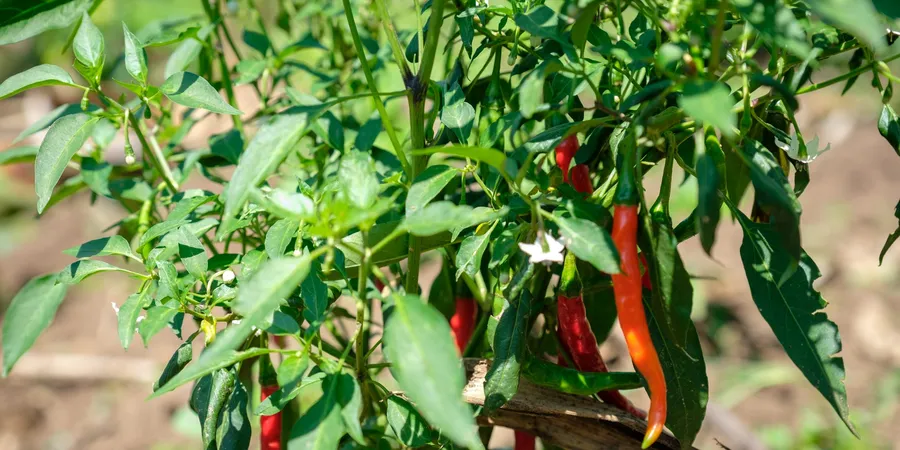
COLEACP has just updated its Technical Brochure on the management of false codling moth (FCM, Thaumatotibia leucotreta), for use in training sessions with Ugandan growers of pepper (Capsicum spp.).The main enhancement is an updated table of plant protection products (PPPs) potentially effective against FCM that are currently registered for use in Uganda (2021). The information includes the active ingredients and concentrations, the Insecticide Resistance Action Committee (IRAC) mode of action classification, the World Health Organization (WHO) classification, and the EU maximum residue level (MRL) for Capsicum.FCM larvae attack more than 70 different host plants. The pest is a particular problem on Capsicum because female moths lay eggs inside the developing fruit. Detection within a consignment of peppers destined for export of a single living individual of FCM, at any stage of development, would lead to rejection of the whole consignment.The European Commission includes FCM on its list of harmful organisms recommended for regulation as quarantine pests, to prevent its introduction into Europe. New European Union phytosanitary regulations stipulate certain conditions that exporting countries must meet before exports of Capsicum are allowed.The brochure includes information on how to monitor FCM, and the control measures that can be taken on pepper crops. The importance of stakeholder engagement between growers, exporters and National Plant Protection Organisations (NPPOs) is highlighted, including effective dialogue and concerted action between public and private sectors in the formulation of national action plans. The brochure for Uganda sits alongside COLEACP’s technical publications on FCM for pepper growers in Sierra Leone, The Gambia and Rwanda.This activity is supported by the Fit For Market SPS programme, implemented by COLEACP within the Framework of Development Cooperation between the Organisation of African, Caribbean and Pacific States (OACPS) and the European Union.
 News
News
Mali: New market profile of dried mango and mango juice
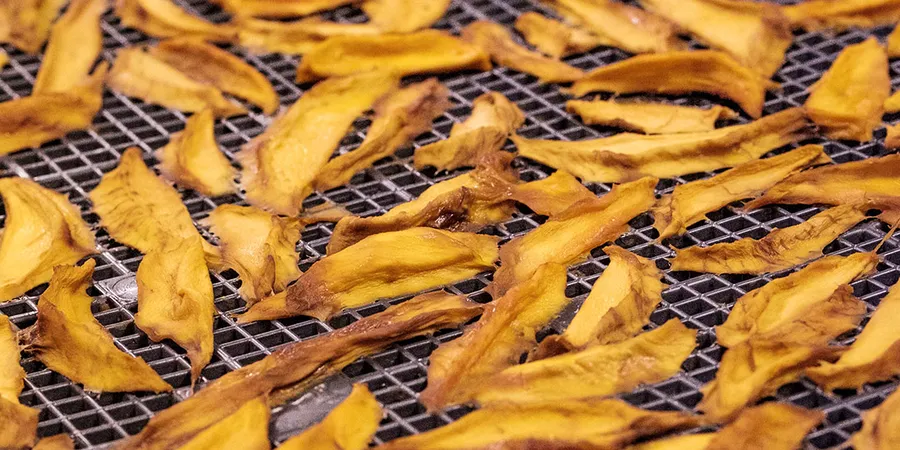
A new market profile of dried mango and mango juice from Mali looks at the local, regional and European markets to identify potential opportunities for product diversification. The report, supported by the Fit For Market programme, was developed by COLEACP’s Market Intelligence service.The dried mango export market is growing, particularly with demand for certified organic and Fairtrade products. South Africa is the main exporter of dried mango with an estimated market share of 50%. After Asian countries, the West African region supplies 15% of European imports of dried mango, often without preservatives and/or with organic certification. European dried mango consumption (mainly by UK and Switzerland) was estimated at nearly 6000 tonnes per year in 2018 with an estimated import value of €47 million.There are few competitors in Mali and West Africa within this sector. Investment in a relatively low-cost drying unit allows Malian companies to quickly become strongly competitive against other regional players. Pilot promotion activities exist at the local level in Mali, for example via local radio stations emphasising the local origin – “Made in Mali”.The mango juice export market is more difficult to access than that of dried mango. Purée or concentrate must be produced in compliance with strict hygiene procedures, requiring significant investment for an industrial-scale production facility, and a good control of the industrial equipment and processes. Smaller-scale operations producing juice for the national market in Mali is less risky, but requires the development of a range of several year-round products. Strong competition exists from the availability of imported sweetened juices at low prices, from Egypt, Spain, Tunisia, Morocco and Nigeria.With the large quantity of mangoes available in Mali and the positive global consumption trends, COLEACP concludes that the market segment for dried mango and mango juice is very promising.The COLEACP Research and Innovation service is currently updating its guide to sustainable production of mangoes, which includes mango diseases and SPS issues.This activity is supported by the Fit For Market SPS programme, implemented by COLEACP within the Framework of Development Cooperation between the Organisation of African, Caribbean and Pacific States (OACPS) and the European Union.
 News
News
News Digest: Brexit
The UK has delayed border checks on goods coming from the EU until next year, citing supply chain issues.On 18 November the UK Government updated its Border Operating Model.The report The Border with the European Union: Importing and Exporting Goods sets out the revised timetable, and provides a Navigation Guide to what’s new or has changed (pp. 8–11).The main points to note are: Full customs declarations and controls will be introduced on 1 January 2022 as previously announced, although Safety and Security Declarations will not be required until 1 July 2022. Pre-notification requirements of SPS goods, due to be introduced on 1 October 2021, will now be introduced on 1 January 2022. From 1 July 2022, certification and physical checks will be introduced for all regulated plants and plant products. From 1 July 2022, high-priority plants and plant products checks will transfer from place of destination to designated Border Control Posts and Control Points.Other updated resources on the Border Operating Model are: Border Operating Model Case Studies How to apply for a health certificate to export SPS goods How to use NES (the National Export System) to complete a customs export declaration How to delay customs declarations How to export to the EU using transit
 News
News
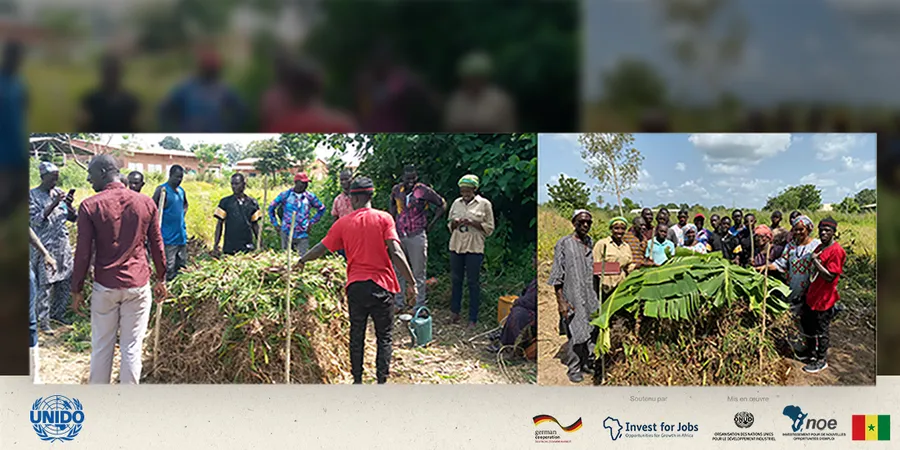
Senegal: Training in compost production from mango industry waste
COLEACP’s recent work with mango producers and processors in Senegal has focused on recovering and quantifying mango waste. Composting was identified as a key solution for recovery of the organic waste produced by the companies.Although this solution is relatively simple, implementing it on a large-scale production site requires specific theoretical and practical knowledge.Through its Fit For Market SPS programme, COLEACP is providing training and consultancy for mango production/processing companies in Casamance. These activities contribute to UNIDO’s implementation of the project "Investments for New Employment Opportunities in Senegal" (INOE-Senegal), financed by GIZ, to enhance environmental and social aspects of the Senegalese mango sector, thus improving its competitiveness.On 3 and 4 November, production and packaging station managers from 11 companies in Casamance that are active in the mango sector took part in theoretical and practical training sessions.The training aimed to build participants’ capacity in: understanding the importance of composting techniques to increase profitability and environmental sustainability knowing all the factors that impact on the maturing and quality of compost designing, setting up and maintaining a large-scale compost production facility using compost appropriately both as a fertiliser and as a soil conditioner.COLEACP would like to congratulate the 20 people who took part: seven teachers/students from the Lycée Technique Agricole Émile Badiane (LTAEB) in Bignona (Casamance), and 13 company technicians.This activity, implemented by COLEACP and the United Nations Industrial Development Organization (UNIDO), contributes to the GIZ "Investment for New Employment Opportunities" (INOE) project. It was supported by the Fit For Market SPS programme, implemented by COLEACP within the Framework of Development Cooperation between the Organisation of African, Caribbean and Pacific States (OACPS) and the European Union.
 News
News
Update on EU MRL changes
Key points Since the start of 2021, there have been European Union (EU) maximum residue level (MRL) changes concerning 123 plant protection products (PPPs), compared with 59 in 2020. These changes refer to modifications to the previous regulation, and can be either an increase or lowering of the MRLs for certain foods. Since the latest Flash Info in August 2021, there have been changes to 40 PPPs, 13 of which are key for ACP horticulture (acrinathrin, ametoctradin, spinetoram, fludioxonil, fosetyl-aluminium, tebufenozide, thiabendazole, cyprodinil, flubendiamide, metaflumizone, propineb, imidacloprid and chlorantraniliprole). The process of lowering MRLs for Mancozeb will be taking a bit longer than expected due to its complexity. How will ACP producers/exporters be affected? Changes to EU MRLs have an impact on ACP growers. For each PPP used, the Good Agricultural Practices (GAPs) in place should always be adapted to ensure compliance with MRLs of the destination market and prevent interception and destruction of merchandise at the border. What should ACP producers/exporters do now? If you use these PPPs, it is important to ensure that the GAPs you apply are compliant with the new MRLs. In most cases, adaptations will be needed (dose, number of applications, pre-harvest interval, etc.). If you have any major concerns about these changes, and fear that you will be left without an effective and locally available alternative, please contact COLEACP at: network@coleacp.org .
 News
News
Biocontrol: Opportunities and challenges in tropical horticulture
On 19–20 October, COLEACP participated in the 16th Annual Biocontrol Industry Meeting (ABIM) in Basel, Switzerland. During these two days, 970 participants from 44 nations were able to network together face-to-face, as well as listen to inspiring presentations and panel discussions. Both SMEs and large enterprises were well represented.The programme of ABIM 2021 included a journalist-led panel discussion involving biocontrol industry leaders, food processors, NGOs and researchers on how biocontrol will help transform agriculture. Edouard Lehmann, Research and Innovation Manager at COLEACP, gave a keynote address on the role of biocontrol in African, Caribbean and the Pacific (ACP) countries.
 News
News
STDF Togo project: Steering Committee meeting
On 30 November 2021 in Lomé, the Steering Committee (COPIL) of the "Project for the reinforcement of the national phytosanitary control and certification system for fruits and vegetables in Togo" (STDF/PG/375) reviewed activities to date and made plans for 2022. Officially launched in November 2018, the project was initially scheduled to close on 31 October 2021. However, due to delays caused by the Covid-19 pandemic, the technical implementation period of the project has been extended to 31 October 2022.The objective of this meeting, led by Mrs Chantal GOTO, President of COPIL, was therefore to assess the project's activities to date; discuss the current issues facing the fruit and vegetable sector in Togo; define activities for the next six months; and plan priorities for the last year of the project's technical implementation.Upcoming activities include:Organisation of a public-private meetingTraining organisation for the DPV (Plant Protection Directorate) on the programming of official controls, inspection procedures, implementing a phytosanitary risk analysis system, etc.Training on organic agriculture for the public extension service ICATSupport organisation for the association of producers, processors and exporters of vegetables and fruits of Togo (APROTELF), to finalise the sectoral Good Practice Guide for leafy vegetables in Togo; to elaborate a strategic development plan; and to set up a permanent secretariat.Organisation of various group training sessions for horticultural companies (via the Fit For Market SPS programme).The next COPIL meeting will be held in May. This activity was organised within the framework of the Project for the Strengthening of the National Phytosanitary Control and Certification System for Fruits and Vegetables in Togo, funded by the Standards and Trade Development Facility (STDF) and implemented by COLEACP.